Hunting Binoculars: What The Next $250, $500 Or $1,000 Actually Buys
Picked by exit pupil, field of view and eye relief rather than marketing copy - because those are the three numbers that decide whether you see the animal.
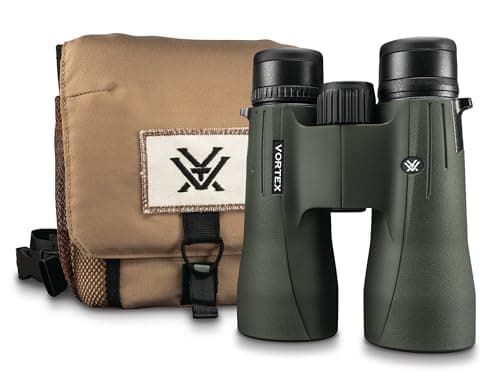
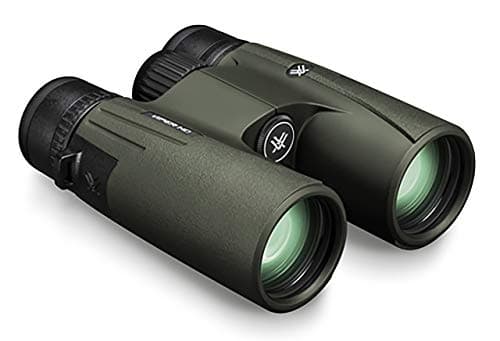
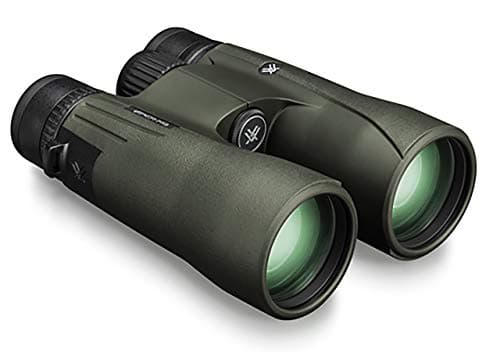
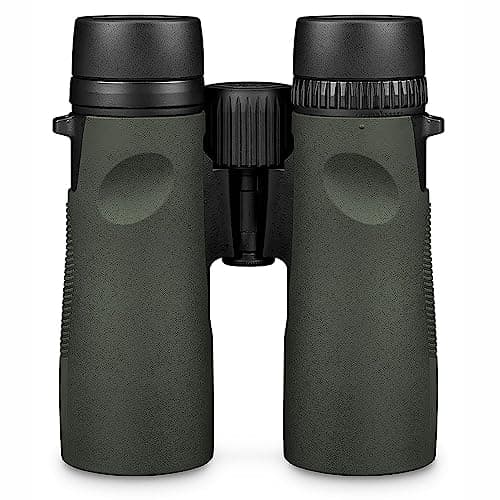
The three binoculars most people should look at first
Our top three from "The Best Hunting Binoculars, Ranked By What They Actually Do", with the live price. Every figure comes from the Amazon Creators API and disappears on its own if it goes stale.
We earn a commission if you buy through the links on this page, at no extra cost to you. It never changes which products we pick or how we rank them - read the full disclosure.
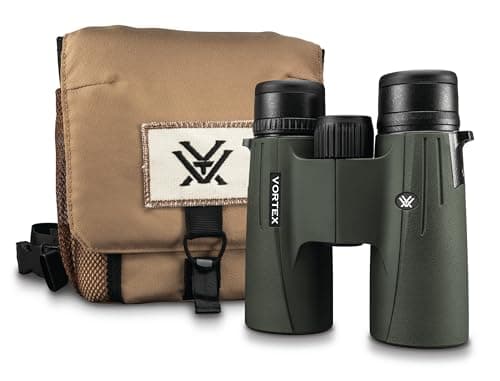
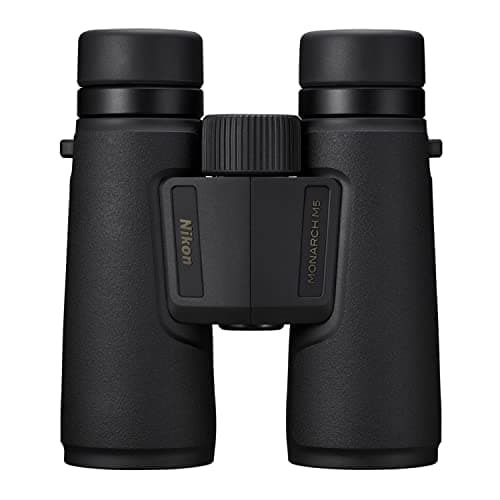
The default answer when someone outgrows a $150 pair: 17 mm of eye relief, a 341 ft field of view and glass that holds its edges, at the price where diminishing returns start.
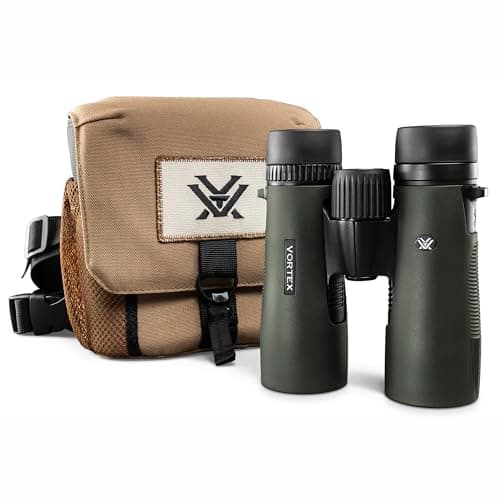
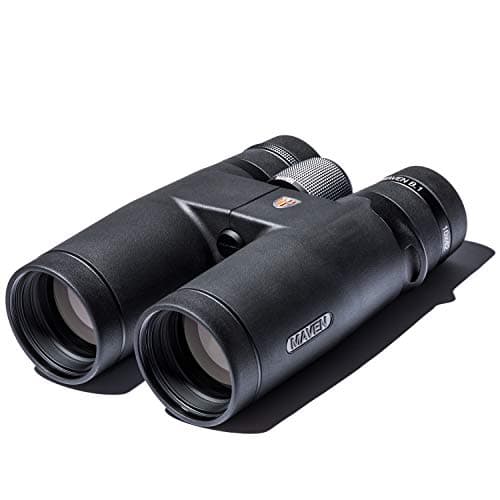
The same body and glass as the 10x42 with a 5.25 mm exit pupil instead of 4.2 mm, which is why it looks brighter in the final ten minutes of legal light.
If you are reading this you probably already own binoculars. You have also found their limit - they gray out twenty minutes before legal light ends, or the edges go soft, or you cannot hold them still. The useful question is not what magnification means. It is whether the next few hundred dollars fixes the specific thing that is annoying you.
This hub is organized around that question. Everything here is picked on three numbers you can check yourself, plus one you cannot: exit pupil, field of view, eye relief, and glass quality. The first three are arithmetic or published specification. The fourth is where the money actually goes, and it is the hardest to prove on paper - so we say what the evidence is rather than asserting it.
The decision is made on four things
Exit pupil is the width of the light column leaving the eyepiece, and it is objective diameter divided by magnification. A 10x42 gives 4.2 mm. An 8x42 gives 5.25 mm. Your pupil opens to roughly 5-7 mm in low light, so in the last ten minutes of legal shooting light the 8x42 feeds your eye more of what it can use. That is why an 8x can genuinely look brighter than a 10x with the same objective, and it is a fact about arithmetic rather than about brands. The full explanation is here.
Field of view decides how fast you find an animal, not how well you judge it. A 10x42 with 341 ft at 1,000 yards shows you noticeably more country per sweep than one with 300 ft, and in cover that difference is the whole game. It also makes glassing less tiring, which matters more than it sounds across a four-hour sit.
Eye relief is how far behind the eyepiece your eye can sit and still see the full field. Under about 15 mm, glasses wearers lose the edges of the image. If you wear glasses this is not a nice-to-have, it is the first filter to apply - and it rules out a lot of otherwise good binoculars at every price.
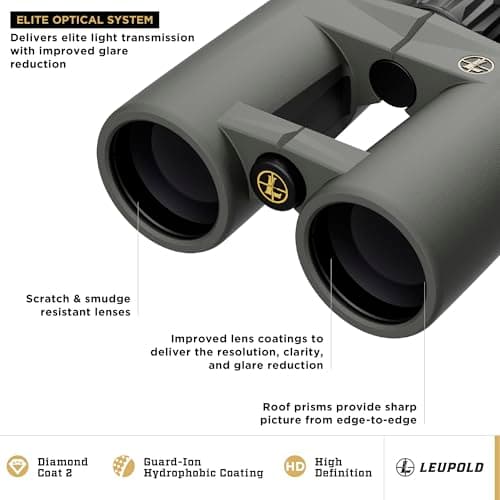
Glass and coatings are what the price is really buying above $300. ED or HD glass elements cut the color fringing that makes a dark animal against brush look mushy; dielectric prism coatings raise light transmission; phase correction on a roof prism lifts resolution. These are real, and they are also where honest reviewing gets hard, because nobody can show you the difference in a spec table. We explain what ED and HD actually mean.
What each tier buys, and what it does not
What changes as you move up
Tier
What you get
What you still do not get
Under $250
Genuine HD glass, fully multi-coated, a field of view in the 320-395 ft range, and a real warranty. Completely adequate for timber and whitetail distances.
Edge-to-edge sharpness, the last ten minutes of light, and a focus wheel that stays smooth in the cold.
Under $500
ED glass, dielectric coatings, 17-18 mm of eye relief, and the step in low-light performance that most people are actually buying.
Alpha-level resolution, Abbe-Koenig prisms, and the color neutrality you only notice side by side with a $2,000 pair.
Under $1,000
Premium prism designs, the best coatings outside the alpha brands, and glass that holds up at the top of the magnification range.
Honestly, not much. Diminishing returns are steep here and we say so on every page.
The jump from a $120 pair to a $250 pair is the biggest single improvement you will ever buy. Every jump after that is smaller than the one before it.
How to choose, in the order that matters
Pick your magnification from your terrain, not from the number. Timber and whitetail: 8x. Mixed country: 10x. Open basins where you glass for hours off a tripod: 12x or 15x.
If you wear glasses, filter on eye relief first. Anything under 15 mm will frustrate you, whatever else it does well.
Then set your budget and buy the widest field you can get at it. Field of view is the spec people regret ignoring.
Buy a harness at the same time. A $500 binocular swinging on a neck strap is a $500 binocular you leave in the truck. Harnesses start at $29.
Only then think about glass grade. It is real, but it is the last 20% and it costs the first 200%.
The grid method, where to look first, and why most hunters glass far too fast.
Binoculars: questions people actually ask
What magnification binoculars are best for hunting?
8x for timber and whitetail, 10x for mixed country, 12x or 15x only if you will carry a tripod. The honest default is 10x42 because it handles both reasonably; the honest better answer depends entirely on whether you are looking through brush or across a basin. Our full comparison is here.
Is a $500 binocular really twice as good as a $250 one?
No, and anyone who says otherwise is selling something. It is noticeably better at dawn and dusk, noticeably sharper at the edges, and usually more comfortable for glasses wearers. In the middle of the day, on a clear target, you would struggle to tell them apart. We go through the economics here.
What does 10x42 mean?
10x is the magnification - the image appears ten times closer. 42 is the objective lens diameter in millimeters, which determines how much light the binocular collects. Together they give you the exit pupil (42 / 10 = 4.2 mm), which is the single most useful derived number for low-light use. The full explainer is here.
Do I need ED glass for hunting?
Need, no. ED glass reduces chromatic aberration - the purple or green fringing around high-contrast edges - which makes a dark animal against bright brush read more cleanly. It matters most at high magnification and in flat light. Plenty of hunters kill plenty of animals with non-ED glass. What ED and HD actually mean.
How much should I spend on hunting binoculars?
Around $250 if you hunt timber and close country, around $500 if last light and open terrain matter to you, and above that only if you already know what you are missing. We break the question down properly here.