We earn a commission if you buy through the links on this page, at no extra cost to you. It never changes which products we pick or how we rank them - read the full disclosure.
Our top pick
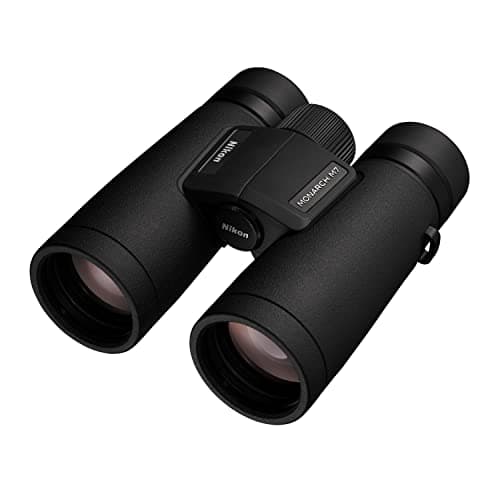
Nikon Monarch M7 10x42
The M5 with a wider field and better coatings; the strongest argument against the Viper HD at a slightly lower price.
$549.95 21% off
Price as of November 18, 2026. #ad How we earn
The Vortex Viper HD is the default upgrade in hunting binoculars for good reasons: 341 ft of field at 1,000 yd, 17.0 mm of eye relief, XR-coated glass that holds its edges, 24.9 oz, and the VIP warranty - unlimited, unconditional, transferable. It is the binocular this site has recommended more than any other. This page is for the reader who wants to know what else is in that bracket, and the honest answer is that several binoculars beat it on one specific published number each.
What the Viper HD is known for, and what it is not
Vortex publishes 10x on a 42 mm objective, 341 ft of field at 1,000 yd (6.5 degrees), 17.0 mm of eye relief, a 6.0 ft close focus and 24.9 oz. Computed from the format: a 4.2 mm exit pupil and a twilight factor of 20.5. Its strengths are that nothing on the sheet is weak, the XR coatings do hold contrast at dusk, and the warranty is the best in the industry in shape and in practice.
What it is not is the leader on any single row. It is not the widest - the Monarch M7 publishes 362 ft. It is not the most generous on eye relief - the Athlon Cronus G2 UHD publishes 19.3 mm. It is not the lightest - the Crossfire HD is 23.0 oz. And it does not publish a transmission figure, which the Zeiss Terra ED does. That is the shape of this page: a well-rounded binocular against five specialists and one budget option.
The number that is the same on all of them
Before comparing anything else, kill the variable that does not vary. Exit pupil is the objective divided by the magnification, so every 10x42 on this page - from the cheapest to the most expensive - computes to 42 / 10 = 4.2 mm, and a twilight factor of 20.5. None of these binoculars is brighter than another because of its format.
That is why the comparisons below are about field of view, eye relief, published transmission, coatings and weight. Anyone telling you a 10x42 in this class is "brighter" is describing coatings and glass correction, not aperture. Exit pupil and twilight factor works through the arithmetic.
How we ranked these
Scored against the published binocular rubric on how we review. For an alternatives page the ordering question is narrower than usual: which binocular gives a Viper HD shopper the most reason to change their mind?
- Does it beat the Viper HD on a published number? Field of view, eye relief or transmission - something a maker states and can be held to, not a coating name.
- Is it in the same price bracket? Five of the six are. The sixth is here because 'cheaper' is a legitimate reason to want an alternative.
- What does it give up? Every pick names it. The Zeiss gives up eye relief; the Athlon gives up weight; the Nikon gives up warranty terms.
- Warranty, scored on what the document promises. This is the row where the Viper HD is hardest to beat, and only the Athlon and the Crossfire HD match it.
- Low-light performance, weighted heaviest in the rubric and the place where the budget pick genuinely falls behind.
Quick picks
Ranked by the criteria published on how we review. Tap any row for the full write-up, or go straight to the current price.
| # | Product | Best for | Score | Price |
|---|---|---|---|---|
| 1 | Nikon Monarch M7 10x42362 ft of field at 1,000 yd - the widest 10x42 we list - and 24.0 oz, which is nearly an ounce lighter than the Viper HD. | Best overall alternativeWidest field in the $450 class | 9.5out of 10 | See today's price on the Monarch M7 10x42$436.65 on Amazon $549.95 21% off |
| 2 | 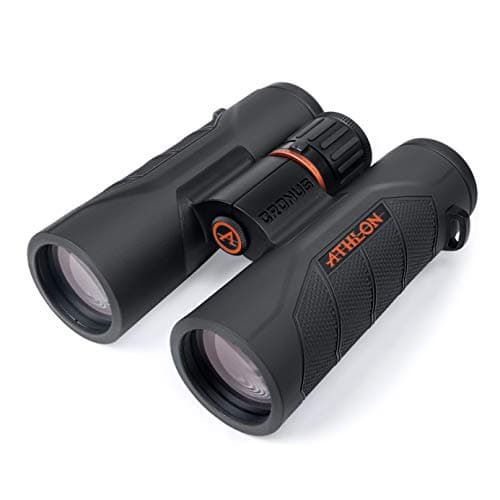 Athlon Cronus G2 UHD 10x4219.3 mm of eye relief - the most of any 10x42 we list - with 338 ft of field on ED/UHD glass and an ESP dielectric prism coating. | Best alternative if you wear glassesBest glass under $600 | 9.6out of 10 | |
| 3 | 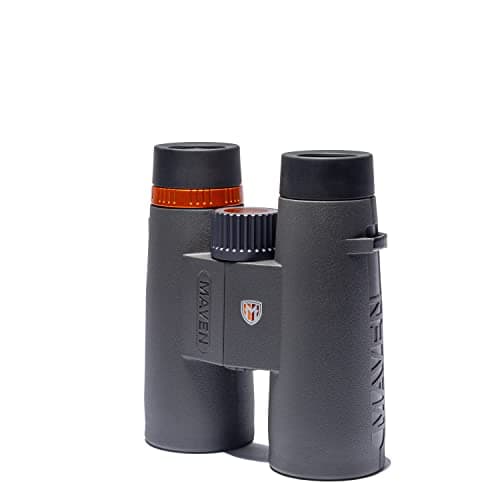 Maven C1 10x42ED glass and Maven's unconditional lifetime warranty at a price between the Monarch M7 and the Viper HD, because there is no dealer margin in it. | Best direct-sale alternativeThe thinking buyer's $475 | 9.4out of 10 | |
| 4 | 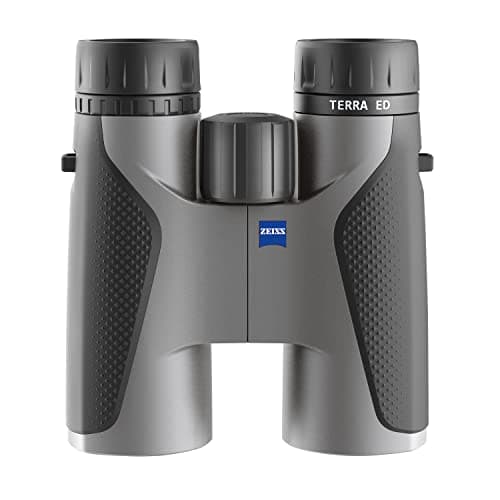 Zeiss Terra ED 10x4288 percent light transmission - a number almost nobody in this class publishes - on SCHOTT ED glass with Zeiss coatings, at 25.6 oz. | Best alternative with a published transmission figureEuropean glass on a budget | 9.2out of 10 | |
| 5 | 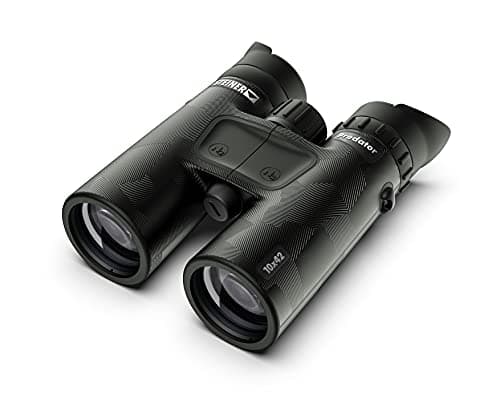 Steiner Predator 10x42Steiner's CAT coatings deliberately lift contrast in the reds and browns, which is a different answer to the same problem. | Best alternative for picking animals out of coverPicking animals out of brush | 9.1out of 10 | |
| 6 | 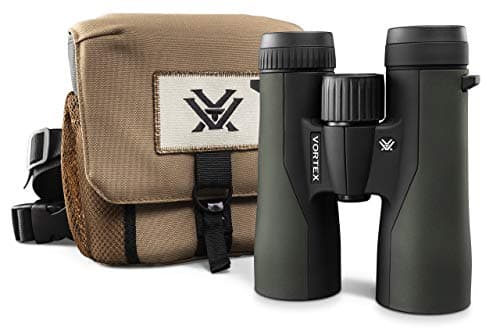 Vortex Crossfire HD 10x42325 ft of field, 23.0 oz and the same unconditional VIP warranty, for roughly a third of the Viper HD. | Best alternative if the price is the problemThe cheapest pair worth owning | 8.9out of 10 |
Prices are pulled live from Amazon and were last checked November 18, 2026; if a figure cannot be verified the button reads "Check price" instead. Scores are our editorial judgment against the published ranking criteria, on our published 8.4 to 9.8 recommendation scale. #ad How we earn.
The alternatives against the original
| Binocular | Field @ 1,000 yd | Eye relief | Weight | Transmission | Warranty |
|---|---|---|---|---|---|
| Vortex Viper HD 10x42 (the original) | 341 ft | 17.0 mm | 24.9 oz | not published | Unconditional, transferable |
| Nikon Monarch M7 10x42 | 362 ft | 16.5 mm | 24.0 oz | not published | Not transferable |
| Athlon Cronus G2 UHD 10x42 | 338 ft | 19.3 mm | 27.8 oz | not published | Lifetime, transferable |
| Maven C1 10x42 | not published | not published | not published | not published | Unconditional lifetime |
| Zeiss Terra ED 10x42 | 330 ft | 14.0 mm | 25.6 oz | 88 % | Limited |
| Steiner Predator 10x42 | not published | not published | not published | not published | Heritage warranty |
| Vortex Crossfire HD 10x42 | 325 ft | 15.0 mm | 23.0 oz | not published | Unconditional, transferable |
Only one maker on this page publishes a light-transmission figure, and only one publishes more field of view than the Viper HD. Two publish almost nothing - which is a comparison result in itself, not an oversight on our part.
Read down the eye-relief column and the spread is 14.0 to 19.3 mm - more than 5 mm between the best and worst in the same price class. For a hunter who glasses in spectacles that single column decides the purchase, and it is the one most product pages bury.
Picking by the reason you are looking
If you want more country in the circle, the Monarch M7 and its 362 ft is the answer, and it is lighter and usually cheaper too. The trade is a warranty that does not transfer.
If you glass in glasses, the Athlon Cronus G2 UHD's 19.3 mm is the most eye relief in the class and the single clearest reason on this page to buy something other than the Viper HD. The trade is 2.9 oz.
If you want a number you can hold a maker to, the Zeiss Terra ED's published 88 percent transmission is the only one here. The trade is 14.0 mm of eye relief, which rules it out for a lot of people.
If your problem is finding animals in cover rather than reading detail, the Steiner Predator's CAT coatings are a different approach rather than a better score. The trade is a non-neutral view you may not like.
If the price is the whole reason you are here, the Vortex Crossfire HD 10x42 keeps the warranty and most of the field for roughly a third of the money - and gives up low-light performance, which is the criterion that matters most at the hours you hunt. Are cheap binoculars any good is the honest version of that trade.
When the answer is still the Viper HD
It is worth saying plainly, because an alternatives page that cannot name the case for the original is not much use. If you want one binocular with no weak row, a warranty that will outlive you and transfer to whoever you give it to, and a dealer network that will take it back without an argument, the Viper HD remains the straightforward answer - and if you would rather have the reach than the alternatives, the Viper HD 12x50 publishes 288 ft and a 4.17 mm exit pupil in the same family.
Where it stops being the obvious answer is when one of the specialist rows above is the thing your hunting actually depends on. The full Viper HD 10x42 review sets out its own sheet, and the best 10x42 hunting binoculars ranks the whole format.
The picks in full
$549.95 21% off
Price as of November 18, 2026. #ad How we earn
Nikon Monarch M7 10x42
The M5 with a wider field and better coatings; the strongest argument against the Viper HD at a slightly lower price.
| Magnification | 10x |
|---|---|
| Objective lens | 42 mm |
| Eye relief | 16.5 mm |
| Field of view | 362 ft @ 1,000 yd |
| Real angular field of view | 6.9° |
| Apparent field of view | 62.2° |
| Close focus | 8.2 ft |
| Weight | 24.0 oz |
| Length | 5.6 in |
| Width | 5.1 in |
| Exit pupil (computed) | 4.2 mm |
| Twilight factor (computed) | 20.5 |
Specs verified 2026-10-05 from Nikon's published specification. Exit pupil and twilight factor are computed, not quoted.
What it does well
- Wider field of view than the M5 and most 10x42s at this price
- ED glass with improved multicoating
- Comfortable eye relief for glasses wearers
Where it gives ground
- No unconditional transferable warranty
- Focus wheel has more travel than some will like
Skip it if
Warranty matters more to you than optics - Vortex VIP is the better long-term bet.
How this score breaks down
- Low-light performance (weight 5)8.2
- Optical quality per dollar (weight 4)9.5
- Field of view (weight 3)10.0
- Eye relief (weight 3)8.3
- Weight and ergonomics (weight 2)9.6
- Warranty (weight 2)6.5
Criterion scores are on the 0-10 rubric scale. Their weighted mean is 8.7, which maps to 9.5 on our published recommendation scale of 8.4 to 9.8 - the band of products we are willing to recommend at all. The weights, the definitions and the mapping are all published, so any score here can be checked against our own rules. These are editorial judgments from published specifications, computed optical arithmetic and documented consensus.
If you are looking past the Viper HD, this is the first binocular to look at, and the reason is one published number. Nikon publishes 362 ft of field at 1,000 yd - a 6.9-degree real angular field and a 62.2-degree apparent field - against the Viper HD's 341 ft. That is 21 extra feet of country in the circle at every sweep, and field of view is the specification that most changes how quickly you find animals.
It also publishes 16.5 mm of eye relief, an 8.2 ft close focus, 24.0 oz of weight in a 5.6 by 5.1 in body, and ED glass. At 24.0 oz it is lighter than the Viper HD's 24.9 oz, and it typically sells for less. Across the four rows most buyers care about - field, weight, glass type and price - it matches or beats the thing it is an alternative to.
Good to know: Nikon's warranty is not transferable and is not the no-fault cover Vortex offers, which is the one row where the Viper HD clearly wins and the reason plenty of hunters stay with Vortex regardless. The focus wheel also has more travel than some people like. The Monarch M7 against the Viper HD directly is the head-to-head.
Price as of November 18, 2026. #ad How we earn
Athlon Cronus G2 UHD 10x42
19.3 mm of eye relief and 338 ft of field on ED/UHD glass with an ESP dielectric prism coating - the clearest value argument above $500.
| Magnification | 10x |
|---|---|
| Objective lens | 42 mm |
| Eye relief | 19.3 mm |
| Field of view | 338 ft @ 1,000 yds |
| Angular field of view | 6.5° |
| Close focus | 2 m / 6.6 ft |
| Interpupillary distance | 56-73 mm |
| Glass | Extra-low dispersion / UHD |
| Prism coating | ESP dielectric |
| Weight | 27.8 oz |
| Dimensions | 6.3" x 5.1" |
| Exit pupil (computed) | 4.2 mm |
| Twilight factor (computed) | 20.5 |
Specs verified 2026-11-09 from Athlon's published specification. Exit pupil and twilight factor are computed, not quoted.
What it does well
- 19.3 mm of eye relief, the longest of any 10x42 on this site
- 338 ft of field at 1,000 yd
- ED/UHD glass with Athlon's ESP dielectric prism coating
- 6.6 ft close focus
- Athlon's lifetime warranty
Where it gives ground
- 27.8 oz, heavier than the Viper HD and the Monarch M7
- Athlon's published table gives no prism type, exit-pupil or transmission figure
- Brand carries less weight on resale
Skip it if
You will only ever glass in good light. The money buys you edge-of-legal-light performance.
How this score breaks down
- Low-light performance (weight 5)8.6
- Optical quality per dollar (weight 4)9.4
- Field of view (weight 3)8.8
- Eye relief (weight 3)10.0
- Weight and ergonomics (weight 2)7.4
- Warranty (weight 2)9.0
Criterion scores are on the 0-10 rubric scale. Their weighted mean is 8.9, which maps to 9.6 on our published recommendation scale of 8.4 to 9.8 - the band of products we are willing to recommend at all. The weights, the definitions and the mapping are all published, so any score here can be checked against our own rules. These are editorial judgments from published specifications, computed optical arithmetic and documented consensus.
Eye relief is the specification that quietly decides whether a binocular works for a glasses wearer, and this is where the Cronus G2 UHD beats everything in the class. Athlon publishes 19.3 mm against the Viper HD's 17.0 mm and the Monarch M7's 16.5 mm. Below roughly 15 mm the field starts closing in behind spectacles; above 18 mm it essentially stops being a consideration, and only this binocular clears that line comfortably.
The rest of the sheet holds up: 338 ft of field at 1,000 yd (within 3 ft of the Viper HD), a 6.6 ft close focus, a 56-73 mm interpupillary range, extra-low-dispersion UHD glass, an ESP dielectric prism coating, and a lifetime transferable warranty that matches Vortex's VIP cover in shape. The dielectric coating is the same prism treatment the premium tier uses.
Good to know: 27.8 oz makes it the heaviest binocular on this page, nearly 3 oz over the Viper HD, which you notice on a harness across a full day. Athlon also publishes no prism type, exit-pupil or transmission figure, and the brand's resale value is weaker. The full Athlon line puts it in context.
Price as of November 18, 2026. #ad How we earn
Maven C1 10x42
The C series is Maven's value line: ED glass and the same warranty as the B series, at a price that sits between the Viper HD and the Monarch M7.
| Magnification | 10x |
|---|---|
| Objective lens | 42 mm |
| Exit pupil (computed) | 4.2 mm |
| Twilight factor (computed) | 20.5 |
Magnification and objective are the manufacturer's own model designation; exit pupil and twilight factor are computed from them. We could not machine-read Maven's spec page, so the remaining published figures are not listed rather than guessed.
What it does well
- ED glass with Maven's lifetime warranty
- Lighter than the B1.2
- Direct pricing means no dealer markup
Where it gives ground
- Not as bright at the edges as the B1.2
- Availability on Amazon is inconsistent
Skip it if
You need it this week - direct-sale stock fluctuates.
How this score breaks down
- Low-light performance (weight 5)8.5
- Optical quality per dollar (weight 4)8.9
- Field of view (weight 3)8.0
- Eye relief (weight 3)8.4
- Weight and ergonomics (weight 2)8.0
- Warranty (weight 2)9.5
Criterion scores are on the 0-10 rubric scale. Their weighted mean is 8.5, which maps to 9.4 on our published recommendation scale of 8.4 to 9.8 - the band of products we are willing to recommend at all. The weights, the definitions and the mapping are all published, so any score here can be checked against our own rules. These are editorial judgments from published specifications, computed optical arithmetic and documented consensus.
Maven's C series is the company's value line, and the pitch is structural rather than optical: Maven sells direct, skips the dealer margin, and puts the difference into the glass. The C1 10x42 uses ED glass and carries the same unconditional lifetime warranty as Maven's flagship B series, at a price that lands between the Monarch M7 and the Viper HD.
Computed from the format, it delivers the same 4.2 mm exit pupil and 20.5 twilight factor as every other 10x42 here - which is the point worth repeating on a page like this. Nothing in this price class is brighter than anything else in it; what separates them is correction, coatings, field and eye relief. The C1's case is that you are paying for glass rather than distribution.
Good to know: Maven publishes less than the Japanese brands - there is no field-of-view or eye-relief figure in the spec we have on file - so it is harder to compare on paper than the Monarch M7. It is also not as bright at the edges as Maven's own B1.2, and because Maven sells direct, Amazon stock is inconsistent. Maven vs Vortex covers the brand trade in full.
Price as of November 18, 2026. #ad How we earn
Zeiss Terra ED 10x42
Zeiss coatings and SCHOTT ED glass in the brand's entry line, which is the cheapest way to get a Zeiss view.
| Magnification | 10 x |
|---|---|
| Objective lens | 42 mm |
| Eye relief (exit pupil distance) | 14.0 mm |
| Field of view | 110 m (330 ft) @ 1,000 |
| Angular field of view | 60° |
| Close focus | 1.6 m (5.3 ft) |
| Light transmission | 88 % |
| Weight | 725 g (25.6 oz) |
| Length | 142 mm (5.6 in) |
| Interpupillary distance | 58 - 76 mm |
| Exit pupil (computed) | 4.2 mm |
| Twilight factor (published and computed) | 20.5 |
Specs verified 2026-10-05 from Zeiss's published specification. Exit pupil and twilight factor are computed, not quoted.
What it does well
- SCHOTT ED glass with Zeiss multicoating
- Compact and light for a 42 mm
- Excellent contrast in flat light
Where it gives ground
- Built in China, not Germany, and priced accordingly
- Narrower field than the Japanese competition
- 14.0 mm of eye relief is the shortest in this price class
Skip it if
Field of view is your priority - the Monarch M7 gives you more of it.
How this score breaks down
- Low-light performance (weight 5)8.4
- Optical quality per dollar (weight 4)9.0
- Field of view (weight 3)7.8
- Eye relief (weight 3)6.4
- Weight and ergonomics (weight 2)9.2
- Warranty (weight 2)7.0
Criterion scores are on the 0-10 rubric scale. Their weighted mean is 8.1, which maps to 9.2 on our published recommendation scale of 8.4 to 9.8 - the band of products we are willing to recommend at all. The weights, the definitions and the mapping are all published, so any score here can be checked against our own rules. These are editorial judgments from published specifications, computed optical arithmetic and documented consensus.
This is the cheapest way to get a Zeiss view, and it is the only binocular on this page whose maker publishes a light-transmission figure: 88 percent. That matters because transmission is the specification everyone talks about at last light and almost nobody states. Zeiss also publishes 330 ft of field at 1,000 yd (110 m), a 60-degree apparent field, a 5.3 ft close focus, a 58-76 mm interpupillary range and 25.6 oz, on SCHOTT ED glass with Zeiss's own coatings.
The 5.3 ft close focus is the shortest here by a wide margin, which makes it the one binocular on this page that is also genuinely useful for anything near you. If your decision hinges on a number you can hold the maker to rather than on a coating name, this is the sheet to read.
Good to know: 14.0 mm of eye relief is the shortest in this price class and a real problem if you glass in glasses - the Athlon above it gives 5.3 mm more. The 330 ft field is narrower than the Japanese competition, and the Terra line is built in China rather than Germany and priced accordingly. The full Zeiss Terra ED review is the detail.
Price as of November 18, 2026. #ad How we earn
Steiner Predator 10x42
Steiner's CAT coatings deliberately boost contrast in the reds and browns, which genuinely helps separate an animal from cover.
| Magnification | 10x |
|---|---|
| Objective lens | 42 mm |
| Exit pupil (computed) | 4.2 mm |
| Twilight factor (computed) | 20.5 |
Magnification and objective are the manufacturer's own model designation; exit pupil and twilight factor are computed from them. We could not machine-read Steiner's spec page, so the remaining published figures are not listed rather than guessed.
What it does well
- CAT coatings increase contrast against brown and gray backgrounds
- Rugged Makrolon housing
- Long eye relief
Where it gives ground
- The color cast is divisive - it is not a neutral view
- Heavier than most in the class
Skip it if
You want a neutral, natural color rendition.
How this score breaks down
- Low-light performance (weight 5)8.0
- Optical quality per dollar (weight 4)7.8
- Field of view (weight 3)7.5
- Eye relief (weight 3)8.3
- Weight and ergonomics (weight 2)7.0
- Warranty (weight 2)8.0
Criterion scores are on the 0-10 rubric scale. Their weighted mean is 7.8, which maps to 9.1 on our published recommendation scale of 8.4 to 9.8 - the band of products we are willing to recommend at all. The weights, the definitions and the mapping are all published, so any score here can be checked against our own rules. These are editorial judgments from published specifications, computed optical arithmetic and documented consensus.
Every other binocular on this page tries to show you a neutral, accurate image and leave the interpreting to you. Steiner's Predator does something deliberately different: the CAT (Color Adjusted Transmission) coatings boost contrast in the red and brown end of the spectrum, which is exactly where a deer-colored animal sits against green and gray cover. For a hunter whose problem is separating a bedded animal from brush rather than reading antler detail at distance, that is a genuinely different tool.
It is the same 10x42 format as everything else here, so it computes to the same 4.2 mm exit pupil and 20.5 twilight factor. The difference is entirely in what the coatings do with the light they pass, which is why this is the one alternative on the page that is not trying to beat the Viper HD at its own game.
Good to know: the color cast is divisive. It is not a neutral view, and if you also use your binocular for anything other than finding game you may dislike what it does to the image - this is the pick people either love or return. It is also heavier than most in the class, and Steiner publishes less than Nikon or Zeiss do.
Price as of November 18, 2026. #ad How we earn
Vortex Crossfire HD 10x42
The entry point: HD glass, 325 ft of field, and the same VIP warranty, for roughly what a decent pair of boots costs.
| Magnification | 10x |
|---|---|
| Objective lens | 42 mm |
| Eye relief | 15.0mm |
| Field of view | 325' @ 1000 yds |
| Angular field of view | 6.2º |
| Close focus | 6.0' |
| Weight | 23.0 oz. |
| Height | 6.0" |
| Width | 5.2" |
| Exit pupil (computed) | 4.2 mm |
| Twilight factor (computed) | 20.5 |
Specs verified 2026-10-05 from Vortex's published specification. Exit pupil and twilight factor are computed, not quoted.
What it does well
- Cheapest Vortex with genuine HD glass
- 325 ft field of view is respectable at this price
- VIP warranty is identical to the $1,800 Razor
Where it gives ground
- Noticeably softer at the edges than the Diamondback HD
- Low-light performance is where the savings show
Skip it if
Your complaint about your current pair is that it grays out early - this will not fix that.
How this score breaks down
- Low-light performance (weight 5)5.5
- Optical quality per dollar (weight 4)9.1
- Field of view (weight 3)7.5
- Eye relief (weight 3)6.5
- Weight and ergonomics (weight 2)8.0
- Warranty (weight 2)10.0
Criterion scores are on the 0-10 rubric scale. Their weighted mean is 7.5, which maps to 8.9 on our published recommendation scale of 8.4 to 9.8 - the band of products we are willing to recommend at all. The weights, the definitions and the mapping are all published, so any score here can be checked against our own rules. These are editorial judgments from published specifications, computed optical arithmetic and documented consensus.
Plenty of people searching for a Viper HD alternative are not looking for a different brand - they are looking for a smaller number. This is the budget pick on the page, and it keeps the one thing that makes a Vortex a Vortex: the VIP warranty is unlimited, unconditional and transferable, identical to the cover on the Viper HD and on the $1,799 Razor UHD.
Vortex publishes 325 ft of field at 1,000 yd (6.2 degrees), 15.0 mm of eye relief, a 6.0 ft close focus and 23.0 oz - which makes it the lightest binocular on this page. 325 ft is only 16 ft narrower than the Viper HD, which is a smaller gap than the price difference suggests.
Good to know: this is where the savings genuinely show. It is noticeably softer at the edges than the Diamondback HD above it, and low-light performance is the criterion that separates it from everything else here - the exit pupil arithmetic is identical, but the coatings and glass correction are not. Buy it if the budget is fixed, not if you glass hard at dawn. The best budget hunting binoculars is the wider tier.
Our recommendation
If you take one thing from this page, take this.
Nikon Monarch M7 10x42
Best overall alternative
362 ft of field at 1,000 yd - the widest 10x42 we list - and 24.0 oz, which is nearly an ounce lighter than the Viper HD.
$549.95 21% off
Athlon Cronus G2 UHD 10x42
Best alternative if you wear glasses
19.3 mm of eye relief - the most of any 10x42 we list - with 338 ft of field on ED/UHD glass and an ESP dielectric prism coating.
Prices are pulled live and shown on each button. #ad How we earn.
Questions people actually ask
What is the best alternative to the Vortex Viper HD?
Is there a binocular with more eye relief than the Viper HD?
Is anything in this price class brighter than the Viper HD?
What is a cheaper alternative to the Vortex Viper HD?
Should I buy the Viper HD 10x42 or the 12x50?
Sources
- Vortex Viper HD 10x42 - published specifications - read 2026-10-05
- Nikon Monarch M7 10x42 - published specifications - read 2026-10-05
- Athlon Cronus G2 UHD 10x42 - published specifications - read 2026-11-09
- ZEISS Terra ED 10x42 - published technical data, including 88 % light transmission - read 2026-10-05
- Vortex Crossfire HD 10x42 - published specifications - read 2026-10-05
- Maven C1 10x42 - product page - read 2026-10-05
- Steiner Predator 10x42 - product page - read 2026-10-05
Read next
Brands: want your product tested? For Brands.