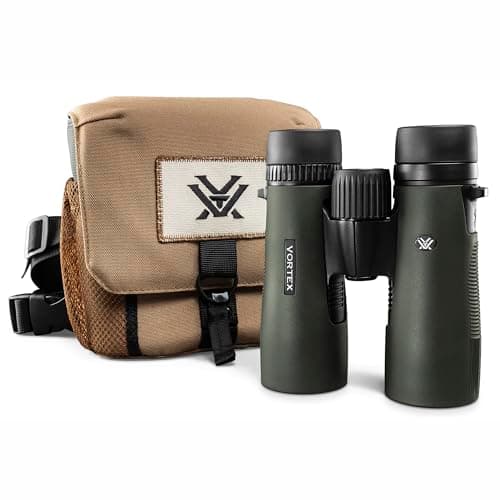
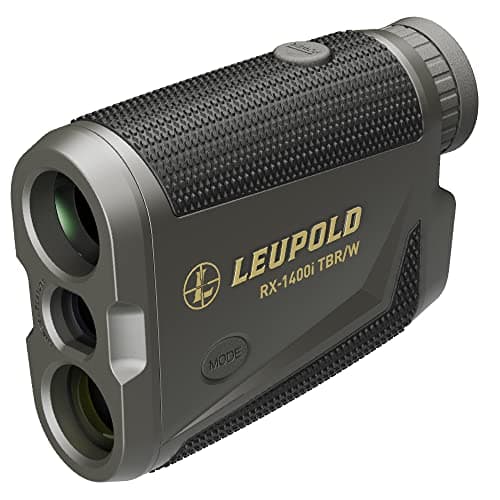
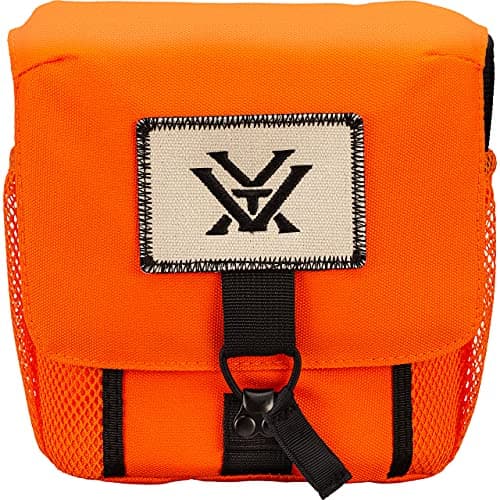
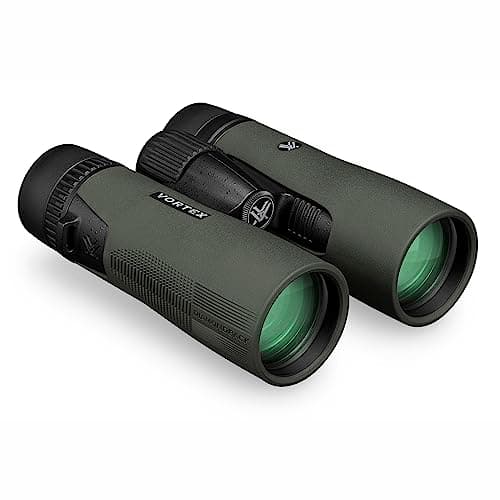
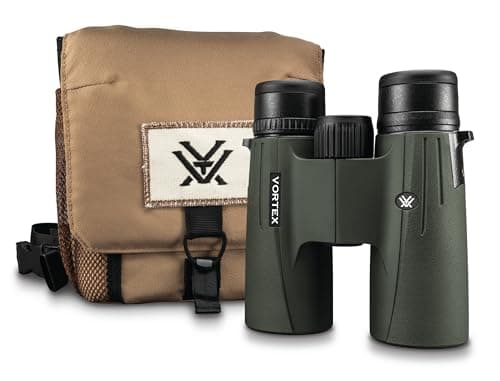
Our top three from "A Complete Hunting Optics Kit For $500", with the live price. Every figure comes from the Amazon Creators API and disappears on its own if it goes stale.
We earn a commission if you buy through the links on this page, at no extra cost to you. It never changes which products we pick or how we rank them - read the full disclosure.
TBR/W gives you the true horizontal distance and a holdover value in the same readout, which is the single most useful feature on a hunting rangefinder.
Most optics advice treats each item in isolation: here are the best binoculars, here are the best rangefinders. That is not how anyone actually spends money. You have a number in your head - $250, $500, $1,000 - and the real question is how to split it so the whole kit works.
These guides answer that question. They are deliberately cross-category, because the most common way to waste money on optics is to put all of it into one item: a $900 binocular swinging on a neck strap, or an $800 spotting scope on a $60 tripod that lets the image shake.
The order to buy in
Binoculars. They do the most work and you will use them every minute of every hunt.
A harness. $29 to $65. It is the difference between carrying the binoculars and leaving them behind.
A rangefinder, if you bowhunt. For archery it is not optional; the yardage decides the shot.
A tripod, if you glass open country. At 12x and above the tripod is part of the optic.
A spotting scope, last. Only when you genuinely need to judge animals past about 600 yards.
What each budget actually builds
Three kits, three budgets
Budget
A sensible split
What it does well
$250
A $150-200 HD binocular plus a $29 harness.
Everything inside 300 yards in reasonable light. Genuinely enough for most whitetail hunting.
$500
A $230-250 binocular, a $200 angle-compensating rangefinder, and a $29 harness.
Adds yardage you can trust, which matters more than the next step in glass quality.
$1,000
A $450-500 ED-glass binocular, a $200 rangefinder, a $65 harness, and a $150-200 tripod.
Last light, trusted yardage, and the ability to sit behind glass for hours. A complete western kit.
Every split above is deliberately unbalanced towards the binocular, because that is the optic you look through all day.
Start here
If you are upgrading from a cheap pair and want one page that explains the whole decision, read upgrading from cheap binoculars - it is the longest and most complete thing on this site. If you have a number in mind, go straight to the kit for $250, $500 or $1,000.
If you are buying for someone else, the gift guide is written for the person who does not hunt and needs to not get it wrong, and the under-$100 list covers the small things an experienced hunter actually wants. And if a spec term is in your way, the glossary defines every one we use, with the arithmetic where there is any.
What each name is actually good at - warranty, sales model, defended price band.
Guides: questions people actually ask
What hunting optics do I actually need to start?
Binoculars and a harness. That is it. A rangefinder comes next if you bowhunt, a tripod if you glass open country, and a spotting scope only when judging animals at long range becomes the limiting factor. How to build the kit in order.
Should I buy one good optic or two decent ones?
Two decent ones, almost always. A $450 binocular with a $200 rangefinder beats a $650 binocular with no yardage, because knowing the distance changes shot decisions and the last increment of glass quality does not. The $500 kit page works through it.
Are expensive binoculars worth it?
The jump from $120 to $250 is enormous. From $250 to $500 is real and worth it if last light matters to you. From $500 to $1,500 is small, and for most hunting it is not worth it. We make the case honestly here.
What is the single best upgrade under $50?
A harness, if you do not have one. Then lens wipes made for coated optics, because the alternative is a shirt tail and permanent scratches. Both are in the under-$100 gift list.