We earn a commission if you buy through the links on this page, at no extra cost to you. It never changes which products we pick or how we rank them - read the full disclosure.
Our top pick
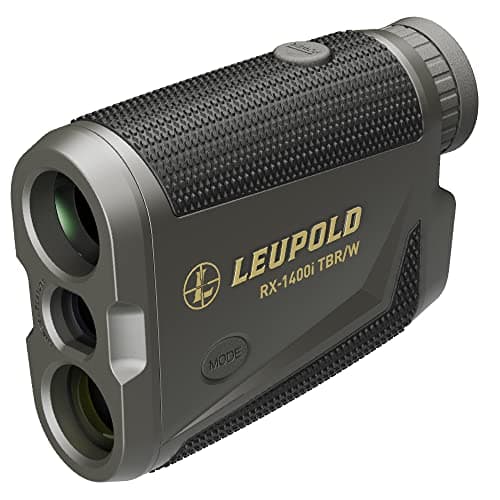
Leupold RX-1400i TBR/W Gen 2
TBR/W gives you the true horizontal distance and a holdover value in the same readout, which is the single most useful feature on a hunting rangefinder.
Price as of November 12, 2026. #ad How we earn
The best archery rangefinder under $200 is the Leupold RX-1400i TBR/W Gen 2: it reports the true horizontal distance to the animal rather than the slope distance, and it does it behind a red display that stays readable in timber. The Vortex Triumph HD 850 does the same geometry for less, in a lighter body with a plainer screen. Those are the two units under $200 with a live listing, and everything else at this price compromises on the geometry, the display or the warranty.
Under $200 is an unusually good place to shop for a bow rangefinder, because the single feature archery needs most - angle compensation - stopped being a premium item several years ago. What is still premium is arrow-specific ballistics: a unit that takes your arrow weight and speed and returns a pin-matched number. That costs more than $200, and this page is about whether you need it.
Quick picks
Ranked by the criteria published on how we review. Tap any row for the full write-up, or go straight to the current price.
| # | Product | Best for | Score | Price |
|---|---|---|---|---|
| 1 | Leupold RX-1400i TBR/W Gen 2TBR/W returns the true horizontal distance plus a holdover value, behind a red OLED display that stays readable in timber. | Best archery rangefinder under $200Best rangefinder under $250 | 9.6out of 10 | |
| 2 | 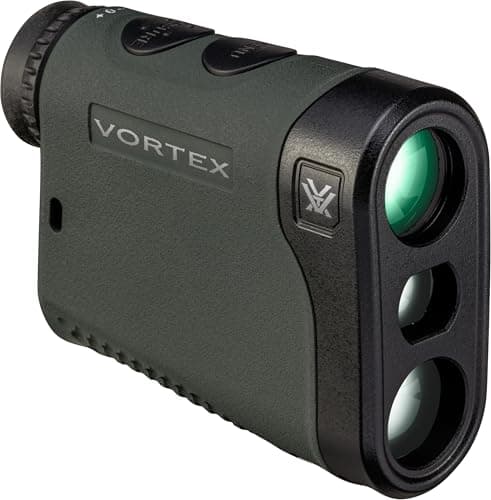 Vortex Triumph HD 850HCD angle compensation and plus or minus 0.5 yd inside 100 yd - which is the band an arrow actually flies in. | Best value below $200Best value entry rangefinder | 9.1out of 10 |
Prices are pulled live from Amazon and were last checked November 12, 2026; if a figure cannot be verified the button reads "Check price" instead. Scores are our editorial judgment against the published ranking criteria, on our published 8.4 to 9.8 recommendation scale. #ad How we earn.
What to look for in an archery rangefinder under $200
Four things, in this order. Everything else on a spec sheet is noise at this price.
- Angle compensation, by any name. Leupold calls it TBR, Vortex calls it HCD, Bushnell calls it ARC. All three report the horizontal distance an arrow actually travels instead of the line-of-sight distance the laser measured. From an elevated stand this is the difference between a lung hit and a liver hit. The mechanics are in what angle compensation is.
- A display you can read in timber. An illuminated red readout costs a little more and is worth it. Black LCD numerals against a dark deer in a dark wood are the most common complaint about cheap rangefinders.
- Close-range accuracy, not maximum range. A unit advertised to 1,400 yards is being advertised on a reflective target. What matters for archery is whether it locks onto a deer at 22 yards without hunting, and every unit here does.
- Weight and one-hand operation. You will range with your bow in the other hand. Four to six ounces, one button, no menu diving.
Price as of November 12, 2026. #ad How we earn
Leupold RX-1400i TBR/W Gen 2
TBR/W gives you the true horizontal distance and a holdover value in the same readout, which is the single most useful feature on a hunting rangefinder.
| Magnification | 5x |
|---|---|
| Objective lens | 21 mm |
| Eye relief | 18.3 mm |
| Field of view | 368 ft @ 1,000 yd |
| Angular field of view | 7º |
| Max range, reflective | 1,400 yd |
| Max range, trees | 1,200 yd |
| Max range, deer | 900 yd |
| Minimum range | 6 yd |
| Accuracy | +/- 0.5 yd to 125 yd; +/- 2 yd to 1,000 yd; +/- 0.5 % beyond |
| Display | Red TOLED, adjustable brightness |
| Ranging modes | TBR/W, Bow with Flightpath, Line of Sight |
| Battery | CR2, approx. 3,000 actuations |
| Weight | 5.1 oz |
| Dimensions (L x W x H) | 4 x 1.4 x 3 in |
| Laser classification | Class 3R |
Specs verified 2026-10-26 from Leupold's published specification. Exit pupil and twilight factor are computed, not quoted.
What it does well
- TBR/W reports true ballistic range, not line of sight
- Fast, legible red OLED display in low light
- Compact enough for a harness pouch
Where it gives ground
- Stated ranges assume reflective targets, not deer hide - Leupold publishes 1,400 yd reflective but only 900 yd on deer
- No bluetooth or ballistic app integration
- Accuracy loosens to plus or minus 2 yd out at 1,000 yd
Skip it if
You need ranges past 1,000 yards on game - this is not that unit.
How this score breaks down
- Ranging accuracy and range on game (weight 5)8.5
- Angle compensation implementation (weight 5)9.5
- Display legibility in low light (weight 3)9.0
- Speed and scan mode (weight 3)8.5
- One-handed ergonomics (weight 2)9.0
Criterion scores are on the 0-10 rubric scale. Their weighted mean is 8.9, which maps to 9.6 on our published recommendation scale of 8.4 to 9.8 - the band of products we are willing to recommend at all. The weights, the definitions and the mapping are all published, so any score here can be checked against our own rules. These are editorial judgments from published specifications, computed optical arithmetic and documented consensus.
This is the pick, and the reason is TBR/W. From a treestand the distance your arrow actually covers is the horizontal leg of the triangle, not the line of sight you are looking down, and TBR/W reports that corrected number alongside a holdover value in the same readout. Bow mode with Flightpath is included, which shows whether the arrow's apex clears the branch between you and the animal - the problem that is invisible through any other rangefinder.
Leupold publishes 1,400 yd reflective, 1,200 yd on trees and 900 yd on deer, accuracy of plus or minus 0.5 yd inside 125 yd, 368 ft of field at 1,000 yd, 18.3 mm of eye relief, a red TOLED display with adjustable brightness, roughly 3,000 actuations on a CR2, and 5.1 oz in a 4 by 1.4 by 3 in body. For a bowhunter every one of those numbers is comfortably more than the job needs, which is the point: nothing on this page will be the reason you miss.
Good to know: there is no arrow-specific ballistics here. You get a corrected horizontal distance, not a pin-matched holdover computed from your arrow's weight and speed - that is what the tier above does. The best archery rangefinder with angle compensation covers the units that go that far.
Price as of November 12, 2026. #ad How we earn
Vortex Triumph HD 850
The cheapest way onto the site: HCD angle compensation, a published 350 yd rating on deer and the VIP lifetime warranty, in a 4.6 oz body.
| Magnification | 5x |
|---|---|
| Objective lens | 21 mm |
| Optical system | HD, fully multi-coated |
| Eye relief | 13 mm |
| Field of view | 335 ft @ 1,000 yd |
| Angular field of view | 6.4 degrees |
| Max range, reflective | 850 yd |
| Max range, trees | 500 yd |
| Max range, deer | 350 yd |
| Minimum range | 6 yd |
| Accuracy, to 100 yd | +/- 0.5 yd |
| Accuracy, 100-850 yd | +/- 2 yd |
| Angle compensation | HCD; line of sight and scan modes; reads to +/- 89 degrees |
| Target modes | Normal, first, last |
| Display | Black LCD |
| Battery | CR2, 4,000+ range cycles |
| Weight | 4.6 oz (130 g) |
| Dimensions (L x W x H) | 3.8 x 3.1 x 1.4 in |
| Sealing | Waterproof and shockproof |
| Warranty | Vortex VIP lifetime, transferable |
Specs verified 2026-11-04 from Vortex's published specification. Exit pupil and twilight factor are computed, not quoted.
What it does well
- HCD angle compensation included, which most units at this price leave out
- Published figures for all three target types, including 350 yd on deer
- Plus or minus 0.5 yd inside 100 yd - the tightest short-range figure of any entry unit here
- 4.6 oz, the lightest rangefinder on the site
- Vortex VIP lifetime warranty, transferable and no-fault
- Waterproof and shockproof, with 4,000+ range cycles on one CR2
Where it gives ground
- 350 yd on deer is a genuine ceiling - it is not an open-country unit
- A black LCD rather than an illuminated display, so it is harder to read against dark timber
- 13 mm of eye relief is short if you range in glasses
Skip it if
You hunt open country past about 350 yards. Buy the RX-1400i TBR/W Gen 2 instead.
How this score breaks down
- Ranging accuracy and range on game (weight 5)7.0
- Angle compensation implementation (weight 5)9.0
- Display legibility in low light (weight 3)6.0
- Speed and scan mode (weight 3)7.5
- One-handed ergonomics (weight 2)9.5
Criterion scores are on the 0-10 rubric scale. Their weighted mean is 7.8, which maps to 9.1 on our published recommendation scale of 8.4 to 9.8 - the band of products we are willing to recommend at all. The weights, the definitions and the mapping are all published, so any score here can be checked against our own rules. These are editorial judgments from published specifications, computed optical arithmetic and documented consensus.
Archery is the one discipline where the cheapest credible rangefinder makes complete sense, because the distances are short and this unit is at its most accurate exactly there. Vortex publishes plus or minus 0.5 yd inside 100 yd, which is the tightest short-range figure at this price and covers every distance an arrow is ever launched at.
HCD angle compensation is included and reads to plus or minus 89 degrees, which is the feature that actually matters from an elevated stand. The body is waterproof and shockproof, it weighs 4.6 oz, and it carries the VIP lifetime warranty. Good to know: the published ceiling is 350 yd on deer, so this is a bow and whitetail unit rather than the one for elk country.
How the picks compare
| Unit | Angle-compensated distance | Illuminated display | Published weight | Arrow ballistics |
|---|---|---|---|---|
| Leupold RX-1400i TBR/W Gen 2 | Yes - TBR/W, plus holdover | Yes - red OLED | Not published by Leupold | No |
| Vortex Triumph HD 850 | Yes - HCD, to +/- 89 degrees | No | 350 yd on deer | VIP lifetime |
Specification details are read from each manufacturer's published product page; where a figure is not published we say so rather than estimate it.
Is $200 enough for a bow rangefinder?
For a whitetail hunter, yes, comfortably. Your shot window is 20 to 45 yards, your sight is pin-based, and the only correction that changes anything is the horizontal distance. A $200 unit delivers that exactly as accurately as an $800 one, because the trigonometry does not get better with money - only the ballistics layered on top of it does.
Where $200 starts to bind is western archery, where you may range a bull at 90 yards to decide whether to close, and where arrow drop at the top of your range becomes a real variable. That is the case for the RX-FullDraw 5, which takes your arrow weight and speed and returns a pin-matched number, and for the broader comparison in best archery rangefinders with angle compensation.
What we would actually buy
Buy the RX-1400i TBR/W Gen 2. The illuminated display is the feature you will notice every single time you use it, and at this price it is the only unit here that has one. If you would rather spend the difference on arrows, the Triumph HD 850 does the same geometry for roughly half the money, in a lighter package with a plainer display. If your budget is genuinely under $100, see best hunting rangefinders under $100 - the honest answer there is shorter than you would expect.
Our recommendation
If you take one thing from this page, take this.
Leupold RX-1400i TBR/W Gen 2
Best archery rangefinder under $200
TBR/W returns the true horizontal distance plus a holdover value, behind a red OLED display that stays readable in timber.
Vortex Triumph HD 850
Best value below $200
HCD angle compensation and plus or minus 0.5 yd inside 100 yd - which is the band an arrow actually flies in.
Prices are pulled live and shown on each button. #ad How we earn.