We earn a commission if you buy through the links on this page, at no extra cost to you. It never changes which products we pick or how we rank them - read the full disclosure.
Our top pick
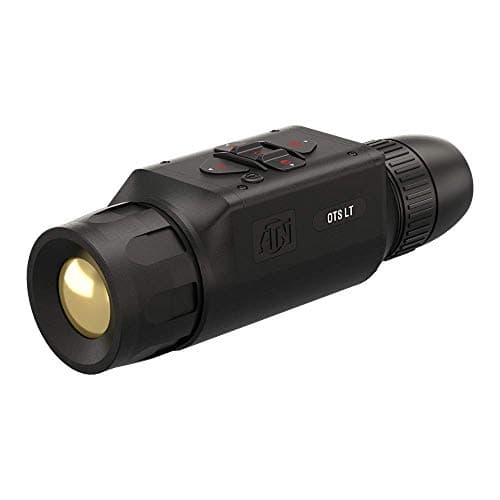
ATN OTS LT 320 Thermal Monocular
320 resolution makes the difference between seeing that something is warm and seeing what it is, which is the whole argument for spending more on thermal.
Price as of October 5, 2026. #ad How we earn
A thermal monocular is not a low-light optic, it is a heat-detection device. That distinction explains everything about what it does well and what it does badly.
What thermal does that glass cannot
Conventional optics amplify existing light. In total darkness there is nothing to amplify, which is why the best binocular in the world shows you nothing at midnight. Thermal detects emitted infrared radiation - heat - so it works in complete darkness, through light fog, and against backgrounds where a visually camouflaged animal is invisible.
The practical consequences: you find animals in the dark that no glass would show you, you spot animals in cover that are visually hidden, and - the use almost everyone finds most valuable - you recover wounded animals after dark by following a heat trail that a flashlight would walk past.
Resolution is the specification that matters
| Sensor | What you get | Realistic use |
|---|---|---|
| 160 x 120 | A warm blob | Detecting presence at short range |
| 256 x 192 | A warm shape with rough outline | Detection, and recovery of downed animals |
| 320 x 240 | Enough outline to identify species, usually | Detection plus the beginnings of identification |
| 384 x 288 and up | Clear species identification, some behavior | Serious thermal hunting where legal |
| 640 x 480 | Detailed identification at distance | Professional and high-end use |
These are judgments about what each resolution class delivers in practice, not measurements we made. The step from 256 to 320 is the one most buyers notice, because it is roughly where identification becomes possible.
Everything else on a thermal spec sheet matters less than this number. Detection range claims, magnification, refresh rate and color palettes are all secondary to whether the sensor has enough pixels to resolve an outline.
Quick picks
Ranked by the criteria published on how we review. Tap any row for the full write-up, or go straight to the current price.
| # | Product | Best for | Score | Price |
|---|---|---|---|---|
| 1 | ATN OTS LT 320 Thermal MonocularA 320 sensor, which is where identification starts, about $1,699. | Best thermal monocularHigher-resolution thermal | 8.2out of 10 | |
| 2 | 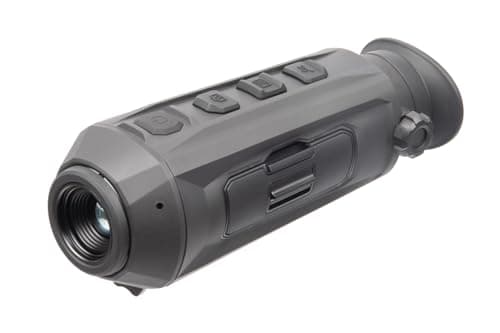 AGM Taipan TM10-256 Thermal MonocularA 256 sensor for detection and recovery, about $795. | Best entry thermalEntry thermal scanning | 8.3out of 10 | |
| 3 | 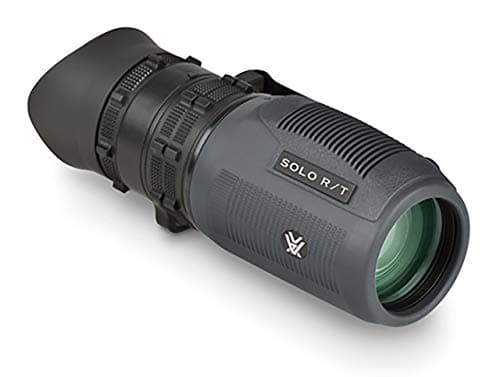 Vortex Solo R/T 8x364.5 mm exit pupil, 18.0 mm eye relief, about $149. | The daytime companionRanging reticle in a pocket | 8.6out of 10 |
Prices are pulled live from Amazon and were last checked October 5, 2026; if a figure cannot be verified the button reads "Check price" instead. Scores are our editorial judgment against the published ranking criteria, not a test result. #ad How we earn.
What thermal does badly
- Daylight detail. In daylight a $149 conventional monocular resolves far more than a $1,699 thermal. Thermal does not replace glass, it supplements it.
- Judging an animal. You cannot assess antler quality on a heat signature. For that you need conventional optics and light.
- Fine terrain reading. Thermal flattens the world into temperature. Navigating with it is disorienting.
- Battery life. A thermal unit draws real power. Carry spares and expect hours rather than days.
- Rain and heavy fog. Water absorbs infrared, so performance degrades substantially in wet conditions.
The recovery case, which is the strongest one
If you are uncertain whether to spend this money, the use that justifies it most often is recovering a wounded animal after dark. A body on the ground stays warmer than its surroundings for hours and shows clearly on even a 256 sensor. Tracking a blood trail with a flashlight through brush is slow and often fails; sweeping a thermal across the same ground usually does not.
That use also tends to be the least regulatory-constrained, because it is recovery rather than hunting. Confirm that for your own state - do not take a general statement on a website as the answer.
The picks in detail
Price as of October 5, 2026. #ad How we earn
ATN OTS LT 320 Thermal Monocular
320 resolution makes the difference between seeing that something is warm and seeing what it is, which is the whole argument for spending more on thermal.
Magnification and objective are the manufacturer's own model designation; exit pupil and twilight factor are computed from them. We could not machine-read ATN's spec page, so the remaining published figures are not listed rather than guessed.
What it does well
- 320 sensor gives usable identification, not just detection
- Long battery life for a thermal
- Video recording onboard
Where it gives ground
- Expensive relative to any daytime optic
- Legality for hunting varies by state and species
Skip it if
You only need to find a downed animal - the cheaper 256 unit does that.
How this score breaks down
- Low-light performance (weight 4)9.5
- Size and weight (weight 4)7.5
- Optical quality per dollar (weight 4)8.0
- Eye relief (weight 2)7.0
- Build and sealing (weight 2)8.5
Weights and definitions are published on how we review. These are editorial judgments from published specs and documented consensus, not test results.
320 pixels across is the threshold where thermal stops telling you only that something is warm and starts telling you roughly what it is. Below that, detection; at and above it, the beginnings of identification. That distinction is worth more than any other specification in this category.
Onboard video recording is genuinely useful for recovery - showing someone where a wounded animal went is far easier with a clip than a description.
Price as of October 5, 2026. #ad How we earn
AGM Taipan TM10-256 Thermal Monocular
A 256-resolution thermal monocular for scanning: it finds animals in the dark that no glass can, and resolves nothing in daylight that glass cannot.
Magnification and objective are the manufacturer's own model designation; exit pupil and twilight factor are computed from them. We could not machine-read AGM's spec page, so the remaining published figures are not listed rather than guessed.
What it does well
- Detects heat signatures in total darkness
- Pocketable for a thermal
- Useful for recovering animals after dark
Where it gives ground
- 256 resolution is detection, not identification
- Check your state's regulations before hunting with it
Skip it if
You expect it to replace daytime glass. It does a different job.
How this score breaks down
- Low-light performance (weight 4)8.5
- Size and weight (weight 4)8.5
- Optical quality per dollar (weight 4)8.5
- Eye relief (weight 2)7.0
- Build and sealing (weight 2)8.0
Weights and definitions are published on how we review. These are editorial judgments from published specs and documented consensus, not test results.
256 pixels is detection rather than identification. For finding a downed animal after dark - which is the use case that does not run into most regulatory issues - it does the job well and costs less than half the 320 unit.
Price as of October 5, 2026. #ad How we earn
Vortex Solo R/T 8x36
A 4.5 mm exit pupil, 18 mm of eye relief and an MRAD ranging reticle in a unit that weighs a third of a binocular.
| Magnification | 8x |
|---|---|
| Objective lens | 36 mm |
| Eye relief | 18.0mm |
| Field of view | 393' @ 1000 yds |
| Angular field of view | 7.5º |
| Close focus | 16.4' |
| Weight | 9.7 oz. |
| Length | 4.9" |
| Exit pupil (computed) | 4.5 mm |
| Twilight factor (computed) | 17 |
Specs verified 2026-10-05 from Vortex's published specification. Exit pupil and twilight factor are computed, not quoted.
What it does well
- R/T ranging reticle estimates distance without batteries
- 18.0 mm eye relief, verified in Vortex's published specs
- Half the bulk of binoculars
Where it gives ground
- One eye tires faster than two over a long sit
- No depth perception, which matters in cover
Skip it if
You glass for more than a few minutes at a time.
How this score breaks down
- Low-light performance (weight 4)7.5
- Size and weight (weight 4)8.5
- Optical quality per dollar (weight 4)9.0
- Eye relief (weight 2)9.5
- Build and sealing (weight 2)9.0
Weights and definitions are published on how we review. These are editorial judgments from published specs and documented consensus, not test results.
Included because thermal does not replace glass. A thermal unit in daylight resolves far less detail than a $149 conventional monocular, and you will want both.
Questions people actually ask
Is a thermal monocular legal for hunting?
What thermal resolution do I need?
Can thermal replace binoculars?
Does thermal work in rain?
What is the best use for a thermal monocular?
Sources
- Vortex Solo R/T 8x36 published specifications - read 2026-10-05