Thermal detects heat and works in total darkness; night vision amplifies existing light and needs some, or an infrared illuminator. For hunting, thermal is the better buy for finding and recovering animals, night vision is better for reading terrain and detail, and neither helps at dawn - that is an exit-pupil problem, not a night problem.
How each one actually works
Thermal has no relationship to visible light at all. A microbolometer sensor reads infrared radiation - heat - and maps temperature differences to brightness. A deer standing on cold ground shows up as a bright shape. Point a thermal through a window and you see nothing behind it, because glass blocks that wavelength. Point it at wet, warm ground and contrast collapses, because the temperature differences flatten out.
Night vision is an amplifier. It takes the small amount of visible and near-infrared light available from the moon, the stars or an IR illuminator and multiplies it. The image looks like a photograph - trees look like trees, fences look like fences - but in genuine darkness with no illuminator there is nothing to amplify, and the image goes to noise.
Where each one wins
| Task | Thermal | Night vision |
|---|---|---|
| Finding an animal in open country at night | Clearly better | Poor beyond close range |
| Identifying what the animal is | Depends on sensor resolution | Better, if there is light to amplify |
| Recovering a downed animal | Clearly better | Workable at short range |
| Seeing the ground you are walking on | Poor - terrain has little heat contrast | Clearly better |
| Total darkness, no moon | Works | Needs an IR illuminator |
| Warm, wet weather | Contrast drops | Unaffected |
| Through a window or windscreen | Does not work | Works |
Quick picks
Ranked by the criteria published on how we review. Tap any row for the full write-up, or go straight to the current price.
| # | Product | Best for | Score | Price |
|---|---|---|---|---|
| 1 | 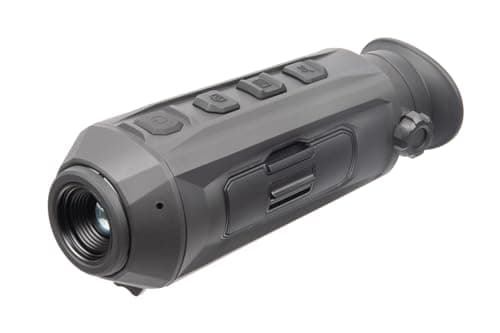 AGM Taipan TM10-256 Thermal Monocular256 thermal - finds warm bodies in total darkness, including animals you need to recover. | Best for detectionEntry thermal scanning | 9.3out of 10 | See today's price on the Taipan TM10-256 Thermal MonocularCheck price on Amazon No buyable offer at the last price check. |
| 2 | 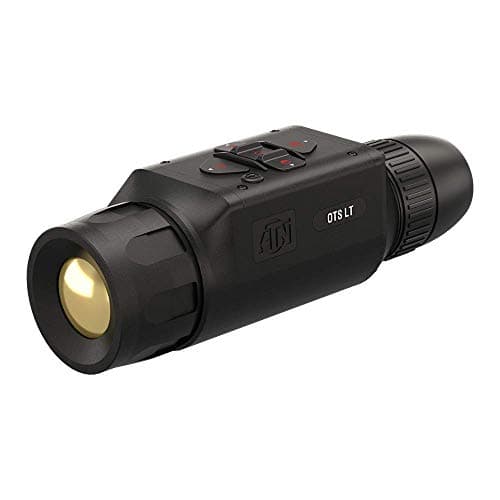 ATN OTS LT 320 Thermal Monocular320 thermal - the resolution where a warm shape becomes a recognizable animal. | Best for identificationHigher-resolution thermal | 9.2out of 10 | |
| 3 | 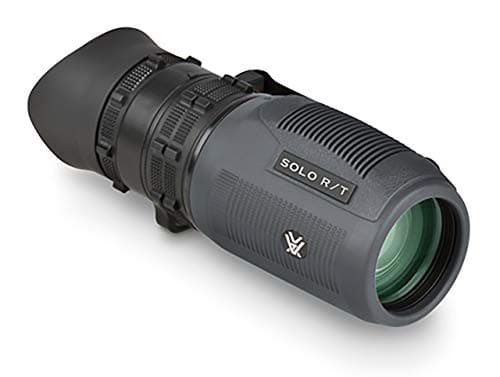 Vortex Solo R/T 8x36Neither technology helps at dawn. A 4.5 mm exit pupil does. | The daylight answerRanging reticle in a pocket | 9.4out of 10 | See today's price on the Solo R/T 8x36Check price on Amazon No buyable offer at the last price check. |
Prices are pulled live from Amazon and were last checked November 12, 2026; if a figure cannot be verified the button reads "Check price" instead. Scores are our editorial judgment against the published ranking criteria, on our published 8.4 to 9.8 recommendation scale. #ad How we earn.
The spec that decides a thermal purchase
Ignore the detection-range number on the box. Sensors will detect a heat source at absurd distances as a single warm pixel, and that figure tells you nothing about whether you can tell a coyote from a dog. The number that matters is sensor resolution - 256 wide versus 320 wide - because identification depends on how many pixels fall on the animal at the range you actually shoot.
The practical rule: 256 to find things, 320 to identify them. If your personal rule is that you do not shoot at anything you have not positively identified, the resolution step is not optional. The full thermal picks are in the best thermal monoculars for hunting.
What most people actually need
A large share of hunters shopping for night optics are not trying to hunt in the dark - they are frustrated that their binoculars quit twenty minutes before legal light does. That is not a night-vision problem and no amount of money spent on thermal will fix it. It is an exit-pupil problem, and the fix is a larger objective relative to the magnification.
The arithmetic and the fix are covered in exit pupil and twilight factor, and the glass that does it is in the best low-light hunting binoculars. If you genuinely hunt after dark, come back to this page and buy by sensor resolution.
Questions people actually ask
Is thermal or night vision better for hunting?
Can thermal see through glass?
What thermal resolution do I need for hunting?
Is thermal hunting legal?
Sources
- AGM Global Vision Taipan series product information - read 2026-10-11
- ATN OTS LT thermal monocular product information - read 2026-10-11