We earn a commission if you buy through the links on this page, at no extra cost to you. It never changes which products we pick or how we rank them - read the full disclosure.
Our top pick
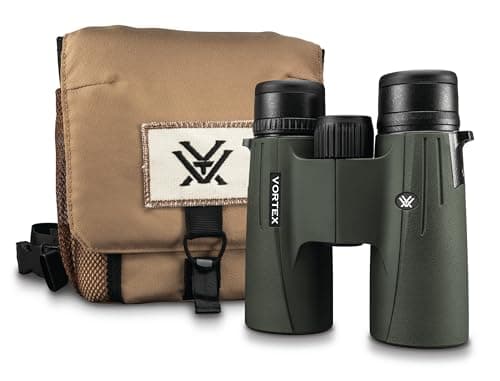
Vortex Viper HD 8x42
The same body and glass as the 10x42 with a 5.25 mm exit pupil instead of 4.2 mm, which is why it looks brighter in the final ten minutes of legal light.
Price as of October 5, 2026. #ad How we earn
Almost every binocular is advertised as bright. Brightness in low light is mostly determined by two numbers you can compute yourself from the model designation, which means you never have to take the claim on trust.
The two numbers, and why they disagree
Exit pupil = objective / magnification. It is the width in millimeters of the light column leaving the eyepiece. Your pupil dilates to roughly 5-7 mm in the dark, so an exit pupil of 5.25 mm fills it far better than one of 4.2 mm. Below about 4 mm you are feeding your eye less light than it can use, and the image looks dim no matter what the binocular cost.
Twilight factor = the square root of (magnification x objective). It is a crude index of how much detail you can resolve in poor light, and it rewards magnification - which exit pupil penalizes. An 8x42 computes to 18.3; a 12x50 to 24.5. Both numbers are legitimate and they point in opposite directions, which is why no single figure answers the question.
| Format | Exit pupil | Twilight factor | What it is good at in poor light |
|---|---|---|---|
| 8x32 | 4.00 mm | 16.0 | Compact. Compromised at dusk. |
| 8x42 | 5.25 mm | 18.3 | Seeing that something is there. The brightest practical hunting format. |
| 10x42 | 4.20 mm | 20.5 | A balance. The default for a reason. |
| 10x50 | 5.00 mm | 22.4 | Nearly as bright as an 8x42, with more reach. Heavy. |
| 12x50 | 4.17 mm | 24.5 | Judging detail on an animal you have already found. Needs a tripod. |
| 15x56 | 3.73 mm | 29.0 | Tripod-only detail work. Dim at dusk. |
Both columns are computed by us from magnification and objective. Neither is a manufacturer claim.
The practical upshot: if your complaint is that your binoculars go gray before legal light ends, change format before you change budget. An 8x42 at $239 will out-perform a 10x42 at $1,799 for that specific task. That is not a provocation, it is division.
Quick picks
Ranked by the criteria published on how we review. Tap any row for the full write-up, or go straight to the current price.
| # | Product | Best for | Score | Price |
|---|---|---|---|---|
| 1 | Vortex Viper HD 8x425.25 mm exit pupil, 18.0 mm eye relief, 409 ft of field, premium coatings. | Best for low lightLast light and timber | 9.3out of 10 | |
| 2 | 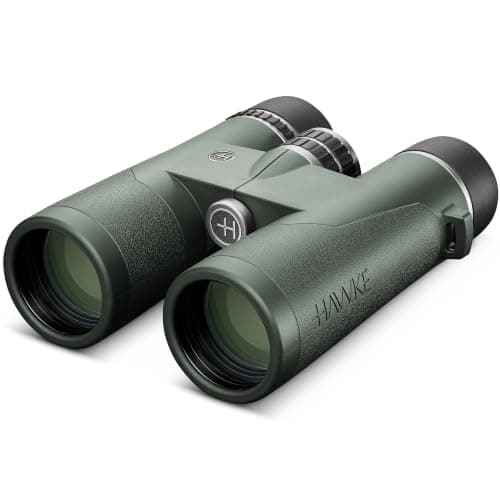 Hawke Frontier ED X Gen 2 8x42The same 5.25 mm exit pupil with ED glass, for less money. | Best value for low lightWide-field low-light glassing | 8.8out of 10 | $559.99 on Amazon $609.00 8% off |
| 3 | 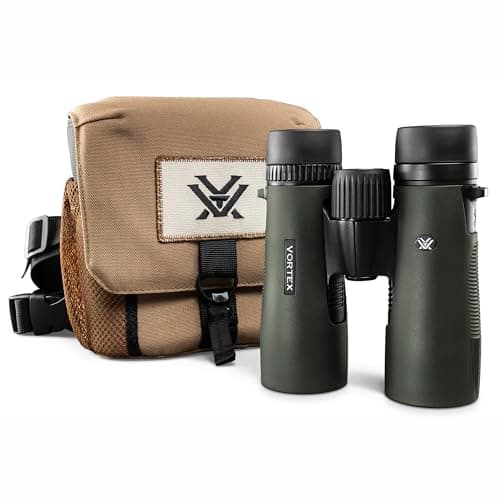 Vortex Diamondback HD 8x425.25 mm exit pupil and 17 mm eye relief for about $239. | Best budget low-light pickBudget low-light pick | 9.0out of 10 | |
| 4 | 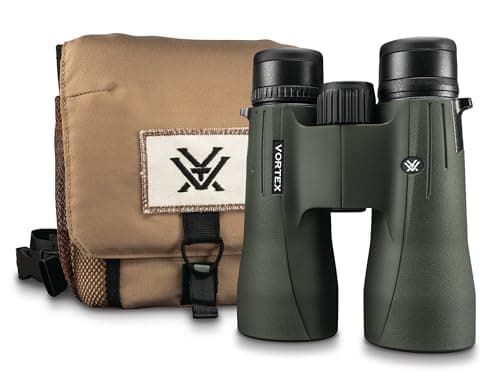 Vortex Viper HD 12x50Twilight factor 24.5 - the other half of the low-light equation. | Best for resolving detail in poor lightOpen country off a tripod | 8.1out of 10 | |
| 5 | 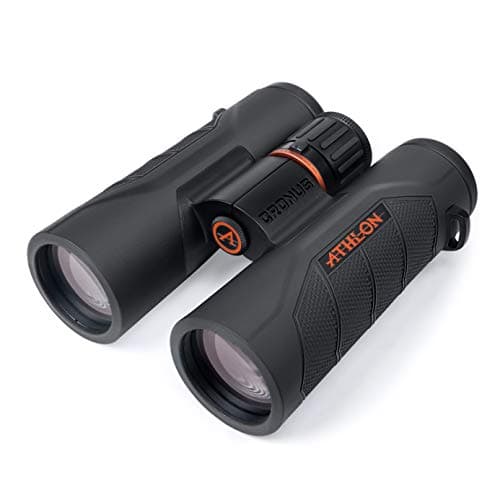 Athlon Cronus G2 UHD 10x42Abbe-Koenig prisms transmit more light than the class standard. | Best coatings for the moneyBest glass under $600 | 8.8out of 10 |
Prices are pulled live from Amazon and were last checked October 5, 2026; if a figure cannot be verified the button reads "Check price" instead. Scores are our editorial judgment against the published ranking criteria, not a test result. #ad How we earn.
Where the money does help
Transmission. Two 8x42s both deliver a 5.25 mm exit pupil, but the one with more anti-reflective coating layers, dielectric prism coatings and phase correction delivers more of the light that entered the objective. Manufacturers rarely publish a transmission percentage, which is frustrating, but the coating specification is a reasonable proxy and it is on every spec sheet.
- Fully multi-coated - every air-to-glass surface treated. Non-negotiable.
- Dielectric prism coatings - higher reflectivity than aluminum or silver coatings.
- Phase correction - a roof-prism-specific coating that recovers resolution and contrast.
- Abbe-Koenig prisms - avoid the lossy surface entirely. Rare below $1,000.
The picks in detail
Price as of October 5, 2026. #ad How we earn
Vortex Viper HD 8x42
The same body and glass as the 10x42 with a 5.25 mm exit pupil instead of 4.2 mm, which is why it looks brighter in the final ten minutes of legal light.
| Magnification | 8x |
|---|---|
| Objective lens | 42 mm |
| Eye relief | 18.0mm |
| Field of view | 409' @ 1000 yds |
| Angular field of view | 7.8º |
| Close focus | 6.0' |
| Weight | 24.5 oz. |
| Height | 5.6" |
| Width | 4.9" |
| Exit pupil (computed) | 5.25 mm |
| Twilight factor (computed) | 18.3 |
Specs verified 2026-10-05 from Vortex's published specification. Exit pupil and twilight factor are computed, not quoted.
What it does well
- 5.25 mm exit pupil is the brightest in the Viper 42 mm line
- 18.0 mm eye relief, the most forgiving in the range
- 409 ft field of view makes finding animals in cover faster
Where it gives ground
- 8x will not resolve a bedded buck at 800 yards
- Costs the same as the 10x42, so the choice is purely about terrain
Skip it if
Most of your glassing is across open basins - you will want the 10x or 12x.
How this score breaks down
- Low-light performance (weight 5)9.5
- Optical quality per dollar (weight 4)9.0
- Field of view (weight 3)9.5
- Eye relief (weight 3)9.5
- Weight and ergonomics (weight 2)8.0
- Warranty (weight 2)10.0
Weights and definitions are published on how we review. These are editorial judgments from published specs and documented consensus, not test results.
This is the most complete answer on the page because it combines the right format with the right coatings. The computed 5.25 mm exit pupil matches your dilated pupil far better than a 10x42's 4.2 mm, and Vortex's XR Plus coatings and dielectric prism coatings mean more of the light that enters actually arrives. Vortex publishes 18.0 mm of eye relief and 409 ft of field (verified 2026-10-05) - the most forgiving figures in the Viper 42 mm line.
Hawke Frontier ED X Gen 2 8x42
Hawke's ED X line puts a genuinely wide field and ED glass in the Viper HD's price bracket, with a 5.25 mm exit pupil for last light.
| Magnification | 8x |
|---|---|
| Objective lens | 42mm |
| Exit pupil (computed) | 5.25 mm |
| Twilight factor (computed) | 18.3 |
Specs verified 2026-10-05 from Hawke's published specification. Exit pupil and twilight factor are computed, not quoted.
What it does well
- ED glass with a wide field of view
- 5.25 mm exit pupil for dawn and dusk
- Lifetime warranty
Where it gives ground
- Smaller service footprint in the US
- Less resale demand than Vortex or Leupold
Skip it if
You want a 10x. This listing is the 8x42.
How this score breaks down
- Low-light performance (weight 5)9.0
- Optical quality per dollar (weight 4)9.0
- Field of view (weight 3)9.0
- Eye relief (weight 3)8.5
- Weight and ergonomics (weight 2)8.0
- Warranty (weight 2)8.5
Weights and definitions are published on how we review. These are editorial judgments from published specs and documented consensus, not test results.
Hawke publishes 8x and 42 mm for this model (verified 2026-10-05), so the computed exit pupil is 5.25 mm - identical to the Viper HD 8x42. Add ED glass and a wide field and the optical case is strong. The difference is service footprint and resale, not the physics.
Price as of October 5, 2026. #ad How we earn
Vortex Diamondback HD 8x42
A 5.25 mm exit pupil and 17 mm of eye relief at the $250 tier, which is the combination most first upgrades actually need.
| Magnification | 8x |
|---|---|
| Objective lens | 42 mm |
| Eye relief | 17 mm |
| Field of view | 393 feet/1000 yards |
| Angular field of view | 7.5 degrees |
| Close focus | 5 feet |
| Weight | 21.8 oz |
| Height | 5.8 inches |
| Width | 5.1 inches |
| Exit pupil (computed) | 5.25 mm |
| Twilight factor (computed) | 18.3 |
Specs verified 2026-10-05 from Vortex's published specification. Exit pupil and twilight factor are computed, not quoted.
What it does well
- 5.25 mm exit pupil, the same figure as the Viper HD 8x42
- 17 mm eye relief works with glasses
- 393 ft field of view is wide for the money
Where it gives ground
- 8x limits you in genuinely open country
- Focus wheel is stiffer than the Viper's in the cold
Skip it if
You glass across canyons - the extra magnification matters more than the brightness there.
How this score breaks down
- Low-light performance (weight 5)8.5
- Optical quality per dollar (weight 4)9.5
- Field of view (weight 3)9.0
- Eye relief (weight 3)9.0
- Weight and ergonomics (weight 2)8.0
- Warranty (weight 2)10.0
Weights and definitions are published on how we review. These are editorial judgments from published specs and documented consensus, not test results.
The cheapest way to get the right format. The exit pupil is exactly the same 5.25 mm as the Viper HD 8x42 at half the price; what you lose is transmission through less expensive coatings. Vortex publishes 17 mm eye relief and 393 ft of field (verified 2026-10-05), both generous.
Price as of October 5, 2026. #ad How we earn
Vortex Viper HD 12x50
A 4.17 mm exit pupil and 288 ft of field, which is the trade you make for the extra detail; plan on a tripod, because 12x shows you your own pulse.
| Magnification | 12x |
|---|---|
| Objective lens | 50 mm |
| Eye relief | 16.0mm |
| Field of view | 288' @ 1000 yds |
| Angular field of view | 5.5º |
| Close focus | 8.0' |
| Weight | 28.8 oz. |
| Height | 6.5" |
| Width | 5.2" |
| Exit pupil (computed) | 3.5 mm |
| Twilight factor (computed) | 22.4 |
Specs verified 2026-10-05 from Vortex's published specification. Exit pupil and twilight factor are computed, not quoted.
What it does well
- 12x resolves antler detail a 10x leaves ambiguous
- 50 mm objective keeps the exit pupil close to the 10x42
- Still fits a standard bino harness
Where it gives ground
- Unusable handheld for sustained glassing - tripod required
- 288 ft field makes picking up moving animals harder
Skip it if
You will not carry a tripod. A shaky 12x sees less than a steady 10x.
How this score breaks down
- Low-light performance (weight 5)8.0
- Optical quality per dollar (weight 4)9.0
- Field of view (weight 3)7.0
- Eye relief (weight 3)8.0
- Weight and ergonomics (weight 2)6.5
- Warranty (weight 2)10.0
Weights and definitions are published on how we review. These are editorial judgments from published specs and documented consensus, not test results.
Included to make a point the rest of this page would otherwise hide. Exit pupil governs apparent brightness; twilight factor - the square root of magnification times objective - tracks how much *detail* you can resolve in poor light, and it runs the other way. The 12x50 computes to 24.5 against the 8x42's 18.3. If your problem is seeing *whether* there is an animal, take the 8x42. If it is judging an animal you have already found, the 12x50 at dusk on a tripod is the better tool.
Price as of October 5, 2026. #ad How we earn
Athlon Cronus G2 UHD 10x42
UHD glass with Abbe-Koenig prisms at roughly half what comparable prism designs cost elsewhere - the clearest value argument above $500.
| Magnification | 10x |
|---|---|
| Objective lens | 42 mm |
| Exit pupil (computed) | 4.2 mm |
| Twilight factor (computed) | 20.5 |
Magnification and objective are the manufacturer's own model designation; exit pupil and twilight factor are computed from them. We could not machine-read Athlon's spec page, so the remaining published figures are not listed rather than guessed.
What it does well
- Abbe-Koenig prisms, normally a $1,000-plus feature
- UHD glass controls chromatic aberration well
- Long eye relief
Where it gives ground
- Heavier than the Viper HD
- Brand carries less weight on resale
Skip it if
You will only ever glass in good light. The money buys you edge-of-legal-light performance.
How this score breaks down
- Low-light performance (weight 5)9.0
- Optical quality per dollar (weight 4)9.5
- Field of view (weight 3)8.5
- Eye relief (weight 3)9.0
- Weight and ergonomics (weight 2)7.0
- Warranty (weight 2)8.5
Weights and definitions are published on how we review. These are editorial judgments from published specs and documented consensus, not test results.
The honest 10x42 entry on a low-light page. A 10x42 cannot beat an 8x42's exit pupil - that is arithmetic - but it can claw back some of the gap through transmission, and Abbe-Koenig prisms are the most effective way to do that at any price under $1,000.
Questions people actually ask
What are the best binoculars for low light hunting?
Do bigger objective lenses mean brighter binoculars?
Is a 12x50 good for low light?
Does paying more actually make binoculars brighter?
Sources
- Vortex Viper HD 8x42 published specifications - read 2026-10-05
- Vortex Diamondback HD 8x42 published specifications - read 2026-10-05
- Vortex Viper HD 12x50 published specifications - read 2026-10-05