We earn a commission if you buy through the links on this page, at no extra cost to you. It never changes which products we pick or how we rank them - read the full disclosure.
Our top pick
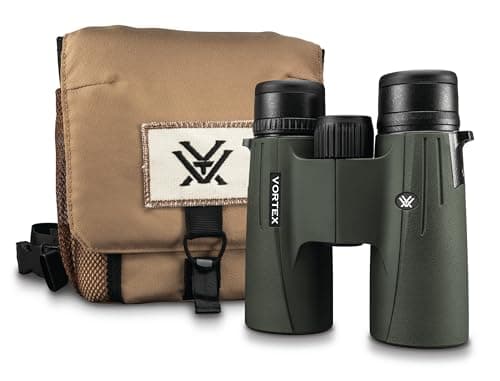
Vortex Viper HD 10x42
The default answer when someone outgrows a $150 pair: 17 mm of eye relief, a 341 ft field of view and glass that holds its edges, at the price where diminishing returns start.
Price as of October 5, 2026. #ad How we earn
You already own binoculars. You have found the thing they cannot do - they go gray before legal light ends, or the edges smear, or you cannot hold them still at 12x. This page is about which of those problems the next few hundred dollars actually solves, and which it does not.
We have not field-tested these binoculars, and we are not going to pretend otherwise. What we have done is apply a consistent, published set of criteria to the specifications each manufacturer publishes, compute the optical arithmetic ourselves, and say where the evidence is thin. The full method is here. For a reader choosing between two $500 binoculars, we think a dated side-by-side synthesis is worth more than one person's unverifiable anecdote.
How we ranked these
In weighted order: low-light performance (exit pupil, twilight factor, glass and coating grade), optical quality per dollar, field of view, eye relief, weight and ergonomics, and warranty. Those weights are published on how we review and the per-metric score for every pick is expandable on each card, so you can check our conclusions against our own rules.
Quick picks
Ranked by the criteria published on how we review. Tap any row for the full write-up, or go straight to the current price.
| # | Product | Best for | Score | Price |
|---|---|---|---|---|
| 1 | Vortex Viper HD 10x42The default answer above $400, and the point where diminishing returns start. | Best overallThe all-round upgrade | 8.8out of 10 | |
| 2 | 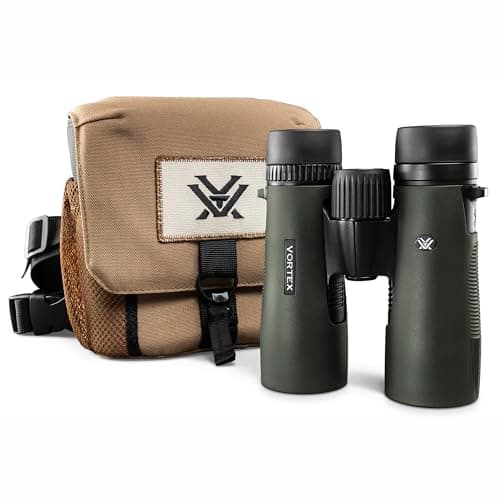 Vortex Diamondback HD 10x42Genuine HD glass and a 330 ft field for about half the Viper's price. | Best valueBest value overall | 8.1out of 10 | $236.00 on Amazon $249.00 5% off |
| 3 | Vortex Viper HD 8x42Same body and glass as the 10x42 with a 5.25 mm exit pupil instead of 4.2 mm. | Best for last lightLast light and timber | 9.3out of 10 | |
| 4 | 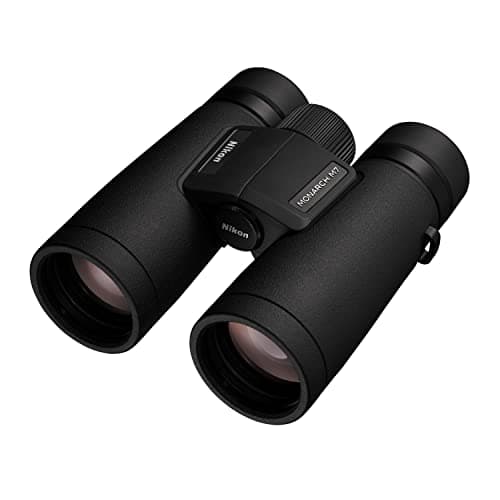 Nikon Monarch M7 10x42ED glass and a wider field than most 10x42s at the price, without Vortex's warranty. | Widest field in the classWidest field in the $450 class | 8.4out of 10 | $447.75 on Amazon $549.95 19% off |
| 5 | 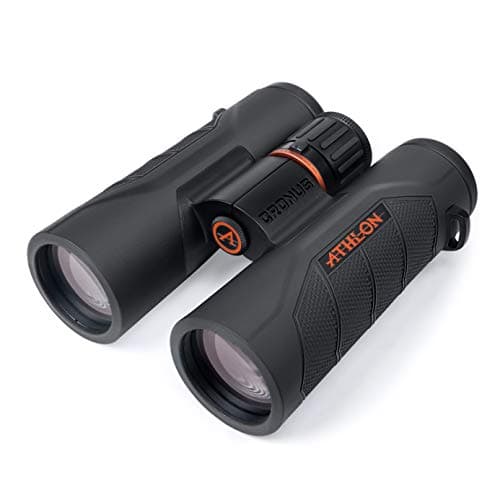 Athlon Cronus G2 UHD 10x42Abbe-Koenig prisms at roughly half what the prism design normally costs. | Best glass under $600Best glass under $600 | 8.8out of 10 | |
| 6 | 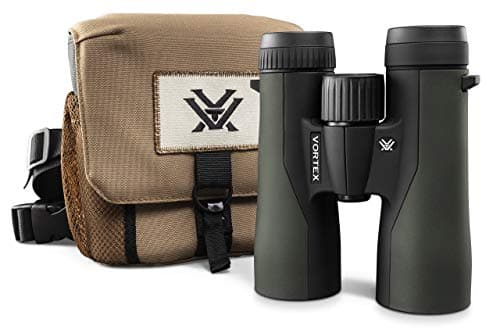 Vortex Crossfire HD 10x42The cheapest pair here we would actually recommend owning. | Best under $150The cheapest pair worth owning | 7.4out of 10 |
Prices are pulled live from Amazon and were last checked October 5, 2026; if a figure cannot be verified the button reads "Check price" instead. Scores are our editorial judgment against the published ranking criteria, not a test result. #ad How we earn.
The three numbers that decide this
Exit pupil is objective divided by magnification, and it sets a hard ceiling on low-light brightness. Every 10x42 on this page has a 4.2 mm exit pupil - the format decides that, not the price. Every 8x42 has 5.25 mm. This is why an $489 8x42 can genuinely out-perform a $1,799 10x42 in the last ten minutes of light: the money buys transmission and resolution, not aperture.
Twilight factor is the square root of magnification times objective: 20.5 for a 10x42, 18.3 for an 8x42, 24.5 for a 12x50. It is a crude single figure for low-light detail resolution, and it moves in the opposite direction from exit pupil, which is exactly why neither number alone answers the question. We work through both properly.
Eye relief is where a lot of otherwise good buys fall over. Under about 15 mm, glasses wearers lose the field edges. The Viper HD 8x42 publishes 18.0 mm, the Diamondback HD 10x42 publishes 15 mm, and if you wear glasses that gap is more important than any difference in glass grade on this page.
| Model | Exit pupil | Twilight factor | Published eye relief | Published field at 1,000 yd |
|---|---|---|---|---|
| Vortex Viper HD 10x42 | 4.2 mm | 20.5 | 17.0 mm | 341 ft |
| Vortex Viper HD 8x42 | 5.25 mm | 18.3 | 18.0 mm | 409 ft |
| Vortex Diamondback HD 10x42 | 4.2 mm | 20.5 | 15 mm | 330 ft |
| Vortex Crossfire HD 10x42 | 4.2 mm | 20.5 | 15.0 mm | 325 ft |
| Vortex Viper HD 12x50 | 4.17 mm | 24.5 | 16.0 mm | 288 ft |
Eye relief and field of view are read from each manufacturer's published specification on 2026-10-05. Exit pupil and twilight factor are computed from magnification and objective and are therefore arithmetic, not a quoted claim.
The picks in full
Price as of October 5, 2026. #ad How we earn
Vortex Viper HD 10x42
The default answer when someone outgrows a $150 pair: 17 mm of eye relief, a 341 ft field of view and glass that holds its edges, at the price where diminishing returns start.
| Magnification | 10x |
|---|---|
| Objective lens | 42 mm |
| Eye relief | 17.0mm |
| Field of view | 341' @ 1000 yds |
| Angular field of view | 6.5º |
| Close focus | 6.0' |
| Weight | 24.9 oz. |
| Height | 5.6" |
| Width | 4.9" |
| Exit pupil (computed) | 4.2 mm |
| Twilight factor (computed) | 20.5 |
Specs verified 2026-10-05 from Vortex's published specification. Exit pupil and twilight factor are computed, not quoted.
What it does well
- 17.0 mm eye relief is generous enough for most glasses wearers
- 341 ft at 1,000 yards is a wide field for a 10x
- Vortex VIP warranty is unconditional and transferable
Where it gives ground
- 24.9 oz is noticeable on a chest harness over a long day
- The 12x50 costs little more if you glass open country
Skip it if
You hunt timber inside 200 yards - the 8x42 Diamondback does that job for less than half the money.
How this score breaks down
- Low-light performance (weight 5)8.5
- Optical quality per dollar (weight 4)9.0
- Field of view (weight 3)9.0
- Eye relief (weight 3)9.0
- Weight and ergonomics (weight 2)7.5
- Warranty (weight 2)10.0
Weights and definitions are published on how we review. These are editorial judgments from published specs and documented consensus, not test results.
Vortex publishes 341 ft of linear field at 1,000 yards and 17.0 mm of eye relief for this model (verified 2026-10-05). Both figures are near the top of the 10x42 class, and the combination is what makes this the binocular most people should buy when they outgrow an entry pair: wide enough to find animals quickly, forgiving enough to use with glasses, and bright enough that the last ten minutes of legal light are still productive.
The computed exit pupil is 4.2 mm, which is the ceiling for any 10x42 - that number is fixed by the format, not by the brand. What the Viper's price buys over a Diamondback HD at the same 4.2 mm is light *transmission* through better coatings and better glass, which is a real difference and also the hardest thing on this page to prove in a table. Across published expert roundups the Viper HD is consistently placed above the $250 tier on edge sharpness and low-light contrast, and that matches the coating specification Vortex lists.
The honest caveat is weight: 24.9 oz is noticeable on a harness by hour four. If you hunt open country and expect to glass from a tripod, the 12x50 costs little more and sees more. If you hunt timber, the 8x42 gives you 5.25 mm of exit pupil for the same money.
Vortex Diamondback HD 10x42
The honest floor for hunting glass: HD optical system, 330 ft of field and 15 mm of eye relief for about half what the Viper costs.
| Magnification | 10x |
|---|---|
| Objective lens | 42 mm |
| Eye relief | 15 mm |
| Field of view | 330 feet/1000 yards |
| Angular field of view | 6.3 degrees |
| Close focus | 6.7 feet |
| Weight | 21.4 oz |
| Height | 5.8 inches |
| Width | 5.1 inches |
| Exit pupil (computed) | 4.2 mm |
| Twilight factor (computed) | 20.5 |
Specs verified 2026-10-05 from Vortex's published specification. Exit pupil and twilight factor are computed, not quoted.
What it does well
- Genuine HD glass at the $250 tier
- 330 ft field of view matches binoculars costing twice as much
- Same unconditional VIP warranty as the Viper
Where it gives ground
- 15 mm eye relief is tight for some glasses wearers
- Edge sharpness falls off before the Viper's does
Skip it if
You wear glasses and have struggled with eye relief before - try the 8x42, which gives 17 mm.
How this score breaks down
- Low-light performance (weight 5)7.0
- Optical quality per dollar (weight 4)9.5
- Field of view (weight 3)8.5
- Eye relief (weight 3)6.5
- Weight and ergonomics (weight 2)8.0
- Warranty (weight 2)10.0
Weights and definitions are published on how we review. These are editorial judgments from published specs and documented consensus, not test results.
This is the pair we would hand to someone upgrading from a $120 binocular, because it is where the improvement per dollar is steepest. Vortex publishes 330 ft at 1,000 yards and 15 mm of eye relief (verified 2026-10-05) - the field is within 11 ft of the Viper's, which costs twice as much.
Where it gives ground is predictable and visible: the edges soften earlier than the Viper's, and in the last few minutes of light the difference in coatings shows. The 15 mm eye relief is also the one spec to check against yourself - if you wear glasses and have struggled before, the 8x42 version publishes 17 mm and is the safer buy.
Price as of October 5, 2026. #ad How we earn
Vortex Viper HD 8x42
The same body and glass as the 10x42 with a 5.25 mm exit pupil instead of 4.2 mm, which is why it looks brighter in the final ten minutes of legal light.
| Magnification | 8x |
|---|---|
| Objective lens | 42 mm |
| Eye relief | 18.0mm |
| Field of view | 409' @ 1000 yds |
| Angular field of view | 7.8º |
| Close focus | 6.0' |
| Weight | 24.5 oz. |
| Height | 5.6" |
| Width | 4.9" |
| Exit pupil (computed) | 5.25 mm |
| Twilight factor (computed) | 18.3 |
Specs verified 2026-10-05 from Vortex's published specification. Exit pupil and twilight factor are computed, not quoted.
What it does well
- 5.25 mm exit pupil is the brightest in the Viper 42 mm line
- 18.0 mm eye relief, the most forgiving in the range
- 409 ft field of view makes finding animals in cover faster
Where it gives ground
- 8x will not resolve a bedded buck at 800 yards
- Costs the same as the 10x42, so the choice is purely about terrain
Skip it if
Most of your glassing is across open basins - you will want the 10x or 12x.
How this score breaks down
- Low-light performance (weight 5)9.5
- Optical quality per dollar (weight 4)9.0
- Field of view (weight 3)9.5
- Eye relief (weight 3)9.5
- Weight and ergonomics (weight 2)8.0
- Warranty (weight 2)10.0
Weights and definitions are published on how we review. These are editorial judgments from published specs and documented consensus, not test results.
The whole argument is one computed number. 42 / 8 = 5.25 mm of exit pupil, against 4.2 mm for the 10x42. Your pupil dilates to roughly 5-7 mm in low light, so at the edge of legal shooting light the 8x42 is actually feeding your eye more usable light than its more popular sibling. Vortex also publishes a wider field (409 ft at 1,000 yards) and more eye relief (18.0 mm) for the 8x, both verified 2026-10-05.
You give up resolution at distance, and in genuinely open country that matters. This is the pick for timber, whitetail, and anyone whose complaint about their current binocular is that it goes gray too early. We compare the two formats in detail.
Nikon Monarch M7 10x42
The M5 with a wider field and better coatings; the strongest argument against the Viper HD at a slightly lower price.
| Magnification | 10x |
|---|---|
| Objective lens | 42 mm |
| Exit pupil (computed) | 4.2 mm |
| Twilight factor (computed) | 20.5 |
Magnification and objective are the manufacturer's own model designation; exit pupil and twilight factor are computed from them. We could not machine-read Nikon's spec page, so the remaining published figures are not listed rather than guessed.
What it does well
- Wider field of view than the M5 and most 10x42s at this price
- ED glass with improved multicoating
- Comfortable eye relief for glasses wearers
Where it gives ground
- No unconditional transferable warranty
- Focus wheel has more travel than some will like
Skip it if
Warranty matters more to you than optics - Vortex VIP is the better long-term bet.
How this score breaks down
- Low-light performance (weight 5)8.5
- Optical quality per dollar (weight 4)8.5
- Field of view (weight 3)9.5
- Eye relief (weight 3)8.5
- Weight and ergonomics (weight 2)8.5
- Warranty (weight 2)6.5
Weights and definitions are published on how we review. These are editorial judgments from published specs and documented consensus, not test results.
The M7 is the strongest argument against the Viper HD at a slightly lower price. It carries ED glass and improved multicoating over the M5, and Nikon's ergonomics have always favored a long, comfortable eyecup. The trade is the warranty: Vortex's VIP cover is unconditional and transferable, Nikon's is not, and over ten years that is worth something real.
Price as of October 5, 2026. #ad How we earn
Athlon Cronus G2 UHD 10x42
UHD glass with Abbe-Koenig prisms at roughly half what comparable prism designs cost elsewhere - the clearest value argument above $500.
| Magnification | 10x |
|---|---|
| Objective lens | 42 mm |
| Exit pupil (computed) | 4.2 mm |
| Twilight factor (computed) | 20.5 |
Magnification and objective are the manufacturer's own model designation; exit pupil and twilight factor are computed from them. We could not machine-read Athlon's spec page, so the remaining published figures are not listed rather than guessed.
What it does well
- Abbe-Koenig prisms, normally a $1,000-plus feature
- UHD glass controls chromatic aberration well
- Long eye relief
Where it gives ground
- Heavier than the Viper HD
- Brand carries less weight on resale
Skip it if
You will only ever glass in good light. The money buys you edge-of-legal-light performance.
How this score breaks down
- Low-light performance (weight 5)9.0
- Optical quality per dollar (weight 4)9.5
- Field of view (weight 3)8.5
- Eye relief (weight 3)9.0
- Weight and ergonomics (weight 2)7.0
- Warranty (weight 2)8.5
Weights and definitions are published on how we review. These are editorial judgments from published specs and documented consensus, not test results.
Abbe-Koenig prisms transmit more light than the Schmidt-Pechan prisms almost everything else at this price uses, because they do not need a reflective coating on the critical surface. That is normally a feature of binoculars priced near $1,000. Athlon's whole business model is putting that kind of specification below where it usually sits, and accepting weaker brand equity and slower service in exchange.
If you will only ever glass in good light, this specification buys you nothing you will notice. If your limiting factor is the fifteen minutes either side of legal light, it is the most capability per dollar on this page.
Price as of October 5, 2026. #ad How we earn
Vortex Crossfire HD 10x42
The entry point: HD glass, 325 ft of field, and the same VIP warranty, for roughly what a decent pair of boots costs.
| Magnification | 10x |
|---|---|
| Objective lens | 42 mm |
| Eye relief | 15.0mm |
| Field of view | 325' @ 1000 yds |
| Angular field of view | 6.2º |
| Close focus | 6.0' |
| Weight | 23.0 oz. |
| Height | 6.0" |
| Width | 5.2" |
| Exit pupil (computed) | 4.2 mm |
| Twilight factor (computed) | 20.5 |
Specs verified 2026-10-05 from Vortex's published specification. Exit pupil and twilight factor are computed, not quoted.
What it does well
- Cheapest Vortex with genuine HD glass
- 325 ft field of view is respectable at this price
- VIP warranty is identical to the $1,800 Razor
Where it gives ground
- Noticeably softer at the edges than the Diamondback HD
- Low-light performance is where the savings show
Skip it if
Your complaint about your current pair is that it grays out early - this will not fix that.
How this score breaks down
- Low-light performance (weight 5)5.5
- Optical quality per dollar (weight 4)9.0
- Field of view (weight 3)7.5
- Eye relief (weight 3)6.5
- Weight and ergonomics (weight 2)8.0
- Warranty (weight 2)10.0
Weights and definitions are published on how we review. These are editorial judgments from published specs and documented consensus, not test results.
Vortex publishes 325 ft of field and 15.0 mm of eye relief here (verified 2026-10-05), which for the money is remarkable - and the VIP warranty is identical to the one on the $1,799 Razor. What you give up is low-light performance, which is exactly where cheap coatings show. If your complaint about your current binocular is that it grays out early, this will not fix it. If your complaint is that your current binocular is unusable, this will.
What the money actually buys above $500
Less than the price suggests. From $120 to $250 the change is enormous - you go from genuinely bad to genuinely adequate. From $250 to $500 there is a real step in last-light performance and edge sharpness that most hunters will notice. From $500 to $1,800, you are buying the final increment of resolution, color neutrality and the sense of looking through a window rather than at an image. It is real, and it is small, and anyone telling you it is transformative is selling.
That is also why the Razor UHD and the Swarovski EL are on this site but not at the top of this page. They are better. They are not better in proportion to their price, and for the buyer this site is written for - the person upgrading from a cheap pair - the jump already made is bigger than the one those represent.
Questions people actually ask
What are the best all-round hunting binoculars?
Are cheap hunting binoculars good enough?
Should I buy 8x42 or 10x42 for hunting?
How much should I spend on hunting binoculars?
Does a binocular warranty actually matter?
Sources
- Vortex Viper HD 10x42 published specifications - read 2026-10-05
- Vortex Viper HD 8x42 published specifications - read 2026-10-05
- Vortex Diamondback HD 10x42 published specifications - read 2026-10-05
- Vortex Crossfire HD 10x42 published specifications - read 2026-10-05