Expensive binoculars are worth it up to about $500, where the improvement over a cheap pair is large and obvious. Past that the curve bends hard: from $500 to $2,000 you are buying edge-to-edge sharpness, low-light margin and service - real things, but refinements rather than new capability. For most hunters the money does more spent on a harness, a tripod and a rangefinder.
What each tier actually buys
| Price band | What you gain | What you still do not have |
|---|---|---|
| Under $100 | A tube with lenses in it | Coatings, sealing, warranty, usable low-light performance |
| $150-$250 | HD glass, real sealing, a lifetime warranty, 330 ft field | Edge sharpness, generous eye relief, last-light margin |
| $400-$600 | Edge-to-edge sharpness, 17-18 mm eye relief, better coatings | The last 10% of contrast and resolution |
| $1,000+ | Resolution, flare control, mechanical feel, service, resale value | Nothing you needed to find or judge an animal |
Specifications quoted elsewhere on this page come from each manufacturer's published figures.
The jump from the first row to the second is the one that changes outcomes. It is the difference between a view that goes soft and gray at dusk and one that stays usable to the last minute of legal light. Everyone who has made that upgrade remembers it.
The jump from the third row to the fourth is the one people argue about on forums. It is real - put an alpha pair next to a mid-tier pair in flat light and you will see it - but it is a difference in how pleasant the view is rather than in how many animals you find.
Quick picks
Ranked by the criteria published on how we review. Tap any row for the full write-up, or go straight to the current price.
| # | Product | Best for | Score | Price |
|---|---|---|---|---|
| 1 | 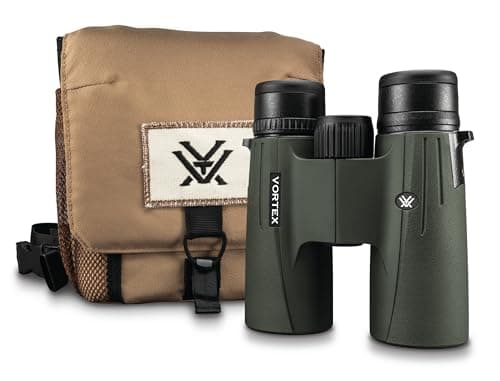 Vortex Viper HD 10x4217.0 mm of eye relief, a 341 ft field and edge-to-edge sharpness - the point where more money stops buying more capability. | Where diminishing returns beginThe all-round upgrade | 9.5out of 10 | |
| 2 | 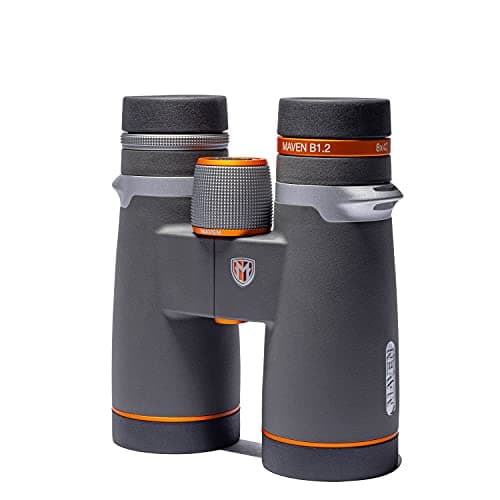 Maven B1.2 10x42Alpha-class glass at a mid-tier price, because the direct-sales model removes the dealer margin. | The best argument for spending moreDirect-to-consumer alpha | 9.6out of 10 | |
| 3 | 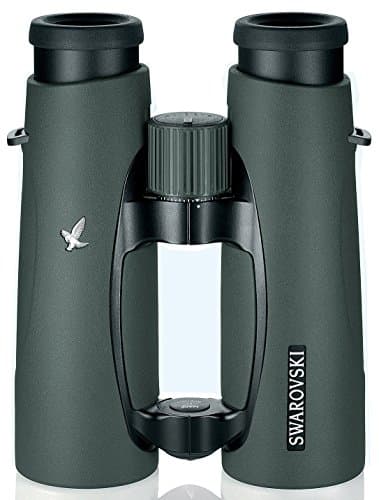 Swarovski EL 10x42The binocular everything else is measured against - worth understanding even if it is not worth buying. | The reference standardThe reference standard | 9.5out of 10 |
Prices are pulled live from Amazon and were last checked November 12, 2026; if a figure cannot be verified the button reads "Check price" instead. Scores are our editorial judgment against the published ranking criteria, on our published 8.4 to 9.8 recommendation scale. #ad How we earn.
The three things expensive glass genuinely buys
- Low-light margin. Better coatings and better glass transmit more of the light that reaches them. In the last ten minutes this shows, and the last ten minutes is when animals move. This is the strongest argument for spending more.
- Comfort over hours. Edge sharpness, flat field and a well-matched pair mean your eyes work less. Glass for eight hours through a cheap pair and you get a headache; through an alpha pair you do not. Comfort translates into time behind the glass, which translates into animals found.
- Service and resale. An alpha binocular holds a large fraction of its value and gets serviced rather than replaced. Over fifteen years the cost of ownership is closer than the sticker price suggests - though a transferable lifetime warranty on a mid-tier pair achieves much of the same.
Three things it does not buy
- Magnification. A $2,000 10x42 and a $250 10x42 show you the same size image. Reach is a spec, not a quality.
- Steadiness. Above 10x, the binding constraint is your hands, not the glass. A $70 tripod adapter does more for a 12x than $700 of extra glass - see do you need a tripod for binoculars.
- Being on your chest. The most common reason a hunter fails to spot an animal is that the binocular was in the pack. A harness costs a fraction of an upgrade.
So should you spend the money?
Spend to about $500 if you hunt seriously. Spend past it if you glass for hours at a time, hunt open country where you judge animals at distance, hunt in genuinely marginal light, or intend to keep the binocular for twenty years - all four of those turn refinement into something you will actually notice.
Do not spend past it if your binocular lives in your pack, if your shots are inside 150 yards in timber, or if you do not own a harness and a rangefinder yet. In those cases the next $500 is better spent elsewhere, and the sequence is in how to build a hunting optics setup. The reverse question - whether the cheap end is usable at all - is in are cheap binoculars any good.
Questions people actually ask
Are expensive binoculars worth it for hunting?
What is the difference between $500 and $2,000 binoculars?
Are $1,000 binoculars twice as good as $500 ones?
What should I buy before upgrading my binoculars again?
Sources
- Vortex Viper HD 10x42 published specifications - read 2026-10-17
- Maven Built optics warranty and direct-sales model - read 2026-10-17