We earn a commission if you buy through the links on this page, at no extra cost to you. It never changes which products we pick or how we rank them - read the full disclosure.
Our top pick
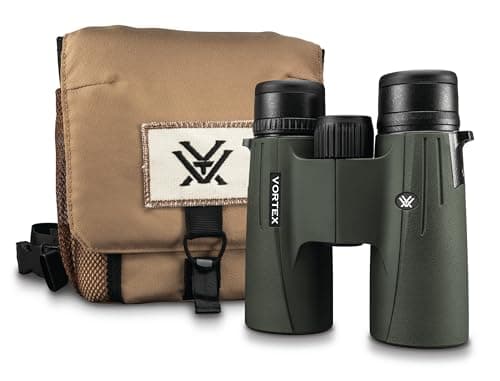
Vortex Viper HD 8x42
The same body and glass as the 10x42 with a 5.25 mm exit pupil instead of 4.2 mm, which is why it looks brighter in the final ten minutes of legal light.
Price as of October 5, 2026. #ad How we earn
8x42 is the format most hunters should own and the format most of them talk themselves out of, because 10x sounds like more. This page ranks the 8x42s we can verify against published specifications - and the first thing to say is that one of the numbers you are shopping on is identical across every one of them.
Exit pupil is 42 / 8 = 5.25 mm on every 8x42 ever built. An entry-level Celestron Nature DX and a premium Maven B1.2 put the same width of light column into your eye. That is arithmetic, and no amount of money changes it. (Why exit pupil matters and what twilight factor adds to it.)
So the money goes into four other things, and only three of them are reliably published: field of view, eye relief, light transmission and build quality. This page is ordered on those, in that order of weight, against the published review criteria for binoculars.
The criteria, before the picks
- Published field of view at 1,000 yards. The specification that does the most work in hunting, because the job is finding an animal before studying it. A 60 ft spread across this page is the largest difference any number here produces.
- Published eye relief. Under about 15 mm, a glasses wearer sees a vignetted circle and loses the field of view they paid for. Above about 17 mm it stops being a consideration.
- Published light transmission, where it exists. Only one maker on this page prints it. Where it is absent we say so rather than guessing, and fall back on the coating specification - which indicates intent, not a percentage.
- Weight and close focus. 5 oz separates the lightest from the heaviest here. That is noticed on a chest harness long before any optical difference is.
- Warranty, read as written. Unconditional and transferable is worth real money on an optic that can be ended by one fall. A limited warranty is not the same product.
Quick picks
Ranked by the criteria published on how we review. Tap any row for the full write-up, or go straight to the current price.
| # | Product | Best for | Score | Price |
|---|---|---|---|---|
| 1 | Vortex Viper HD 8x42409 ft of field, 18.0 mm of eye relief and an unconditional transferable warranty. | Best 8x42 overallLast light and timber | 9.3out of 10 | |
| 2 | 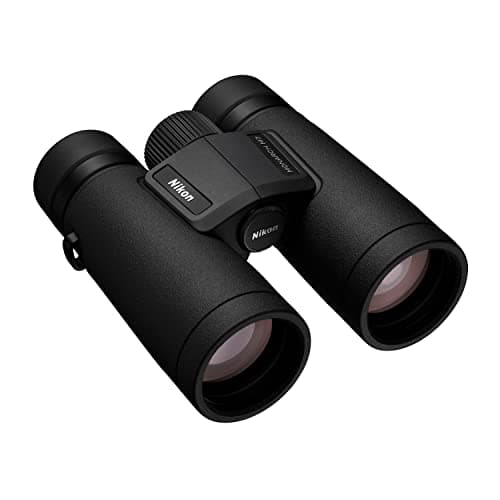 Nikon Monarch M7 8x42435 ft at 1,000 yards and 23.6 oz - the widest, lightest 8x42 we could verify. | Widest field in the formatThe widest field in the format | 8.9out of 10 | |
| 3 | 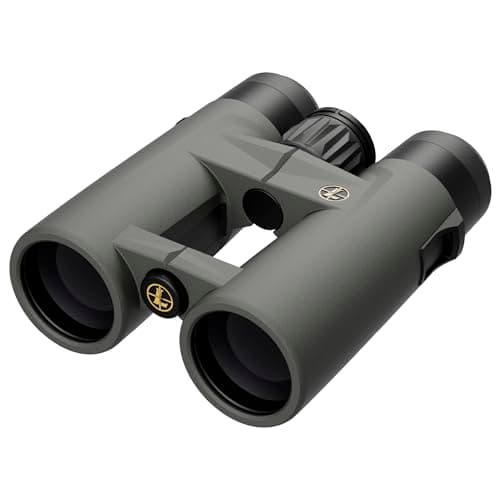 Leupold BX-4 Pro Guide HD 8x42 Gen 218 mm of eye relief and a lifetime guarantee that asks no questions, in a 24.5 oz open-bridge body. | Best for hard use and glassesHard use and glasses wearers | 8.7out of 10 | |
| 4 | 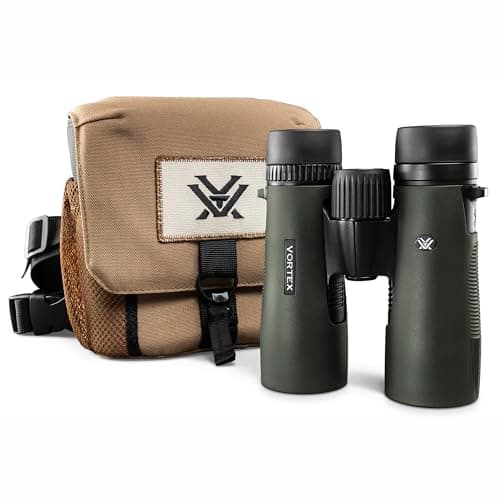 Vortex Diamondback HD 8x42393 ft of field and 17 mm of eye relief at roughly half the Viper HD's price. | Best value 8x42Budget low-light pick | 9.0out of 10 | |
| 5 | 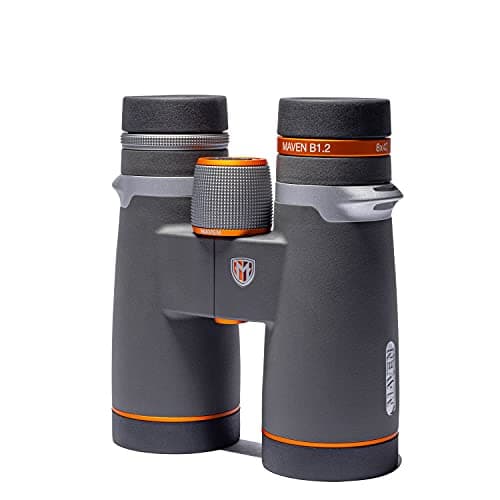 Maven B1.2 8x4293.95 percent light transmission, 420 ft of field and a 4.9 ft near focus - at several times the Diamondback's price. | Best published transmissionPublished transmission and last light | 9.0out of 10 | |
| 6 | 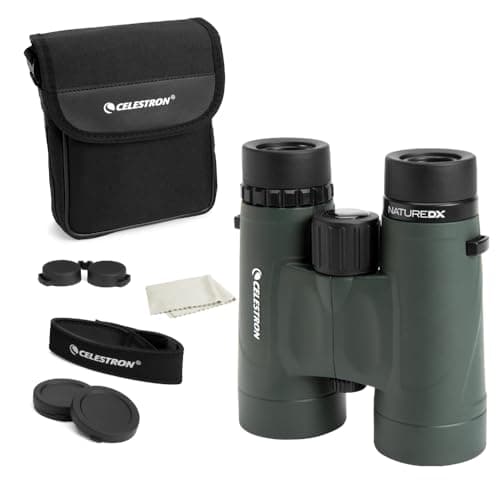 Celestron Nature DX 8x42The entry-level floor, and the best of this group for wildlife as well as hunting. | Cheapest worth owningDual-use glassing and wildlife | 7.7out of 10 | $148.99 on Amazon $179.95 17% off |
Prices are pulled live from Amazon and were last checked October 5, 2026; if a figure cannot be verified the button reads "Check price" instead. Scores are our editorial judgment against the published ranking criteria, not a test result. #ad How we earn.
What the published figures actually show
| Model | Field at 1,000 yd | Eye relief | Weight | Exit pupil | Transmission |
|---|---|---|---|---|---|
| Celestron Nature DX 8x42 | Not published as ft/1,000 yd | 17.5 mm | Light for a 42 mm | 5.25 mm | Not published |
| Vortex Diamondback HD 8x42 | 393 ft | 17 mm | 21.8 oz | 5.25 mm | Not published |
| Leupold BX-4 Pro Guide HD 8x42 Gen 2 | 376 ft | 18 mm | 24.5 oz | 5.25 mm | Not published |
| Vortex Viper HD 8x42 | 409 ft | 18.0 mm | 24.5 oz | 5.25 mm | Not published |
| Maven B1.2 8x42 | 420 ft | 18.1 mm | 26.8 oz | 5.3 mm | 93.95 % |
| Nikon Monarch M7 8x42 | 435 ft | 17.1 mm | 23.6 oz | 5.3 mm | Not published |
Exit pupil is objective divided by magnification: 42 / 8 = 5.25 mm. Maven and Nikon publish 5.3 mm, which is the same figure rounded differently. Five of six makers do not publish light transmission, which is the single most useful specification in this format and the one hardest to shop on.
Read that table twice, because it argues against most of what you will read elsewhere. Field of view spans 59 ft and eye relief spans 1.1 mm across a price range of roughly seven to one. The expensive binoculars here are not specification monsters; they are better-transmitting, better-resolving versions of the same arithmetic. If a page tells you a premium binocular is dramatically brighter *because it gathers more light*, it is wrong - the aperture is identical. It transmits more of the light it gathers, which is a different and smaller claim.
Why 8x42 rather than 10x42
The case for 8x is three specifications deep. Exit pupil goes from 4.2 mm to 5.25 mm, so the image holds up visibly later into dusk. Field of view goes up by 50 to 70 ft in the same product line, so you find animals faster. And the image shakes less in your hands, because magnification multiplies tremor as well as detail - which for a lot of hunters is the difference between glassing offhand and needing a tripod.
What you give up is resolvable detail at distance. Twilight factor drops from 20.5 to 18.3, and judging antler mass on a bedded animal at 600 yards is genuinely harder with an 8x. If that is the task in front of you, buy a 10x42 or a 12x50 and accept the dimmer, narrower, shakier image as the price. The full head-to-head is here.
Who should not buy an 8x42
- You glass open basins and judge animals at 500 yards or more. Buy a 10x42 or a 12x50. The extra magnification is doing work an 8x cannot do.
- You already own a competent 10x42 and your complaint is distance, not light. A second binocular in a different format is a worse purchase than a tripod and an adapter, which does more for a shaky image than any optic swap.
- Your budget is under about $120. Nothing in this format is worth owning down there. Save for a few more weeks and buy the Celestron or the Diamondback HD.
The picks in detail
Price as of October 5, 2026. #ad How we earn
Vortex Viper HD 8x42
The same body and glass as the 10x42 with a 5.25 mm exit pupil instead of 4.2 mm, which is why it looks brighter in the final ten minutes of legal light.
| Magnification | 8x |
|---|---|
| Objective lens | 42 mm |
| Eye relief | 18.0mm |
| Field of view | 409' @ 1000 yds |
| Angular field of view | 7.8º |
| Close focus | 6.0' |
| Weight | 24.5 oz. |
| Height | 5.6" |
| Width | 4.9" |
| Exit pupil (computed) | 5.25 mm |
| Twilight factor (computed) | 18.3 |
Specs verified 2026-10-05 from Vortex's published specification. Exit pupil and twilight factor are computed, not quoted.
What it does well
- 5.25 mm exit pupil is the brightest in the Viper 42 mm line
- 18.0 mm eye relief, the most forgiving in the range
- 409 ft field of view makes finding animals in cover faster
Where it gives ground
- 8x will not resolve a bedded buck at 800 yards
- Costs the same as the 10x42, so the choice is purely about terrain
Skip it if
Most of your glassing is across open basins - you will want the 10x or 12x.
How this score breaks down
- Low-light performance (weight 5)9.5
- Optical quality per dollar (weight 4)9.0
- Field of view (weight 3)9.0
- Eye relief (weight 3)9.5
- Weight and ergonomics (weight 2)8.5
- Warranty (weight 2)10.0
Weights and definitions are published on how we review. These are editorial judgments from published specs and documented consensus, not test results.
This is the pick because it loses nothing badly. Vortex publishes 409 ft of linear field at 1,000 yards, 18.0 mm of eye relief, 6.0 ft close focus and 24.5 oz (read from Vortex's own page on 2026-10-05). Only two binoculars on this page publish a wider field, and both of them cost more. Nothing here publishes more eye relief except by a tenth of a millimeter.
The coating specification is where the price above the Diamondback HD goes: XR Plus on every air-to-glass surface, dielectric prism coatings, phase correction. Vortex does not publish a transmission percentage, which is the honest limit of what we can tell you - the coating list says the design intends high transmission, and it does not prove a number.
Where it gives ground. It is a mid-priced binocular and the outer edge of the image is softer than alpha glass. The focus wheel is firmer in the cold than the Nikon's. And at 24.5 oz it is nearly an ounce heavier than the Monarch M7 with 26 ft less field, which is a real trade and not a rounding error.
Price as of October 5, 2026. #ad How we earn
Nikon Monarch M7 8x42
435 ft of field at 1,000 yards - the widest view of any 8x42 on this site, in the lightest body of the group.
| Magnification | 8x |
|---|---|
| Objective lens | 42 mm |
| Eye relief | 17.1 mm |
| Field of view | 435 ft @ 1,000 yd |
| Real angular field of view | 8.3° |
| Apparent field of view | 60.3° |
| Close focus | 8.2 ft |
| Weight | 23.6 oz |
| Length | 5.6 in |
| Width | 5.1 in |
| Waterproof | up to 1 m for 10 minutes |
| Exit pupil (published) | 5.3 mm |
| Twilight factor (computed) | 18.3 |
Specs verified 2026-10-05 from Nikon's published specification. Exit pupil and twilight factor are computed, not quoted.
What it does well
- 435 ft field of view, published by Nikon, leads every 8x42 we have verified
- 23.6 oz is the lightest 42 mm here
- 17.1 mm of eye relief and ED glass
Where it gives ground
- Nikon's warranty is not unconditional or transferable
- 8.2 ft close focus is the longest of the group
- Waterproof rating is 1 m for 10 minutes, shorter than the IPX7 ratings around it
Skip it if
You want warranty cover you will never have to argue about - Vortex VIP or Leupold's lifetime guarantee are both stronger.
How this score breaks down
- Low-light performance (weight 5)9.0
- Optical quality per dollar (weight 4)9.0
- Field of view (weight 3)10.0
- Eye relief (weight 3)9.0
- Weight and ergonomics (weight 2)9.5
- Warranty (weight 2)6.5
Weights and definitions are published on how we review. These are editorial judgments from published specs and documented consensus, not test results.
Nikon's published figures for the M7 8x42, read from Nikon's own specification table on 2026-10-05: 8.3 degrees real field, 60.3 degrees apparent, 435 ft at 1,000 yards, 17.1 mm eye relief, 5.3 mm exit pupil, 23.6 oz. The 435 ft figure is 26 ft wider than the Viper HD and 59 ft wider than the Leupold, which is the largest spread any specification on this page produces.
Field of view is the specification that does the most work in hunting, because the task is usually finding an animal rather than studying one. A wider field means fewer passes to cover the same hillside and less chance of sweeping past something. Paired with the lowest weight here, this is the binocular that is easiest to use for four hours straight.
Where it gives ground. Nikon's warranty is a limited warranty, not an unconditional transferable one - if you drop these off a rock face, that difference costs you real money. Close focus is 8.2 ft, the longest on this page, so they are poor for anything closer than game. And the published waterproof rating is 1 m for 10 minutes, where the Maven is rated IPX7 at 1 m for 30 minutes.
Price as of October 5, 2026. #ad How we earn
Leupold BX-4 Pro Guide HD 8x42 Gen 2
18 mm of eye relief and a lifetime guarantee that transfers with the binocular, in an open-bridge body built for a pack frame.
| Magnification | 8x |
|---|---|
| Objective lens | 42 mm |
| Eye relief | 18 mm |
| Field of view | 376 ft @ 1,000 yd |
| Angular field of view | 7° |
| Close focus | 8.7 ft |
| Weight | 24.5 oz |
| Length | 5.7 in |
| Interpupillary distance | 56 - 74 mm |
| Exit pupil (published) | 5.25 mm |
| Twilight factor (computed) | 18.3 |
Specs verified 2026-10-05 from Leupold's published specification. Exit pupil and twilight factor are computed, not quoted.
What it does well
- 18 mm eye relief, published by Leupold, ties the longest here
- Guaranteed for Life cover with no receipt and no owner requirement
- 24.5 oz open-bridge body with a built-in 1/4-20 tripod port
Where it gives ground
- 376 ft of field is 59 ft behind the Monarch M7
- 8.7 ft close focus rules it out for anything but game
- Street price moves around more than the Vortex line does
Skip it if
Field of view is what you are shopping for - three binoculars on this page publish a wider one.
How this score breaks down
- Low-light performance (weight 5)8.5
- Optical quality per dollar (weight 4)8.5
- Field of view (weight 3)7.5
- Eye relief (weight 3)10.0
- Weight and ergonomics (weight 2)9.0
- Warranty (weight 2)9.5
Weights and definitions are published on how we review. These are editorial judgments from published specs and documented consensus, not test results.
Leupold publishes 376 ft of field, 7 degrees angular field, 18 mm of eye relief, 5.25 mm exit pupil, 8.7 ft close focus, 24.5 oz and 5.7 in of length for the Gen 2 8x42 (read 2026-10-05). The two numbers worth buying for are the 18 mm of eye relief and the guarantee behind it.
Eye relief is the specification glasses wearers feel most immediately. Under about 15 mm you see a vignetted circle instead of the full field, and all the field of view you paid for is wasted. 18 mm is enough that the published 376 ft is actually 376 ft on your eye - which can make this the practical winner over a wider binocular with shorter relief.
Where it gives ground. 376 ft is the narrowest field of the five hunting-first picks here, and the gap to the Nikon is visible rather than theoretical. Close focus at 8.7 ft is long. Street pricing moves more than Vortex's does, so the comparison against the Viper HD changes month to month - check both before you commit.
Price as of October 5, 2026. #ad How we earn
Vortex Diamondback HD 8x42
A 5.25 mm exit pupil and 17 mm of eye relief at the $250 tier, which is the combination most first upgrades actually need.
| Magnification | 8x |
|---|---|
| Objective lens | 42 mm |
| Eye relief | 17 mm |
| Field of view | 393 feet/1000 yards |
| Angular field of view | 7.5 degrees |
| Close focus | 5 feet |
| Weight | 21.8 oz |
| Height | 5.8 inches |
| Width | 5.1 inches |
| Exit pupil (computed) | 5.25 mm |
| Twilight factor (computed) | 18.3 |
Specs verified 2026-10-05 from Vortex's published specification. Exit pupil and twilight factor are computed, not quoted.
What it does well
- 5.25 mm exit pupil, the same figure as the Viper HD 8x42
- 17 mm eye relief works with glasses
- 393 ft field of view is wide for the money
Where it gives ground
- 8x limits you in genuinely open country
- Focus wheel is stiffer than the Viper's in the cold
Skip it if
You glass across canyons - the extra magnification matters more than the brightness there.
How this score breaks down
- Low-light performance (weight 5)8.5
- Optical quality per dollar (weight 4)9.5
- Field of view (weight 3)8.5
- Eye relief (weight 3)9.0
- Weight and ergonomics (weight 2)9.0
- Warranty (weight 2)10.0
Weights and definitions are published on how we review. These are editorial judgments from published specs and documented consensus, not test results.
The strongest argument on the site that specification and price separate faster than performance and price. Vortex publishes 393 ft of field, 17 mm of eye relief, 5 ft close focus and 21.8 oz (read 2026-10-05). That is 16 ft of field and 1 mm of eye relief behind the Viper HD, for a price that is usually less than half, with the identical warranty and the lightest weight of the 42 mm bodies here.
If the money for the Viper HD would otherwise come out of a harness, a tripod adapter or your tag budget, buy this instead and do not feel bad about it. It is also the sensible pick for anyone replacing a cheap pair for the first time - the step from a no-name $80 binocular to this is far larger than the step from this to anything above it.
Where it gives ground. Last light. The coatings are a tier below the Viper HD's and the final ten minutes of legal shooting light is exactly where you notice it. The focus wheel is also stiffer in the cold. Neither matters at midday; both matter at dusk, which is when you are most likely to be looking.
Price as of October 5, 2026. #ad How we earn
Maven B1.2 8x42
The only 8x42 here that publishes a light-transmission figure - 93.95 percent - alongside 420 ft of field and a 4.9 ft near focus.
| Magnification | 8x |
|---|---|
| Objective lens | 42 mm |
| Eye relief | 18.1 mm |
| Field of view | 420 ft @ 1,000 yd |
| Angular field of view | 8.0° |
| Near focus | 4.9 ft |
| Light transmission | 93.95 % |
| Prism | Wide Angle Schmidt-Pechan, dielectric coated |
| Weight | 26.808 oz |
| Dimensions (W x H x D) | 5.2 x 5.7 x 2.2 in |
| Waterproof | 1 m for 30 min (IPX7) |
| Exit pupil (published) | 5.3 mm |
| Twilight factor (computed) | 18.3 |
Specs verified 2026-10-05 from Maven's published specification. Exit pupil and twilight factor are computed, not quoted.
What it does well
- 93.95 percent light transmission, published by Maven
- 420 ft of field with 18.1 mm of eye relief
- 4.9 ft near focus is the shortest of the group
- Unconditional lifetime warranty, sold direct
Where it gives ground
- 26.8 oz is the heaviest 8x42 on this page
- Direct-to-consumer pricing sits far above the rest of the format
- No dealer network - you cannot pick one up and look through it first
Skip it if
You are not certain you can see the difference a premium 8x42 makes. Borrow one first; the Viper HD does most of this for a fraction of the money.
How this score breaks down
- Low-light performance (weight 5)10.0
- Optical quality per dollar (weight 4)7.0
- Field of view (weight 3)9.5
- Eye relief (weight 3)10.0
- Weight and ergonomics (weight 2)7.0
- Warranty (weight 2)10.0
Weights and definitions are published on how we review. These are editorial judgments from published specs and documented consensus, not test results.
Maven is the only maker on this page that publishes a transmission figure, and 93.95 percent is a high one (read from Maven's own B1.2 specification table on 2026-10-05, alongside 420 ft of field, 8.0 degrees, 18.1 mm of eye relief, a 4.9 ft near focus and a Wide Angle Schmidt-Pechan prism with dielectric coating). Transmission is the specification that decides the last ten minutes of light, and it is the one almost nobody prints.
Publishing it is itself informative. The 5.25 mm exit pupil on this page is shared by the cheapest Celestron here; what differs is how much of the light entering the objective actually reaches your eye. A maker willing to put a number on that is a maker confident in the answer.
Where it gives ground. It is 26.8 oz, the heaviest here, and that is felt by hour four on a harness. It is sold direct only, so you cannot look through one in a store before buying - and with a binocular at this price, being able to compare it yourself is worth something. The honest version of this recommendation: borrow one first. If you cannot see the difference against a Viper HD, buy the Viper HD and spend the rest on a tripod.
Celestron Nature DX 8x42
A 5.25 mm exit pupil, 17.5 mm of eye relief and a close focus near 6.5 ft, which makes it the best of these for wildlife watching as well as hunting.
| Magnification | 8x |
|---|---|
| Objective lens | 42 mm |
| Exit pupil (computed) | 5.25 mm |
| Twilight factor (computed) | 18.3 |
Magnification and objective are the manufacturer's own model designation; exit pupil and twilight factor are computed from them. We could not machine-read Celestron's spec page, so the remaining published figures are not listed rather than guessed.
What it does well
- 17.5 mm eye relief, verified in Celestron's published specs
- Close focus is far shorter than hunting-first designs
- Very light for a 42 mm
Where it gives ground
- BaK-4 prisms without ED glass - chromatic aberration is visible
- Not built to the same abuse standard as hunting-first brands
Skip it if
This is strictly a hunting optic for you - the Diamondback HD is tougher for the money.
How this score breaks down
- Low-light performance (weight 5)6.5
- Optical quality per dollar (weight 4)8.5
- Field of view (weight 3)7.5
- Eye relief (weight 3)9.0
- Weight and ergonomics (weight 2)9.0
- Warranty (weight 2)6.0
Weights and definitions are published on how we review. These are editorial judgments from published specs and documented consensus, not test results.
Here because it marks the floor of what we would recommend, not because it competes with the five above it. Celestron's published figures put eye relief at 17.5 mm and close focus far shorter than the hunting-first designs, which makes it the one binocular on this page that is genuinely good for birds and bugs as well as deer.
Where it gives ground. BaK-4 prisms without ED glass, so color fringing on a dark animal against bright brush is visible in a way it is not on the Viper HD. It is also not built to the abuse standard of the hunting brands, and Celestron's warranty is the weakest here. If your binocular lives on a pack frame in the rain, spend the extra and buy the Diamondback HD.
Spend what is left on a harness, not on glass
If you are choosing between the Viper HD on a neck strap and the Diamondback HD plus a harness, take the second every time. A binocular on a strap swings, hits your sternum when you bend, and sits open to rain and brush - which is how it ends up in a pack, then in the truck, then unused. Harnesses start around $29 and no $29 of extra glass does as much.
The same logic applies one step further up. An 8x42 is steady enough to use offhand, which is most of its appeal, but on a tripod even an 8x finds bedded animals that a handheld 10x walks straight past. If you are weighing the last $300 of an upgrade, a mid-priced 8x42 plus a tripod and adapter beats a premium 8x42 on its own, nearly every time.
Questions people actually ask
Is 8x42 good for hunting?
What is the exit pupil of an 8x42?
Which 8x42 has the widest field of view?
Are expensive 8x42 binoculars worth it?
8x42 or 10x42 if I only own one pair of binoculars?
Sources
- Vortex Viper HD 8x42 published specifications - read 2026-10-05
- Vortex Diamondback HD 8x42 published specifications - read 2026-10-05
- Nikon MONARCH M7 8x42 published specification table - read 2026-10-05
- Leupold BX-4 Pro Guide HD 8x42mm Gen 2 published specifications - read 2026-10-05
- Maven B1.2 published specification table - read 2026-10-05