We earn a commission if you buy through the links on this page, at no extra cost to you. It never changes which products we pick or how we rank them - read the full disclosure.
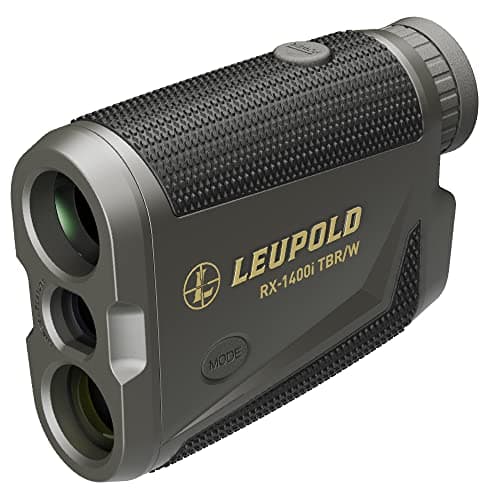
Our top pick
Leupold RX-1400i TBR/W Gen 2
TBR/W gives you the true horizontal distance and a holdover value in the same readout, which is the single most useful feature on a hunting rangefinder.
Price as of October 5, 2026. #ad How we earn
Angle compensation is the most important feature on a hunting rangefinder and the most loosely described. Three genuinely different things carry the name, they return three different kinds of answer, and buying the wrong one means doing arithmetic you thought you had paid to avoid.
Why any of this is necessary
Your laser measures the straight line to the target. Gravity acts over the horizontal component of that line. When you are shooting up or down a slope, the two differ - and the one your sights are calibrated for is the horizontal.
The error scales with the angle, not with the distance, which produces a counterintuitive result: it matters proportionally more at close range from a treestand than at long range across a valley. The trigonometry, worked through.
The three kinds, and what each returns
| Type | What it returns | Setup needed | Who it suits |
|---|---|---|---|
| Corrected distance (Vortex HCD, Angle Intelligence) | The horizontal distance in yards | None | Most hunters, rifle or bow |
| Ballistic holdover (Leupold TBR/W) | A holdover in inches, MOA or MIL | Select a ballistic group | Rifle hunters shooting past 300 yd |
| Arrow-matched distance (Leupold FullDraw) | The pin distance for your arrow | Enter arrow weight and speed | Bowhunters |
| Full solver (Sig with Applied Ballistics) | A complete firing solution | Profile your load; sync environmentals | Long-range shooters |
Each row down the table removes a step of mental work and adds a step of setup. Pick the row where that trade favors you.
Quick picks
Ranked by the criteria published on how we review. Tap any row for the full write-up, or go straight to the current price.
| # | Product | Best for | Score | Price |
|---|---|---|---|---|
| 1 | Leupold RX-1400i TBR/W Gen 2TBR/W returns a holdover, which is one step further than a corrected distance. | Best implementation overallBest rangefinder under $250 | 8.9out of 10 | |
| 2 | 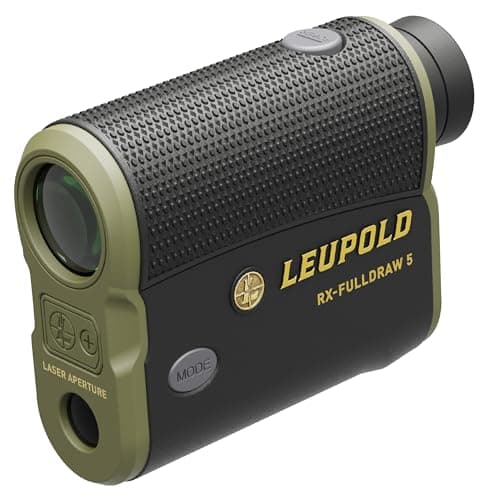 Leupold RX-FullDraw 5Pin-matched distance from your actual arrow, not a generic group. | Best for archeryBowhunting | 9.0out of 10 | |
| 3 | 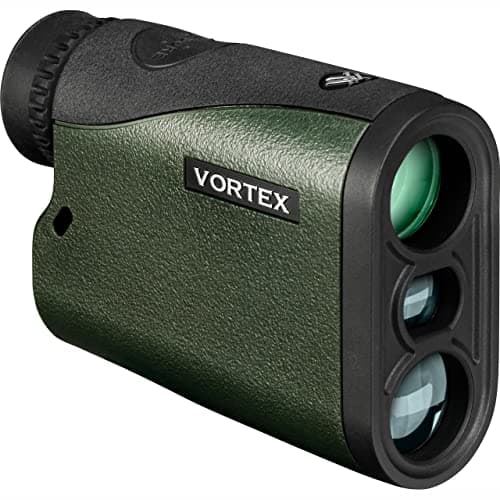 Vortex Crossfire HD 1400HCD returns the horizontal distance. Simple and sufficient. | Best valueSimplest reliable ranging | 7.9out of 10 | |
| 4 | 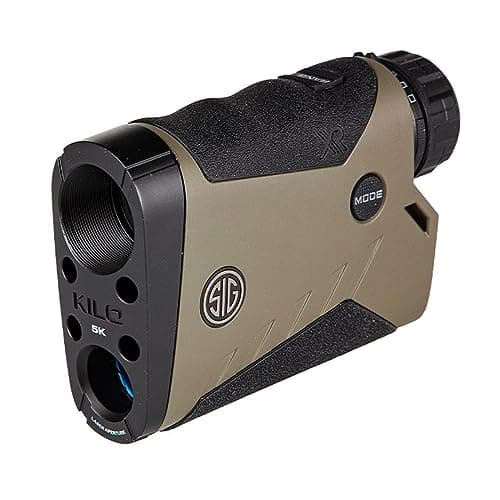 Sig Sauer KILO5KApplied Ballistics returns a full firing solution, not a distance. | Most capableLong-range ballistic solving | 8.9out of 10 | |
| 5 | 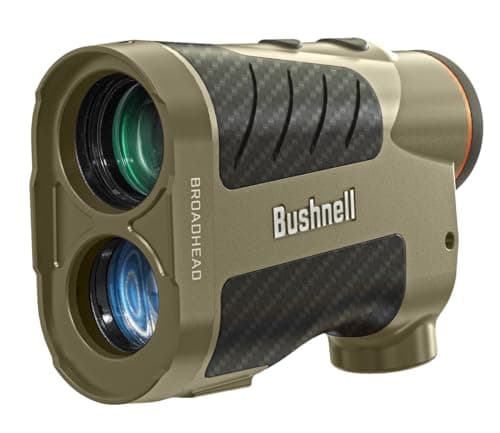 Bushnell BroadheadAngle-compensated ranging with an adaptive display, about $236. | Best budget archery optionBudget bow rangefinder | 8.4out of 10 |
Prices are pulled live from Amazon and were last checked October 5, 2026; if a figure cannot be verified the button reads "Check price" instead. Scores are our editorial judgment against the published ranking criteria, not a test result. #ad How we earn.
Which one you actually need
- Rifle, inside 300 yards, flat-ish ground: corrected distance. Simple, instant, nothing to configure.
- Rifle, past 300 yards or steep ground: TBR/W, so you get the holdover rather than converting a corrected distance yourself.
- Bow, any distance: arrow-matched. Your pins are calibrated to your arrow, not to a ballistic group, so generic correction is the wrong answer.
- Past 600 yards with a configured load: a full solver, and accept the setup time.
The mistake to avoid
Buying a full solver and never configuring it. An unprofiled ballistic solver returns answers based on default assumptions about a load you are not shooting - which is worse than a simple corrected distance, because it looks authoritative. If you will not sit down and enter your actual load, buy the simpler unit.
The picks in detail
Price as of October 5, 2026. #ad How we earn
Leupold RX-1400i TBR/W Gen 2
TBR/W gives you the true horizontal distance and a holdover value in the same readout, which is the single most useful feature on a hunting rangefinder.
Magnification and objective are the manufacturer's own model designation; exit pupil and twilight factor are computed from them. We could not machine-read Leupold's spec page, so the remaining published figures are not listed rather than guessed.
What it does well
- TBR/W reports true ballistic range, not line of sight
- Fast, legible red OLED display in low light
- Compact enough for a harness pouch
Where it gives ground
- Stated ranges assume reflective targets, not deer hide
- No bluetooth or ballistic app integration
Skip it if
You need ranges past 1,000 yards on game - this is not that unit.
How this score breaks down
- Ranging accuracy and range on game (weight 5)8.5
- Angle compensation implementation (weight 5)9.5
- Display legibility in low light (weight 3)9.0
- Speed and scan mode (weight 3)8.5
- One-handed ergonomics (weight 2)9.0
Weights and definitions are published on how we review. These are editorial judgments from published specs and documented consensus, not test results.
The most useful angle compensation at any sensible price: rather than handing you a corrected number to then convert, it gives you the aiming solution directly for a selected ballistic group. In detail.
Price as of October 5, 2026. #ad How we earn
Leupold RX-FullDraw 5
Built specifically around arrow flight: it takes your arrow weight and speed and returns the pin-matched distance rather than a raw number.
Magnification and objective are the manufacturer's own model designation; exit pupil and twilight factor are computed from them. We could not machine-read Leupold's spec page, so the remaining published figures are not listed rather than guessed.
What it does well
- Archery-specific ballistics using your arrow weight and speed
- Flightpath shows whether your arrow clears a branch
- Fast ranging in Scan mode from a stand
Where it gives ground
- Overkill and over-priced if you only shoot a rifle
- Needs setup before the season, not in the stand
Skip it if
You hunt with a rifle. The RX-1400i does the job for less than half.
How this score breaks down
- Ranging accuracy and range on game (weight 5)9.0
- Angle compensation implementation (weight 5)9.5
- Display legibility in low light (weight 3)9.0
- Speed and scan mode (weight 3)8.5
- One-handed ergonomics (weight 2)8.5
Weights and definitions are published on how we review. These are editorial judgments from published specs and documented consensus, not test results.
Archery angle compensation done properly: your arrow weight and speed go in, the pin distance comes out, and Flightpath tells you whether the arrow clears the branch.
Price as of October 5, 2026. #ad How we earn
Vortex Crossfire HD 1400
A 5x21 monocular that ranges to 1,400 yards reflective with HCD angle compensation, at the price where rangefinders stop being a luxury.
| Magnification | 5x |
|---|---|
| Objective lens | 21 mm |
| Eye relief | 16.0mm |
| Field of view | 367' @ 1000 yds |
| Angular field of view | 7.0º |
| Stated accuracy | 1 yds. @100 yds. |
| Weight | 4.8 oz. |
| Length | 4.0" |
| Height | 2.9" |
| Width | 1.3" |
Specs verified 2026-10-05 from Vortex's published specification. Exit pupil and twilight factor are computed, not quoted.
What it does well
- HCD mode gives angle-compensated distance
- 16.0 mm eye relief with a 367 ft field at 5x
- VIP warranty
Where it gives ground
- Display is LCD, not illuminated, so it fades in deep shade
- No ballistic holdover output, just corrected distance
Skip it if
You hunt in low light often - an illuminated display is worth the upgrade.
How this score breaks down
- Ranging accuracy and range on game (weight 5)8.0
- Angle compensation implementation (weight 5)8.5
- Display legibility in low light (weight 3)6.5
- Speed and scan mode (weight 3)8.0
- One-handed ergonomics (weight 2)8.5
Weights and definitions are published on how we review. These are editorial judgments from published specs and documented consensus, not test results.
HCD stands for Horizontal Component Distance, which is exactly what it returns. No ballistic assumptions, nothing to configure - for most hunting this is all you need.
Price as of October 5, 2026. #ad How we earn
Sig Sauer KILO5K
Applied Ballistics onboard and a 7x25 optic: it returns a firing solution rather than a distance, which is what long-range shooting actually needs.
Magnification and objective are the manufacturer's own model designation; exit pupil and twilight factor are computed from them. We could not machine-read Sig Sauer's spec page, so the remaining published figures are not listed rather than guessed.
What it does well
- Onboard Applied Ballistics solver
- Ranges well past practical rifle distances
- Bluetooth profile sync
Where it gives ground
- More capability than most hunters will ever configure
- Menu depth is real - plan on reading the manual
Skip it if
Your shots are inside 400 yards. You are paying for solving you will not use.
How this score breaks down
- Ranging accuracy and range on game (weight 5)9.5
- Angle compensation implementation (weight 5)9.0
- Display legibility in low light (weight 3)8.5
- Speed and scan mode (weight 3)9.5
- One-handed ergonomics (weight 2)7.0
Weights and definitions are published on how we review. These are editorial judgments from published specs and documented consensus, not test results.
The top of the category: your actual load, onboard environmentals and a solution rather than a number. Also more setup than most hunters will do.
Price as of October 5, 2026. #ad How we earn
Bushnell Broadhead
Angle-compensated ranging aimed at archery distances, with ActivSync display that flips between dark and light to stay readable.
Magnification and objective are the manufacturer's own model designation; exit pupil and twilight factor are computed from them. We could not machine-read Bushnell's spec page, so the remaining published figures are not listed rather than guessed.
What it does well
- ActivSync display adapts to background brightness
- Angle compensation at an archery-focused price
- Compact and one-hand operable
Where it gives ground
- Less precise than the FullDraw 5 on true arrow ballistics
- Stated maximum range is optimistic for game
Skip it if
You want arrow-specific holdover rather than corrected distance.
How this score breaks down
- Ranging accuracy and range on game (weight 5)8.0
- Angle compensation implementation (weight 5)9.0
- Display legibility in low light (weight 3)8.5
- Speed and scan mode (weight 3)8.0
- One-handed ergonomics (weight 2)8.5
Weights and definitions are published on how we review. These are editorial judgments from published specs and documented consensus, not test results.
Compensated distance rather than arrow-specific ballistics, at half the FullDraw 5's price. For a lot of bowhunters that is the right trade.
Questions people actually ask
What is the best angle compensating rangefinder?
What is the difference between HCD and TBR?
Do bowhunters need a different kind of angle compensation?
Does angle compensation matter at close range?
Sources
- Leupold RX-1400i TBR/W Gen 2 product page - read 2026-10-05
- Leupold RX-FullDraw 5 product page - read 2026-10-05
- Vortex Crossfire HD 1400 published specifications - read 2026-10-05