We earn a commission if you buy through the links on this page, at no extra cost to you. It never changes which products we pick or how we rank them - read the full disclosure.
Our top pick
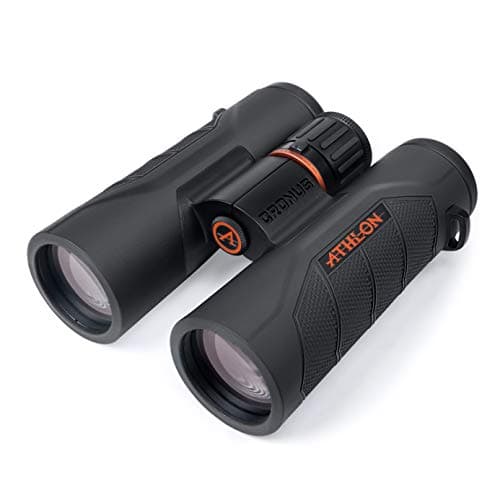
Athlon Cronus G2 UHD 10x42
UHD glass with Abbe-Koenig prisms at roughly half what comparable prism designs cost elsewhere - the clearest value argument above $500.
Price as of October 5, 2026. #ad How we earn
Before the picks, the thing this page has to say: if you are reading it because you upgraded from a cheap pair to a $250 pair and now want to know what is next, the honest answer is that you have already made the big jump, and this one is small.
The sequence goes roughly like this. $120 to $250 is transformative. $250 to $500 is real and worth it if last light matters. $500 to $1,000 buys a premium prism design, better glass at the top of the magnification range, and a view that holds together closer to the edges. You will notice it side by side on a tripod. You will rarely notice it on a hillside at 300 yards with an animal moving.
Which is why this page is organized around *what specific job* the extra money does, rather than around a league table. There are four genuinely different reasons to be in this tier, and they lead to four different binoculars.
Quick picks
Ranked by the criteria published on how we review. Tap any row for the full write-up, or go straight to the current price.
| # | Product | Best for | Score | Price |
|---|---|---|---|---|
| 1 | Athlon Cronus G2 UHD 10x42Abbe-Koenig prisms at roughly half what that design normally costs. | Best under $1,000Best glass under $600 | 8.8out of 10 | |
| 2 | 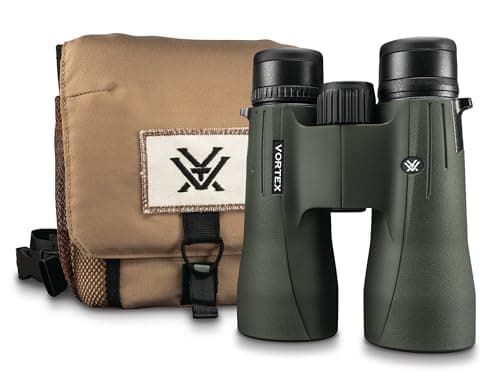 Vortex Viper HD 12x5024.5 twilight factor and 288 ft of field - the detail-resolving choice. | Best for open countryOpen country off a tripod | 8.1out of 10 | |
| 3 | 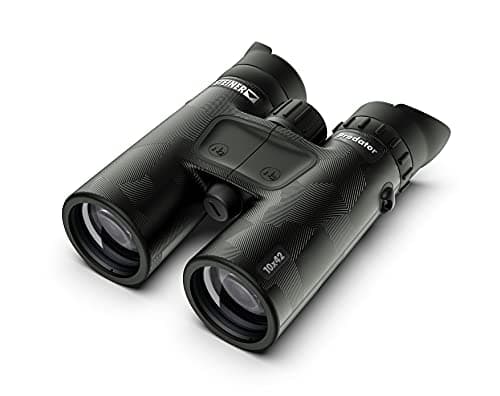 Steiner Predator 10x42CAT coatings deliberately boost contrast in browns and reds. | Best for picking animals out of coverPicking animals out of brush | 7.9out of 10 | |
| 4 | 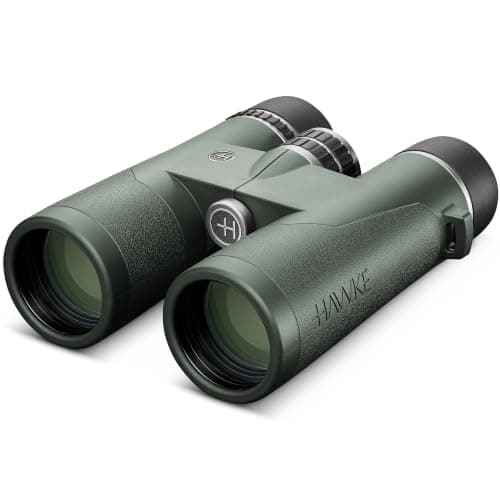 Hawke Frontier ED X Gen 2 8x42ED glass, a 5.25 mm exit pupil and a wide field, under $560. | Best wide-field low-light pickWide-field low-light glassing | 8.7out of 10 | $559.99 on Amazon $609.00 8% off |
| 5 | 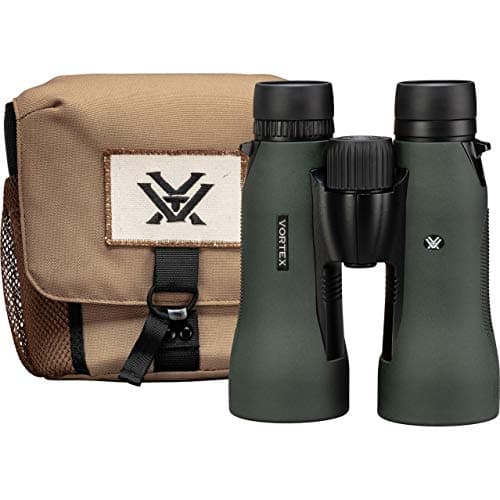 Vortex Diamondback HD 15x56The cheapest credible way to glass all morning without a spotting scope. | Best tripod binocularTripod glassing without a spotting scope | 7.6out of 10 |
Prices are pulled live from Amazon and were last checked October 5, 2026; if a figure cannot be verified the button reads "Check price" instead. Scores are our editorial judgment against the published ranking criteria, not a test result. #ad How we earn.
Four reasons to spend this much, and the pick for each
- You want the best light transmission you can get for the money. Abbe-Koenig prisms, so the Cronus G2 UHD.
- You glass open country and need to resolve detail at distance. Twilight factor 24.5, so the Viper HD 12x50 - with a tripod.
- You struggle to separate animals from brush. Tuned contrast coatings, so the Steiner Predator.
- Last light is your whole problem. A 5.25 mm exit pupil, so the Hawke Frontier ED X 8x42 - and note it costs less than the rest of this page.
What happens above $1,000
Diminishing returns get steeper, not shallower. A Razor UHD at $1,799 and a Swarovski EL at $1,999 are both better than everything on this page - better resolution, better color neutrality, better edge performance, better service. They are not twice as good, because nothing in optics is twice as good as a competent $500 binocular.
What they genuinely offer, beyond the glass, is resale value and the kind of service support that makes a binocular a twenty-year purchase. That is a legitimate reason to buy one. "It will transform your hunting" is not. The upgrade guide works through the whole curve.
The picks in detail
Price as of October 5, 2026. #ad How we earn
Athlon Cronus G2 UHD 10x42
UHD glass with Abbe-Koenig prisms at roughly half what comparable prism designs cost elsewhere - the clearest value argument above $500.
| Magnification | 10x |
|---|---|
| Objective lens | 42 mm |
| Exit pupil (computed) | 4.2 mm |
| Twilight factor (computed) | 20.5 |
Magnification and objective are the manufacturer's own model designation; exit pupil and twilight factor are computed from them. We could not machine-read Athlon's spec page, so the remaining published figures are not listed rather than guessed.
What it does well
- Abbe-Koenig prisms, normally a $1,000-plus feature
- UHD glass controls chromatic aberration well
- Long eye relief
Where it gives ground
- Heavier than the Viper HD
- Brand carries less weight on resale
Skip it if
You will only ever glass in good light. The money buys you edge-of-legal-light performance.
How this score breaks down
- Low-light performance (weight 5)9.0
- Optical quality per dollar (weight 4)9.5
- Field of view (weight 3)8.5
- Eye relief (weight 3)9.0
- Weight and ergonomics (weight 2)7.0
- Warranty (weight 2)8.5
Weights and definitions are published on how we review. These are editorial judgments from published specs and documented consensus, not test results.
Abbe-Koenig prisms do not need a reflective coating on the critical surface, which is why they transmit more light than the Schmidt-Pechan prisms nearly everything below $1,000 uses. Finding that design at this price is the single most interesting thing in this tier. You pay for it in brand equity and service speed rather than in glass.
Price as of October 5, 2026. #ad How we earn
Vortex Viper HD 12x50
A 4.17 mm exit pupil and 288 ft of field, which is the trade you make for the extra detail; plan on a tripod, because 12x shows you your own pulse.
| Magnification | 12x |
|---|---|
| Objective lens | 50 mm |
| Eye relief | 16.0mm |
| Field of view | 288' @ 1000 yds |
| Angular field of view | 5.5º |
| Close focus | 8.0' |
| Weight | 28.8 oz. |
| Height | 6.5" |
| Width | 5.2" |
| Exit pupil (computed) | 3.5 mm |
| Twilight factor (computed) | 22.4 |
Specs verified 2026-10-05 from Vortex's published specification. Exit pupil and twilight factor are computed, not quoted.
What it does well
- 12x resolves antler detail a 10x leaves ambiguous
- 50 mm objective keeps the exit pupil close to the 10x42
- Still fits a standard bino harness
Where it gives ground
- Unusable handheld for sustained glassing - tripod required
- 288 ft field makes picking up moving animals harder
Skip it if
You will not carry a tripod. A shaky 12x sees less than a steady 10x.
How this score breaks down
- Low-light performance (weight 5)8.0
- Optical quality per dollar (weight 4)9.0
- Field of view (weight 3)7.0
- Eye relief (weight 3)8.0
- Weight and ergonomics (weight 2)6.5
- Warranty (weight 2)10.0
Weights and definitions are published on how we review. These are editorial judgments from published specs and documented consensus, not test results.
The computed numbers tell the story: a 4.17 mm exit pupil (nearly the same as a 10x42) but a twilight factor of 24.5 against 20.5, which is the figure that tracks detail resolution in poor light. Vortex publishes 288 ft of field and 16.0 mm of eye relief (verified 2026-10-05). At 12x you need a tripod for sustained glassing - that is not optional advice, it is how you get the benefit you paid for.
Price as of October 5, 2026. #ad How we earn
Steiner Predator 10x42
Steiner's CAT coatings deliberately boost contrast in the reds and browns, which genuinely helps separate an animal from cover.
| Magnification | 10x |
|---|---|
| Objective lens | 42 mm |
| Exit pupil (computed) | 4.2 mm |
| Twilight factor (computed) | 20.5 |
Magnification and objective are the manufacturer's own model designation; exit pupil and twilight factor are computed from them. We could not machine-read Steiner's spec page, so the remaining published figures are not listed rather than guessed.
What it does well
- CAT coatings increase contrast against brown and gray backgrounds
- Rugged Makrolon housing
- Long eye relief
Where it gives ground
- The color cast is divisive - it is not a neutral view
- Heavier than most in the class
Skip it if
You want a neutral, natural color rendition.
How this score breaks down
- Low-light performance (weight 5)8.0
- Optical quality per dollar (weight 4)8.0
- Field of view (weight 3)7.5
- Eye relief (weight 3)8.5
- Weight and ergonomics (weight 2)7.0
- Warranty (weight 2)8.0
Weights and definitions are published on how we review. These are editorial judgments from published specs and documented consensus, not test results.
Steiner's approach here is unusual and worth understanding: the coatings are tuned rather than neutral, lifting contrast in the red and brown part of the spectrum to separate an animal from brush. It genuinely helps with that specific task. It also means the view is not color-neutral, which some people dislike intensely. Know which camp you are in before buying.
Hawke Frontier ED X Gen 2 8x42
Hawke's ED X line puts a genuinely wide field and ED glass in the Viper HD's price bracket, with a 5.25 mm exit pupil for last light.
| Magnification | 8x |
|---|---|
| Objective lens | 42mm |
| Exit pupil (computed) | 5.25 mm |
| Twilight factor (computed) | 18.3 |
Specs verified 2026-10-05 from Hawke's published specification. Exit pupil and twilight factor are computed, not quoted.
What it does well
- ED glass with a wide field of view
- 5.25 mm exit pupil for dawn and dusk
- Lifetime warranty
Where it gives ground
- Smaller service footprint in the US
- Less resale demand than Vortex or Leupold
Skip it if
You want a 10x. This listing is the 8x42.
How this score breaks down
- Low-light performance (weight 5)9.0
- Optical quality per dollar (weight 4)8.5
- Field of view (weight 3)9.0
- Eye relief (weight 3)8.5
- Weight and ergonomics (weight 2)8.0
- Warranty (weight 2)8.5
Weights and definitions are published on how we review. These are editorial judgments from published specs and documented consensus, not test results.
Hawke publishes 8x and a 42 mm objective for this model (verified 2026-10-05), which computes to a 5.25 mm exit pupil - the brightest configuration in this tier. Combined with ED glass and a wide field it is the low-light pick here, and it costs less than most of the 10x42s on this page. The trade is a smaller US service footprint.
Price as of October 5, 2026. #ad How we earn
Vortex Diamondback HD 15x56
A 3.73 mm exit pupil and 230 ft of field: the cheapest credible way to sit behind a tripod all morning without carrying a spotting scope.
| Magnification | 15x |
|---|---|
| Objective lens | 56 mm |
| Eye relief | 15.6mm |
| Field of view | 230' @ 1000 yds |
| Angular field of view | 4.4º |
| Close focus | 14.0' |
| Weight | 34.8 oz. |
| Height | 7.1" |
| Width | 5.8" |
| Exit pupil (computed) | 3.73 mm |
| Twilight factor (computed) | 29 |
Specs verified 2026-10-05 from Vortex's published specification. Exit pupil and twilight factor are computed, not quoted.
What it does well
- 15x finds animals a 10x walks past
- 56 mm objective keeps it usable at dawn
- Much lighter and cheaper than a spotting scope setup
Where it gives ground
- 42.7 oz and 15x means a tripod is mandatory, not optional
- Too much magnification for timber or still-hunting
Skip it if
This is your only pair of binoculars. 15x is a second optic, not a first one.
How this score breaks down
- Low-light performance (weight 5)7.5
- Optical quality per dollar (weight 4)9.0
- Field of view (weight 3)6.0
- Eye relief (weight 3)7.5
- Weight and ergonomics (weight 2)5.5
- Warranty (weight 2)10.0
Weights and definitions are published on how we review. These are editorial judgments from published specs and documented consensus, not test results.
A different kind of purchase from everything else on this page. Vortex publishes 230 ft of field and 15.6 mm of eye relief (verified 2026-10-05), and the computed exit pupil is 3.73 mm. At 15x and 42.7 oz a tripod is mandatory, not recommended. As a second optic for sitting behind on a ridge it does most of what a spotting scope does for a third of the combined cost.
Questions people actually ask
Are $1,000 binoculars worth it over $500 ones?
What is an Abbe-Koenig prism and why does it matter?
Should I buy 12x50 binoculars instead of a spotting scope?
Do I need a tripod for 12x or 15x binoculars?
Sources
- Vortex Viper HD 12x50 published specifications - read 2026-10-05
- Vortex Diamondback HD 15x56 published specifications - read 2026-10-05
- Hawke Frontier ED X 8x42 published specifications - read 2026-10-05