We earn a commission if you buy through the links on this page, at no extra cost to you. It never changes which products we pick or how we rank them - read the full disclosure.
Our top pick
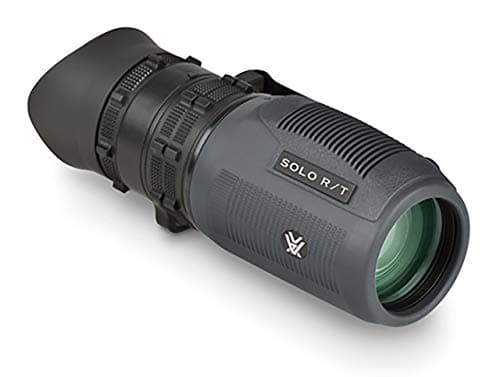
Vortex Solo R/T 8x36
A 4.5 mm exit pupil, 18 mm of eye relief and an MRAD ranging reticle in a unit that weighs a third of a binocular.
Price as of October 5, 2026. #ad How we earn
Monoculars get dismissed, and mostly that is fair. Two eyes resolve low-contrast shapes better than one, tire more slowly, and give you depth perception a single barrel cannot. If you are buying one optic to glass with, buy binoculars. This page is about the specific cases where that advice does not apply.
The three cases where a monocular is right
A pocket or backup optic. A few ounces in a harness pocket that you forget is there until you need it. Nothing else does this - a binocular is always a decision to carry.
Short confirming looks, repeated. Is that an antler or a branch - forty times a day. Raising a monocular one-handed is less motion than raising binoculars, and when you are already holding a bow it may be the only option.
Thermal. Here the sensor is the whole product and a second channel would roughly double the cost for no benefit. Every thermal unit is a monocular for that reason. Our thermal picks.
The arithmetic decides it faster than opinion
| Format | Exit pupil | Honest verdict |
|---|---|---|
| 8x25 | 3.13 mm | Daylight only. Genuinely pocketable. |
| 10x25 | 2.50 mm | Daylight only. The classic compact compromise. |
| 8x36 | 4.50 mm | Usable near legal light. The sweet spot. |
| 10x42 | 4.20 mm | Matches a binocular for light, and nearly for bulk. |
Exit pupil computed as objective divided by magnification. Your dark-adapted pupil wants 5-7 mm, so nothing here fills it - but 4.5 mm is a different proposition from 2.5 mm.
That table is the most useful thing on this page. A 25 mm monocular is a daylight tool, full stop - and that is fine if you know it going in. The 8x36 format is the interesting one: at 4.5 mm it is actually better than a 10x42 binocular for apparent brightness, in a package a third of the size.
Quick picks
Ranked by the criteria published on how we review. Tap any row for the full write-up, or go straight to the current price.
| # | Product | Best for | Score | Price |
|---|---|---|---|---|
| 1 | Vortex Solo R/T 8x364.5 mm exit pupil, 18.0 mm eye relief, and a ranging reticle. | Best hunting monocularRanging reticle in a pocket | 8.6out of 10 | |
| 2 | 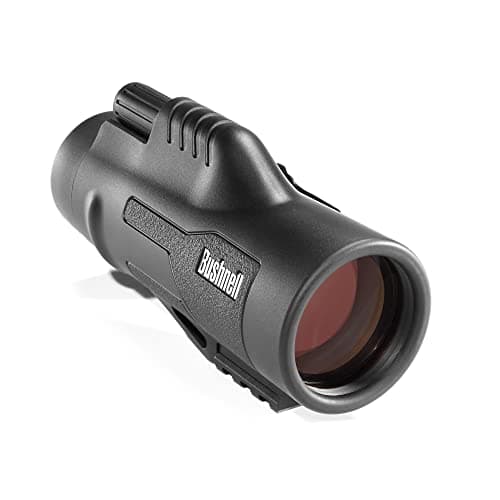 Bushnell Legend 10x42 MonocularA 42 mm objective gives 4.2 mm of exit pupil, about $174. | Best for low lightLow-light monocular | 7.6out of 10 | |
| 3 | 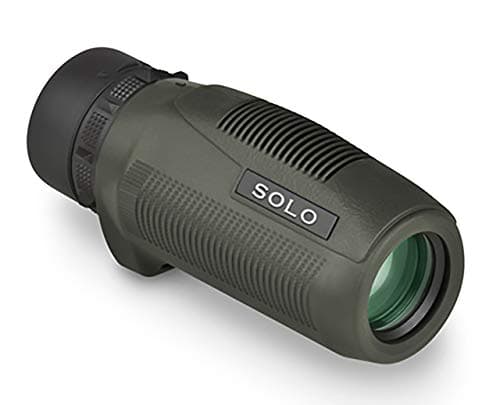 Vortex Solo 10x2510x in a few ounces for about $79, with a 2.5 mm exit pupil. | Best pocket optionThe pocket backup | 7.9out of 10 | |
| 4 | 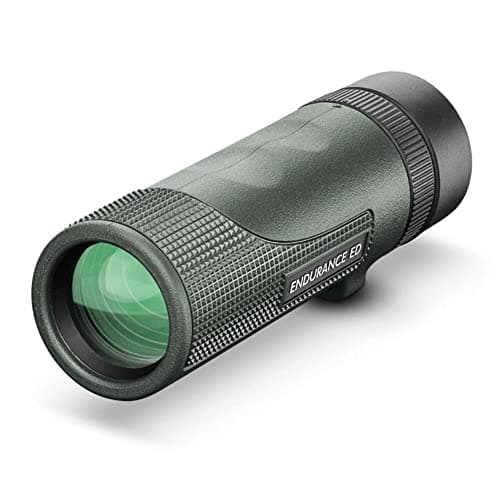 Hawke Endurance ED 10x25 MonocularED elements in a 10x25 for about $100. | Best ED glass under $100ED glass in a monocular | 7.7out of 10 |
Prices are pulled live from Amazon and were last checked October 5, 2026; if a figure cannot be verified the button reads "Check price" instead. Scores are our editorial judgment against the published ranking criteria, not a test result. #ad How we earn.
What you genuinely lose with one eye
- Low-contrast resolution. Your brain combines two images to pull a shape out of a cluttered background. One image gives it less to work with, and a bedded animal in brush is exactly that problem.
- Endurance. Glassing through one eye for twenty minutes is noticeably more tiring, and tired eyes find less.
- Depth perception. Minor for most hunting, and it matters when judging whether an animal is in front of or behind a line of brush.
- Scanning speed. Narrower fields and one-eyed viewing make systematic searching slower.
The picks in detail
Price as of October 5, 2026. #ad How we earn
Vortex Solo R/T 8x36
A 4.5 mm exit pupil, 18 mm of eye relief and an MRAD ranging reticle in a unit that weighs a third of a binocular.
| Magnification | 8x |
|---|---|
| Objective lens | 36 mm |
| Eye relief | 18.0mm |
| Field of view | 393' @ 1000 yds |
| Angular field of view | 7.5º |
| Close focus | 16.4' |
| Weight | 9.7 oz. |
| Length | 4.9" |
| Exit pupil (computed) | 4.5 mm |
| Twilight factor (computed) | 17 |
Specs verified 2026-10-05 from Vortex's published specification. Exit pupil and twilight factor are computed, not quoted.
What it does well
- R/T ranging reticle estimates distance without batteries
- 18.0 mm eye relief, verified in Vortex's published specs
- Half the bulk of binoculars
Where it gives ground
- One eye tires faster than two over a long sit
- No depth perception, which matters in cover
Skip it if
You glass for more than a few minutes at a time.
How this score breaks down
- Low-light performance (weight 4)7.5
- Size and weight (weight 4)8.5
- Optical quality per dollar (weight 4)9.0
- Eye relief (weight 2)9.5
- Build and sealing (weight 2)9.0
Weights and definitions are published on how we review. These are editorial judgments from published specs and documented consensus, not test results.
Vortex publishes 8x, a 36 mm objective, 18.0 mm of eye relief and 393 ft of linear field at 1,000 yards for this unit (verified 2026-10-05). The computed exit pupil is 4.5 mm - which is the figure that matters, because it is above a 10x42 binocular's 4.2 mm and makes this usable near legal light rather than only in daylight.
The R/T ranging reticle estimates distance from an assumed target size, with no batteries involved. It is approximate compared to a laser and it is a genuinely useful backup. At 393 ft the field is wide for a monocular, which makes it less frustrating to scan with than most.
Price as of October 5, 2026. #ad How we earn
Bushnell Legend 10x42 Monocular
A 42 mm objective gives a 4.2 mm exit pupil, which is the only way a monocular stays usable at legal light.
| Magnification | 10x |
|---|---|
| Objective lens | 42 mm |
| Exit pupil (computed) | 4.2 mm |
| Twilight factor (computed) | 20.5 |
Magnification and objective are the manufacturer's own model designation; exit pupil and twilight factor are computed from them. We could not machine-read Bushnell's spec page, so the remaining published figures are not listed rather than guessed.
What it does well
- 4.2 mm exit pupil matches a 10x42 binocular
- ED Prime glass
- Still far smaller than binoculars
Where it gives ground
- Bulky for a monocular - most of a binocular's volume
- One-eyed viewing at 10x is tiring
Skip it if
Size is the reason you want a monocular at all.
How this score breaks down
- Low-light performance (weight 4)8.5
- Size and weight (weight 4)6.0
- Optical quality per dollar (weight 4)8.5
- Eye relief (weight 2)7.0
- Build and sealing (weight 2)8.0
Weights and definitions are published on how we review. These are editorial judgments from published specs and documented consensus, not test results.
The computed exit pupil matches a 10x42 binocular exactly, which is the only way a monocular stays usable at the edges of legal light. The cost is bulk: a 42 mm monocular is most of the volume of a binocular, which undercuts the reason you wanted one.
Price as of October 5, 2026. #ad How we earn
Vortex Solo 10x25
A 2.5 mm exit pupil says this is a daylight optic, and at $79 and a few ounces that is exactly the job it is for.
| Magnification | 10x |
|---|---|
| Objective lens | 25 mm |
| Eye relief | 14.5mm |
| Field of view | 315' @ 1000 yds |
| Angular field of view | 6.0º |
| Close focus | 16.4' |
| Weight | 5.6 oz. |
| Length | 4.4" |
| Exit pupil (computed) | 2.5 mm |
| Twilight factor (computed) | 15.8 |
Specs verified 2026-10-05 from Vortex's published specification. Exit pupil and twilight factor are computed, not quoted.
What it does well
- Small enough to live in a bino harness pocket
- 10x in a unit you forget you are carrying
- VIP warranty
Where it gives ground
- 2.5 mm exit pupil is dim at dawn and dusk
- Narrow field makes scanning slow
Skip it if
This would be your only optic. Buy binoculars.
How this score breaks down
- Low-light performance (weight 4)5.0
- Size and weight (weight 4)9.5
- Optical quality per dollar (weight 4)9.0
- Eye relief (weight 2)7.0
- Build and sealing (weight 2)9.0
Weights and definitions are published on how we review. These are editorial judgments from published specs and documented consensus, not test results.
Vortex publishes 14.5 mm of eye relief and 315 ft of field (verified 2026-10-05). The computed 2.5 mm exit pupil tells you exactly what this is: a daylight tool. Accept that and it is an excellent one at the price, and it lives in a harness pocket indefinitely.
Price as of October 5, 2026. #ad How we earn
Hawke Endurance ED 10x25 Monocular
ED glass in a 10x25 monocular at under $100, which is unusual at this size and price.
| Magnification | 10x |
|---|---|
| Objective lens | 25 mm |
| Exit pupil (computed) | 2.5 mm |
| Twilight factor (computed) | 15.8 |
Magnification and objective are the manufacturer's own model designation; exit pupil and twilight factor are computed from them. We could not machine-read Hawke's spec page, so the remaining published figures are not listed rather than guessed.
What it does well
- ED glass controls fringing better than most compacts
- Under $100
- Waterproof and nitrogen filled
Where it gives ground
- 25 mm objective limits low-light use
- Short eye relief
Skip it if
Dawn and dusk are when you need it.
How this score breaks down
- Low-light performance (weight 4)5.5
- Size and weight (weight 4)9.5
- Optical quality per dollar (weight 4)8.5
- Eye relief (weight 2)6.5
- Build and sealing (weight 2)8.0
Weights and definitions are published on how we review. These are editorial judgments from published specs and documented consensus, not test results.
ED glass in a compact at this price is unusual, and it does visible work on the color fringing that compacts are worst at. The 25 mm objective still computes to 2.5 mm of exit pupil, so the daylight-only limitation stands.
Questions people actually ask
Is a monocular good for hunting?
What size monocular should I buy?
Can a monocular replace binoculars?
What is a ranging reticle on a monocular?
Sources
- Vortex Solo R/T 8x36 published specifications - read 2026-10-05
- Vortex Solo 10x25 published specifications - read 2026-10-05