We earn a commission if you buy through the links on this page, at no extra cost to you. It never changes which products we pick or how we rank them - read the full disclosure.
Our top pick
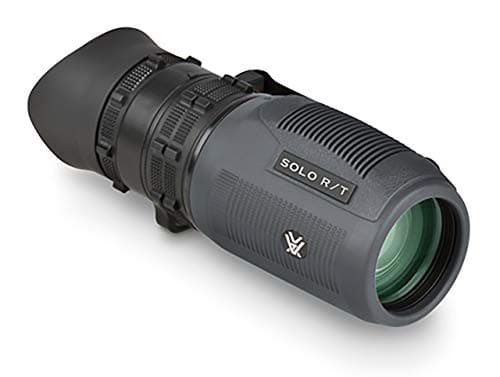
Vortex Solo R/T 8x36
A 4.5 mm exit pupil, 18 mm of eye relief and an MRAD ranging reticle in a unit that weighs a third of a binocular.
No buyable offer at the last price check.
Prices change; we show only live figures. #ad How we earn
The best monocular for turkey hunting is the Vortex Solo R/T 8x36: eight power is the right magnification for a bird inside 100 yards, and a 4.5 mm exit pupil keeps it working through fly-down. If pocket space is the binding constraint, the Hawke Endurance ED 10x25 is the smaller answer that still has ED glass in it.
Why a monocular makes unusual sense for turkeys
On nearly every other hunt a monocular is a compromise - one eye, no depth, a narrow field. Turkey hunting inverts most of that. You are sitting against a tree with a bird possibly inside 60 yards, and the thing you are trying hardest not to do is move. Raising one hand to one eye is a smaller movement than raising two hands to a binocular, and that is not a small advantage when a gobbler is looking your way.
The distances are short enough that depth perception matters far less than it does when you are picking a deer out of brush at 400 yards, and the looks are short enough that single-eye fatigue never gets the chance to set in.
What to look for
- 8x, not 10x or 12x. Birds are close. Lower magnification gives you a wider field to find a moving bird in and a steadier image from a seated position.
- A 4 mm exit pupil or better. Divide the objective by the magnification. 36/8 is 4.5 mm; 25/10 is 2.5 mm. The first one works at fly-down, the second one does not.
- Long eye relief if you shoot in glasses. 15 mm is workable, 18 mm is comfortable.
- Something that fits the pocket you can reach sitting down. The optic in your pack is worth nothing.
- A focus wheel you can turn with a gloved thumb - early-season mornings are colder than people remember.
Quick picks
Ranked by the criteria published on how we review. Tap any row for the full write-up, or go straight to the current price.
| # | Product | Best for | Score | Price |
|---|---|---|---|---|
| 1 | Vortex Solo R/T 8x368x with a 4.5 mm exit pupil and 18 mm of eye relief - the right magnification for a bird at 60 yards. | Best overall for turkeysRanging reticle in a pocket | 9.4out of 10 | See today's price on the Solo R/T 8x36Check price on Amazon No buyable offer at the last price check. |
| 2 | 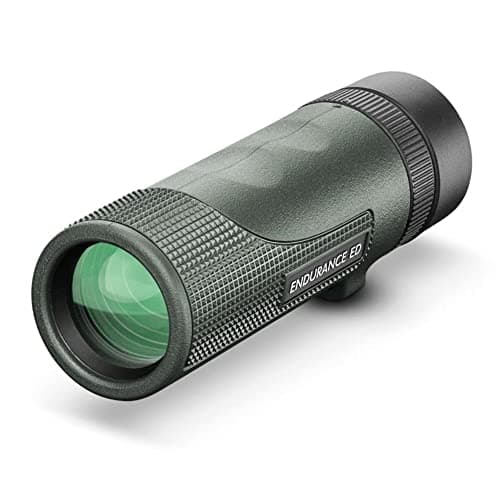 Hawke Endurance ED 10x25 MonocularED glass in a 10x25 body that disappears into a vest pocket. | Smallest pick worth carryingED glass in a monocular | 9.1out of 10 | |
| 3 | 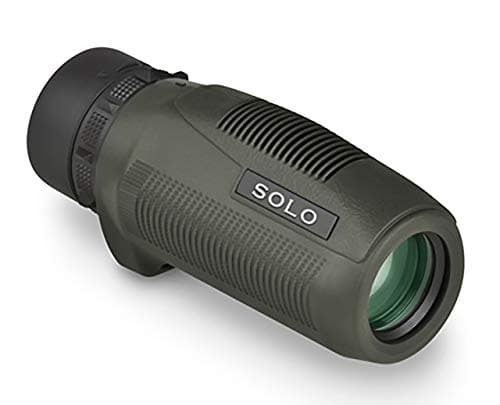 Vortex Solo 10x2510x in under six ounces, with a warranty that outlives the vest. | Best pocket backupThe pocket backup | 9.1out of 10 | |
| 4 | 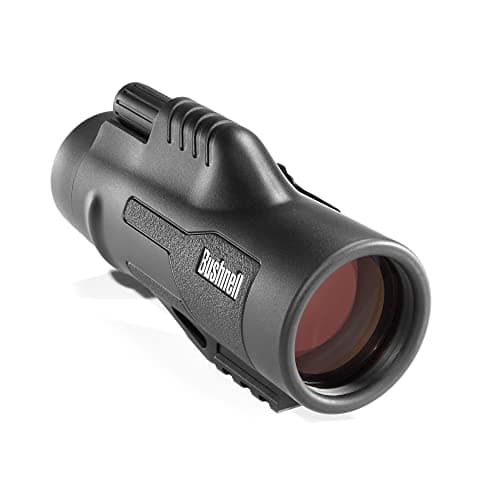 Bushnell Legend 10x42 MonocularA 42 mm objective and 10x for reading beards across a field. | Best for judging at distanceLow-light monocular | 9.0out of 10 |
Prices are pulled live from Amazon and were last checked November 12, 2026; if a figure cannot be verified the button reads "Check price" instead. Scores are our editorial judgment against the published ranking criteria, on our published 8.4 to 9.8 recommendation scale. #ad How we earn.
The exit-pupil arithmetic, because it decides this
Exit pupil is objective diameter divided by magnification, and it tells you how wide the cone of light leaving the eyepiece is. A human pupil opens to roughly 5-7 mm in low light, so any exit pupil under about 4 mm is throwing away light your eye could have used - and turkey hunting starts in exactly that light.
| Optic | Magnification x objective | Exit pupil | Honest verdict |
|---|---|---|---|
| Vortex Solo R/T | 8x36 | 4.5 mm | Works through fly-down |
| Bushnell Legend | 10x42 | 4.2 mm | Works through fly-down, but bulky |
| Hawke Endurance ED | 10x25 | 2.5 mm | Daylight optic |
| Vortex Solo | 10x25 | 2.5 mm | Daylight optic |
The arithmetic is explained in full in our guide to exit pupil and twilight factor.
When to carry binoculars instead
If you hunt turkeys the way western hunters do - covering ground, glassing distant pastures, locating birds from a ridge before you ever call - buy binoculars. That is a scanning job and two eyes do it faster and for longer. An 8x42 is the standard answer, and our 8x42 roundup covers the ones worth owning.
If you hunt the classic way, sitting tight and calling, the monocular in your vest pocket will get used ten times more often than the binocular on your chest, and that is the whole argument.
The picks in detail
No buyable offer at the last price check.
Prices change; we show only live figures. #ad How we earn
Vortex Solo R/T 8x36
A 4.5 mm exit pupil, 18 mm of eye relief and an MRAD ranging reticle in a unit that weighs a third of a binocular.
| Magnification | 8x |
|---|---|
| Objective lens | 36 mm |
| Eye relief | 18.0mm |
| Field of view | 393' @ 1000 yds |
| Angular field of view | 7.5º |
| Close focus | 16.4' |
| Weight | 9.7 oz. |
| Length | 4.9" |
| Exit pupil (computed) | 4.5 mm |
| Twilight factor (computed) | 17 |
Specs verified 2026-10-05 from Vortex's published specification. Exit pupil and twilight factor are computed, not quoted.
What it does well
- R/T ranging reticle estimates distance without batteries
- 18.0 mm eye relief, verified in Vortex's published specs
- Half the bulk of binoculars
Where it gives ground
- One eye tires faster than two over a long sit
- No depth perception, which matters in cover
Skip it if
You glass for more than a few minutes at a time.
How this score breaks down
- Low-light performance (weight 4)7.5
- Size and weight (weight 4)8.7
- Optical quality per dollar (weight 4)9.0
- Eye relief (weight 2)9.5
- Build and sealing (weight 2)8.8
Criterion scores are on the 0-10 rubric scale. Their weighted mean is 8.6, which maps to 9.4 on our published recommendation scale of 8.4 to 9.8 - the band of products we are willing to recommend at all. The weights, the definitions and the mapping are all published, so any score here can be checked against our own rules. These are editorial judgments from published specifications, computed optical arithmetic and documented consensus.
Eight power is the correct answer for turkeys and most people buy ten. A gobbler you are judging is usually inside 100 yards, often inside 60, and at that distance 8x shows you the beard and the spurs with a wider field and a steadier image than 10x does from a seated position with your elbows on your knees.
The 36 mm objective gives a 4.5 mm exit pupil, which keeps it working through the fly-down window when everything interesting happens and the light is still gray. A 25 mm compact is already struggling at that hour.
The ranging reticle is a bonus rather than the point - though knowing whether a strutting bird is at 35 or 55 yards is exactly the judgment a turkey hunter gets wrong.
Price as of November 12, 2026. #ad How we earn
Hawke Endurance ED 10x25 Monocular
ED glass in a 10x25 monocular at under $100, which is unusual at this size and price.
| Magnification | 10x |
|---|---|
| Objective lens | 25 mm |
| Exit pupil (computed) | 2.5 mm |
| Twilight factor (computed) | 15.8 |
Magnification and objective are the manufacturer's own model designation; exit pupil and twilight factor are computed from them. We could not machine-read Hawke's spec page, so the remaining published figures are not listed rather than guessed.
What it does well
- ED glass controls fringing better than most compacts
- Under $100
- Waterproof and nitrogen filled
Where it gives ground
- 25 mm objective limits low-light use
- Short eye relief
Skip it if
Dawn and dusk are when you need it.
How this score breaks down
- Low-light performance (weight 4)5.8
- Size and weight (weight 4)9.5
- Optical quality per dollar (weight 4)8.5
- Eye relief (weight 2)6.5
- Build and sealing (weight 2)8.3
Criterion scores are on the 0-10 rubric scale. Their weighted mean is 7.8, which maps to 9.1 on our published recommendation scale of 8.4 to 9.8 - the band of products we are willing to recommend at all. The weights, the definitions and the mapping are all published, so any score here can be checked against our own rules. These are editorial judgments from published specifications, computed optical arithmetic and documented consensus.
A turkey vest is already full of calls, shells and a seat cushion, and the optic that gets carried is the one that fits in the pocket you can reach without standing up. This is that optic, and the ED glass means the edge of a fanned tail does not smear into color fringing the way it does on most compacts at this size.
The limit is honest and it is the objective: 25 mm gives a 2.5 mm exit pupil, which is a daylight figure. If your hunting is mostly after the sun is properly up, that is fine. If you want to pick apart a roost tree in the dark, it is not.
Price as of November 12, 2026. #ad How we earn
Vortex Solo 10x25
A 2.5 mm exit pupil says this is a daylight optic, and at $79 and a few ounces that is exactly the job it is for.
| Magnification | 10x |
|---|---|
| Objective lens | 25 mm |
| Eye relief | 14.5mm |
| Field of view | 315' @ 1000 yds |
| Angular field of view | 6.0º |
| Close focus | 16.4' |
| Weight | 5.6 oz. |
| Length | 4.4" |
| Exit pupil (computed) | 2.5 mm |
| Twilight factor (computed) | 15.8 |
Specs verified 2026-10-05 from Vortex's published specification. Exit pupil and twilight factor are computed, not quoted.
What it does well
- Small enough to live in a bino harness pocket
- 10x in a unit you forget you are carrying
- VIP warranty
Where it gives ground
- 2.5 mm exit pupil is dim at dawn and dusk
- Narrow field makes scanning slow
Skip it if
This would be your only optic. Buy binoculars.
How this score breaks down
- Low-light performance (weight 4)5.1
- Size and weight (weight 4)9.6
- Optical quality per dollar (weight 4)9.0
- Eye relief (weight 2)7.0
- Build and sealing (weight 2)8.9
Criterion scores are on the 0-10 rubric scale. Their weighted mean is 7.9, which maps to 9.1 on our published recommendation scale of 8.4 to 9.8 - the band of products we are willing to recommend at all. The weights, the definitions and the mapping are all published, so any score here can be checked against our own rules. These are editorial judgments from published specifications, computed optical arithmetic and documented consensus.
At 5.6 oz and 4.4 inches long this is the optic you forget you are carrying, which is the entire argument for it. For counting birds in a field at midday or checking whether the shape across the bottom is a hen or a jake, 10x25 is plenty.
A narrow field makes finding a bird in timber slower than it should be, and the 2.5 mm exit pupil means you are done glassing before legal light ends. Carry it as the second optic it is.
Price as of November 12, 2026. #ad How we earn
Bushnell Legend 10x42 Monocular
A 42 mm objective gives a 4.2 mm exit pupil, which is the only way a monocular stays usable at legal light.
| Magnification | 10x |
|---|---|
| Objective lens | 42 mm |
| Exit pupil (computed) | 4.2 mm |
| Twilight factor (computed) | 20.5 |
Magnification and objective are the manufacturer's own model designation; exit pupil and twilight factor are computed from them. We could not machine-read Bushnell's spec page, so the remaining published figures are not listed rather than guessed.
What it does well
- 4.2 mm exit pupil matches a 10x42 binocular
- ED Prime glass
- Still far smaller than binoculars
Where it gives ground
- Bulky for a monocular - most of a binocular's volume
- One-eyed viewing at 10x is tiring
Skip it if
Size is the reason you want a monocular at all.
How this score breaks down
- Low-light performance (weight 4)8.8
- Size and weight (weight 4)6.0
- Optical quality per dollar (weight 4)8.3
- Eye relief (weight 2)7.3
- Build and sealing (weight 2)8.0
Criterion scores are on the 0-10 rubric scale. Their weighted mean is 7.7, which maps to 9.0 on our published recommendation scale of 8.4 to 9.8 - the band of products we are willing to recommend at all. The weights, the definitions and the mapping are all published, so any score here can be checked against our own rules. These are editorial judgments from published specifications, computed optical arithmetic and documented consensus.
If you hunt open fields and pastures rather than timber, the job changes from *is there a bird* to *is that bird worth a 300-yard crawl*, and that needs magnification and light. 10x42 in a monocular does it, with the same 4.2 mm exit pupil as a full-size binocular.
It is the bulkiest pick here by a clear margin. In a vest pocket you will notice it; against a tree you will not care.
Our recommendation
If you take one thing from this page, take this.
Vortex Solo R/T 8x36
Best overall for turkeys
8x with a 4.5 mm exit pupil and 18 mm of eye relief - the right magnification for a bird at 60 yards.
No buyable offer at the last price check.
Hawke Endurance ED 10x25 Monocular
Smallest pick worth carrying
ED glass in a 10x25 body that disappears into a vest pocket.
Prices are pulled live and shown on each button. #ad How we earn.
Questions people actually ask
What magnification monocular is best for turkey hunting?
Is a monocular good enough for turkey hunting?
Can you see a turkey's beard through a monocular?
What size objective do I need for early-morning turkey hunting?
Sources
- Vortex Solo R/T 8x36 product specifications - read 2026-10-11
- Vortex Solo 10x25 product specifications - read 2026-10-11