We earn a commission if you buy through the links on this page, at no extra cost to you. It never changes which products we pick or how we rank them - read the full disclosure.
Our top pick
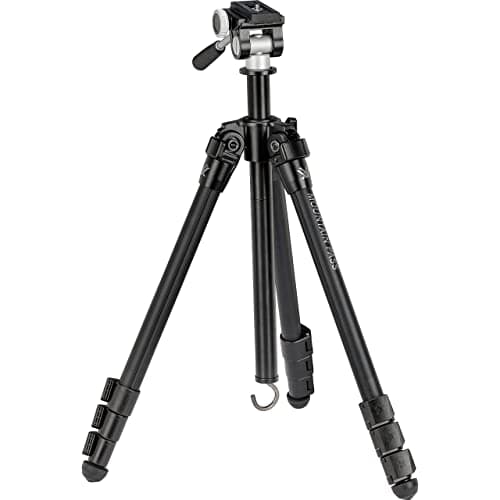
Vortex Mountain Pass Tripod Kit
3.1 lbs of aluminum with a ball head included, which makes it the cheapest way to get binoculars genuinely steady.
Price as of October 5, 2026. #ad How we earn
Here is the claim this page is built on: for most hunters, a $149 tripod and a $67 adapter applied to the binoculars they already own will improve what they see more than a $216 binocular upgrade would. That is a strong claim and the mechanism is straightforward.
Why a tripod does more than better glass
Two reasons, and the second is the bigger one.
It removes shake. At 10x your pulse and your breathing are magnified tenfold. Handheld, you are seeing a slightly moving image, and your eye averages out detail to compensate. Mounted, the image is still and small details - an ear, a leg, the horizontal line of a back - resolve where they did not before.
It makes the grid method possible. Systematic glassing - working a hillside in overlapping squares, holding on each for ten to twenty seconds - is what finds bedded animals. Handheld, that is physically exhausting and nobody does it for forty minutes. Mounted, it is comfortable, and the difference in what you find is not subtle. The technique.
What stability you need, by magnification
| Optic | Stability needed | Sensible spend | Why |
|---|---|---|---|
| 8x or 10x binoculars | Modest | $149 aluminum | Shake is barely visible at 10x; any stable platform works |
| 12x50 binoculars | Good | $149-399 | Shake becomes visible; carbon helps if you carry it far |
| 15x56 binoculars | Stiff | $399 carbon | 15x shows every tremor the tripod allows |
| 65 mm spotting scope | Stiff | $399 carbon | Weight plus magnification |
| 85 mm scope at 60x | Very stiff | $499 carbon | Anything less throws away the scope's resolution |
The pattern: buy for the heaviest, highest-magnification optic you expect to own, because a tripod lasts through several optics and upgrading it later means buying twice.
Quick picks
Ranked by the criteria published on how we review. Tap any row for the full write-up, or go straight to the current price.
| # | Product | Best for | Score | Price |
|---|---|---|---|---|
| 1 | Vortex Mountain Pass Tripod Kit3.1 lbs with a ball head included, about $149. | Best value tripodBest tripod under $150 | 8.1out of 10 | |
| 2 | 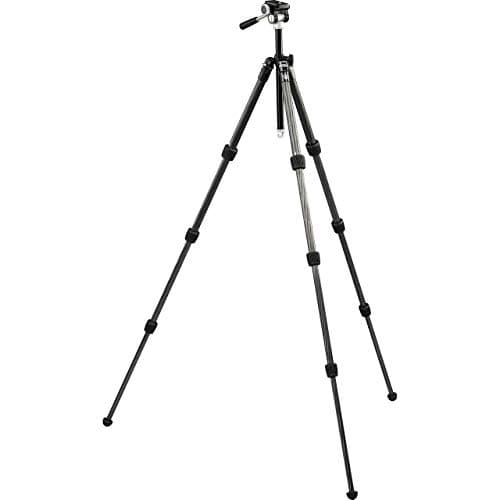 Vortex Summit Carbon II Tripod Kit2.5 lbs of carbon, about $399. | Lightest credible tripodLightest credible tripod | 8.3out of 10 | |
| 3 | 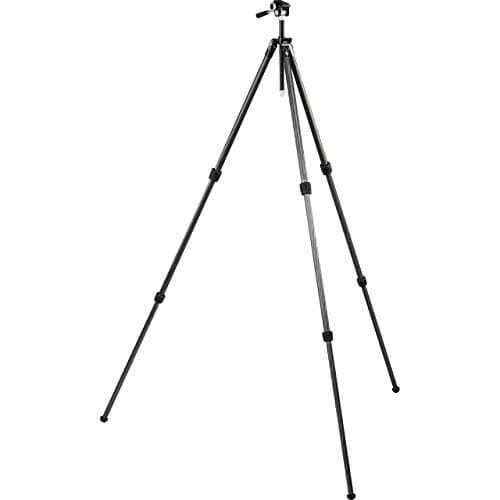 Vortex Ridgeview Carbon Tripod3.2 lbs of carbon, about $499. | Most stableBest glassing tripod | 8.7out of 10 | |
| 4 | 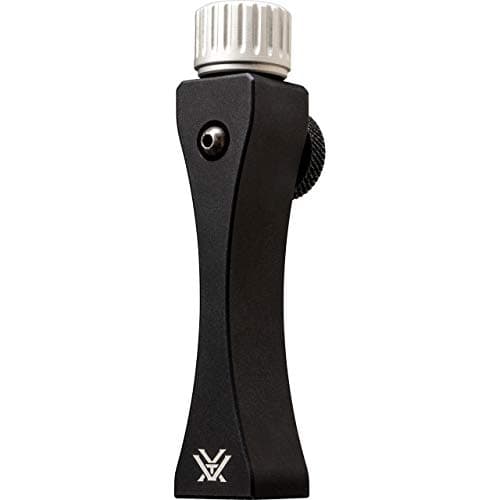 Vortex Pro Binocular AdapterA clamping binocular adapter for about $67. | The adapter you also needBest binocular adapter | 8.7out of 10 | $66.99 on Amazon $99.99 33% off |
| 5 | 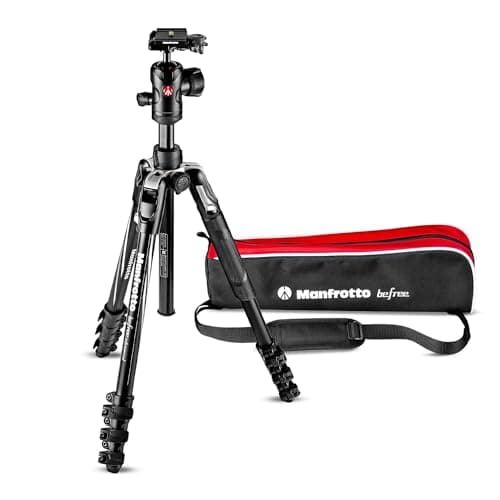 Manfrotto Befree Advanced TripodA photographic travel tripod with a fluid ball head, about $200. | Best dual photo and glassing useDual photo and glassing use | 7.9out of 10 |
Prices are pulled live from Amazon and were last checked October 5, 2026; if a figure cannot be verified the button reads "Check price" instead. Scores are our editorial judgment against the published ranking criteria, not a test result. #ad How we earn.
You also need an adapter, and the cheap ones slip
Binoculars do not mount to a tripod head directly. Almost all center-hinge models have a 1/4-20 threaded socket behind a cap on the front of the hinge, and an adapter bridges that to the head.
The $10 adapters thread into the socket and nothing else, and they work loose. You notice when the binocular has slowly rotated out of level while you were glassing. The better adapters clamp the binocular body as well. On a 15x56 that is not optional. Adapters compared, and how to fit one.
Carbon or aluminum
Carbon damps vibration better at the same stiffness and weighs less. Aluminum is cheaper and heavier. The honest decision rule: if you walk more than a mile from the vehicle, carbon pays for itself; if you glass from near the truck, aluminum is fine and you keep $250.
One practical note either way: keep the center column retracted whenever you can. Extending it is the single biggest loss of stability on any tripod, and it is free to avoid by sitting down instead.
The picks in detail
Price as of October 5, 2026. #ad How we earn
Vortex Mountain Pass Tripod Kit
3.1 lbs of aluminum with a ball head included, which makes it the cheapest way to get binoculars genuinely steady.
Magnification and objective are the manufacturer's own model designation; exit pupil and twilight factor are computed from them. We could not machine-read Vortex's spec page, so the remaining published figures are not listed rather than guessed.
What it does well
- Ball head included at $149
- Stable enough for 15x56 binoculars
- VIP warranty
Where it gives ground
- 3.1 lbs of aluminum is heavy for the stability it gives
- Not stiff enough for an 85 mm scope at 60x
Skip it if
You own a spotting scope. Buy carbon.
How this score breaks down
- Core function (stability or protection) (weight 5)8.0
- Noise and access speed (weight 4)7.5
- Fit, adjustability and comfort (weight 3)8.0
- Weather protection or build (weight 3)8.0
- Value for money (weight 3)9.5
Weights and definitions are published on how we review. These are editorial judgments from published specs and documented consensus, not test results.
Vortex publishes 3.1 lbs for this kit (verified 2026-10-05). Head included, which matters - a tripod without a head is not a usable product and photographic heads are often sold separately. Aluminum rather than carbon, so you are carrying weight for your stability, and at this price that is the right trade for most people.
Price as of October 5, 2026. #ad How we earn
Vortex Summit Carbon II Tripod Kit
2.5 lbs of carbon per Vortex's published spec: light enough to actually carry on a day hunt, which is the only tripod spec that matters.
Magnification and objective are the manufacturer's own model designation; exit pupil and twilight factor are computed from them. We could not machine-read Vortex's spec page, so the remaining published figures are not listed rather than guessed.
What it does well
- 2.5 lbs, verified in Vortex's published specification
- Carbon legs damp vibration better than aluminum
- Packs short enough to strap to a day pack
Where it gives ground
- Less stable than the Ridgeview under a heavy scope
- Leg locks need care in grit
Skip it if
You run an 85 mm scope at 60x in wind.
How this score breaks down
- Core function (stability or protection) (weight 5)8.5
- Noise and access speed (weight 4)8.0
- Fit, adjustability and comfort (weight 3)8.0
- Weather protection or build (weight 3)8.5
- Value for money (weight 3)8.5
Weights and definitions are published on how we review. These are editorial judgments from published specs and documented consensus, not test results.
Vortex publishes 2.5 lbs (verified 2026-10-05). Carbon damps vibration better than aluminum at the same stiffness and weighs less, which is the whole argument. Packs short enough to strap to a day pack. Less stable than the Ridgeview under a heavy optic.
Price as of October 5, 2026. #ad How we earn
Vortex Ridgeview Carbon Tripod
Carbon legs at 3.2 lbs per Vortex's published spec, stiff enough to hold an 85 mm scope at 60x without the image breathing.
Magnification and objective are the manufacturer's own model designation; exit pupil and twilight factor are computed from them. We could not machine-read Vortex's spec page, so the remaining published figures are not listed rather than guessed.
What it does well
- Holds an 85 mm spotting scope steady at full magnification
- 3.2 lbs, verified in Vortex's published specification
- VIP warranty
Where it gives ground
- Costs as much as a Diamondback HD spotting scope
- Overbuilt for binocular-only use
Skip it if
You only tripod binoculars - the Mountain Pass is enough.
How this score breaks down
- Core function (stability or protection) (weight 5)9.5
- Noise and access speed (weight 4)8.0
- Fit, adjustability and comfort (weight 3)8.5
- Weather protection or build (weight 3)9.0
- Value for money (weight 3)8.0
Weights and definitions are published on how we review. These are editorial judgments from published specs and documented consensus, not test results.
Vortex publishes 3.2 lbs (verified 2026-10-05) - heavier than the Summit Carbon II because it is built stiffer. This is the one to buy if you will also put an 85 mm spotting scope on it, which makes it better value than it looks.
Vortex Pro Binocular Adapter
The adapter that actually stays put: it clamps the binocular rather than relying on the tripod socket thread alone.
Magnification and objective are the manufacturer's own model designation; exit pupil and twilight factor are computed from them. We could not machine-read Vortex's spec page, so the remaining published figures are not listed rather than guessed.
What it does well
- Secure clamping rather than thread-only mounting
- Works with most center-hinge binoculars
- VIP warranty
Where it gives ground
- $67 for an adapter feels steep until the cheap one slips
- Adds bulk to the binocular hinge
Skip it if
You tripod your binoculars twice a season.
How this score breaks down
- Core function (stability or protection) (weight 5)9.5
- Noise and access speed (weight 4)8.0
- Fit, adjustability and comfort (weight 3)9.0
- Weather protection or build (weight 3)8.5
- Value for money (weight 3)8.0
Weights and definitions are published on how we review. These are editorial judgments from published specs and documented consensus, not test results.
Binoculars do not mount to tripods directly. This clamps the binocular body rather than relying on the threaded socket alone, which is the difference between a mount that stays put and one that works loose while you glass.
Price as of October 5, 2026. #ad How we earn
Manfrotto Befree Advanced Tripod
A photographic travel tripod that doubles as a glassing platform, which makes sense if you also carry a camera.
Magnification and objective are the manufacturer's own model designation; exit pupil and twilight factor are computed from them. We could not machine-read Manfrotto's spec page, so the remaining published figures are not listed rather than guessed.
What it does well
- Excellent build and fluid ball head
- Folds very short for a pack
- Huge accessory ecosystem
Where it gives ground
- Designed for cameras, not for wind on a ridge
- Center column reduces stability when extended
Skip it if
Glassing is the only job. A hunting-first tripod is stiffer per pound.
How this score breaks down
- Core function (stability or protection) (weight 5)8.0
- Noise and access speed (weight 4)7.5
- Fit, adjustability and comfort (weight 3)8.5
- Weather protection or build (weight 3)7.5
- Value for money (weight 3)8.0
Weights and definitions are published on how we review. These are editorial judgments from published specs and documented consensus, not test results.
Worth considering if you also carry a camera - the build and the head quality are excellent and the accessory ecosystem is enormous. Designed for cameras rather than for wind on a ridge, and the center column reduces stability when extended.
Questions people actually ask
Do I need a tripod for binoculars?
What tripod should I buy for 15x56 binoculars?
Carbon or aluminum tripod for hunting?
Do I need a special head for binoculars?
Sources
- Vortex Mountain Pass tripod kit published specifications - read 2026-10-05
- Vortex Summit Carbon II tripod published specifications - read 2026-10-05
- Vortex Ridgeview carbon tripod published specifications - read 2026-10-05