Mounting binoculars on a tripod takes about thirty seconds once you have done it, and the first time it is not obvious where the mounting point even is.
What you need
- A center-hinge binocular with a tripod socket
- A binocular tripod adapter (clamping, if your binocular is heavy)
- A tripod with a head
- 1
Find the tripod socket and remove the cap
Look at the front of the center hinge, between the objective lenses, on the side facing away from you. There is usually a knurled plastic or metal cap there. Unscrew it counter-clockwise and put it somewhere you will find it again - a pocket, not the ground. Underneath is a 1/4-20 threaded socket. If there is no cap and no socket, your binocular is not tripod-adaptable; some compact and open-bridge designs are not.
- 2
Thread the adapter into the socket
Screw the adapter in finger-tight. Do not use a tool - you are threading into a relatively soft alloy and over-tightening strips it. Finger-tight is correct and sufficient.
- 3
If it is a clamping adapter, close the clamp
A clamping adapter has a second part that grips the binocular body or the hinge. Tighten it until it is firm. This is the part that stops the binocular rotating, so do not skip it because the thread already feels secure.
- 4
Mount the adapter to the tripod head
Either screw the adapter directly onto the head's 1/4-20 stud, or clip it into the head's quick-release plate if it has one. Check that the plate's lever is fully closed - a half-closed quick-release lever is how expensive optics hit rocks.
- 5
Level it, then check it again after five minutes
Get the horizon flat in the view. Then glass for five minutes and check it again. If the horizon has tilted, your adapter is thread-only and relying on friction - that is the failure mode clamping adapters exist to fix, and the only real solution is a better adapter.
The two things that commonly go wrong
You cannot find the socket. It is behind a cap on the front of the center hinge, and on some binoculars that cap looks like a decorative badge rather than a removable part. If there genuinely is no cap, check the manufacturer's specification for tripod adaptability before assuming the binocular is faulty.
The binocular slowly rotates out of level. This is a thread-only adapter working loose under the binocular's weight, and tightening it harder is not the answer - you will strip the socket. A clamping adapter is. Adapters compared.
The stability mistakes that waste the setup
Mounting the binocular is the easy part. These four things determine whether the mount actually improves what you see:
- Keep the center column retracted. Extending it is the single biggest loss of stability on any tripod. Sit down instead of raising the tripod - it costs nothing and it is more comfortable anyway.
- Let go after adjusting. Your hand on the binocular is a vibration source. Adjust, release, pause a second, then look.
- Spread the legs properly and seat the feet. On soft ground push the feet in; on rock find three solid contact points rather than balancing on uneven ones.
- Set the height so your neck is straight. A tripod that makes you crane is a tripod you will stop using after twenty minutes, which defeats the whole purpose.
Why bother at all
Because a mounted binocular makes systematic grid glassing possible, and systematic grid glassing is what finds bedded animals. Handheld, holding on one square of hillside for twenty seconds at a time for forty minutes is exhausting and nobody does it. Mounted, it is comfortable. The technique this unlocks.
What you need
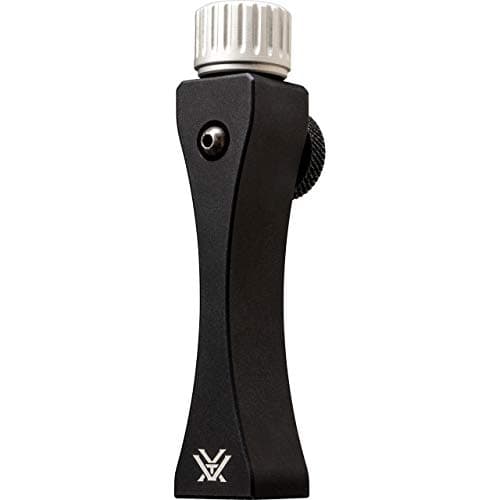
Vortex Pro Binocular Adapter
The adapter that actually stays put: it clamps the binocular rather than relying on the tripod socket thread alone.
Magnification and objective are the manufacturer's own model designation; exit pupil and twilight factor are computed from them. We could not machine-read Vortex's spec page, so the remaining published figures are not listed rather than guessed.
What it does well
- Secure clamping rather than thread-only mounting
- Works with most center-hinge binoculars
- VIP warranty
Where it gives ground
- $67 for an adapter feels steep until the cheap one slips
- Adds bulk to the binocular hinge
Skip it if
You tripod your binoculars twice a season.
How this score breaks down
- Core function (stability or protection) (weight 5)9.5
- Noise and access speed (weight 4)8.0
- Fit, adjustability and comfort (weight 3)9.0
- Weather protection or build (weight 3)8.5
- Value for money (weight 3)8.0
Weights and definitions are published on how we review. These are editorial judgments from published specs and documented consensus, not test results.
Clamps the body rather than relying on thread friction, which is what stops the slow rotation described in step 5 below.
Price as of October 5, 2026. #ad How we earn
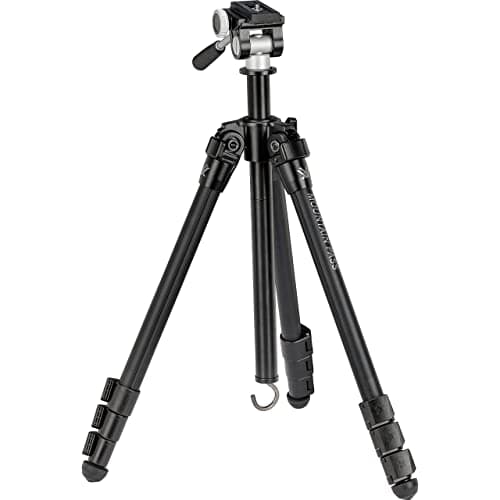
Vortex Mountain Pass Tripod Kit
3.1 lbs of aluminum with a ball head included, which makes it the cheapest way to get binoculars genuinely steady.
Magnification and objective are the manufacturer's own model designation; exit pupil and twilight factor are computed from them. We could not machine-read Vortex's spec page, so the remaining published figures are not listed rather than guessed.
What it does well
- Ball head included at $149
- Stable enough for 15x56 binoculars
- VIP warranty
Where it gives ground
- 3.1 lbs of aluminum is heavy for the stability it gives
- Not stiff enough for an 85 mm scope at 60x
Skip it if
You own a spotting scope. Buy carbon.
How this score breaks down
- Core function (stability or protection) (weight 5)8.0
- Noise and access speed (weight 4)7.5
- Fit, adjustability and comfort (weight 3)8.0
- Weather protection or build (weight 3)8.0
- Value for money (weight 3)9.5
Weights and definitions are published on how we review. These are editorial judgments from published specs and documented consensus, not test results.
Vortex publishes 3.1 lbs (verified 2026-10-05). Head included, which saves working out which head to buy.
Price as of October 5, 2026. #ad How we earn
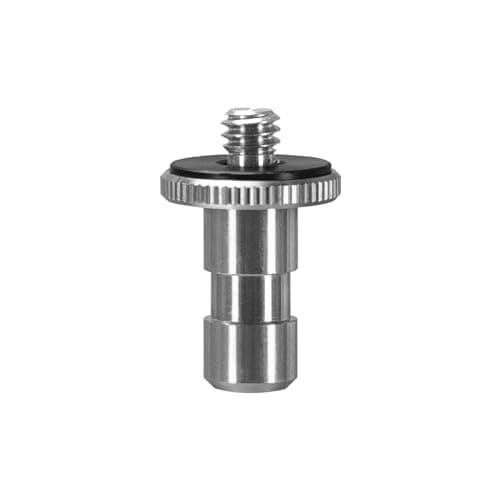
FANAUE Quick-Release Binocular Tripod Adapter
A detachable quick-release adapter at $10 that lets you lift the binoculars off the tripod without unscrewing anything.
Magnification and objective are the manufacturer's own model designation; exit pupil and twilight factor are computed from them. We could not machine-read FANAUE's spec page, so the remaining published figures are not listed rather than guessed.
What it does well
- Quick-release means you are not unscrewing in the cold
- $10
- Standard 1/4-20 compatibility
Where it gives ground
- Plastic components in the release mechanism
- No warranty worth the name
Skip it if
You need it to hold a heavy scope.
How this score breaks down
- Core function (stability or protection) (weight 5)7.0
- Noise and access speed (weight 4)7.5
- Fit, adjustability and comfort (weight 3)7.5
- Weather protection or build (weight 3)7.0
- Value for money (weight 3)9.5
Weights and definitions are published on how we review. These are editorial judgments from published specs and documented consensus, not test results.
Lets you lift the binoculars off without unscrewing anything, which matters in gloves.
Questions people actually ask
Where is the tripod socket on binoculars?
Can you put any binoculars on a tripod?
How tight should a binocular tripod adapter be?
Should I extend the tripod center column?
Sources
- Vortex Pro binocular adapter product page - read 2026-10-05
- Vortex Mountain Pass tripod kit published specifications - read 2026-10-05