We earn a commission if you buy through the links on this page, at no extra cost to you. It never changes which products we pick or how we rank them - read the full disclosure.
Our top pick
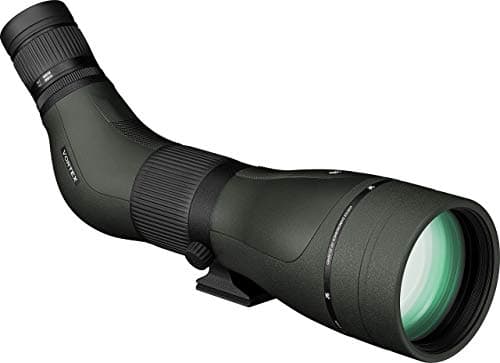
Vortex Diamondback HD 20-60x85
An 85 mm objective, 20-60x, and 18.3-20.3 mm of eye relief for around $500, which is the cheapest credible way into a real spotting scope.
Price as of October 5, 2026. #ad How we earn
A spotting scope is a judging tool, not a finding tool. You find animals with binoculars, because two eyes and a wide field cover ground fast. Then you put the scope on the one you care about and decide whether it is worth the stalk. Buying a scope to replace binoculars is the most expensive mistake in this category.
The specification that sells scopes tells you the least
Maximum magnification. Every scope here reaches 45x or 60x, and almost every scope here looks perfectly good at 20x. What separates them is whether the top of the zoom is usable or merely available.
A $140 scope at 50x gives you a large, dim, soft image that tells you less than its own 30x image does. A $900 scope at 55x gives you detail you can make a decision on. That is the entire price curve in this category, and it is invisible in a spec table.
Exit pupil collapses as you zoom, and that is arithmetic
| Objective | At 15x | At 20x | At 40x | At 60x |
|---|---|---|---|---|
| 65 mm | 4.33 mm | 3.25 mm | 1.63 mm | 1.08 mm |
| 80 mm | - | 4.00 mm | 2.00 mm | 1.33 mm |
| 85 mm | - | 4.25 mm | 2.13 mm | 1.42 mm |
Your pupil opens to roughly 5-7 mm in low light. No spotting scope at any objective or any price is a low-light instrument at the top of its zoom - that is division, not a product flaw. Zoom down at dawn.
Quick picks
Ranked by the criteria published on how we review. Tap any row for the full write-up, or go straight to the current price.
| # | Product | Best for | Score | Price |
|---|---|---|---|---|
| 1 | Vortex Diamondback HD 20-60x85An 85 mm objective and 18.3-20.3 mm of eye relief for about $499. | Best value overallBest spotting scope value | 8.3out of 10 | |
| 2 | 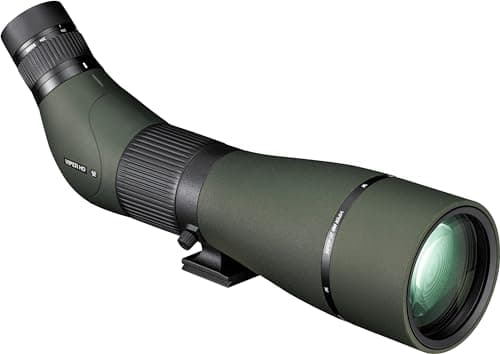 Vortex Viper HD 20-60x85Holds resolution deeper into the zoom, about $899. | Best all-round scopeBest all-round spotting scope | 8.6out of 10 | |
| 3 | 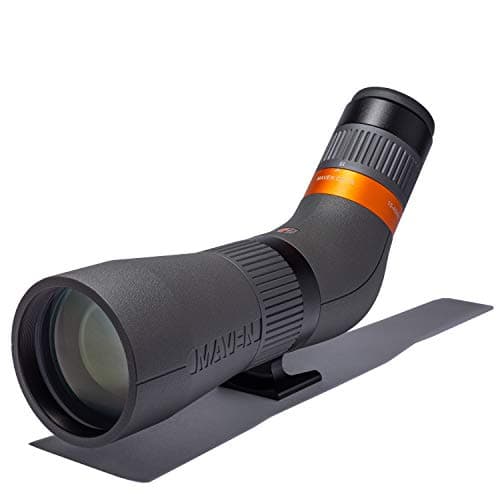 Maven CS.1A 15-45x6540.4 oz at a 65 mm objective - the one that actually gets carried. | Best for the backcountryBackpack spotting scope | 8.4out of 10 | |
| 4 | 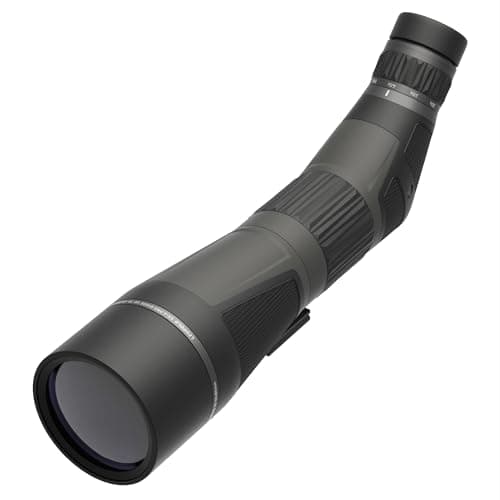 Leupold SX-4 Pro Guide HD 20-60x85Twilight Max HD coatings in a body built for pack frames, about $999. | Toughest buildToughest spotting scope here | 8.2out of 10 | $999.99 on Amazon $1,199.99 17% off |
| 5 | 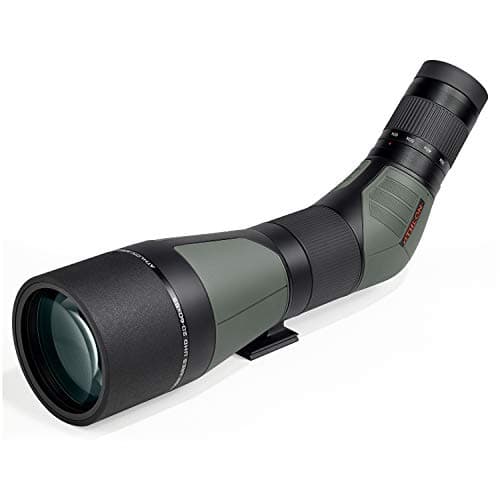 Athlon Ares G2 UHD 20-60x85UHD glass in an 85 mm body for about $900. | Most glass per dollarMost glass per dollar at 85 mm | 8.4out of 10 | |
| 6 | 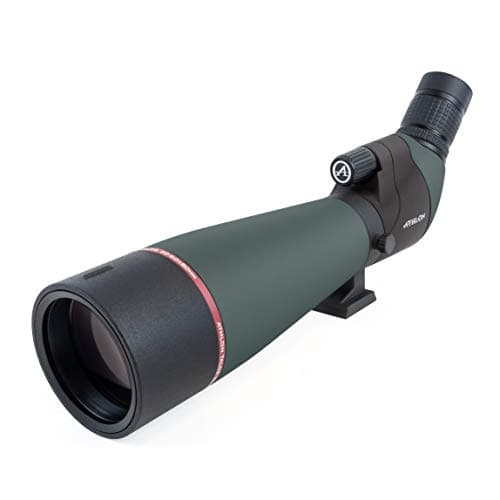 Athlon Talos 20-60x80An 80 mm objective for about $140, with a hard ceiling. | Cheapest usable scopeCheapest usable spotting scope | 6.3out of 10 |
Prices are pulled live from Amazon and were last checked October 5, 2026; if a figure cannot be verified the button reads "Check price" instead. Scores are our editorial judgment against the published ranking criteria, not a test result. #ad How we earn.
The weight question, which decides more purchases than resolution
An 85 mm scope plus a tripod stiff enough to hold it steady at 60x is eight to ten pounds. If that combination means the scope stays in the truck on day four of a hard hunt, a 65 mm that actually comes with you is the better optic. That is not a compromise argument, it is the only argument that matters for a backcountry hunter.
Maven's published 40.4 oz for the CS.1A is the figure to compare against. Our compact scope page goes further into this.
The tripod is part of the scope
At 60x, a tripod that lets the image breathe destroys the resolution you paid for. A cheap aluminum tripod under an 85 mm scope in any wind does exactly that, and it is the most common way hunters waste money on optics: they buy an $899 scope and put it on a $60 tripod.
Budget for carbon legs if you are carrying the scope any distance. Our tripod picks for spotting scopes.
The picks in detail
Price as of October 5, 2026. #ad How we earn
Vortex Diamondback HD 20-60x85
An 85 mm objective, 20-60x, and 18.3-20.3 mm of eye relief for around $500, which is the cheapest credible way into a real spotting scope.
| Magnification | 20-60x |
|---|---|
| Objective lens | 85 mm |
| Eye relief | 18.3mm - 20.3mm |
| Field of view | 108' - 60' @ 1000 yds |
| Angular field of view | 2.1º - 1.1º |
| Close focus | 24.6' |
| Weight | 60.9 oz. |
| Length | 16.0" |
| Exit pupil (computed) | 4.25 mm |
| Twilight factor (computed) | 41.2 |
Specs verified 2026-10-05 from Vortex's published specification. Exit pupil and twilight factor are computed, not quoted.
What it does well
- 85 mm objective gathers enough light for dawn judging
- 18.3-20.3 mm eye relief is unusually generous
- VIP warranty
Where it gives ground
- Image softens noticeably past about 45x
- Needs a tripod costing a meaningful fraction of the scope
Skip it if
You only glass inside 400 yards - 15x56 binoculars are lighter and cheaper.
How this score breaks down
- Resolution at top magnification (weight 5)8.0
- Usable magnification range (weight 4)8.5
- Eye relief across the zoom (weight 3)9.5
- Weight and packability (weight 3)7.0
- Build and sealing (weight 2)8.5
Weights and definitions are published on how we review. These are editorial judgments from published specs and documented consensus, not test results.
Vortex publishes 20-60x, an 85 mm objective, 18.3 to 20.3 mm of eye relief and 2.1 to 1.1 degrees of angular field for this scope (verified 2026-10-05). That eye relief figure is the most generous in this roundup by a clear margin, which matters enormously on a scope you sit behind for an hour.
The computed exit pupil runs from 4.25 mm at 20x down to 1.42 mm at 60x, which is the honest limit of any 85 mm scope at full magnification and not a criticism of this one. Image quality softens noticeably past about 45x - that is where the price sits relative to the Viper HD.
Price as of October 5, 2026. #ad How we earn
Vortex Viper HD 20-60x85
The step where a spotting scope stops being a compromise: usable detail at 60x instead of giving up at 45x.
| Magnification | 20-60x |
|---|---|
| Objective lens | 85 mm |
| Eye relief | 17.8mm - 19.6mm |
| Field of view | 101' - 50' @ 1000 yds |
| Angular field of view | 1.9º - 1.0º |
| Close focus | 36.0' |
| Weight | 76.6 oz. |
| Length | 17.5" |
| Exit pupil (computed) | 4.25 mm |
| Twilight factor (computed) | 41.2 |
Specs verified 2026-10-05 from Vortex's published specification. Exit pupil and twilight factor are computed, not quoted.
What it does well
- Holds resolution much deeper into the magnification range
- 17.8-19.6 mm eye relief across the zoom
- Apochromatic lens system controls color fringing
Where it gives ground
- 65.7 oz means a serious tripod
- Nearly twice the Diamondback HD's price
Skip it if
You judge animals inside 600 yards. The Diamondback HD does that.
How this score breaks down
- Resolution at top magnification (weight 5)9.0
- Usable magnification range (weight 4)9.0
- Eye relief across the zoom (weight 3)9.0
- Weight and packability (weight 3)6.5
- Build and sealing (weight 2)9.0
Weights and definitions are published on how we review. These are editorial judgments from published specs and documented consensus, not test results.
Vortex publishes 17.8 to 19.6 mm of eye relief and 1.9 to 1.0 degrees of field (verified 2026-10-05). The apochromatic lens system is where the money goes, and what it buys is usable detail at 55x and 60x rather than giving up at 45x. If you are judging antler at long range, that is the whole purchase.
Price as of October 5, 2026. #ad How we earn
Maven CS.1A 15-45x65
A 65 mm objective at 40.4 oz per Maven's published spec: the weight compromise that actually gets carried on a backcountry hunt.
| Magnification | 15x |
|---|---|
| Objective lens | 65 mm |
| Magnification range | 15x-45x |
| Weight | 40.4 oz |
| Exit pupil (computed) | 4.33 mm |
| Twilight factor (computed) | 31.2 |
Specs verified 2026-10-05 from Maven's published specification. Exit pupil and twilight factor are computed, not quoted.
What it does well
- 40.4 oz, verified in Maven's published specification
- 15x minimum makes scanning practical
- Lifetime warranty, sold direct
Where it gives ground
- 65 mm gathers less light than an 85 mm at dawn
- 45x ceiling limits fine antler judging
Skip it if
You glass from a truck or a fixed camp - take the 85 mm.
How this score breaks down
- Resolution at top magnification (weight 5)8.5
- Usable magnification range (weight 4)7.5
- Eye relief across the zoom (weight 3)8.0
- Weight and packability (weight 3)9.5
- Build and sealing (weight 2)9.0
Weights and definitions are published on how we review. These are editorial judgments from published specs and documented consensus, not test results.
Maven publishes a 15-45x magnification range and a 40.4 oz weight for this scope (verified 2026-10-05). The computed exit pupil runs 4.33 mm at 15x to 1.44 mm at 45x, which is better at the bottom of the range than an 85 mm at 20x.
Starting at 15x rather than 20x also makes initial scanning genuinely easier. The honest trade is light gathering: a 65 mm collects about 41% less light than an 85 mm, which shows at dawn.
Leupold SX-4 Pro Guide HD 20-60x85
Leupold's Twilight Max HD coatings in a body built to survive being strapped to a pack frame for a week.
| Magnification | 20x |
|---|---|
| Objective lens | 85 mm |
| Exit pupil (computed) | 4.25 mm |
| Twilight factor (computed) | 41.2 |
Magnification and objective are the manufacturer's own model designation; exit pupil and twilight factor are computed from them. We could not machine-read Leupold's spec page, so the remaining published figures are not listed rather than guessed.
What it does well
- Twilight Max HD coatings favor dawn and dusk performance
- Built to Leupold's abuse standard
- Lifetime guarantee
Where it gives ground
- Heavier than the Vortex equivalents
- Eyepiece is less comfortable than Vortex's
Skip it if
Pack weight is your binding constraint.
How this score breaks down
- Resolution at top magnification (weight 5)8.5
- Usable magnification range (weight 4)9.0
- Eye relief across the zoom (weight 3)8.0
- Weight and packability (weight 3)6.0
- Build and sealing (weight 2)9.5
Weights and definitions are published on how we review. These are editorial judgments from published specs and documented consensus, not test results.
Leupold's coatings are tuned towards the edges of the day rather than towards peak midday resolution, which given when animals move is a defensible priority. We could not machine-read Leupold's spec page, so this review quotes no eye relief or field figures for it.
Price as of October 5, 2026. #ad How we earn
Athlon Ares G2 UHD 20-60x85
UHD glass in an 85 mm body at a price that undercuts the Viper HD, which is Athlon's whole argument.
| Magnification | 20x |
|---|---|
| Objective lens | 85 mm |
| Exit pupil (computed) | 4.25 mm |
| Twilight factor (computed) | 41.2 |
Magnification and objective are the manufacturer's own model designation; exit pupil and twilight factor are computed from them. We could not machine-read Athlon's spec page, so the remaining published figures are not listed rather than guessed.
What it does well
- UHD glass with ED elements
- Priced below comparable Vortex and Leupold
- Lifetime transferable warranty
Where it gives ground
- Service turnaround is slower than the majors
- Resale demand is thinner
Skip it if
You need a walk-in dealer for service.
How this score breaks down
- Resolution at top magnification (weight 5)9.0
- Usable magnification range (weight 4)9.0
- Eye relief across the zoom (weight 3)8.5
- Weight and packability (weight 3)6.5
- Build and sealing (weight 2)8.0
Weights and definitions are published on how we review. These are editorial judgments from published specs and documented consensus, not test results.
The same argument Athlon makes everywhere: specification above its price band, with weaker brand equity and slower service as the cost. ED elements in the UHD glass control the color fringing that makes an antler tine against bright sky hard to read.
Price as of October 5, 2026. #ad How we earn
Athlon Talos 20-60x80
An 80 mm objective for around $140 - the point where a spotting scope costs less than the tripod it needs.
| Magnification | 20x |
|---|---|
| Objective lens | 80 mm |
| Exit pupil (computed) | 4 mm |
| Twilight factor (computed) | 40 |
Magnification and objective are the manufacturer's own model designation; exit pupil and twilight factor are computed from them. We could not machine-read Athlon's spec page, so the remaining published figures are not listed rather than guessed.
What it does well
- 80 mm objective at an entry price
- Includes a basic tripod in most listings
- Lifetime warranty
Where it gives ground
- Image degrades sharply above 40x
- Not built for hard backcountry use
Skip it if
You will judge antler at long range - the resolution is not there.
How this score breaks down
- Resolution at top magnification (weight 5)5.5
- Usable magnification range (weight 4)7.0
- Eye relief across the zoom (weight 3)7.0
- Weight and packability (weight 3)6.0
- Build and sealing (weight 2)6.5
Weights and definitions are published on how we review. These are editorial judgments from published specs and documented consensus, not test results.
Included because the floor matters. An 80 mm objective at this price is remarkable and the image degrades sharply above about 40x - which means you are effectively buying a 20-40x scope. For range work and for confirming what binoculars found, that is enough.
Questions people actually ask
What is the best spotting scope for hunting?
Do I need an 85 mm spotting scope?
How much should I spend on a spotting scope?
What magnification do I need in a spotting scope?
Can I use a spotting scope without a tripod?
Sources
- Vortex Diamondback HD 20-60x85 published specifications - read 2026-10-05
- Vortex Viper HD 20-60x85 published specifications - read 2026-10-05
- Maven CS.1A 15-45x65 published specifications - read 2026-10-05