We earn a commission if you buy through the links on this page, at no extra cost to you. It never changes which products we pick or how we rank them - read the full disclosure.
Our top pick
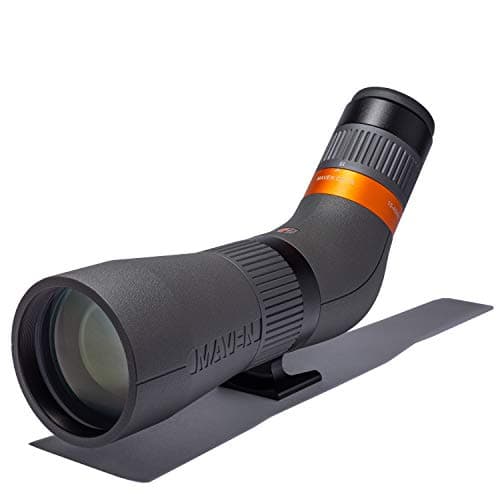
Maven CS.1A 15-45x65
A 65 mm objective at 40.4 oz per Maven's published spec: the weight compromise that actually gets carried on a backcountry hunt.
Price as of October 5, 2026. #ad How we earn
Every discussion of compact spotting scopes gets the framing wrong by comparing scope weights. The number that matters is the scope plus the tripod, because a light scope on a heavy tripod has saved you nothing.
The real weight arithmetic
| Setup | Scope | Tripod | Total |
|---|---|---|---|
| 85 mm plus a stiff carbon tripod | About 66 oz | 3.2 lbs (51 oz) | About 7.3 lbs |
| 65 mm plus a light carbon tripod | 40.4 oz | 2.5 lbs (40 oz) | About 5.0 lbs |
| 15x56 binoculars plus a light carbon tripod | 42.7 oz | 2.5 lbs (40 oz) | About 5.2 lbs |
| 15x56 binoculars plus an aluminum tripod | 42.7 oz | 3.1 lbs (50 oz) | About 5.8 lbs |
Scope and tripod weights read from Vortex's and Maven's published specifications on 2026-10-05. The 85 mm needs the stiffer tripod, which is why its total is 2.3 lbs more rather than 1.6 lbs more.
2.3 pounds is the honest cost of the 85 mm, and it compounds: a stiffer tripod is also bulkier and more awkward to strap to a pack. Over a week-long backcountry hunt that is a real difference in whether the scope gets used.
What 65 mm actually costs you
Light gathering, and it is straightforward: aperture area scales with the square of the diameter, so a 65 mm collects roughly 41% less light than an 85 mm. At the same magnification the 65 mm image is dimmer, and at dawn that matters.
But look at the exit pupil arithmetic, because it is less bad than it sounds. A 65 mm at 15x computes to 4.33 mm. An 85 mm at 20x computes to 4.25 mm. At their respective bottom ends, the compact scope is marginally brighter, because its lower minimum magnification compensates for the smaller aperture.
What you lose is the top end: 45x against 60x, and less aperture to support it. For judging a specific animal at extreme range the 85 mm wins clearly. For finding animals and making most judging calls, the 65 mm is closer than the aperture difference suggests.
Quick picks
Ranked by the criteria published on how we review. Tap any row for the full write-up, or go straight to the current price.
| # | Product | Best for | Score | Price |
|---|---|---|---|---|
| 1 | Maven CS.1A 15-45x6540.4 oz, a 15x bottom end, and a lifetime warranty. | Best compact scopeBackpack spotting scope | 8.4out of 10 | |
| 2 | 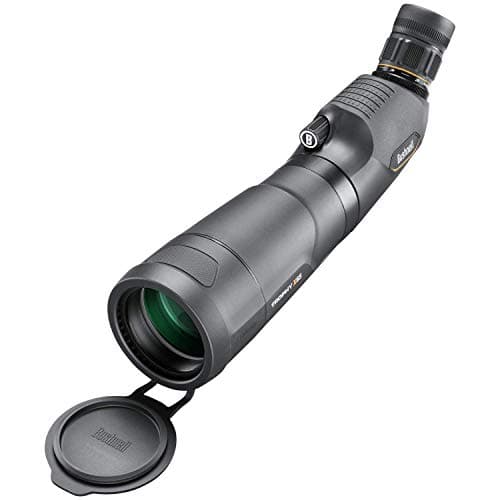 Bushnell Trophy Xtreme 20-60x65A 65 mm with a tripod included, about $228. | Cheapest compactBudget packable scope | 7.1out of 10 | |
| 3 | 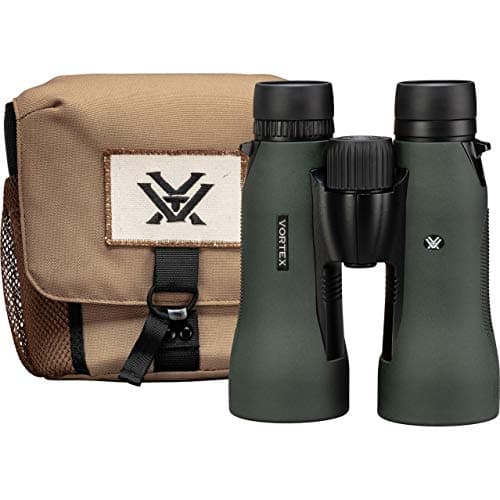 Vortex Diamondback HD 15x5615x56 binoculars at 42.7 oz - two eyes, no eyepiece. | The lighter alternativeTripod glassing without a spotting scope | 7.5out of 10 | |
| 4 | 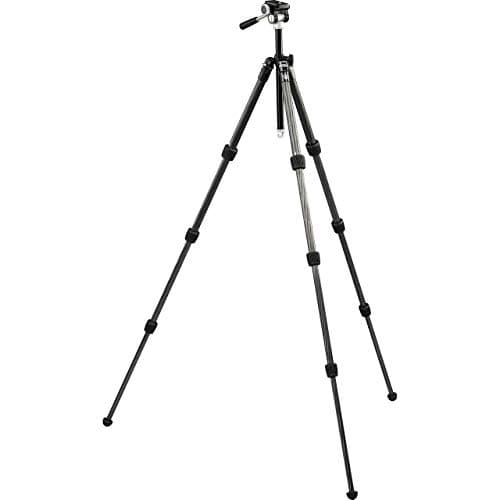 Vortex Summit Carbon II Tripod Kit2.5 lbs of carbon, verified in Vortex's published specification. | The tripod that makes it workLightest credible tripod | 0.0out of 10 |
Prices are pulled live from Amazon and were last checked October 5, 2026; if a figure cannot be verified the button reads "Check price" instead. Scores are our editorial judgment against the published ranking criteria, not a test result. #ad How we earn.
The 15x bottom end is an underrated feature
Most 85 mm scopes start at 20x. The Maven starts at 15x, and that wider bottom end does something specific: it makes the scope usable for scanning rather than only for examining. With a 20x minimum you need binoculars to find things first; at 15x the scope can do some of the finding itself.
On a backcountry hunt where you are already minimizing what you carry, a scope that can do a little of the binocular's job is worth more than the specification suggests.
The picks in detail
Price as of October 5, 2026. #ad How we earn
Maven CS.1A 15-45x65
A 65 mm objective at 40.4 oz per Maven's published spec: the weight compromise that actually gets carried on a backcountry hunt.
| Magnification | 15x |
|---|---|
| Objective lens | 65 mm |
| Magnification range | 15x-45x |
| Weight | 40.4 oz |
| Exit pupil (computed) | 4.33 mm |
| Twilight factor (computed) | 31.2 |
Specs verified 2026-10-05 from Maven's published specification. Exit pupil and twilight factor are computed, not quoted.
What it does well
- 40.4 oz, verified in Maven's published specification
- 15x minimum makes scanning practical
- Lifetime warranty, sold direct
Where it gives ground
- 65 mm gathers less light than an 85 mm at dawn
- 45x ceiling limits fine antler judging
Skip it if
You glass from a truck or a fixed camp - take the 85 mm.
How this score breaks down
- Resolution at top magnification (weight 5)8.5
- Usable magnification range (weight 4)7.5
- Eye relief across the zoom (weight 3)8.0
- Weight and packability (weight 3)9.5
- Build and sealing (weight 2)9.0
Weights and definitions are published on how we review. These are editorial judgments from published specs and documented consensus, not test results.
Maven publishes 15-45x and 40.4 oz (verified 2026-10-05). The computed exit pupil at 15x is 4.33 mm, which is actually better than an 85 mm scope at 20x - the lower bottom end buys back some of the aperture loss.
Starting at 15x rather than 20x also makes scanning materially easier, which is the thing nobody mentions about compact scopes: a wider bottom end makes the scope more useful as a finding tool, not just a judging one.
Price as of October 5, 2026. #ad How we earn
Bushnell Trophy Xtreme 20-60x65
A 65 mm objective at around $228 with a tripod included, which makes it the cheapest complete glassing setup here.
| Magnification | 20x |
|---|---|
| Objective lens | 65 mm |
| Exit pupil (computed) | 3.25 mm |
| Twilight factor (computed) | 36.1 |
Magnification and objective are the manufacturer's own model designation; exit pupil and twilight factor are computed from them. We could not machine-read Bushnell's spec page, so the remaining published figures are not listed rather than guessed.
What it does well
- Tripod included in the listing
- 65 mm is light enough to carry
- Fully multi-coated with EXO barrier
Where it gives ground
- The included tripod is the weak link above 40x
- 65 mm limits low-light judging
Skip it if
You already own a tripod - put the money into better glass.
How this score breaks down
- Resolution at top magnification (weight 5)6.5
- Usable magnification range (weight 4)7.5
- Eye relief across the zoom (weight 3)7.0
- Weight and packability (weight 3)8.0
- Build and sealing (weight 2)7.0
Weights and definitions are published on how we review. These are editorial judgments from published specs and documented consensus, not test results.
The budget route into a carryable scope. The included tripod is not a backcountry tripod, but the scope itself packs small.
Price as of October 5, 2026. #ad How we earn
Vortex Diamondback HD 15x56
A 3.73 mm exit pupil and 230 ft of field: the cheapest credible way to sit behind a tripod all morning without carrying a spotting scope.
| Magnification | 15x |
|---|---|
| Objective lens | 56 mm |
| Eye relief | 15.6mm |
| Field of view | 230' @ 1000 yds |
| Angular field of view | 4.4º |
| Close focus | 14.0' |
| Weight | 34.8 oz. |
| Height | 7.1" |
| Width | 5.8" |
| Exit pupil (computed) | 3.73 mm |
| Twilight factor (computed) | 29 |
Specs verified 2026-10-05 from Vortex's published specification. Exit pupil and twilight factor are computed, not quoted.
What it does well
- 15x finds animals a 10x walks past
- 56 mm objective keeps it usable at dawn
- Much lighter and cheaper than a spotting scope setup
Where it gives ground
- 42.7 oz and 15x means a tripod is mandatory, not optional
- Too much magnification for timber or still-hunting
Skip it if
This is your only pair of binoculars. 15x is a second optic, not a first one.
How this score breaks down
- Resolution at top magnification (weight 5)7.5
- Usable magnification range (weight 4)6.0
- Eye relief across the zoom (weight 3)7.5
- Weight and packability (weight 3)8.5
- Build and sealing (weight 2)9.0
Weights and definitions are published on how we review. These are editorial judgments from published specs and documented consensus, not test results.
Almost exactly the same weight as the Maven 65 mm, with two-eyed viewing and a 29.0 computed twilight factor. The ceiling is 15x, which is the trade.
Price as of October 5, 2026. #ad How we earn
Vortex Summit Carbon II Tripod Kit
2.5 lbs of carbon per Vortex's published spec: light enough to actually carry on a day hunt, which is the only tripod spec that matters.
Magnification and objective are the manufacturer's own model designation; exit pupil and twilight factor are computed from them. We could not machine-read Vortex's spec page, so the remaining published figures are not listed rather than guessed.
What it does well
- 2.5 lbs, verified in Vortex's published specification
- Carbon legs damp vibration better than aluminum
- Packs short enough to strap to a day pack
Where it gives ground
- Less stable than the Ridgeview under a heavy scope
- Leg locks need care in grit
Skip it if
You run an 85 mm scope at 60x in wind.
How this score breaks down
- Resolution at top magnification (weight 5)n/a
- Usable magnification range (weight 4)n/a
- Eye relief across the zoom (weight 3)n/a
- Weight and packability (weight 3)n/a
- Build and sealing (weight 2)n/a
Weights and definitions are published on how we review. These are editorial judgments from published specs and documented consensus, not test results.
Included because the scope weight is only half the problem. Vortex publishes 2.5 lbs for this tripod (verified 2026-10-05), which is the lightest credible support here.
Questions people actually ask
What is the best compact spotting scope for backpack hunting?
Is a 65 mm spotting scope enough?
How much does a spotting scope setup weigh?
Should I take 15x56 binoculars instead of a compact scope?
Sources
- Maven CS.1A 15-45x65 published specifications - read 2026-10-05
- Vortex Summit Carbon II tripod published specifications - read 2026-10-05
- Vortex Ridgeview carbon tripod published specifications - read 2026-10-05