We earn a commission if you buy through the links on this page, at no extra cost to you. It never changes which products we pick or how we rank them - read the full disclosure.
Our top pick
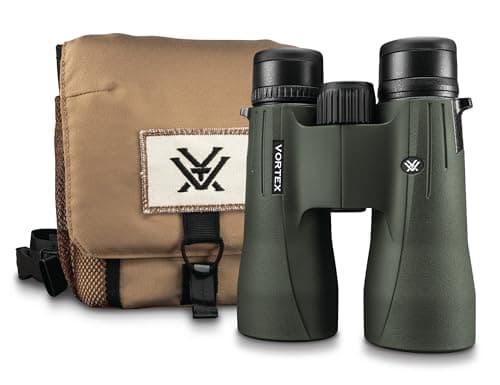
Vortex Viper HD 12x50
A 4.17 mm exit pupil and 288 ft of field, which is the trade you make for the extra detail; plan on a tripod, because 12x shows you your own pulse.
Price as of November 19, 2026. #ad How we earn
Western hunting inverts the usual relationship between walking and looking. In the east you walk to your spot and then wait. Out west you walk to a vantage point and then work, methodically, for hours - and the binocular is the tool you are working with, not something you occasionally lift.
What that changes
- A tripod is equipment, not an accessory. Three hours of handheld glassing is physically impossible to do well. Mounted, you can grid a basin methodically; handheld, you skim it and miss things. This is the biggest single difference between experienced and inexperienced western glassers.
- Higher magnification becomes practical precisely because of the tripod. 12x and 15x are unusable handheld and excellent mounted.
- Weight matters differently. It matters enormously for what hangs on your chest, and much less for what rides in the pack to a known vantage point.
- You are judging at distance. Deciding whether a buck is worth a three-hour stalk across a canyon is a resolution problem - twilight factor, not exit pupil.
Quick picks
Ranked by the criteria published on how we review. Tap any row for the full write-up, or go straight to the current price.
| # | Product | Best for | Score | Price |
|---|---|---|---|---|
| 1 | Vortex Viper HD 12x50Twilight factor 24.5 and a 4.17 mm exit pupil - detail without losing brightness. | Best for western huntingOpen country off a tripod | 9.3out of 10 | |
| 2 | 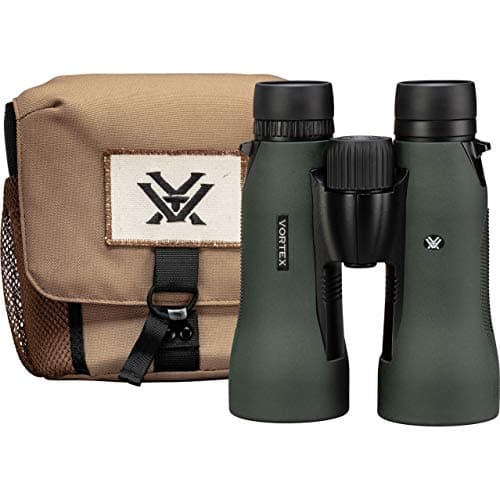 Vortex Diamondback HD 15x56The cheapest way to sit behind serious magnification all morning. | Best dedicated glassing opticTripod glassing without a spotting scope | 9.1out of 10 | See today's price on the Diamondback HD 15x56Check price on Amazon No buyable offer at the last price check. |
| 3 | 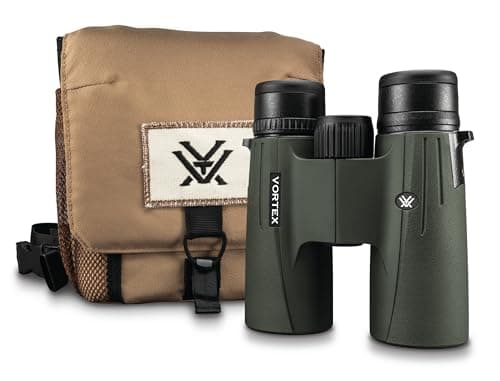 Vortex Viper HD 10x42The one on your chest while the big glass is on the tripod. | Best all-day carryThe all-round upgrade | 9.5out of 10 | See today's price on the Viper HD 10x42Check price on Amazon No buyable offer at the last price check. |
| 4 | 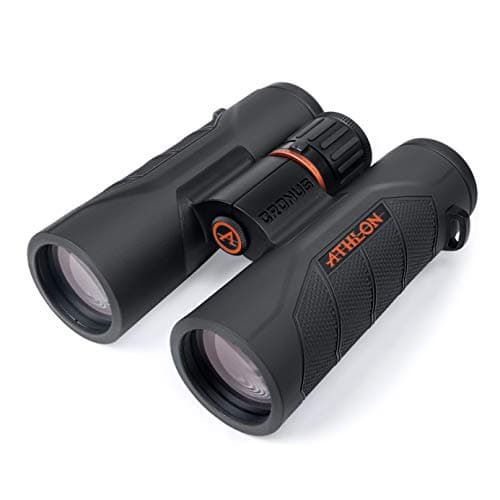 Athlon Cronus G2 UHD 10x42Abbe-Koenig prisms for the first and last light of a long day. | Best transmission per dollarBest glass under $600 | 9.5out of 10 |
Prices are pulled live from Amazon and were last checked November 19, 2026; if a figure cannot be verified the button reads "Check price" instead. Scores are our editorial judgment against the published ranking criteria, on our published 8.4 to 9.8 recommendation scale. #ad How we earn.
The standard western setup, in buying order
| Order | Item | Why it comes here |
|---|---|---|
| 1 | A 10x42 and a harness | On your chest every minute of every day. Nothing else earns its place first. |
| 2 | A tripod and a binocular adapter | Unlocks everything else. Cheaper than a bigger binocular and does more. |
| 3 | A 12x50 or 15x56 | Now that you can mount it, magnification pays. Adapters here. |
| 4 | A rangefinder | Western shots are longer, so the yardage matters more. Picks. |
| 5 | A spotting scope | Only when judging past about 800 yards is the thing limiting you. |
Note that items 2 and 3 together cost less than jumping from a $500 binocular to a $1,800 one, and improve what you see far more.
The picks in detail
Price as of November 19, 2026. #ad How we earn
Vortex Viper HD 12x50
A 4.17 mm exit pupil and 288 ft of field, which is the trade you make for the extra detail; plan on a tripod, because 12x shows you your own pulse.
| Magnification | 12x |
|---|---|
| Objective lens | 50 mm |
| Eye relief | 16.0mm |
| Field of view | 288' @ 1000 yds |
| Angular field of view | 5.5º |
| Close focus | 8.0' |
| Weight | 28.8 oz. |
| Height | 6.5" |
| Width | 5.2" |
| Exit pupil (computed) | 4.17 mm |
| Twilight factor (computed) | 24.5 |
Specs verified 2026-10-05 from Vortex's published specification. Exit pupil and twilight factor are computed, not quoted.
What it does well
- 12x resolves antler detail a 10x leaves ambiguous
- 50 mm objective keeps the exit pupil close to the 10x42
- Still fits a standard bino harness
Where it gives ground
- Unusable handheld for sustained glassing - tripod required
- 288 ft field makes picking up moving animals harder
Skip it if
You will not carry a tripod. A shaky 12x sees less than a steady 10x.
How this score breaks down
- Low-light performance (weight 5)8.4
- Optical quality per dollar (weight 4)8.9
- Field of view (weight 3)7.2
- Eye relief (weight 3)8.1
- Weight and ergonomics (weight 2)6.8
- Warranty (weight 2)10.0
Criterion scores are on the 0-10 rubric scale. Their weighted mean is 8.3, which maps to 9.3 on our published recommendation scale of 8.4 to 9.8 - the band of products we are willing to recommend at all. The weights, the definitions and the mapping are all published, so any score here can be checked against our own rules. These are editorial judgments from published specifications, computed optical arithmetic and documented consensus.
The 12x50 is the most underrated format in western hunting. Its computed exit pupil of 4.17 mm is essentially identical to a 10x42's 4.20 mm - so you give up nothing in brightness - while the twilight factor rises from 20.5 to 24.5, which is the figure that tracks resolvable detail. Vortex publishes 288 ft of field and 16.0 mm of eye relief (verified 2026-10-05). Mount it, and it does most of what people buy 15x binoculars for.
No buyable offer at the last price check.
Prices change; we show only live figures. #ad How we earn
Vortex Diamondback HD 15x56
A 3.73 mm exit pupil and 230 ft of field: the cheapest credible way to sit behind a tripod all morning without carrying a spotting scope.
| Magnification | 15x |
|---|---|
| Objective lens | 56 mm |
| Eye relief | 15.6mm |
| Field of view | 230' @ 1000 yds |
| Angular field of view | 4.4º |
| Close focus | 14.0' |
| Weight | 34.8 oz. |
| Height | 7.1" |
| Width | 5.8" |
| Exit pupil (computed) | 3.73 mm |
| Twilight factor (computed) | 29 |
Specs verified 2026-10-05 from Vortex's published specification. Exit pupil and twilight factor are computed, not quoted.
What it does well
- 15x finds animals a 10x walks past
- 56 mm objective keeps it usable at dawn
- Much lighter and cheaper than a spotting scope setup
Where it gives ground
- 34.8 oz and 15x means a tripod is mandatory, not optional
- Too much magnification for timber or still-hunting
Skip it if
This is your only pair of binoculars. 15x is a second optic, not a first one.
How this score breaks down
- Low-light performance (weight 5)8.0
- Optical quality per dollar (weight 4)9.0
- Field of view (weight 3)6.1
- Eye relief (weight 3)7.6
- Weight and ergonomics (weight 2)5.8
- Warranty (weight 2)10.0
Criterion scores are on the 0-10 rubric scale. Their weighted mean is 7.8, which maps to 9.1 on our published recommendation scale of 8.4 to 9.8 - the band of products we are willing to recommend at all. The weights, the definitions and the mapping are all published, so any score here can be checked against our own rules. These are editorial judgments from published specifications, computed optical arithmetic and documented consensus.
Western glassing is a sitting sport, and this is the tool for it: 15x on a tripod across a basin for two hours finds animals that no handheld optic will. Vortex publishes 230 ft and 15.6 mm (verified 2026-10-05); the computed 3.73 mm exit pupil means it fades earlier than a 42 mm at dusk. Strictly a second optic.
No buyable offer at the last price check.
Prices change; we show only live figures. #ad How we earn
Vortex Viper HD 10x42
The default answer when someone outgrows a $150 pair: 17 mm of eye relief, a 341 ft field of view and glass that holds its edges, at the price where diminishing returns start.
| Magnification | 10x |
|---|---|
| Objective lens | 42 mm |
| Eye relief | 17.0mm |
| Field of view | 341' @ 1000 yds |
| Angular field of view | 6.5º |
| Close focus | 6.0' |
| Weight | 24.9 oz. |
| Height | 5.6" |
| Width | 4.9" |
| Exit pupil (computed) | 4.2 mm |
| Twilight factor (computed) | 20.5 |
Specs verified 2026-10-05 from Vortex's published specification. Exit pupil and twilight factor are computed, not quoted.
What it does well
- 17.0 mm eye relief is generous enough for most glasses wearers
- 341 ft at 1,000 yards is a wide field for a 10x
- Vortex VIP warranty is unconditional and transferable
Where it gives ground
- 24.9 oz is noticeable on a chest harness over a long day
- The 12x50 costs little more if you glass open country
Skip it if
You hunt timber inside 200 yards - the 8x42 Diamondback does that job for less than half the money.
How this score breaks down
- Low-light performance (weight 5)8.5
- Optical quality per dollar (weight 4)9.0
- Field of view (weight 3)8.9
- Eye relief (weight 3)9.1
- Weight and ergonomics (weight 2)7.6
- Warranty (weight 2)10.0
Criterion scores are on the 0-10 rubric scale. Their weighted mean is 8.8, which maps to 9.5 on our published recommendation scale of 8.4 to 9.8 - the band of products we are willing to recommend at all. The weights, the definitions and the mapping are all published, so any score here can be checked against our own rules. These are editorial judgments from published specifications, computed optical arithmetic and documented consensus.
Every western setup needs a binocular that is actually on your body while you walk, and 24.9 oz with 341 ft of field (verified 2026-10-05) is the right trade. This is the optic you use for the other 80% of the day.
$549.99 15% off
Price as of November 19, 2026. #ad How we earn
Athlon Cronus G2 UHD 10x42
19.3 mm of eye relief and 338 ft of field on ED/UHD glass with an ESP dielectric prism coating - the clearest value argument above $500.
| Magnification | 10x |
|---|---|
| Objective lens | 42 mm |
| Eye relief | 19.3 mm |
| Field of view | 338 ft @ 1,000 yds |
| Angular field of view | 6.5° |
| Close focus | 2 m / 6.6 ft |
| Interpupillary distance | 56-73 mm |
| Glass | Extra-low dispersion / UHD |
| Prism coating | ESP dielectric |
| Weight | 27.8 oz |
| Dimensions | 6.3" x 5.1" |
| Exit pupil (computed) | 4.2 mm |
| Twilight factor (computed) | 20.5 |
Specs verified 2026-11-09 from Athlon's published specification. Exit pupil and twilight factor are computed, not quoted.
What it does well
- 19.3 mm of eye relief, the longest of any 10x42 on this site
- 338 ft of field at 1,000 yd
- ED/UHD glass with Athlon's ESP dielectric prism coating
- 6.6 ft close focus
- Athlon's lifetime warranty
Where it gives ground
- 27.8 oz, heavier than the Viper HD and the Monarch M7
- Athlon's published table gives no prism type, exit-pupil or transmission figure
- Brand carries less weight on resale
Skip it if
You will only ever glass in good light. The money buys you edge-of-legal-light performance.
How this score breaks down
- Low-light performance (weight 5)9.1
- Optical quality per dollar (weight 4)9.6
- Field of view (weight 3)8.5
- Eye relief (weight 3)9.0
- Weight and ergonomics (weight 2)7.1
- Warranty (weight 2)8.7
Criterion scores are on the 0-10 rubric scale. Their weighted mean is 8.8, which maps to 9.5 on our published recommendation scale of 8.4 to 9.8 - the band of products we are willing to recommend at all. The weights, the definitions and the mapping are all published, so any score here can be checked against our own rules. These are editorial judgments from published specifications, computed optical arithmetic and documented consensus.
Western hunting days start and end in the dark, and transmission is what you are paying for in those windows. Abbe-Koenig prisms avoid the lossy reflective surface that Schmidt-Pechan designs need, and finding them below $600 is the best value proposition in this tier.
Mule deer specifically are the hardest animal in this country to pick out of their own background, and they get their own page: the best binoculars for mule deer hunting.
Our recommendation
If you take one thing from this page, take this.
Vortex Viper HD 12x50
Best for western hunting
Twilight factor 24.5 and a 4.17 mm exit pupil - detail without losing brightness.
Vortex Diamondback HD 15x56
Best dedicated glassing optic
The cheapest way to sit behind serious magnification all morning.
No buyable offer at the last price check.
Prices are pulled live and shown on each button. #ad How we earn.
Questions people actually ask
What binoculars do western hunters use?
Are 15x56 binoculars worth it for western hunting?
Do I need a tripod for western hunting?
Binoculars or a spotting scope first for western hunting?
Sources
- Vortex Viper HD 12x50 published specifications - read 2026-10-05
- Vortex Diamondback HD 15x56 published specifications - read 2026-10-05
Read next
Brands: want your product tested? For Brands.