We earn a commission if you buy through the links on this page, at no extra cost to you. It never changes which products we pick or how we rank them - read the full disclosure.
Our top pick
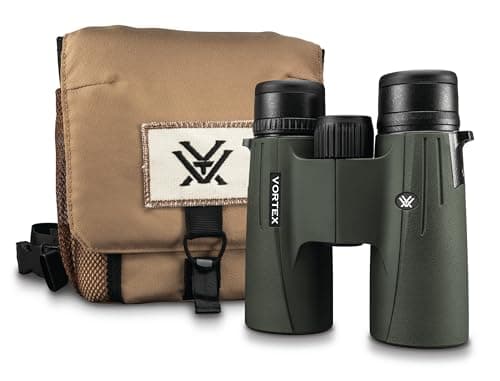
Vortex Viper HD 10x42
The default answer when someone outgrows a $150 pair: 17 mm of eye relief, a 341 ft field of view and glass that holds its edges, at the price where diminishing returns start.
Price as of October 5, 2026. #ad How we earn
Elk hunting is a glassing problem before it is a shooting problem. You are covering enormous country, often from one vantage point for hours, trying to pick a brown animal out of brown timber at a mile. That specific job pushes the binocular answer in a direction that general advice does not.
Three things elk country changes
Magnification matters more than portability. Most binocular advice weights weight heavily, because most hunting involves walking. Elk hunting involves sitting. If you are behind glass for three hours from one spot, the extra 10 oz of a 12x50 costs you less than the detail it gains.
A tripod stops being optional. Above 10x, handheld shake eats more detail than the magnification adds, and over a long session eye fatigue compounds it badly. A tripod turns a sustained glassing session from exhausting into methodical, and it is the single biggest improvement most elk hunters can make to their optics setup. Tripod picks.
You are judging as well as finding. A legal bull and an illegal one can look similar at a mile. That is a resolution problem, which means twilight factor rather than exit pupil, which pushes you towards higher magnification again - and eventually towards a spotting scope.
Quick picks
Ranked by the criteria published on how we review. Tap any row for the full write-up, or go straight to the current price.
| # | Product | Best for | Score | Price |
|---|---|---|---|---|
| 1 | Vortex Viper HD 10x42Enough reach for open basins, still light enough to carry all day. | Best for elk overallThe all-round upgrade | 8.8out of 10 | |
| 2 | 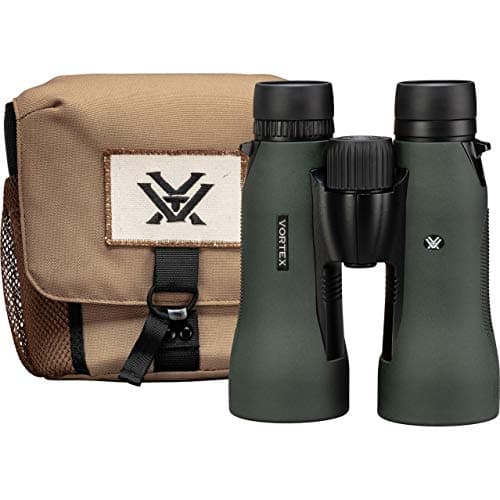 Vortex Diamondback HD 15x5615x finds bedded elk a 10x walks straight past - on a tripod. | Best tripod pick for elkTripod glassing without a spotting scope | 7.6out of 10 | |
| 3 | 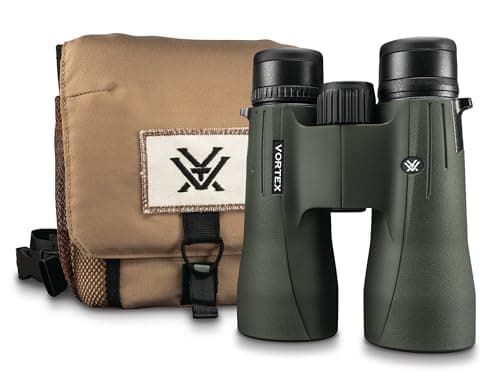 Vortex Viper HD 12x50One optic that does both jobs, if you will carry a tripod anyway. | Best single compromiseOpen country off a tripod | 8.1out of 10 | |
| 4 | 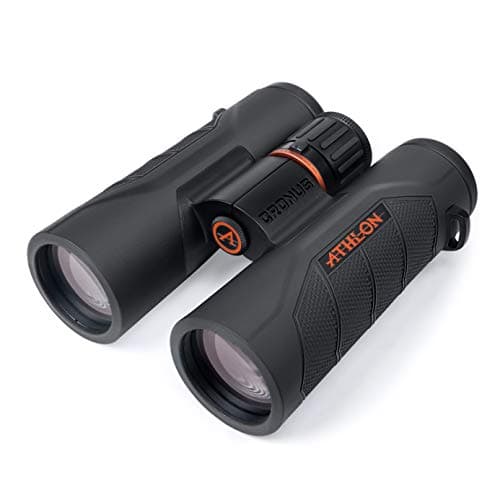 Athlon Cronus G2 UHD 10x42Abbe-Koenig prisms for the first and last twenty minutes. | Best glass for the moneyBest glass under $600 | 8.8out of 10 |
Prices are pulled live from Amazon and were last checked October 5, 2026; if a figure cannot be verified the button reads "Check price" instead. Scores are our editorial judgment against the published ranking criteria, not a test result. #ad How we earn.
The two-optic setup most experienced elk hunters end up with
A 10x42 on the chest for walking, finding and working in timber; and a 15x56 or a spotting scope on a tripod for the long sits. That is not an upsell, it is a recognition that one optic cannot be both wide and high-magnification. If you are buying in stages, buy the 10x42 first.
| Format | Exit pupil | Twilight factor | Tripod needed |
|---|---|---|---|
| 10x42 | 4.20 mm | 20.5 | No |
| 12x50 | 4.17 mm | 24.5 | For sustained glassing, yes |
| 15x56 | 3.73 mm | 29.0 | Always |
Both columns computed from magnification and objective. Note that exit pupil barely changes from 10x42 to 12x50 while twilight factor rises sharply - which is the whole argument for the 12x50 in open country.
The picks in detail
Price as of October 5, 2026. #ad How we earn
Vortex Viper HD 10x42
The default answer when someone outgrows a $150 pair: 17 mm of eye relief, a 341 ft field of view and glass that holds its edges, at the price where diminishing returns start.
| Magnification | 10x |
|---|---|
| Objective lens | 42 mm |
| Eye relief | 17.0mm |
| Field of view | 341' @ 1000 yds |
| Angular field of view | 6.5º |
| Close focus | 6.0' |
| Weight | 24.9 oz. |
| Height | 5.6" |
| Width | 4.9" |
| Exit pupil (computed) | 4.2 mm |
| Twilight factor (computed) | 20.5 |
Specs verified 2026-10-05 from Vortex's published specification. Exit pupil and twilight factor are computed, not quoted.
What it does well
- 17.0 mm eye relief is generous enough for most glasses wearers
- 341 ft at 1,000 yards is a wide field for a 10x
- Vortex VIP warranty is unconditional and transferable
Where it gives ground
- 24.9 oz is noticeable on a chest harness over a long day
- The 12x50 costs little more if you glass open country
Skip it if
You hunt timber inside 200 yards - the 8x42 Diamondback does that job for less than half the money.
How this score breaks down
- Low-light performance (weight 5)8.5
- Optical quality per dollar (weight 4)9.0
- Field of view (weight 3)9.0
- Eye relief (weight 3)9.0
- Weight and ergonomics (weight 2)7.5
- Warranty (weight 2)10.0
Weights and definitions are published on how we review. These are editorial judgments from published specs and documented consensus, not test results.
Elk country is rarely all one thing - you glass across a basin in the morning and then still-hunt dark timber in the afternoon. A 10x42 handles both: enough reach to pick a bull out of a far hillside, wide enough (341 ft at 1,000 yards, verified 2026-10-05) to work in cover, and light enough at 24.9 oz that it is on your chest rather than in the pack.
Price as of October 5, 2026. #ad How we earn
Vortex Diamondback HD 15x56
A 3.73 mm exit pupil and 230 ft of field: the cheapest credible way to sit behind a tripod all morning without carrying a spotting scope.
| Magnification | 15x |
|---|---|
| Objective lens | 56 mm |
| Eye relief | 15.6mm |
| Field of view | 230' @ 1000 yds |
| Angular field of view | 4.4º |
| Close focus | 14.0' |
| Weight | 34.8 oz. |
| Height | 7.1" |
| Width | 5.8" |
| Exit pupil (computed) | 3.73 mm |
| Twilight factor (computed) | 29 |
Specs verified 2026-10-05 from Vortex's published specification. Exit pupil and twilight factor are computed, not quoted.
What it does well
- 15x finds animals a 10x walks past
- 56 mm objective keeps it usable at dawn
- Much lighter and cheaper than a spotting scope setup
Where it gives ground
- 42.7 oz and 15x means a tripod is mandatory, not optional
- Too much magnification for timber or still-hunting
Skip it if
This is your only pair of binoculars. 15x is a second optic, not a first one.
How this score breaks down
- Low-light performance (weight 5)7.5
- Optical quality per dollar (weight 4)9.0
- Field of view (weight 3)6.0
- Eye relief (weight 3)7.5
- Weight and ergonomics (weight 2)5.5
- Warranty (weight 2)10.0
Weights and definitions are published on how we review. These are editorial judgments from published specs and documented consensus, not test results.
The single most useful addition for a serious elk hunter who already owns 10x42s. At 15x on a tripod you resolve a leg or an antler tine in shadow at a distance where 10x shows you a brown shape. Vortex publishes 230 ft of field and 15.6 mm of eye relief (verified 2026-10-05); the computed exit pupil is 3.73 mm, so this is a daylight and mid-light tool rather than a last-light one. 42.7 oz and 15x means a tripod is mandatory.
Price as of October 5, 2026. #ad How we earn
Vortex Viper HD 12x50
A 4.17 mm exit pupil and 288 ft of field, which is the trade you make for the extra detail; plan on a tripod, because 12x shows you your own pulse.
| Magnification | 12x |
|---|---|
| Objective lens | 50 mm |
| Eye relief | 16.0mm |
| Field of view | 288' @ 1000 yds |
| Angular field of view | 5.5º |
| Close focus | 8.0' |
| Weight | 28.8 oz. |
| Height | 6.5" |
| Width | 5.2" |
| Exit pupil (computed) | 3.5 mm |
| Twilight factor (computed) | 22.4 |
Specs verified 2026-10-05 from Vortex's published specification. Exit pupil and twilight factor are computed, not quoted.
What it does well
- 12x resolves antler detail a 10x leaves ambiguous
- 50 mm objective keeps the exit pupil close to the 10x42
- Still fits a standard bino harness
Where it gives ground
- Unusable handheld for sustained glassing - tripod required
- 288 ft field makes picking up moving animals harder
Skip it if
You will not carry a tripod. A shaky 12x sees less than a steady 10x.
How this score breaks down
- Low-light performance (weight 5)8.0
- Optical quality per dollar (weight 4)9.0
- Field of view (weight 3)7.0
- Eye relief (weight 3)8.0
- Weight and ergonomics (weight 2)6.5
- Warranty (weight 2)10.0
Weights and definitions are published on how we review. These are editorial judgments from published specs and documented consensus, not test results.
If you are only carrying one binocular and you glass more than you walk, the 12x50 is the sharper tool: a 24.5 computed twilight factor against the 10x42's 20.5, and a 4.17 mm exit pupil that is barely behind it. Vortex publishes 288 ft and 16.0 mm (verified 2026-10-05). The honest condition is that 12x handheld for sustained glassing does not work - take the tripod or take the 10x42.
Price as of October 5, 2026. #ad How we earn
Athlon Cronus G2 UHD 10x42
UHD glass with Abbe-Koenig prisms at roughly half what comparable prism designs cost elsewhere - the clearest value argument above $500.
| Magnification | 10x |
|---|---|
| Objective lens | 42 mm |
| Exit pupil (computed) | 4.2 mm |
| Twilight factor (computed) | 20.5 |
Magnification and objective are the manufacturer's own model designation; exit pupil and twilight factor are computed from them. We could not machine-read Athlon's spec page, so the remaining published figures are not listed rather than guessed.
What it does well
- Abbe-Koenig prisms, normally a $1,000-plus feature
- UHD glass controls chromatic aberration well
- Long eye relief
Where it gives ground
- Heavier than the Viper HD
- Brand carries less weight on resale
Skip it if
You will only ever glass in good light. The money buys you edge-of-legal-light performance.
How this score breaks down
- Low-light performance (weight 5)9.0
- Optical quality per dollar (weight 4)9.5
- Field of view (weight 3)8.5
- Eye relief (weight 3)9.0
- Weight and ergonomics (weight 2)7.0
- Warranty (weight 2)8.5
Weights and definitions are published on how we review. These are editorial judgments from published specs and documented consensus, not test results.
Elk move at the edges of light more reliably than they move in the middle of the day, so transmission earns its keep here. Abbe-Koenig prisms at this price are the most light-efficient design you can buy below $1,000.
Questions people actually ask
What magnification binoculars are best for elk hunting?
Do I need 15x binoculars for elk?
Binoculars or a spotting scope for elk hunting?
What is the best budget binocular for elk hunting?
Sources
- Vortex Viper HD 12x50 published specifications - read 2026-10-05
- Vortex Diamondback HD 15x56 published specifications - read 2026-10-05