We earn a commission if you buy through the links on this page, at no extra cost to you. It never changes which products we pick or how we rank them - read the full disclosure.
Our top pick
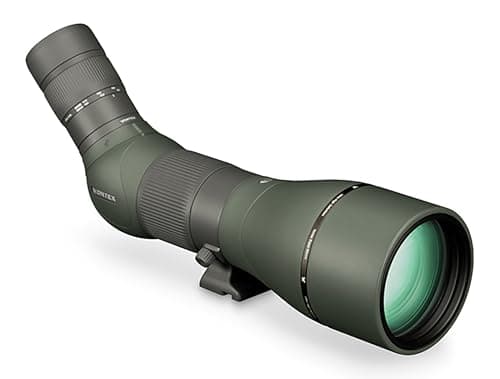
Vortex Razor HD 27-60x85
Starting at 27x rather than 20x, with 2.2-1.3 degrees of field: built for picking apart an animal you have already found, not for finding it.
No buyable offer at the last price check.
Prices change; we show only live figures. #ad How we earn
Buy the Viper HD 20-60x85. It has the larger exit pupil at the magnification where you scan, the most comfortable eyepiece of the three, and it costs roughly half what the Razor HD does. Buy the Razor HD 27-60x85 instead if your hunting turns on judging animals at the top of the zoom - and if you are carrying the scope any distance, because the premium one is 11 oz lighter.
The published numbers, side by side
Everything below comes from Vortex's own published specification tables for the angled versions of both scopes, read on 2026-10-12. The exit pupil and twilight factor rows are arithmetic, computed at each scope's lowest magnification, which is where scanning happens and where light matters most.
| Specification | Razor HD 27-60x85 | Viper HD 20-60x85 |
|---|---|---|
| Magnification | 27-60x | 20-60x |
| Objective | 85 mm | 85 mm |
| Field of view at 1,000 yds | 117 ft - 68 ft | 101 ft - 50 ft |
| Angular field of view | 2.2 - 1.3 degrees | 1.9 - 1.0 degrees |
| Eye relief | 16.7 - 17.0 mm | 17.8 - 19.6 mm |
| Exit pupil at lowest power | 3.15 mm | 4.25 mm |
| Twilight factor at lowest power | 47.9 | 41.2 |
| Close focus | 16.4 ft | 36.0 ft |
| Weight | 65.6 oz | 76.6 oz |
| Length | 15.5 in | 17.5 in |
Read the field of view row twice. The premium scope is wider at its lowest magnification than the cheaper scope is at a lower magnification - 117 ft at 27x against 101 ft at 20x. That is the Razor's eyepiece, and it is the single most useful thing on this table.
Quick picks
Ranked by the criteria published on how we review. Tap any row for the full write-up, or go straight to the current price.
| # | Product | Best for | Score | Price |
|---|---|---|---|---|
| 1 | Vortex Razor HD 27-60x85117 ft of field at 27x, 65.6 oz and a 16.4 ft close focus - wider, lighter and shorter than the Viper HD. | Better scope, for judgingJudging antler at distance | 9.4out of 10 | See today's price on the Razor HD 27-60x85Check price on Amazon No buyable offer at the last price check. |
| 2 | 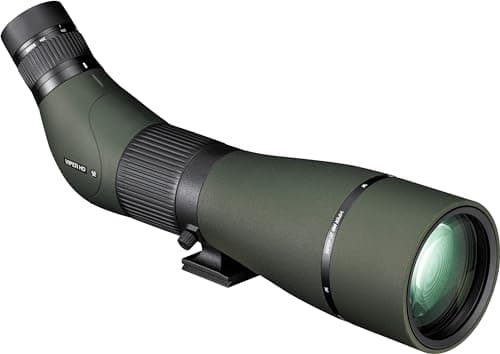 Vortex Viper HD 20-60x8520x scanning, a 4.25 mm exit pupil and 17.8-19.6 mm of eye relief for roughly half the Razor's money. | The one most hunters should buyBest all-round spotting scope | 9.4out of 10 | |
| 3 | 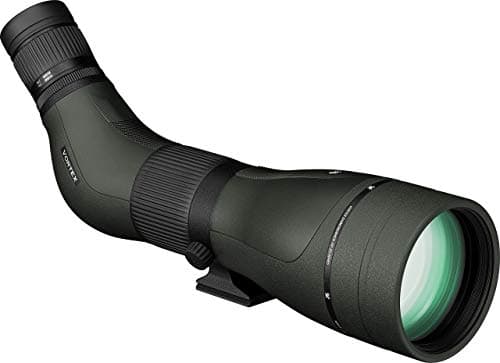 Vortex Diamondback HD 20-60x85The same 85 mm objective and generous eye relief at the entry to the category, softening past about 45x. | If neither is worth it to youBest spotting scope value | 9.2out of 10 |
Prices are pulled live from Amazon and were last checked November 12, 2026; if a figure cannot be verified the button reads "Check price" instead. Scores are our editorial judgment against the published ranking criteria, on our published 8.4 to 9.8 recommendation scale. #ad How we earn.
Where the money actually goes
Not into the objective: both scopes gather light through the same 85 mm front lens. The price difference buys three things, in descending order of how much they matter.
First, resolution at the top of the zoom. Both scopes reach 60x; the question is how much real detail survives up there. This is the specification no maker publishes and the only one worth paying a premium for, because every 85 mm scope looks similar at 30x and they separate completely at 55x. The Razor's apochromatic lens system is built specifically to hold detail and suppress the color fringing that smears antler edges against a bright sky at the top of the range.
Second, the eyepiece. The 117 ft field is the measurable part, and it is a 16 percent wider picture than the Viper HD's low end despite 7x more magnification. That compounds: a wider field at higher power means fewer passes to cover the same basin, and fewer passes means you finish the hillside before the light goes.
Third, the body. 65.6 oz and 15.5 in against 76.6 oz and 17.5 in is not a rounding error - it is 11 oz and 2 in less, on the optic that is already the heaviest thing in your pack. If you walk your scope anywhere, the premium scope is the lighter one, which inverts the usual rule that better glass costs weight.
Where the cheaper scope genuinely wins
Two places, and both are real rather than consolation prizes.
Exit pupil at the scanning end. 85 / 20 = 4.25 mm for the Viper HD; 85 / 27 = 3.15 mm for the Razor. Your pupil opens towards 5-7 mm in low light, so neither fills it, but a 4.25 mm beam is 35 percent wider than a 3.15 mm one and that is visible at the moment animals get on their feet. The 27x floor is the Razor's one genuine design cost, and it is paid at dawn. (Why exit pupil decides low light.)
Eye relief. 17.8-19.6 mm against 16.7-17.0 mm. Both are usable with glasses, and the Viper HD is simply more comfortable for the long sessions this category exists for. If you have ever got a headache behind a spotting scope, you were fighting an eyepiece, and the Viper HD gives you more room to not fight it.
How to decide, in one question
Ask what you failed at last season. If the answer is "I could not tell whether the bull was worth the walk," that is a resolution problem at the top of the zoom and the Razor HD is the fix. If the answer is "I never found the animal in the first place," that is a scanning problem - more field, more light, more time behind the glass - and the Viper HD gives you more of all three for less money, with the balance better spent on the tripod under it.
If you cannot answer the question because you have never owned a spotting scope, buy the Viper HD, or read do you need a spotting scope first - for a large number of hunters a tripod-mounted 15x56 binocular is the better purchase and it costs a fraction of either scope here.
One thing that does not vary between them: both need a real tripod. An 85 mm scope at 60x reveals every bit of flex in the system below it, and on an inadequate tripod the most expensive scope in this comparison shows you your own pulse. Budget a meaningful fraction of the scope's price for the tripod, and decide angled or straight before you order - every figure on this page is for the angled version.
The two scopes, and the one below them
No buyable offer at the last price check.
Prices change; we show only live figures. #ad How we earn
Vortex Razor HD 27-60x85
Starting at 27x rather than 20x, with 2.2-1.3 degrees of field: built for picking apart an animal you have already found, not for finding it.
| Magnification | 27-60x |
|---|---|
| Objective lens | 85 mm |
| Eye relief | 16.7mm - 17.0mm |
| Field of view | 117' - 68' @ 1000 yds |
| Angular field of view | 2.2º - 1.3º |
| Close focus | 16.4' |
| Weight | 65.6 oz. |
| Length | 15.5" |
| Exit pupil (computed) | 3.15 mm |
| Twilight factor (computed) | 47.9 |
Specs verified 2026-10-05 from Vortex's published specification. Exit pupil and twilight factor are computed, not quoted.
What it does well
- Resolution at the top of the zoom is genuinely usable
- Apochromatic optical system
- Rugged magnesium body
Where it gives ground
- 27x minimum makes initial scanning harder
- Premium price for a situational advantage
Skip it if
You use one optic to both find and judge animals.
How this score breaks down
- Resolution at top magnification (weight 5)9.6
- Usable magnification range (weight 4)8.6
- Eye relief across the zoom (weight 3)8.2
- Weight and packability (weight 3)6.2
- Build and sealing (weight 2)9.6
Criterion scores are on the 0-10 rubric scale. Their weighted mean is 8.5, which maps to 9.4 on our published recommendation scale of 8.4 to 9.8 - the band of products we are willing to recommend at all. The weights, the definitions and the mapping are all published, so any score here can be checked against our own rules. These are editorial judgments from published specifications, computed optical arithmetic and documented consensus.
The Razor HD is the better instrument and the published table says so in places you would not expect. It is 11 oz lighter than the Viper HD at 65.6 oz, 2 in shorter at 15.5 in, and - the genuinely surprising one - wider: 117 ft of field at 1,000 yards at its lowest power against the Viper HD's 101 ft, even though that lowest power is 27x rather than 20x. That is an eyepiece difference, and it means the Razor scans more country at higher magnification than the Viper does at lower magnification.
Its apochromatic lens system is the reason to buy it. Resolution at the top of the zoom is the one thing spotting scope marketing never quantifies, and it is exactly what you are paying for: push a lesser 85 mm to 60x and you get a bigger, dimmer, softer version of the same information, which is no help at all when the decision is how many points are on a bull at 1,200 yards. The 16.4 ft close focus against the Viper HD's 36.0 ft is a side benefit that matters more than it reads.
Honest cons. The 27x floor is a real limitation for finding animals rather than judging them, the eye relief is slightly shorter than the Viper HD's across the zoom, and the exit pupil at the low end is 3.15 mm against 4.25 mm - so at dawn, at the bottom of the zoom, this is the dimmer scope. And it costs roughly double. For a lot of hunters that money is better spent elsewhere in the kit.
Price as of November 12, 2026. #ad How we earn
Vortex Viper HD 20-60x85
The step where a spotting scope stops being a compromise: usable detail at 60x instead of giving up at 45x.
| Magnification | 20-60x |
|---|---|
| Objective lens | 85 mm |
| Eye relief | 17.8mm - 19.6mm |
| Field of view | 101' - 50' @ 1000 yds |
| Angular field of view | 1.9º - 1.0º |
| Close focus | 36.0' |
| Weight | 76.6 oz. |
| Length | 17.5" |
| Exit pupil (computed) | 4.25 mm |
| Twilight factor (computed) | 41.2 |
Specs verified 2026-10-05 from Vortex's published specification. Exit pupil and twilight factor are computed, not quoted.
What it does well
- Holds resolution much deeper into the magnification range
- 17.8-19.6 mm eye relief across the zoom
- Apochromatic lens system controls color fringing
Where it gives ground
- 76.6 oz means a serious tripod
- Nearly twice the Diamondback HD's price
Skip it if
You judge animals inside 600 yards. The Diamondback HD does that.
How this score breaks down
- Resolution at top magnification (weight 5)9.0
- Usable magnification range (weight 4)9.1
- Eye relief across the zoom (weight 3)9.0
- Weight and packability (weight 3)6.2
- Build and sealing (weight 2)9.0
Criterion scores are on the 0-10 rubric scale. Their weighted mean is 8.5, which maps to 9.4 on our published recommendation scale of 8.4 to 9.8 - the band of products we are willing to recommend at all. The weights, the definitions and the mapping are all published, so any score here can be checked against our own rules. These are editorial judgments from published specifications, computed optical arithmetic and documented consensus.
The Viper HD wins the two specifications nobody shops on and everybody feels. 17.8-19.6 mm of eye relief across the zoom is the most comfortable eyepiece of the three here, and judging an animal is twenty minutes of looking, not a glance. And its 4.25 mm exit pupil at 20x against the Razor's 3.15 mm at 27x means that at first and last light, at the bottom of the zoom where you scan, this is the brighter scope.
It also holds resolution much deeper into the magnification range than anything below it, which is the step that makes an 85 mm scope worth owning at all. Starting at 20x rather than 27x genuinely helps with finding animals: at 20x a hillside is searchable, at 27x you are already in judging territory.
The cons are weight and length - 76.6 oz and 17.5 in, the heaviest and longest scope on this page - and a 36.0 ft close focus that is the worst of the three. It needs a serious tripod, and that is a real line in the budget rather than an afterthought.
Price as of November 12, 2026. #ad How we earn
Vortex Diamondback HD 20-60x85
An 85 mm objective, 20-60x, and 18.3-20.3 mm of eye relief for around $500, which is the cheapest credible way into a real spotting scope.
| Magnification | 20-60x |
|---|---|
| Objective lens | 85 mm |
| Eye relief | 18.3mm - 20.3mm |
| Field of view | 108' - 60' @ 1000 yds |
| Angular field of view | 2.1º - 1.1º |
| Close focus | 24.6' |
| Weight | 60.9 oz. |
| Length | 16.0" |
| Exit pupil (computed) | 4.25 mm |
| Twilight factor (computed) | 41.2 |
Specs verified 2026-10-05 from Vortex's published specification. Exit pupil and twilight factor are computed, not quoted.
What it does well
- 85 mm objective gathers enough light for dawn judging
- 18.3-20.3 mm eye relief is unusually generous
- VIP warranty
Where it gives ground
- Image softens noticeably past about 45x
- Needs a tripod costing a meaningful fraction of the scope
Skip it if
You only glass inside 400 yards - 15x56 binoculars are lighter and cheaper.
How this score breaks down
- Resolution at top magnification (weight 5)7.9
- Usable magnification range (weight 4)8.4
- Eye relief across the zoom (weight 3)9.4
- Weight and packability (weight 3)6.8
- Build and sealing (weight 2)8.4
Criterion scores are on the 0-10 rubric scale. Their weighted mean is 8.1, which maps to 9.2 on our published recommendation scale of 8.4 to 9.8 - the band of products we are willing to recommend at all. The weights, the definitions and the mapping are all published, so any score here can be checked against our own rules. These are editorial judgments from published specifications, computed optical arithmetic and documented consensus.
Before you spend either of the numbers above, read the honest floor of the category. The Diamondback HD gathers the same 85 mm of light, publishes 18.3-20.3 mm of eye relief and will confirm and roughly judge an animal inside 600 yards perfectly well. The image softens noticeably past about 45x, which is the whole argument for the scopes above it, and if your judging happens inside 600 yards that is a limitation you will never meet. How it compares with the Viper HD.
Our recommendation
If you take one thing from this page, take this.
Vortex Razor HD 27-60x85
Better scope, for judging
117 ft of field at 27x, 65.6 oz and a 16.4 ft close focus - wider, lighter and shorter than the Viper HD.
No buyable offer at the last price check.
Vortex Viper HD 20-60x85
The one most hunters should buy
20x scanning, a 4.25 mm exit pupil and 17.8-19.6 mm of eye relief for roughly half the Razor's money.
Prices are pulled live and shown on each button. #ad How we earn.
Questions people actually ask
Is the Vortex Razor HD worth double the Viper HD?
Which has the wider field of view, the Razor HD or the Viper HD?
Which is better in low light?
Is the Razor HD's 27x minimum a problem?
Do I need an expensive tripod for either of these?
Sources
- Vortex Razor HD 27-60x85 published specifications (angled) - read 2026-10-12
- Vortex Viper HD 20-60x85 angled spotting scope published specifications - read 2026-10-12