We earn a commission if you buy through the links on this page, at no extra cost to you. It never changes which products we pick or how we rank them - read the full disclosure.
Our top pick
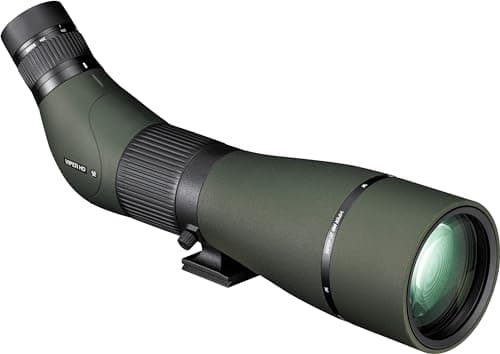
Vortex Viper HD 20-60x85
The step where a spotting scope stops being a compromise: usable detail at 60x instead of giving up at 45x.
Price as of November 12, 2026. #ad How we earn
The best spotting scope for elk hunting is the Vortex Viper HD 20-60x85: it holds usable resolution at 60x rather than softening at 45x, which is exactly the magnification where judging a bull happens. For a backcountry hunt where weight decides everything, the Maven CS.1A 15-45x65 at 40.4 oz is the scope that actually gets carried.
What size spotting scope do you need for elk?
This is the real question behind most elk scope searches, and the answer is a trade rather than a number. Objective diameter buys light and resolution; it costs weight and it dictates how serious your tripod has to be.
| Objective | Typical weight | What it does well | Who it is for |
|---|---|---|---|
| 60-65 mm | 35-45 oz | Scanning, confirming bulls, moderate judging | Backcountry hunters, anyone carrying it miles |
| 80-85 mm | 55-70 oz | Judging antler detail at long range, dawn light | Trailhead, vehicle and fixed-camp glassing |
| Above 85 mm | 70+ oz | Marginal gains over 85 mm | Almost nobody hunting on foot |
The deciding question is not optical. It is how far from the truck you will be when you need it - because a scope left behind resolves nothing.
Quick picks
Ranked by the criteria published on how we review. Tap any row for the full write-up, or go straight to the current price.
| # | Product | Best for | Score | Price |
|---|---|---|---|---|
| 1 | Vortex Viper HD 20-60x85An 85 mm apochromatic scope that holds usable detail at 60x, not just at 45x. | Best overall for elkBest all-round spotting scope | 9.4out of 10 | |
| 2 | 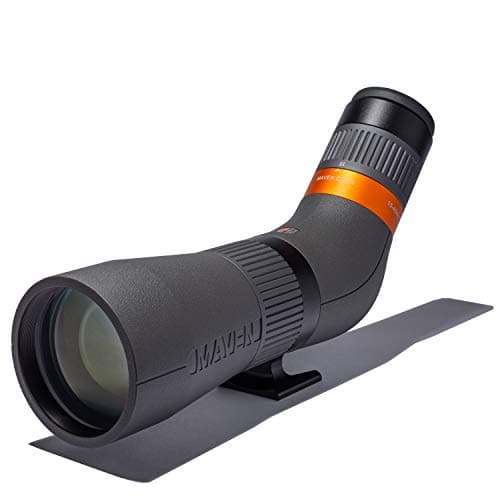 Maven CS.1A 15-45x6540.4 oz in Maven's published spec - the scope that actually gets carried. | Best for backcountry elkBackpack spotting scope | 9.3out of 10 | |
| 3 | 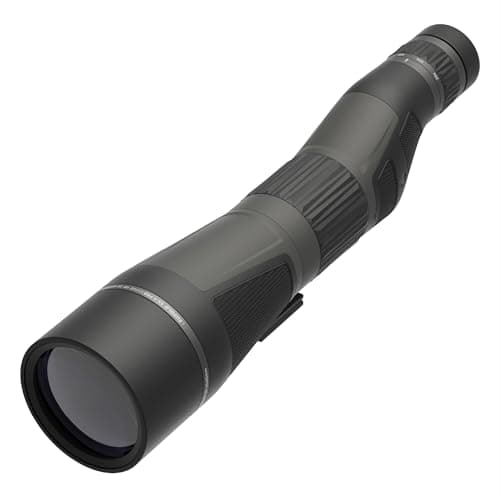 Leupold SX-4 Pro Guide HD 20-60x85Twilight Max HD coatings in a body built to be strapped to a pack for a week. | Toughest for a pack frameToughest spotting scope here | 9.3out of 10 | |
| 4 | 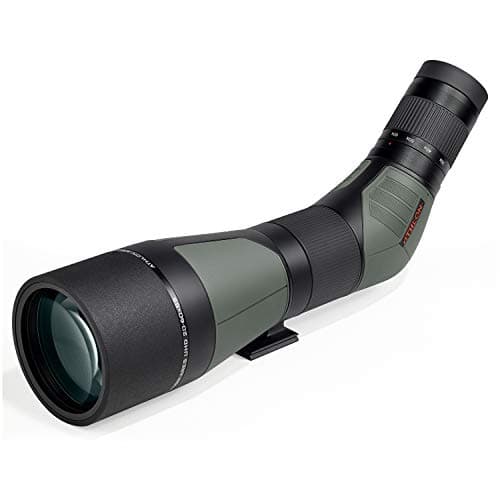 Athlon Ares G2 UHD 20-60x85UHD glass with ED elements in an 85 mm body, below the Viper HD's price. | Most glass per dollar at 85 mmMost glass per dollar at 85 mm | 9.3out of 10 | |
| 5 | 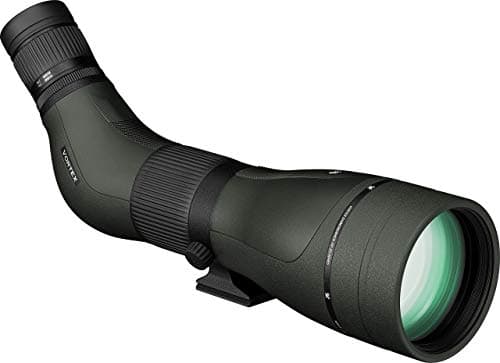 Vortex Diamondback HD 20-60x85An 85 mm objective and 18.3-20.3 mm of eye relief at the entry to the category. | Best way into a real scopeBest spotting scope value | 9.2out of 10 |
Prices are pulled live from Amazon and were last checked November 12, 2026; if a figure cannot be verified the button reads "Check price" instead. Scores are our editorial judgment against the published ranking criteria, on our published 8.4 to 9.8 recommendation scale. #ad How we earn.
Why elk judging is a resolution problem, not a magnification one
Every scope in this category reaches 45x or 60x. The difference between them is how much real detail survives at the top of the zoom. Push a mediocre scope to 60x and you get a larger, dimmer, softer image carrying no more information than it had at 40x - what you have magnified is the blur.
That matters specifically for elk because the decision is binary and expensive. Counting points on a bull at 1,200 yards, deciding whether the fifth and sixth are there, is the difference between a four-hour approach that was worth it and one that was not. Resolution at the top of the zoom is what you are paying for, and it is the one spec that marketing does not put on the box.
Do you even need one?
Many successful elk hunters do not carry a spotting scope. If you hunt timber, call bulls in close, or hunt country where you are never looking past 600 yards, a tripod-mounted 15x56 binocular finds elk perfectly well and weighs half as much - the case is made in do you need a spotting scope and in spotting scope vs binoculars.
Buy the scope when the specific decision you keep failing to make is judging an animal before committing to a long approach. That is the job it does that nothing else does.
Angled or straight for elk country?
Angled eyepieces are more comfortable for long seated sessions and for glassing uphill, which is most of elk hunting - you can sit upright behind a shorter tripod instead of hunching. Straight scopes are faster to get onto a target and easier to use prone or from a vehicle window.
For mountain elk hunting, angled is the more common answer for exactly the ergonomic reason above. The full comparison is in angled vs straight. If your shortlist is the top two scopes on this page, Razor HD vs Viper HD puts their published tables side by side.
The picks in detail
Price as of November 12, 2026. #ad How we earn
Vortex Viper HD 20-60x85
The step where a spotting scope stops being a compromise: usable detail at 60x instead of giving up at 45x.
| Magnification | 20-60x |
|---|---|
| Objective lens | 85 mm |
| Eye relief | 17.8mm - 19.6mm |
| Field of view | 101' - 50' @ 1000 yds |
| Angular field of view | 1.9º - 1.0º |
| Close focus | 36.0' |
| Weight | 76.6 oz. |
| Length | 17.5" |
| Exit pupil (computed) | 4.25 mm |
| Twilight factor (computed) | 41.2 |
Specs verified 2026-10-05 from Vortex's published specification. Exit pupil and twilight factor are computed, not quoted.
What it does well
- Holds resolution much deeper into the magnification range
- 17.8-19.6 mm eye relief across the zoom
- Apochromatic lens system controls color fringing
Where it gives ground
- 76.6 oz means a serious tripod
- Nearly twice the Diamondback HD's price
Skip it if
You judge animals inside 600 yards. The Diamondback HD does that.
How this score breaks down
- Resolution at top magnification (weight 5)9.0
- Usable magnification range (weight 4)9.1
- Eye relief across the zoom (weight 3)9.0
- Weight and packability (weight 3)6.2
- Build and sealing (weight 2)9.0
Criterion scores are on the 0-10 rubric scale. Their weighted mean is 8.5, which maps to 9.4 on our published recommendation scale of 8.4 to 9.8 - the band of products we are willing to recommend at all. The weights, the definitions and the mapping are all published, so any score here can be checked against our own rules. These are editorial judgments from published specifications, computed optical arithmetic and documented consensus.
This is the pick because of where it stops being useful. Most scopes below this tier are sharp to around 40-45x and then soften into a bigger, blurrier version of the same image - which is exactly the magnification range where elk judging happens. This one holds resolution much deeper into the zoom, and the apochromatic lens system keeps color fringing off antler edges against a bright sky.
Eye relief runs 17.8-19.6 mm across the zoom in Vortex's published specification, which matters more than it sounds: judging a bull is twenty minutes of looking, and a cramped eyepiece makes that miserable.
The cost is weight. At 76.6 oz this needs a serious tripod and it is a real decision on a backcountry hunt. If you glass from a trailhead, a vehicle or a fixed camp, take it. If you are eight miles in, read the next pick.
Price as of November 12, 2026. #ad How we earn
Maven CS.1A 15-45x65
A 65 mm objective at 40.4 oz per Maven's published spec: the weight compromise that actually gets carried on a backcountry hunt.
| Magnification | 15x |
|---|---|
| Objective lens | 65 mm |
| Magnification range | 15x-45x |
| Weight | 40.4 oz |
| Exit pupil (computed) | 4.33 mm |
| Twilight factor (computed) | 31.2 |
Specs verified 2026-10-05 from Maven's published specification. Exit pupil and twilight factor are computed, not quoted.
What it does well
- 40.4 oz, verified in Maven's published specification
- 15x minimum makes scanning practical
- Lifetime warranty, sold direct
Where it gives ground
- 65 mm gathers less light than an 85 mm at dawn
- 45x ceiling limits fine antler judging
Skip it if
You glass from a truck or a fixed camp - take the 85 mm.
How this score breaks down
- Resolution at top magnification (weight 5)8.3
- Usable magnification range (weight 4)7.6
- Eye relief across the zoom (weight 3)8.1
- Weight and packability (weight 3)9.6
- Build and sealing (weight 2)9.0
Criterion scores are on the 0-10 rubric scale. Their weighted mean is 8.4, which maps to 9.3 on our published recommendation scale of 8.4 to 9.8 - the band of products we are willing to recommend at all. The weights, the definitions and the mapping are all published, so any score here can be checked against our own rules. These are editorial judgments from published specifications, computed optical arithmetic and documented consensus.
The best spotting scope for a backcountry elk hunt is the one still on your pack on day four. At 40.4 oz this is the weight compromise that gets made, and the 15x bottom end is a genuine advantage: scanning at 15x is practical in a way that scanning at 20x or 27x is not.
The trades are honest. A 65 mm objective gathers less light than an 85 mm at dawn, which is when bulls are on their feet, and the 45x ceiling limits fine antler judging at the longest ranges. For most elk decisions - is it a bull, is it big, which drainage is it heading into - that is enough.
Price as of November 12, 2026. #ad How we earn
Leupold SX-4 Pro Guide HD 20-60x85
Leupold's Twilight Max HD coatings in a body built to survive being strapped to a pack frame for a week.
| Magnification | 20x |
|---|---|
| Objective lens | 85 mm |
| Exit pupil (computed) | 4.25 mm |
| Twilight factor (computed) | 41.2 |
Magnification and objective are the manufacturer's own model designation; exit pupil and twilight factor are computed from them. We could not machine-read Leupold's spec page, so the remaining published figures are not listed rather than guessed.
What it does well
- Twilight Max HD coatings favor dawn and dusk performance
- Built to Leupold's abuse standard
- Lifetime guarantee
Where it gives ground
- Heavier than the Vortex equivalents
- Eyepiece is less comfortable than Vortex's
Skip it if
Pack weight is your binding constraint.
How this score breaks down
- Resolution at top magnification (weight 5)8.7
- Usable magnification range (weight 4)9.1
- Eye relief across the zoom (weight 3)7.9
- Weight and packability (weight 3)5.7
- Build and sealing (weight 2)9.6
Criterion scores are on the 0-10 rubric scale. Their weighted mean is 8.2, which maps to 9.3 on our published recommendation scale of 8.4 to 9.8 - the band of products we are willing to recommend at all. The weights, the definitions and the mapping are all published, so any score here can be checked against our own rules. These are editorial judgments from published specifications, computed optical arithmetic and documented consensus.
Elk hunting is hard on gear in a way that glassing from a truck is not - a scope lashed to a pack frame gets dragged through blowdown, rained on and dropped. Leupold builds to that standard, and the Twilight Max HD coatings favor the dawn and dusk light when bulls are visible.
Heavier than the Vortex equivalents and with a less comfortable eyepiece. You are buying the body and the coatings rather than the last few percent of resolution.
Price as of November 12, 2026. #ad How we earn
Athlon Ares G2 UHD 20-60x85
UHD glass in an 85 mm body at a price that undercuts the Viper HD, which is Athlon's whole argument.
| Magnification | 20-60x |
|---|---|
| Objective lens | 85 mm |
| Field of view | 99-47 ft @ 1,000 yd |
| Eye relief | 0.77-0.70 in (19.6-17.8 mm) |
| Eyepiece angle | 45 degrees |
| Weight | 70 oz |
| Dimensions | 16.9 x 4 in |
| Exit pupil at 20x (computed) | 4.25 mm |
| Exit pupil at 60x (computed) | 1.42 mm |
| Twilight factor at 20x (computed) | 41.2 |
Specs verified 2026-10-19 from Athlon's published specification. Exit pupil and twilight factor are computed, not quoted.
What it does well
- UHD glass with ED elements and an apochromatic lens system
- Priced below comparable Vortex and Leupold 85 mm scopes
- 19.6 mm of eye relief at 20x, which is generous for a spotting scope
- Lifetime transferable warranty
Where it gives ground
- 99 ft of field at 20x is the narrowest of the 85 mm scopes here - the Diamondback HD publishes 108 ft
- 70 oz is heavy for a backpack hunt, even though it undercuts the Viper HD's 76.6 oz
- Athlon publishes no close focus figure and no sealing specification
- Service turnaround is slower than the majors and resale demand is thinner
Skip it if
You need a walk-in dealer for service, or you are counting ounces on a backpack hunt.
How this score breaks down
- Resolution at top magnification (weight 5)8.9
- Usable magnification range (weight 4)8.9
- Eye relief across the zoom (weight 3)8.5
- Weight and packability (weight 3)6.3
- Build and sealing (weight 2)8.1
Criterion scores are on the 0-10 rubric scale. Their weighted mean is 8.3, which maps to 9.3 on our published recommendation scale of 8.4 to 9.8 - the band of products we are willing to recommend at all. The weights, the definitions and the mapping are all published, so any score here can be checked against our own rules. These are editorial judgments from published specifications, computed optical arithmetic and documented consensus.
If you want 85 mm of objective and ED-element glass for less, this is where to look. The optical argument is real: UHD glass controls chromatic aberration well, and at elk-judging magnifications that is what keeps antler edges clean rather than fringed.
What you give up is service and resale. Turnaround is slower than the majors and there is no dealer network to walk into. For a scope you intend to keep, that is a manageable trade.
Price as of November 12, 2026. #ad How we earn
Vortex Diamondback HD 20-60x85
An 85 mm objective, 20-60x, and 18.3-20.3 mm of eye relief for around $500, which is the cheapest credible way into a real spotting scope.
| Magnification | 20-60x |
|---|---|
| Objective lens | 85 mm |
| Eye relief | 18.3mm - 20.3mm |
| Field of view | 108' - 60' @ 1000 yds |
| Angular field of view | 2.1º - 1.1º |
| Close focus | 24.6' |
| Weight | 60.9 oz. |
| Length | 16.0" |
| Exit pupil (computed) | 4.25 mm |
| Twilight factor (computed) | 41.2 |
Specs verified 2026-10-05 from Vortex's published specification. Exit pupil and twilight factor are computed, not quoted.
What it does well
- 85 mm objective gathers enough light for dawn judging
- 18.3-20.3 mm eye relief is unusually generous
- VIP warranty
Where it gives ground
- Image softens noticeably past about 45x
- Needs a tripod costing a meaningful fraction of the scope
Skip it if
You only glass inside 400 yards - 15x56 binoculars are lighter and cheaper.
How this score breaks down
- Resolution at top magnification (weight 5)7.9
- Usable magnification range (weight 4)8.4
- Eye relief across the zoom (weight 3)9.4
- Weight and packability (weight 3)6.8
- Build and sealing (weight 2)8.4
Criterion scores are on the 0-10 rubric scale. Their weighted mean is 8.1, which maps to 9.2 on our published recommendation scale of 8.4 to 9.8 - the band of products we are willing to recommend at all. The weights, the definitions and the mapping are all published, so any score here can be checked against our own rules. These are editorial judgments from published specifications, computed optical arithmetic and documented consensus.
The cheapest credible way into an 85 mm scope, and for a lot of elk hunting it is enough. The objective gathers enough light for dawn judging and the eye relief is unusually generous across the zoom, which makes long sessions tolerable.
The image softens noticeably past about 45x, and it needs a tripod costing a meaningful fraction of the scope. If your judging happens inside 600 yards it will do the job; past that you will wish you had the Viper HD.
Our recommendation
If you take one thing from this page, take this.
Vortex Viper HD 20-60x85
Best overall for elk
An 85 mm apochromatic scope that holds usable detail at 60x, not just at 45x.
Maven CS.1A 15-45x65
Best for backcountry elk
40.4 oz in Maven's published spec - the scope that actually gets carried.
Prices are pulled live and shown on each button. #ad How we earn.
Questions people actually ask
What size spotting scope do I need for elk hunting?
What is the best spotting scope for elk hunting?
Do I need a spotting scope for elk hunting?
Should I get an angled or straight spotting scope for elk?
Sources
- Vortex Viper HD 20-60x85 spotting scope product specifications - read 2026-10-11
- Vortex Diamondback HD 20-60x85 spotting scope product specifications - read 2026-10-11