We earn a commission if you buy through the links on this page, at no extra cost to you. It never changes which products we pick or how we rank them - read the full disclosure.
Our top pick
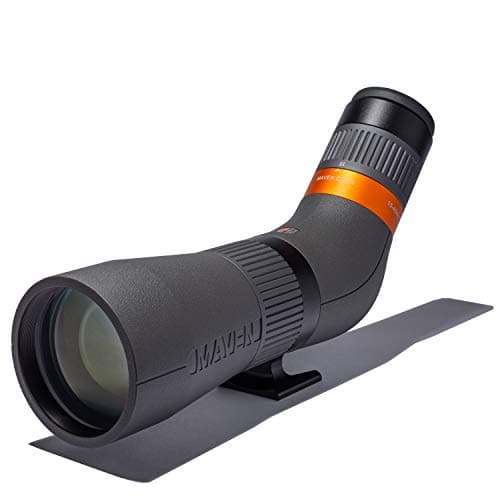
Maven CS.1A 15-45x65
A 65 mm objective at 40.4 oz per Maven's published spec: the weight compromise that actually gets carried on a backcountry hunt.
Price as of November 12, 2026. #ad How we earn
The best spotting scope for sheep hunting is the Maven CS.1A 15-45x65: at a published 40.4 oz it is the heaviest optic most hunters will actually carry above timberline, and its 15x bottom end makes scanning big faces practical. If your hunt allows the weight, the Athlon Ares G2 UHD 20-60x85 resolves more detail and the Leupold SX-4 Pro Guide HD survives more abuse.
Sheep hunting inverts the usual advice. On most hunts you buy the best optic you can afford and carry it. Here the binding constraint is what you can carry to 10,000 feet with ten days of food, and an excellent scope left at the trailhead resolves nothing. Every pick on this page is judged on weight first.
Quick picks
Ranked by the criteria published on how we review. Tap any row for the full write-up, or go straight to the current price.
| # | Product | Best for | Score | Price |
|---|---|---|---|---|
| 1 | Maven CS.1A 15-45x6540.4 oz in a 65 mm body with a 15x bottom end - the weight compromise that actually gets carried to 10,000 feet. | Best spotting scope for sheep huntingBackpack spotting scope | 9.3out of 10 | |
| 2 | 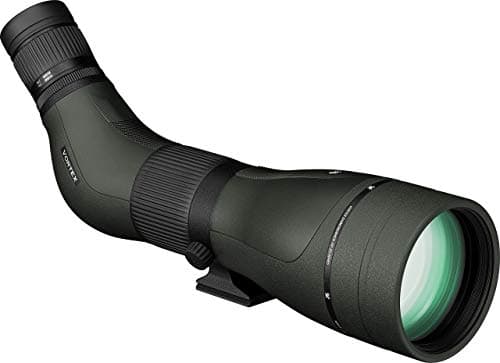 Vortex Diamondback HD 20-60x85An 85 mm objective and 18.3-20.3 mm of eye relief for the price of a mid-tier binocular - at 60.9 oz. | Best value if weight allowsBest spotting scope value | 9.2out of 10 | |
| 3 | 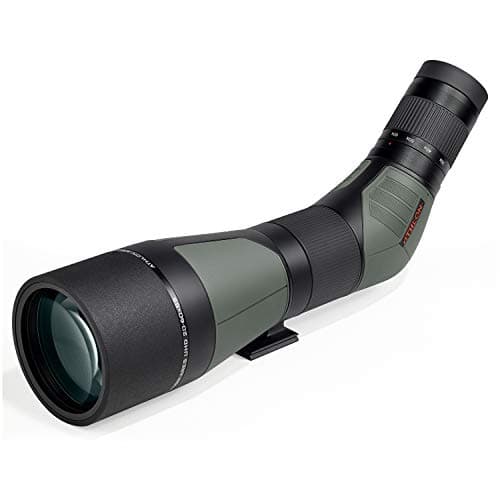 Athlon Ares G2 UHD 20-60x85UHD glass with ED elements in an 85 mm body, priced below the comparable Vortex and Leupold. | Best resolution per dollarMost glass per dollar at 85 mm | 9.3out of 10 | |
| 4 | 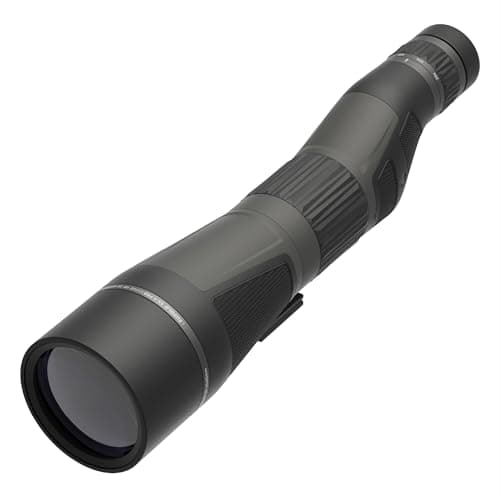 Leupold SX-4 Pro Guide HD 20-60x85Twilight Max HD coatings in a body built to be strapped to a pack frame for a week. | Toughest buildToughest spotting scope here | 9.3out of 10 |
Prices are pulled live from Amazon and were last checked November 12, 2026; if a figure cannot be verified the button reads "Check price" instead. Scores are our editorial judgment against the published ranking criteria, on our published 8.4 to 9.8 recommendation scale. #ad How we earn.
Why sheep hunting needs a spotting scope at all
Two reasons, and they are specific. First, the judging is legal rather than aesthetic: most sheep units set a minimum - full curl, a horn tip past a defined line, or an age read from annuli - and getting that wrong is a citation rather than a disappointment. That is a resolution problem no binocular solves.
Second, the approaches are enormous. Spotting a band of rams at two miles and deciding whether to spend a day climbing to them is a decision worth making from the glass rather than from the boot leather. A 15x56 binocular finds the sheep; a spotting scope tells you whether one of them is legal. The general version of this argument is in do you need a spotting scope.
What to look for in a sheep scope
- Carried weight, including the tripod. A 40 oz scope on a 50 oz tripod is a 5.6 lb system. A 61 oz scope on a tripod stiff enough to hold it is closer to 8 lb. That difference is felt every step - see what size tripod do I need.
- The bottom of the zoom range, not the top. 15x scans; 20x hunts. A scope that starts at 15x covers a face far faster, and most judging happens between 30x and 45x anyway.
- Resolution at the magnification you will actually use. Every zoom scope softens near its top end. A scope that is crisp at 40x beats one that is mushy at 60x, which is why the published maximum is the least useful number on the box.
- Eye relief across the zoom. Two hours behind a scope with tight eye relief is miserable. Vortex's published 18.3-20.3 mm on the Diamondback HD is the standard to measure against.
- Sealing and build. It will be rained on, dropped and lashed to a pack. This is where the Leupold argument lives.
Price as of November 12, 2026. #ad How we earn
Maven CS.1A 15-45x65
A 65 mm objective at 40.4 oz per Maven's published spec: the weight compromise that actually gets carried on a backcountry hunt.
| Magnification | 15x |
|---|---|
| Objective lens | 65 mm |
| Magnification range | 15x-45x |
| Weight | 40.4 oz |
| Exit pupil (computed) | 4.33 mm |
| Twilight factor (computed) | 31.2 |
Specs verified 2026-10-05 from Maven's published specification. Exit pupil and twilight factor are computed, not quoted.
What it does well
- 40.4 oz, verified in Maven's published specification
- 15x minimum makes scanning practical
- Lifetime warranty, sold direct
Where it gives ground
- 65 mm gathers less light than an 85 mm at dawn
- 45x ceiling limits fine antler judging
Skip it if
You glass from a truck or a fixed camp - take the 85 mm.
How this score breaks down
- Resolution at top magnification (weight 5)8.3
- Usable magnification range (weight 4)7.6
- Eye relief across the zoom (weight 3)8.1
- Weight and packability (weight 3)9.6
- Build and sealing (weight 2)9.0
Criterion scores are on the 0-10 rubric scale. Their weighted mean is 8.4, which maps to 9.3 on our published recommendation scale of 8.4 to 9.8 - the band of products we are willing to recommend at all. The weights, the definitions and the mapping are all published, so any score here can be checked against our own rules. These are editorial judgments from published specifications, computed optical arithmetic and documented consensus.
Sheep hunting selects for weight more aggressively than any other hunt, and this is the scope that survives that selection. Maven publishes 40.4 oz, which is roughly 20 oz less than a full-size 85 mm scope - and 20 oz saved at the top of a scree slope on day seven is worth more than any optical difference between the two.
The 15x bottom end matters more than the 45x top end. Scanning a basin at 20x is slow and narrow; at 15x you cover ground, and covering ground is how sheep get found on faces that look empty for two hours and then are not. The glass is Maven's and comes with a lifetime warranty, sold direct.
The honest limits: a 65 mm objective gathers less light than an 85 mm at dawn, and 45x is a ceiling you will occasionally wish were higher when you are trying to count annuli at a mile and a half. If you glass from a spike camp you walk back to, the 85 mm scopes below are better instruments.
Price as of November 12, 2026. #ad How we earn
Vortex Diamondback HD 20-60x85
An 85 mm objective, 20-60x, and 18.3-20.3 mm of eye relief for around $500, which is the cheapest credible way into a real spotting scope.
| Magnification | 20-60x |
|---|---|
| Objective lens | 85 mm |
| Eye relief | 18.3mm - 20.3mm |
| Field of view | 108' - 60' @ 1000 yds |
| Angular field of view | 2.1º - 1.1º |
| Close focus | 24.6' |
| Weight | 60.9 oz. |
| Length | 16.0" |
| Exit pupil (computed) | 4.25 mm |
| Twilight factor (computed) | 41.2 |
Specs verified 2026-10-05 from Vortex's published specification. Exit pupil and twilight factor are computed, not quoted.
What it does well
- 85 mm objective gathers enough light for dawn judging
- 18.3-20.3 mm eye relief is unusually generous
- VIP warranty
Where it gives ground
- Image softens noticeably past about 45x
- Needs a tripod costing a meaningful fraction of the scope
Skip it if
You only glass inside 400 yards - 15x56 binoculars are lighter and cheaper.
How this score breaks down
- Resolution at top magnification (weight 5)7.9
- Usable magnification range (weight 4)8.4
- Eye relief across the zoom (weight 3)9.4
- Weight and packability (weight 3)6.8
- Build and sealing (weight 2)8.4
Criterion scores are on the 0-10 rubric scale. Their weighted mean is 8.1, which maps to 9.2 on our published recommendation scale of 8.4 to 9.8 - the band of products we are willing to recommend at all. The weights, the definitions and the mapping are all published, so any score here can be checked against our own rules. These are editorial judgments from published specifications, computed optical arithmetic and documented consensus.
The case for carrying the extra weight. An 85 mm objective gathers enough light for genuine dawn and dusk judging, which on a sheep hunt is when the animals are up and feeding, and Vortex's published 18.3-20.3 mm of eye relief is unusually generous across the zoom - which matters when you are behind the scope for two hours and your eye is tired.
Vortex publish 60.9 oz and 16.0 inches. That is a significant commitment on a backpack hunt. The image also softens noticeably past about 45x, so the 60x top end is less useful than the number suggests - which narrows the real gap to the 65 mm scope above.
Price as of November 12, 2026. #ad How we earn
Athlon Ares G2 UHD 20-60x85
UHD glass in an 85 mm body at a price that undercuts the Viper HD, which is Athlon's whole argument.
| Magnification | 20-60x |
|---|---|
| Objective lens | 85 mm |
| Field of view | 99-47 ft @ 1,000 yd |
| Eye relief | 0.77-0.70 in (19.6-17.8 mm) |
| Eyepiece angle | 45 degrees |
| Weight | 70 oz |
| Dimensions | 16.9 x 4 in |
| Exit pupil at 20x (computed) | 4.25 mm |
| Exit pupil at 60x (computed) | 1.42 mm |
| Twilight factor at 20x (computed) | 41.2 |
Specs verified 2026-10-19 from Athlon's published specification. Exit pupil and twilight factor are computed, not quoted.
What it does well
- UHD glass with ED elements and an apochromatic lens system
- Priced below comparable Vortex and Leupold 85 mm scopes
- 19.6 mm of eye relief at 20x, which is generous for a spotting scope
- Lifetime transferable warranty
Where it gives ground
- 99 ft of field at 20x is the narrowest of the 85 mm scopes here - the Diamondback HD publishes 108 ft
- 70 oz is heavy for a backpack hunt, even though it undercuts the Viper HD's 76.6 oz
- Athlon publishes no close focus figure and no sealing specification
- Service turnaround is slower than the majors and resale demand is thinner
Skip it if
You need a walk-in dealer for service, or you are counting ounces on a backpack hunt.
How this score breaks down
- Resolution at top magnification (weight 5)8.9
- Usable magnification range (weight 4)8.9
- Eye relief across the zoom (weight 3)8.5
- Weight and packability (weight 3)6.3
- Build and sealing (weight 2)8.1
Criterion scores are on the 0-10 rubric scale. Their weighted mean is 8.3, which maps to 9.3 on our published recommendation scale of 8.4 to 9.8 - the band of products we are willing to recommend at all. The weights, the definitions and the mapping are all published, so any score here can be checked against our own rules. These are editorial judgments from published specifications, computed optical arithmetic and documented consensus.
If judging is the priority and you have the pack space, this is the most glass per dollar in the roundup. UHD glass with ED elements holds detail at high magnification better than the Diamondback HD does, which is exactly the capability a sheep hunter is paying for - the difference between "a legal ram, probably" and "a legal ram".
It carries a lifetime transferable warranty. Service turnaround is slower than the major brands and resale demand is thinner, which are the real costs of the value proposition rather than optical compromises.
Price as of November 12, 2026. #ad How we earn
Leupold SX-4 Pro Guide HD 20-60x85
Leupold's Twilight Max HD coatings in a body built to survive being strapped to a pack frame for a week.
| Magnification | 20x |
|---|---|
| Objective lens | 85 mm |
| Exit pupil (computed) | 4.25 mm |
| Twilight factor (computed) | 41.2 |
Magnification and objective are the manufacturer's own model designation; exit pupil and twilight factor are computed from them. We could not machine-read Leupold's spec page, so the remaining published figures are not listed rather than guessed.
What it does well
- Twilight Max HD coatings favor dawn and dusk performance
- Built to Leupold's abuse standard
- Lifetime guarantee
Where it gives ground
- Heavier than the Vortex equivalents
- Eyepiece is less comfortable than Vortex's
Skip it if
Pack weight is your binding constraint.
How this score breaks down
- Resolution at top magnification (weight 5)8.7
- Usable magnification range (weight 4)9.1
- Eye relief across the zoom (weight 3)7.9
- Weight and packability (weight 3)5.7
- Build and sealing (weight 2)9.6
Criterion scores are on the 0-10 rubric scale. Their weighted mean is 8.2, which maps to 9.3 on our published recommendation scale of 8.4 to 9.8 - the band of products we are willing to recommend at all. The weights, the definitions and the mapping are all published, so any score here can be checked against our own rules. These are editorial judgments from published specifications, computed optical arithmetic and documented consensus.
Sheep country is hard on equipment in a way no other hunt is: scree, rock, rain, and a scope lashed to the outside of a pack for ten days. Leupold's abuse standard is the answer to that, and the Twilight Max HD coatings favor exactly the dawn and dusk performance a sheep hunter needs.
It is heavier than the Vortex equivalents and the eyepiece is less comfortable than Vortex's. If pack weight is your binding constraint - and on most sheep hunts it is - the Maven 65 mm is the better choice despite the lesser glass.
How the picks compare
| Scope | Objective | Zoom range | Published weight | Exit pupil at the bottom of the zoom |
|---|---|---|---|---|
| Maven CS.1A 15-45x65 | 65 mm | 15-45x | 40.4 oz | 4.33 mm |
| Vortex Diamondback HD 20-60x85 | 85 mm | 20-60x | 60.9 oz | 4.25 mm |
| Athlon Ares G2 UHD 20-60x85 | 85 mm | 20-60x | Not published by Athlon | 4.25 mm |
| Leupold SX-4 Pro Guide HD 20-60x85 | 85 mm | 20-60x | Not published by Leupold | 4.25 mm |
Figures as published by each manufacturer; where a weight is not published we say so rather than estimate it. Exit pupil is the objective diameter divided by the magnification.
The row worth staring at is the last one. A 65 mm scope at 15x has a slightly larger exit pupil than an 85 mm scope at 20x - so the lighter scope is not the dimmer scope when you are scanning. The 85 mm advantage appears when you zoom in, which is the half of the job that happens after you have already found the sheep.
Angled or straight for sheep?
Angled, for almost every sheep hunter. You spend hours behind the scope and an angled eyepiece lets you sit upright with the tripod low, which is both more comfortable and more stable in wind. It also lets you glass uphill - which in sheep country is where you are glassing - without contorting. The exception is a scope used prone off a pack. The full comparison is in angled vs straight spotting scopes.
On magnification generally, what magnification spotting scope covers why 60x is rarely the number you use, and best compact spotting scopes is the wider roundup for weight-limited hunts.
Our recommendation
If you take one thing from this page, take this.
Maven CS.1A 15-45x65
Best spotting scope for sheep hunting
40.4 oz in a 65 mm body with a 15x bottom end - the weight compromise that actually gets carried to 10,000 feet.
Vortex Diamondback HD 20-60x85
Best value if weight allows
An 85 mm objective and 18.3-20.3 mm of eye relief for the price of a mid-tier binocular - at 60.9 oz.
Prices are pulled live and shown on each button. #ad How we earn.
Questions people actually ask
What is the best spotting scope for sheep hunting?
What magnification spotting scope do I need for sheep?
Is a 65 mm spotting scope big enough for sheep hunting?
Do I need a spotting scope for sheep hunting or will binoculars do?
Sources
- Maven CS.1A 15-45x65 published specifications - read 2026-10-17
- Vortex Diamondback HD 20-60x85 published specifications - read 2026-10-17