For binoculars and a packable scope, a tripod around 2.5 lbs that extends to just under seated eye height is the right size for most hunters. Once an 85 mm spotting scope is involved, prioritize stiffness and accept about 3 lbs or more. Height matters less than people expect, because almost all serious glassing is done sitting down.
The three numbers that actually decide it
Tripod specifications are a wall of figures, and three of them matter. The rest is detail.
| Spec | What it tells you | What to look for |
|---|---|---|
| Maximum height | Standing or seated use | Seated eye height is enough for most hunting; full standing height adds weight you rarely use |
| Weight | Whether you will carry it | Around 2.5 lbs for binoculars and a light scope; 3+ lbs once an 85 mm scope is on it |
| Load rating | Stiffness under the optic | Comfortably above your heaviest optic plus the head |
| Folded length | Whether it fits the pack | Shorter than your pack is tall, or it catches on brush |
| Leg sections | Height per folded inch | Fewer sections are stiffer; more sections pack shorter |
Maximum height is the number printed largest and the one that matters least. Load rating is the number that decides whether the image is steady.
Why height matters less than you think
Standing behind a tripod is the least stable way to use one, and on a hunt it is also the most visible. Serious glassing happens sitting on a pack with your elbows on your knees, or lying behind the legs with the tripod shortened. That means a tripod which reaches seated eye height - roughly 40 to 48 inches for most adults - covers the overwhelming majority of real use.
Buying full standing height costs you an extra leg section, extra weight and extra flex, and you will use it for the occasional over-the-brush look. If you glass from a vehicle or a fixed blind, that calculation changes and taller is genuinely better.
Quick picks
Ranked by the criteria published on how we review. Tap any row for the full write-up, or go straight to the current price.
| # | Product | Best for | Score | Price |
|---|---|---|---|---|
| 1 | 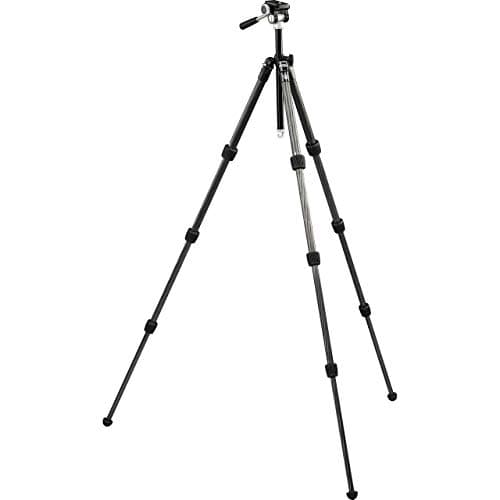 Vortex Summit Carbon II Tripod Kit2.5 lbs of carbon in Vortex's published spec - the size you will carry rather than leave behind. | Right for most huntersLightest credible tripod | 9.3out of 10 | |
| 2 | 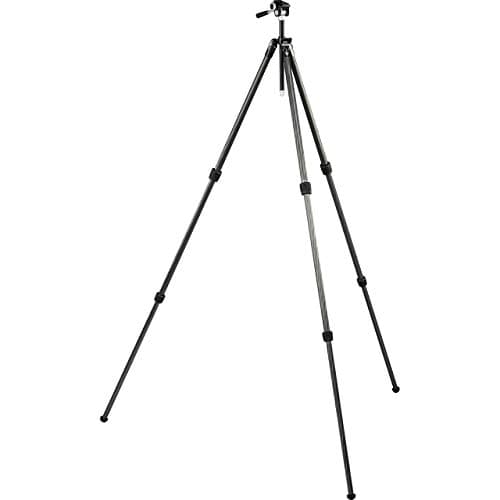 Vortex Ridgeview Carbon Tripod3.2 lbs of carbon that holds an 85 mm spotting scope steady at 60x. | Right for an 85 mm scopeBest glassing tripod | 9.5out of 10 | |
| 3 | 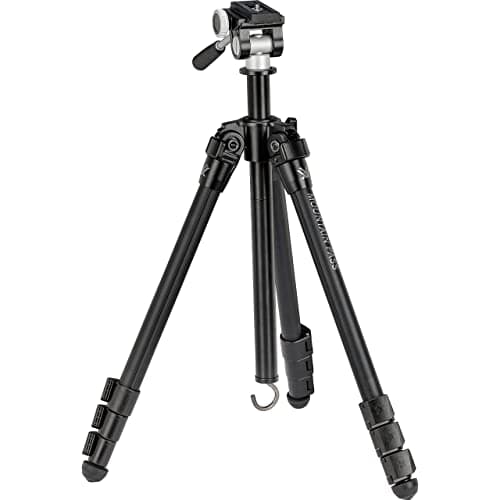 Vortex Mountain Pass Tripod KitAluminum with a ball head included - the cheapest way to get genuinely steady. | Right for a first tripodBest tripod under $150 | 9.2out of 10 |
Prices are pulled live from Amazon and were last checked November 12, 2026; if a figure cannot be verified the button reads "Check price" instead. Scores are our editorial judgment against the published ranking criteria, on our published 8.4 to 9.8 recommendation scale. #ad How we earn.
Size it to the optic on top
- 8x42 or 10x42 binoculars. Almost any tripod works. Buy the lightest thing with legs you trust, and spend the saving on a proper adapter.
- 12x50 or 15x56 binoculars. A tripod stops being optional here. Around 2.5 lbs of carbon, a ball or fluid head, and a clamping adapter.
- A 65 mm spotting scope. Same class of tripod as 15x56 binoculars. Packability still wins.
- An 85 mm spotting scope. Stiffness wins. Expect 3 lbs or more, and do not extend a center column if there is one.
- Glassing and shooting from the same platform. Stiffness and load rating above everything - see tripods for binoculars and shooting.
Carbon or aluminum at a given size
Carbon is stiffer and damps vibration better per pound, which means for the same weight you carry a steadier image, and for the same stiffness you carry less. Aluminum costs less and takes abuse without complaint. At the sizes hunters use, the difference shows up most at high magnification - which is to say, exactly when you are judging an animal.
The reasonable rule: if you tripod binoculars, aluminum is fine. If you tripod a spotting scope at 45x or more, buy carbon. And if you have never used a tripod at all, buy the cheap complete kit first - the step from handheld to any tripod is larger than every step after it, as covered in do you need a tripod for binoculars.
Questions people actually ask
What size tripod do I need for binoculars?
How tall should a hunting tripod be?
What tripod load rating do I need for a spotting scope?
Why does my tripod wobble even though it is rated for the weight?
Sources
- Vortex Summit Carbon II Tripod Kit product specifications - read 2026-10-11
- Vortex Ridgeview Carbon Tripod product specifications - read 2026-10-11