We earn a commission if you buy through the links on this page, at no extra cost to you. It never changes which products we pick or how we rank them - read the full disclosure.
Our top pick
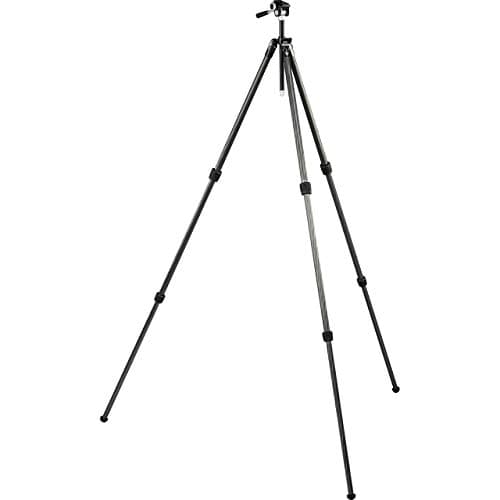
Vortex Ridgeview Carbon Tripod
Carbon legs at 3.2 lbs per Vortex's published spec, stiff enough to hold an 85 mm scope at 60x without the image breathing.
Price as of November 12, 2026. #ad How we earn
The best tripod for both binoculars and shooting is the Vortex Ridgeview Carbon: at 3.2 lbs in Vortex's published spec it is stiff enough to hold an 85 mm scope at 60x and stiff enough not to spring back under a loaded rifle. If stability per dollar matters more than hunting-specific ergonomics, the Benro Mach3 does the same job for less.
What shooting asks that glassing does not
Glassing asks a tripod to hold a picture still against wind and your own pulse. That is a damping problem, and it is why carbon beats aluminum at the same weight. Shooting asks something different: it asks the tripod to resist being pushed and then to return to exactly where it was, repeatedly, while 10-12 lbs of rifle leans on it.
| Glassing | Shooting | |
|---|---|---|
| What matters most | Vibration damping | Stiffness under load |
| Best leg material | Carbon | Carbon, or heavier aluminum |
| Head type | Ball or fluid pan head | Levelling base, or a dedicated shooting head |
| Why it fails | Image breathes at high magnification | Position settles or springs back after the shot |
| Weight tolerance | Whatever you will carry | Heavier is usually better |
Those two columns conflict in exactly one place: weight. Everything else about a good glassing tripod helps the shooting job too.
Quick picks
Ranked by the criteria published on how we review. Tap any row for the full write-up, or go straight to the current price.
| # | Product | Best for | Score | Price |
|---|---|---|---|---|
| 1 | Vortex Ridgeview Carbon TripodCarbon legs at 3.2 lbs in Vortex's published spec, stiff enough for an 85 mm scope at 60x. | Best for both jobsBest glassing tripod | 9.5out of 10 | |
| 2 | 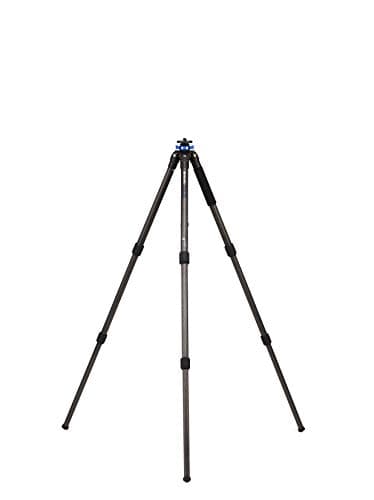 Benro Mach3 TripodA high load rating on carbon legs, from the photographic side of the market. | Best stability per dollarStability per dollar | 9.4out of 10 | |
| 3 | 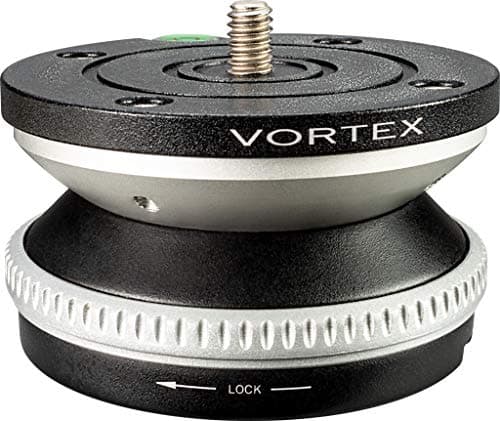 Vortex Pro Tripod Leveling HeadLevels the head without resetting the legs - the difference between glassing and fighting a tripod. | The part that makes it workLeveling a tripod fast | 9.4out of 10 | |
| 4 | 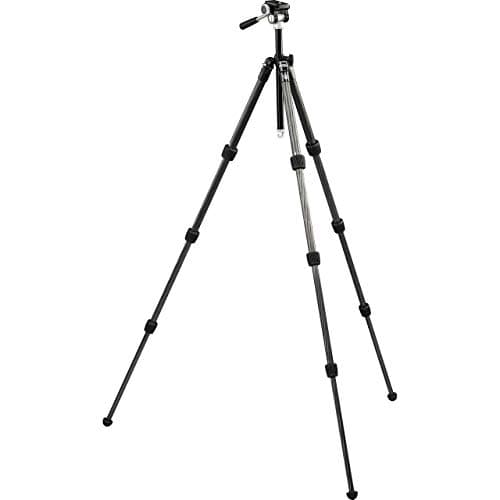 Vortex Summit Carbon II Tripod Kit2.5 lbs of carbon in Vortex's published spec - the one you will actually carry. | Best if weight winsLightest credible tripod | 9.3out of 10 | |
| 5 | 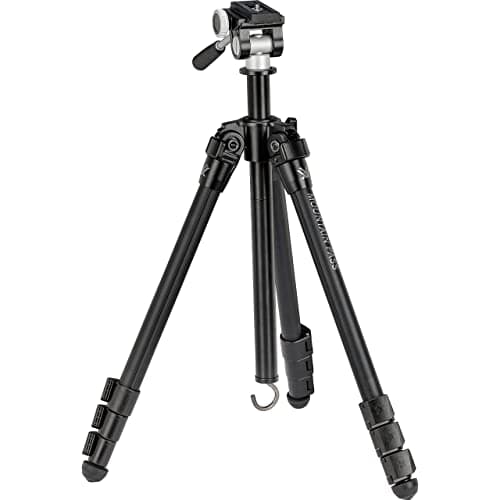 Vortex Mountain Pass Tripod KitAluminum with a ball head included, at the price where tripods start. | Cheapest workable optionBest tripod under $150 | 9.2out of 10 |
Prices are pulled live from Amazon and were last checked November 12, 2026; if a figure cannot be verified the button reads "Check price" instead. Scores are our editorial judgment against the published ranking criteria, on our published 8.4 to 9.8 recommendation scale. #ad How we earn.
The honest limit of a dual-purpose tripod
A tripod you carry on a mountain hunt and a tripod you shoot a heavy rifle from in wind are not the same object, and anybody who tells you otherwise is selling one. What is true is that a stiff carbon glassing tripod covers most practical field shooting - braced sitting, kneeling off a shortened leg set, a standing shot in calm conditions with a light rifle.
What it does not cover is a dedicated precision platform. If you shoot off a tripod competitively or at long range from a fixed position, you want a heavier leg set and a purpose-built shooting head, and the glassing tripod should stay a glassing tripod.
What to check before buying
- Published load rating, not marketing weight. The figure you want is what the legs hold without flex, and it should be well above your heaviest rifle.
- Leg diameter at the top section. The top section carries the load. Thin top tubes flex no matter what the rest of the tripod is made of.
- No center column, or one you can leave down. An extended center column is the single biggest source of wobble in a tripod that is otherwise fine.
- A levelling base if you hunt slopes. It is the fastest cure for a head that is not square. More on heads in the best tripods for spotting scopes.
- Twist locks you can work in gloves. Grit in a leg lock ends a morning faster than any optical problem.
Adapters: the part people forget
A tripod does nothing for your binoculars until there is an adapter between them, and a cheap adapter undoes an expensive tripod. The clamping designs hold where thread-only adapters work loose, and the quick-release designs mean you are not unscrewing anything with cold hands. Our picks are in quick-release binocular tripod adapters, and the mounting procedure is in how to mount binoculars on a tripod.
The picks in detail
Price as of November 12, 2026. #ad How we earn
Vortex Ridgeview Carbon Tripod
Carbon legs at 3.2 lbs per Vortex's published spec, stiff enough to hold an 85 mm scope at 60x without the image breathing.
Magnification and objective are the manufacturer's own model designation; exit pupil and twilight factor are computed from them. We could not machine-read Vortex's spec page, so the remaining published figures are not listed rather than guessed.
What it does well
- Holds an 85 mm spotting scope steady at full magnification
- 3.2 lbs, verified in Vortex's published specification
- VIP warranty
Where it gives ground
- Costs as much as a Diamondback HD spotting scope
- Overbuilt for binocular-only use
Skip it if
You only tripod binoculars - the Mountain Pass is enough.
How this score breaks down
- Core function (stability or protection) (weight 5)9.5
- Noise and access speed (weight 4)8.3
- Fit, adjustability and comfort (weight 3)8.8
- Weather protection or build (weight 3)9.0
- Value for money (weight 3)8.0
Criterion scores are on the 0-10 rubric scale. Their weighted mean is 8.8, which maps to 9.5 on our published recommendation scale of 8.4 to 9.8 - the band of products we are willing to recommend at all. The weights, the definitions and the mapping are all published, so any score here can be checked against our own rules. These are editorial judgments from published specifications, computed optical arithmetic and documented consensus.
If one tripod has to serve both jobs, this is the one. The reason is stiffness rather than mass: the thing that ruins a shooting position is a platform that flexes and springs back when you load it, and carbon legs of this diameter hold a loaded rifle without the slow settle that lighter kits give you.
It also does the glassing job properly, which the heavier aluminum shooting tripods do not always do well - it holds an 85 mm spotting scope steady at full magnification, where the image on a flexier platform breathes with your pulse.
The honest cost is money. This is tripod money that could have gone into glass, and if you only ever tripod a pair of 10x42s you are paying for stiffness you will never load.
Price as of November 12, 2026. #ad How we earn
Benro Mach3 Tripod
Carbon legs with a high load rating at a price that undercuts hunting-branded carbon, if you can live with photographic ergonomics.
Magnification and objective are the manufacturer's own model designation; exit pupil and twilight factor are computed from them. We could not machine-read Benro's spec page, so the remaining published figures are not listed rather than guessed.
What it does well
- High load rating for the weight
- Carbon damping at a sub-$400 price
- Solid leg locks
Where it gives ground
- Head sold separately in some configurations
- No hunting-specific features
Skip it if
You want a complete kit out of the box.
How this score breaks down
- Core function (stability or protection) (weight 5)9.0
- Noise and access speed (weight 4)7.8
- Fit, adjustability and comfort (weight 3)8.0
- Weather protection or build (weight 3)8.3
- Value for money (weight 3)9.3
Criterion scores are on the 0-10 rubric scale. Their weighted mean is 8.5, which maps to 9.4 on our published recommendation scale of 8.4 to 9.8 - the band of products we are willing to recommend at all. The weights, the definitions and the mapping are all published, so any score here can be checked against our own rules. These are editorial judgments from published specifications, computed optical arithmetic and documented consensus.
Load rating is the spec that matters when a rifle enters the conversation, and the photographic market sells it more cheaply than the hunting market does. Carbon legs, a serious published load figure, and a price that undercuts hunting-branded carbon of the same stiffness.
The trade is ergonomics built for cameras rather than for a hunter on a side hill: leg locks and controls assume both hands and good light, and in some configurations the head is sold separately. If you are willing to learn its quirks, it is the value pick on this page.
Price as of November 12, 2026. #ad How we earn
Vortex Pro Tripod Leveling Head
A leveling kit that lets you square the head without re-setting the legs, which is the difference between glassing and fighting a tripod on a side hill.
Magnification and objective are the manufacturer's own model designation; exit pupil and twilight factor are computed from them. We could not machine-read Vortex's spec page, so the remaining published figures are not listed rather than guessed.
What it does well
- Levels the head independently of the legs
- Useful on any uneven ground
- VIP warranty
Where it gives ground
- Adds weight and height to the stack
- Only worth it if you glass on slopes
Skip it if
You glass from flat ground or a vehicle.
How this score breaks down
- Core function (stability or protection) (weight 5)8.8
- Noise and access speed (weight 4)8.0
- Fit, adjustability and comfort (weight 3)9.0
- Weather protection or build (weight 3)8.5
- Value for money (weight 3)8.5
Criterion scores are on the 0-10 rubric scale. Their weighted mean is 8.6, which maps to 9.4 on our published recommendation scale of 8.4 to 9.8 - the band of products we are willing to recommend at all. The weights, the definitions and the mapping are all published, so any score here can be checked against our own rules. These are editorial judgments from published specifications, computed optical arithmetic and documented consensus.
Shooting off a tripod on uneven ground is a levelling problem before it is a stability problem. If the head is not square, your reticle tracks a diagonal when you pan, and correcting it means re-setting the legs with an animal in view.
A levelling base fixes it at the head instead, in seconds, which is why it belongs on a dual-purpose setup more than on a glassing-only one. It adds weight and height to the stack, and if you only glass from flat ground you do not need it.
Price as of November 12, 2026. #ad How we earn
Vortex Summit Carbon II Tripod Kit
2.5 lbs of carbon per Vortex's published spec: light enough to actually carry on a day hunt, which is the only tripod spec that matters.
Magnification and objective are the manufacturer's own model designation; exit pupil and twilight factor are computed from them. We could not machine-read Vortex's spec page, so the remaining published figures are not listed rather than guessed.
What it does well
- 2.5 lbs, verified in Vortex's published specification
- Carbon legs damp vibration better than aluminum
- Packs short enough to strap to a day pack
Where it gives ground
- Less stable than the Ridgeview under a heavy scope
- Leg locks need care in grit
Skip it if
You run an 85 mm scope at 60x in wind.
How this score breaks down
- Core function (stability or protection) (weight 5)8.3
- Noise and access speed (weight 4)8.3
- Fit, adjustability and comfort (weight 3)8.3
- Weather protection or build (weight 3)8.5
- Value for money (weight 3)8.5
Criterion scores are on the 0-10 rubric scale. Their weighted mean is 8.4, which maps to 9.3 on our published recommendation scale of 8.4 to 9.8 - the band of products we are willing to recommend at all. The weights, the definitions and the mapping are all published, so any score here can be checked against our own rules. These are editorial judgments from published specifications, computed optical arithmetic and documented consensus.
The tripod you leave in the truck has a load rating of zero, which is the argument for the lightest credible option. At 2.5 lbs this straps to a day pack without a conversation, and for glassing with binoculars up to 15x56 it is genuinely enough.
For shooting it is the compromise pick: fine for a braced sitting position with a light rifle, less convincing under a heavy rifle in wind. Know which of those you are buying it for.
Price as of November 12, 2026. #ad How we earn
Vortex Mountain Pass Tripod Kit
3.1 lbs of aluminum with a ball head included, which makes it the cheapest way to get binoculars genuinely steady.
Magnification and objective are the manufacturer's own model designation; exit pupil and twilight factor are computed from them. We could not machine-read Vortex's spec page, so the remaining published figures are not listed rather than guessed.
What it does well
- Ball head included at $149
- Stable enough for 15x56 binoculars
- VIP warranty
Where it gives ground
- 3.1 lbs of aluminum is heavy for the stability it gives
- Not stiff enough for an 85 mm scope at 60x
Skip it if
You own a spotting scope. Buy carbon.
How this score breaks down
- Core function (stability or protection) (weight 5)7.7
- Noise and access speed (weight 4)7.5
- Fit, adjustability and comfort (weight 3)8.0
- Weather protection or build (weight 3)8.0
- Value for money (weight 3)9.3
Criterion scores are on the 0-10 rubric scale. Their weighted mean is 8.0, which maps to 9.2 on our published recommendation scale of 8.4 to 9.8 - the band of products we are willing to recommend at all. The weights, the definitions and the mapping are all published, so any score here can be checked against our own rules. These are editorial judgments from published specifications, computed optical arithmetic and documented consensus.
Aluminum is heavier than carbon for the same stiffness and damps vibration less well, and at this price the kit includes a ball head, which is how most people get their first steady glassing position. It will hold 15x56 binoculars well.
It is not the pick for shooting. A ball head under a rifle wants to rotate under load, and an aluminum leg set at this weight flexes more than a shooting position should. Buy it as the glassing tripod it is.
Our recommendation
If you take one thing from this page, take this.
Vortex Ridgeview Carbon Tripod
Best for both jobs
Carbon legs at 3.2 lbs in Vortex's published spec, stiff enough for an 85 mm scope at 60x.
Benro Mach3 Tripod
Best stability per dollar
A high load rating on carbon legs, from the photographic side of the market.
Prices are pulled live and shown on each button. #ad How we earn.
Questions people actually ask
Can I use the same tripod for binoculars and shooting?
What load rating do I need in a tripod for shooting?
Is carbon fiber worth it over aluminum for a hunting tripod?
Do I need a special head to shoot off a tripod?
Sources
- Vortex Ridgeview Carbon Tripod product specifications - read 2026-10-11
- Vortex Summit Carbon II Tripod Kit product specifications - read 2026-10-11