We earn a commission if you buy through the links on this page, at no extra cost to you. It never changes which products we pick or how we rank them - read the full disclosure.
Our top pick
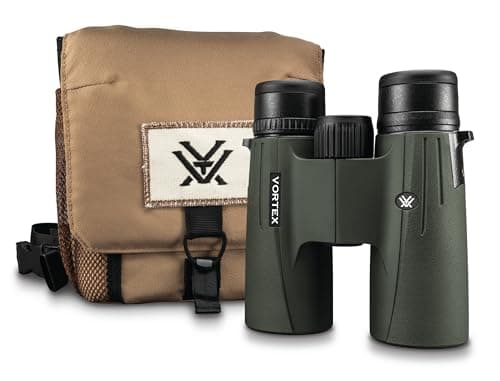
Vortex Viper HD 10x42
The default answer when someone outgrows a $150 pair: 17 mm of eye relief, a 341 ft field of view and glass that holds its edges, at the price where diminishing returns start.
Price as of November 12, 2026. #ad How we earn
The best binocular for coyote hunting is the Vortex Viper HD 10x42: a 341 ft field with 17.0 mm of eye relief, which is the combination that lets you find a dog coming hard at gray light. If you call in timber or thick cover, buy the Diamondback HD 8x42 instead - its 5.25 mm exit pupil is brighter at legal light than any 10x42 can be, and it costs less than half as much.
What coyote hunting asks of a binocular that deer hunting does not
Deer hunting is mostly a patience problem. You sit, something walks out, and you have time to raise glass and look at it. Predator hunting inverts both halves of that: the animal is usually coming to you, deliberately, on a line, and you have somewhere between forty seconds and four minutes to see it, identify it and decide. Everything about choosing glass for it follows from that one difference.
Three consequences, in the order they cost you animals. First, it happens in bad light - coyotes move at the margins of the day, and a serious predator hunter spends most of their shooting time in the twenty minutes either side of legal light, so light-gathering beats magnification. Second, it happens fast, from a seated position, often with a rifle already up, which makes field of view and eye relief the specifications that decide whether you get on the animal at all. Third, the animal is colored to disappear into exactly the cover it lives in, so contrast matters more than fine resolution: you are not reading detail, you are separating gray-brown from gray-brown.
None of those three is magnification. That is why the honest answer to what power binocular to buy for coyotes depends entirely on the country you hunt, and why the 8x on this page is not a budget compromise but a genuinely better instrument for about half of the people reading it.
| How you hunt | Format | Why |
|---|---|---|
| Calling timber, bottoms, standing corn | 8x42 | 5.25 mm exit pupil and the widest field. Dogs appear close and fast. |
| Mixed cover and farmland edges | 10x42 | Enough reach to identify at 400 yards, still fast to acquire. |
| Open prairie, sage, canyon country | 10x42 plus a 15x56 on a tripod | The 15x finds bedded dogs a 10x scans straight past. |
| Night hunting, where it is legal | Thermal, not a binocular | No glass gathers light that is not there. Different tool, different budget. |
If you own one pair and hunt everything, buy the 10x42. If you own two, make the second one the 15x56 rather than a nicer 10x.
Quick picks
Ranked by the criteria published on how we review. Tap any row for the full write-up, or go straight to the current price.
| # | Product | Best for | Score | Price |
|---|---|---|---|---|
| 1 | Vortex Viper HD 10x42341 ft of field and 17.0 mm of eye relief in Vortex's published specs - wide and comfortable enough to run from a sitting call setup. | Best overall for predatorsThe all-round upgrade | 9.5out of 10 | |
| 2 | 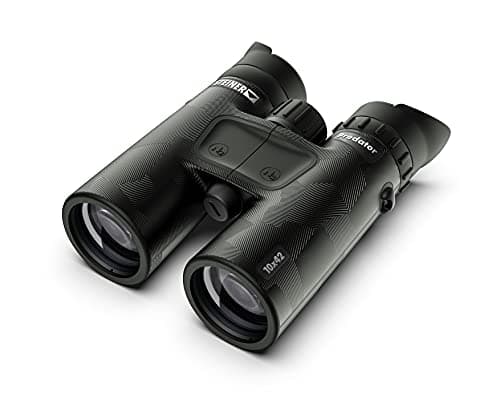 Steiner Predator 10x42Steiner's CAT coatings deliberately lift contrast in the reds and browns, which is a real advantage against brush rather than a marketing line. | Best for picking dogs out of coverPicking animals out of brush | 9.1out of 10 | |
| 3 | 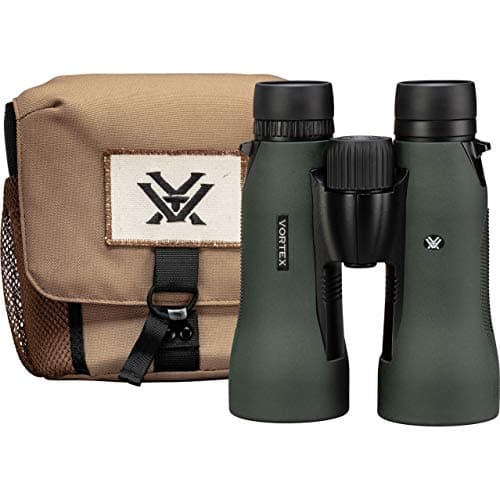 Vortex Diamondback HD 15x5615x on a tripod finds bedded and still coyotes that a 10x sweeps straight past; 34.8 oz makes the tripod mandatory. | Best for open-country scanningTripod glassing without a spotting scope | 9.1out of 10 | |
| 4 | 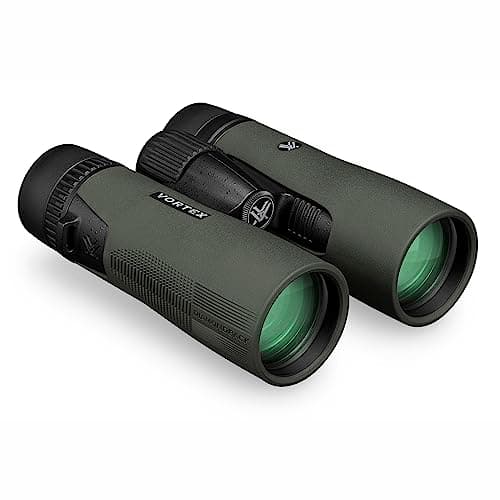 Vortex Diamondback HD 8x42A 5.25 mm exit pupil and 393 ft of field: the brightest and fastest option here, and the cheapest good one. | Best for thick cover and close callsBudget low-light pick | 9.6out of 10 | See today's price on the Diamondback HD 8x42Check price on Amazon No buyable offer at the last price check. |
| 5 | 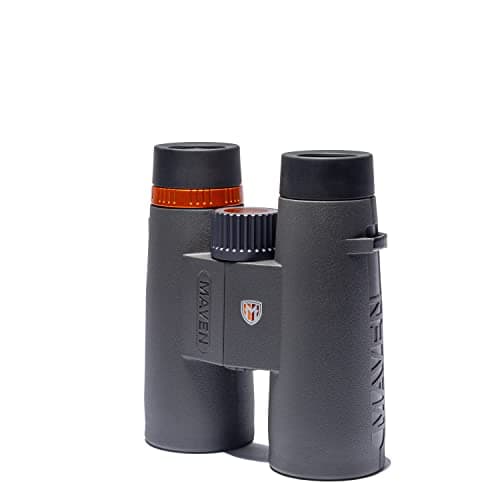 Maven C1 10x42ED glass and a lifetime warranty bought direct, which is where the dealer margin usually goes. | Best direct-to-consumer optionThe thinking buyer's $475 | 9.4out of 10 | |
| 6 | 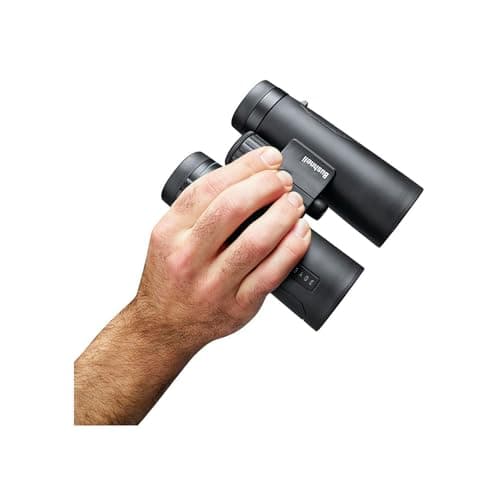 Bushnell Engage DX 10x42ED Prime glass at the bottom of the price range, with short eye relief as the catch. | Cheapest ED glassCheapest ED-glass option | 8.9out of 10 |
Prices are pulled live from Amazon and were last checked November 12, 2026; if a figure cannot be verified the button reads "Check price" instead. Scores are our editorial judgment against the published ranking criteria, on our published 8.4 to 9.8 recommendation scale. #ad How we earn.
The criteria, in the order that matters for predators
1. Exit pupil, because legal light is the whole game
Exit pupil is objective diameter divided by magnification, and it is the width of the beam of light the binocular hands your eye. An 8x42 gives 42 / 8 = 5.25 mm. A 10x42 gives 4.2 mm. A 15x56 gives 3.73 mm. In daylight your pupil sits around 2-3 mm and all three are more than enough; at the edges of the day it opens towards 5-7 mm, and an exit pupil smaller than your pupil is a dimmer image, full stop. That arithmetic is identical on a $150 binocular and a $2,500 one, and it is worked through in exit pupil and twilight factor.
The practical reading for predator hunting: if most of your shooting happens in the last fifteen minutes of light, the 8x42 is the brighter binocular and no amount of spending fixes that for a 10x42. If you need to identify animals at distance before shooting - which is both an ethical requirement and, in many states, a legal one - the reach of the 10x is worth the brightness you give up.
2. Field of view and eye relief, because speed decides
A coyote working a call does not hold still for you. The published linear field of view, stated in feet at 1,000 yards, tells you how much country is inside the circle, and it is the difference between finding the dog and panning around looking for it. 393 ft for the Diamondback HD 8x42 against 230 ft for the 15x56 is not a small gap - it is a 70 percent wider picture.
Eye relief is the companion specification and the one most buyers ignore until it bites. It is the distance behind the eyepiece at which the full field appears. Under roughly 15 mm a glasses wearer cannot get close enough and sees a vignetted circle inside a black ring. Predator hunters wear eye protection more than most, because calling means sitting in brush facing into the wind, so treat 15 mm as the floor and 17 mm as comfortable.
3. Contrast and coatings, because the animal is the color of the dirt
This is where coyote hunting genuinely differs from everything else on this site. You are not trying to count antler points; you are trying to notice that a patch of sage has ears. That is a contrast problem, and contrast comes from coatings, prism quality and glass type rather than from magnification. ED and HD glass reduce the color fringing that smears edges, phase-corrected roof prisms keep fine detail from mushing together, and in one case here - Steiner's CAT system - the coatings are deliberately tuned to favor the browns and reds that game animals wear. ED glass vs HD glass covers what those labels actually mean and where they are marketing.
4. Weight and carry, because predator hunting is a walking game
Coyote hunting is not a tree stand. A typical day is six to fifteen setups with a walk between each one, in the cold, in the dark at both ends. A 24.9 oz binocular swinging from a neck strap gets left in the truck by February, which makes it a 0 oz binocular with a 0 ft field of view. The fix is a bino harness, not a lighter binocular, and it costs a small fraction of the glass it carries.
8x, 10x or 15x: the honest version
The format argument gets treated as a personality test when it is really a terrain question. 8x42 is brighter, wider and faster, and it is right if your dogs show up inside 150 yards. 10x42 identifies animals at the distance where you still have time to do something about it, and it is the correct default for a hunter who owns one pair and hunts mixed country. The full version of that trade, with the arithmetic, is in 8x42 vs 10x42.
15x56 is a different category of decision. It is not a general-purpose binocular - 230 ft of field and 34.8 oz make that clear - but on a tripod, glassing open country methodically, it finds coyotes that are not moving. Bedded dogs, dogs sitting in the shade of a wash, dogs watching you from a rim: those are 15x finds. If you hunt sage or prairie and have never glassed off a tripod, that single change will do more for you than a brighter 10x will. Do you need a tripod for binoculars makes the case properly, and if 15x stops being enough the next step is a spotting scope - Razor HD vs Viper HD covers the two that matter.
What we did not pick, and why
No 8x32 or 10x25 compact. They are pleasant to carry and they compute to exit pupils of 4.00 mm and 2.5 mm - the smaller one is less than half the light of the 8x42 at the moment predators actually move. Carry a compact for a midday stand if you like; do not make it your predator binocular.
No rangefinding binocular either, though that one is tempting: a rangefinding binocular collapses two optics into one, and predator shots are often taken in a hurry. It is not here because of money and weight - at that price you can buy better glass plus a very good standalone rangefinder - and if you are tempted anyway, the Vortex Fury HD 5000 review is the honest version of that math. Coyote ranges are usually short enough that the ballistics argument is weaker than it is for a long-range rifle hunter.
And no alpha glass. A $2,000 binocular is better than everything on this page, visibly, at dusk. It is also not where the next improvement in your predator hunting comes from if you are still glassing offhand, without a harness and without a tripod. Upgrading from cheap binoculars sets out where the money stops buying animals.
The picks in detail
Price as of November 12, 2026. #ad How we earn
Vortex Viper HD 10x42
The default answer when someone outgrows a $150 pair: 17 mm of eye relief, a 341 ft field of view and glass that holds its edges, at the price where diminishing returns start.
| Magnification | 10x |
|---|---|
| Objective lens | 42 mm |
| Eye relief | 17.0mm |
| Field of view | 341' @ 1000 yds |
| Angular field of view | 6.5º |
| Close focus | 6.0' |
| Weight | 24.9 oz. |
| Height | 5.6" |
| Width | 4.9" |
| Exit pupil (computed) | 4.2 mm |
| Twilight factor (computed) | 20.5 |
Specs verified 2026-10-05 from Vortex's published specification. Exit pupil and twilight factor are computed, not quoted.
What it does well
- 17.0 mm eye relief is generous enough for most glasses wearers
- 341 ft at 1,000 yards is a wide field for a 10x
- Vortex VIP warranty is unconditional and transferable
Where it gives ground
- 24.9 oz is noticeable on a chest harness over a long day
- The 12x50 costs little more if you glass open country
Skip it if
You hunt timber inside 200 yards - the 8x42 Diamondback does that job for less than half the money.
How this score breaks down
- Low-light performance (weight 5)8.5
- Optical quality per dollar (weight 4)9.0
- Field of view (weight 3)8.9
- Eye relief (weight 3)9.1
- Weight and ergonomics (weight 2)7.6
- Warranty (weight 2)10.0
Criterion scores are on the 0-10 rubric scale. Their weighted mean is 8.8, which maps to 9.5 on our published recommendation scale of 8.4 to 9.8 - the band of products we are willing to recommend at all. The weights, the definitions and the mapping are all published, so any score here can be checked against our own rules. These are editorial judgments from published specifications, computed optical arithmetic and documented consensus.
This is the pick because coyote hunting rewards the two specifications predator hunters rarely shop on. 341 ft of field at 1,000 yards is wide for a 10x - 16 ft more than the Crossfire HD and 11 ft more than a Zeiss Terra ED - and a wide field is how you find something that is already moving. 17.0 mm of eye relief means you get the full picture through shooting glasses without hunting for the eyebox while a dog closes from 300 yards.
The low-light arithmetic is the same 4.2 mm exit pupil and 20.5 twilight factor every 10x42 has, so what separates this one is coatings and resolution rather than the numbers. In the first and last twenty minutes of shooting light, which is where most of the serious predator hunting in a year happens, the Viper HD holds detail that cheaper HD-glass binoculars let go of.
The honest cons: 24.9 oz on a harness is noticeable after a day of walking in to setups, and it costs roughly three times what a binocular that will technically let you see the coyote costs. If you only hunt the middle of the day, over bait or in snow, you are paying for light you are not using.
Price as of November 12, 2026. #ad How we earn
Steiner Predator 10x42
Steiner's CAT coatings deliberately boost contrast in the reds and browns, which genuinely helps separate an animal from cover.
| Magnification | 10x |
|---|---|
| Objective lens | 42 mm |
| Exit pupil (computed) | 4.2 mm |
| Twilight factor (computed) | 20.5 |
Magnification and objective are the manufacturer's own model designation; exit pupil and twilight factor are computed from them. We could not machine-read Steiner's spec page, so the remaining published figures are not listed rather than guessed.
What it does well
- CAT coatings increase contrast against brown and gray backgrounds
- Rugged Makrolon housing
- Long eye relief
Where it gives ground
- The color cast is divisive - it is not a neutral view
- Heavier than most in the class
Skip it if
You want a neutral, natural color rendition.
How this score breaks down
- Low-light performance (weight 5)8.0
- Optical quality per dollar (weight 4)7.8
- Field of view (weight 3)7.5
- Eye relief (weight 3)8.3
- Weight and ergonomics (weight 2)7.0
- Warranty (weight 2)8.0
Criterion scores are on the 0-10 rubric scale. Their weighted mean is 7.8, which maps to 9.1 on our published recommendation scale of 8.4 to 9.8 - the band of products we are willing to recommend at all. The weights, the definitions and the mapping are all published, so any score here can be checked against our own rules. These are editorial judgments from published specifications, computed optical arithmetic and documented consensus.
Steiner's Color Adjusted Transmission coatings are tuned rather than neutral. The design intent, which Steiner states plainly, is to pass more of the red and brown part of the spectrum and suppress some of the blue-green haze. For a hunter trying to resolve a tan-gray animal standing still inside tan-gray sage, that is the correct trade, and it is the clearest case on this page of a coating doing a job that no amount of magnification does.
Two cons, and the first is real. The view is not neutral, and people either like the warm cast immediately or never get used to it - if these are also your bird-watching or boat binoculars, understand that you are looking through a filter by design. The second is a transparency problem rather than an optical one: Steiner's published specification table for this model is inconsistent between listings and we could not read a single authoritative field-of-view or weight figure off Steiner's own page, so the only numbers we will state here are the arithmetic ones - 4.2 mm of exit pupil and a 20.5 twilight factor, identical to every other 10x42 on this page.
Price as of November 12, 2026. #ad How we earn
Vortex Diamondback HD 15x56
A 3.73 mm exit pupil and 230 ft of field: the cheapest credible way to sit behind a tripod all morning without carrying a spotting scope.
| Magnification | 15x |
|---|---|
| Objective lens | 56 mm |
| Eye relief | 15.6mm |
| Field of view | 230' @ 1000 yds |
| Angular field of view | 4.4º |
| Close focus | 14.0' |
| Weight | 34.8 oz. |
| Height | 7.1" |
| Width | 5.8" |
| Exit pupil (computed) | 3.73 mm |
| Twilight factor (computed) | 29 |
Specs verified 2026-10-05 from Vortex's published specification. Exit pupil and twilight factor are computed, not quoted.
What it does well
- 15x finds animals a 10x walks past
- 56 mm objective keeps it usable at dawn
- Much lighter and cheaper than a spotting scope setup
Where it gives ground
- 34.8 oz and 15x means a tripod is mandatory, not optional
- Too much magnification for timber or still-hunting
Skip it if
This is your only pair of binoculars. 15x is a second optic, not a first one.
How this score breaks down
- Low-light performance (weight 5)8.0
- Optical quality per dollar (weight 4)9.0
- Field of view (weight 3)6.1
- Eye relief (weight 3)7.6
- Weight and ergonomics (weight 2)5.8
- Warranty (weight 2)10.0
Criterion scores are on the 0-10 rubric scale. Their weighted mean is 7.8, which maps to 9.1 on our published recommendation scale of 8.4 to 9.8 - the band of products we are willing to recommend at all. The weights, the definitions and the mapping are all published, so any score here can be checked against our own rules. These are editorial judgments from published specifications, computed optical arithmetic and documented consensus.
Most predator hunters who glass big country are under-magnified. A coyote curled in a wash at 900 yards is a lump the size of a sagebrush, and at 10x a lump stays a lump. At 15x it grows ears. Vortex publishes 230 ft of field and 15.6 mm of eye relief for this one, and the arithmetic gives a 3.73 mm exit pupil and a 29 twilight factor - the 56 mm objective is what keeps 15x usable at gray light instead of merely dark.
The cons are structural rather than optical. At 34.8 oz and 15x, handholding these is pointless - you will see your own pulse - so a tripod and adapter are part of the purchase, not an accessory to it. The 230 ft field is also less than two thirds of the Viper HD's, which makes this the wrong binocular for a coyote already running at 80 yards. Buy it as the second optic for the stand-and-glass part of the hunt, never as your only pair.
No buyable offer at the last price check.
Prices change; we show only live figures. #ad How we earn
Vortex Diamondback HD 8x42
A 5.25 mm exit pupil and 17 mm of eye relief at the $250 tier, which is the combination most first upgrades actually need.
| Magnification | 8x |
|---|---|
| Objective lens | 42 mm |
| Eye relief | 17 mm |
| Field of view | 393 feet/1000 yards |
| Angular field of view | 7.5 degrees |
| Close focus | 5 feet |
| Weight | 21.8 oz |
| Height | 5.8 inches |
| Width | 5.1 inches |
| Exit pupil (computed) | 5.25 mm |
| Twilight factor (computed) | 18.3 |
Specs verified 2026-10-05 from Vortex's published specification. Exit pupil and twilight factor are computed, not quoted.
What it does well
- 5.25 mm exit pupil, the same figure as the Viper HD 8x42
- 17 mm eye relief works with glasses
- 393 ft field of view is wide for the money
Where it gives ground
- 8x limits you in genuinely open country
- Focus wheel is stiffer than the Viper's in the cold
Skip it if
You glass across canyons - the extra magnification matters more than the brightness there.
How this score breaks down
- Low-light performance (weight 5)8.5
- Optical quality per dollar (weight 4)9.5
- Field of view (weight 3)9.0
- Eye relief (weight 3)9.0
- Weight and ergonomics (weight 2)8.3
- Warranty (weight 2)10.0
Criterion scores are on the 0-10 rubric scale. Their weighted mean is 9.0, which maps to 9.6 on our published recommendation scale of 8.4 to 9.8 - the band of products we are willing to recommend at all. The weights, the definitions and the mapping are all published, so any score here can be checked against our own rules. These are editorial judgments from published specifications, computed optical arithmetic and documented consensus.
If your predator hunting is calling in timber, river bottoms, cut corn or anywhere a dog appears inside 150 yards, the 8x42 is the better instrument and it costs less than half the Viper HD. Vortex publishes 393 ft of field at 1,000 yards - 52 ft wider than the Viper HD 10x42 - and 17 mm of eye relief. The 42 mm objective at 8x computes to a 5.25 mm exit pupil, which is the most useful number on this page: your own pupil opens towards 5-7 mm in near darkness, so 5.25 mm of exit pupil hands your eye a visibly brighter image at legal light than any 10x42 can.
The trade is reach. In genuinely open country - prairie, sage, a canyon system - 8x is not enough to decide whether the gray shape at 600 yards is a coyote, a loose dog or a rock, and you will wish you had carried the 10x or the 15x. The focus wheel also stiffens up in hard cold, which is exactly when predator hunting happens.
Price as of November 12, 2026. #ad How we earn
Maven C1 10x42
The C series is Maven's value line: ED glass and the same warranty as the B series, at a price that sits between the Viper HD and the Monarch M7.
| Magnification | 10x |
|---|---|
| Objective lens | 42 mm |
| Exit pupil (computed) | 4.2 mm |
| Twilight factor (computed) | 20.5 |
Magnification and objective are the manufacturer's own model designation; exit pupil and twilight factor are computed from them. We could not machine-read Maven's spec page, so the remaining published figures are not listed rather than guessed.
What it does well
- ED glass with Maven's lifetime warranty
- Lighter than the B1.2
- Direct pricing means no dealer markup
Where it gives ground
- Not as bright at the edges as the B1.2
- Availability on Amazon is inconsistent
Skip it if
You need it this week - direct-sale stock fluctuates.
How this score breaks down
- Low-light performance (weight 5)8.5
- Optical quality per dollar (weight 4)8.9
- Field of view (weight 3)8.0
- Eye relief (weight 3)8.4
- Weight and ergonomics (weight 2)8.0
- Warranty (weight 2)9.5
Criterion scores are on the 0-10 rubric scale. Their weighted mean is 8.5, which maps to 9.4 on our published recommendation scale of 8.4 to 9.8 - the band of products we are willing to recommend at all. The weights, the definitions and the mapping are all published, so any score here can be checked against our own rules. These are editorial judgments from published specifications, computed optical arithmetic and documented consensus.
Maven sells direct, and that is the whole argument: the C1 puts ED glass and a lifetime warranty at a price that would normally buy a mid-tier binocular with a dealer markup attached. For a predator hunter that matters, because the color correction and brightness that keep a coyote separated from brush at dusk are exactly what ED elements are for.
Honest cons: the edges are not as bright as the B1.2 above it, and Amazon stock on Maven products comes and goes - if the buy link below is dead, that is why, and Maven's own site is the fallback. Maven also publishes less of a full specification table than Vortex does, so the figures we quote are the arithmetic: 4.2 mm exit pupil, 20.5 twilight factor.
Price as of November 12, 2026. #ad How we earn
Bushnell Engage DX 10x42
ED Prime glass and EXO barrier coating at $150, which is the lowest price here for a binocular with ED elements.
| Magnification | 10x |
|---|---|
| Objective lens | 42 mm |
| Exit pupil (computed) | 4.2 mm |
| Twilight factor (computed) | 20.5 |
Magnification and objective are the manufacturer's own model designation; exit pupil and twilight factor are computed from them. We could not machine-read Bushnell's spec page, so the remaining published figures are not listed rather than guessed.
What it does well
- ED glass at the very bottom of the price range
- EXO barrier coating sheds water and oil well
- Light enough to forget you are carrying it
Where it gives ground
- Build feels less solid than Vortex at the same price
- Eye relief is short
Skip it if
You wear glasses. Look at the Diamondback HD 8x42 instead.
How this score breaks down
- Low-light performance (weight 5)6.8
- Optical quality per dollar (weight 4)9.0
- Field of view (weight 3)7.3
- Eye relief (weight 3)5.5
- Weight and ergonomics (weight 2)8.3
- Warranty (weight 2)7.0
Criterion scores are on the 0-10 rubric scale. Their weighted mean is 7.3, which maps to 8.9 on our published recommendation scale of 8.4 to 9.8 - the band of products we are willing to recommend at all. The weights, the definitions and the mapping are all published, so any score here can be checked against our own rules. These are editorial judgments from published specifications, computed optical arithmetic and documented consensus.
This is the floor of the page: ED glass, Bushnell's EXO barrier coating that genuinely sheds water and frost, and a weight you forget about, for less than a third of the Viper HD. For a hunter who shoots a handful of coyotes a year on the way to and from deer season, it is enough binocular, and the money saved is better spent on a rangefinder or a harness.
The cons are where the money went. Eye relief is short, so if you wear glasses or shooting glasses - and predator hunters often do, because calling means sitting in brush facing into the wind - the full field arrives as a circle inside a black ring. The body also feels less solid than the Vortex equivalents at the same money. Buy the Diamondback HD 8x42 instead if either of those matters to you.
Our recommendation
If you take one thing from this page, take this.
Vortex Viper HD 10x42
Best overall for predators
341 ft of field and 17.0 mm of eye relief in Vortex's published specs - wide and comfortable enough to run from a sitting call setup.
Steiner Predator 10x42
Best for picking dogs out of cover
Steiner's CAT coatings deliberately lift contrast in the reds and browns, which is a real advantage against brush rather than a marketing line.
Prices are pulled live and shown on each button. #ad How we earn.
Questions people actually ask
What magnification binoculars are best for coyote hunting?
Are 10x42 binoculars good enough for predator hunting?
Do I need thermal for coyote hunting?
What is the best budget binocular for coyote hunting?
Should I buy binoculars or a rangefinder first for coyote hunting?
Sources
- Vortex Viper HD 10x42 published specifications - read 2026-10-12
- Vortex Diamondback HD 8x42 published specifications - read 2026-10-12
- Vortex Diamondback HD 15x56 published specifications - read 2026-10-12
- Steiner Predator 10x42 dealer specification listing (Steiner does not publish a consistent table for this model) - read 2026-10-12