We earn a commission if you buy through the links on this page, at no extra cost to you. It never changes which products we pick or how we rank them - read the full disclosure.
Our top pick
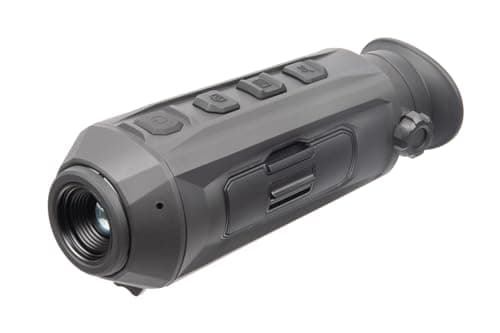
AGM Taipan TM10-256 Thermal Monocular
A 256-resolution thermal monocular for scanning: it finds animals in the dark that no glass can, and resolves nothing in daylight that glass cannot.
No buyable offer at the last price check.
Prices change; we show only live figures. #ad How we earn
For night calling the pick is a thermal monocular, and the AGM Taipan TM10-256 is the one to start with: it detects a coyote in full darkness that no glass can show you. If you call in daylight instead, skip thermal entirely and carry the Vortex Solo R/T 8x36 - a 4.5 mm exit pupil and a ranging reticle in a pocket.
Decide which problem you are solving first
Coyote hunters buy the wrong optic more often than any other group on this site, and it is because two different jobs share one word. Pick the row that matches your hunting before you look at a single product.
| When you hunt | What you need | What to carry |
|---|---|---|
| After legal light, calling with a light or over snow | Heat detection | A thermal monocular - 256 to detect, 320 to identify |
| First and last light, field edges and cut banks | Objective diameter | A 36-42 mm monocular with a 4+ mm exit pupil |
| Full daylight, scanning open ground | Magnification you can hold steady | 8x or 10x pocket monocular |
| All of the above, one optic only | Two eyes, not one | Binoculars. A monocular is a second optic, not a first |
The last row is the honest one. A monocular earns its place as the thing you carry in addition to binoculars, or as the thermal that does a job glass cannot.
Quick picks
Ranked by the criteria published on how we review. Tap any row for the full write-up, or go straight to the current price.
| # | Product | Best for | Score | Price |
|---|---|---|---|---|
| 1 | AGM Taipan TM10-256 Thermal MonocularA 256-resolution thermal that finds a dog coming in across a field no glass will show you. | Best for night callingEntry thermal scanning | 9.3out of 10 | See today's price on the Taipan TM10-256 Thermal MonocularCheck price on Amazon No buyable offer at the last price check. |
| 2 | 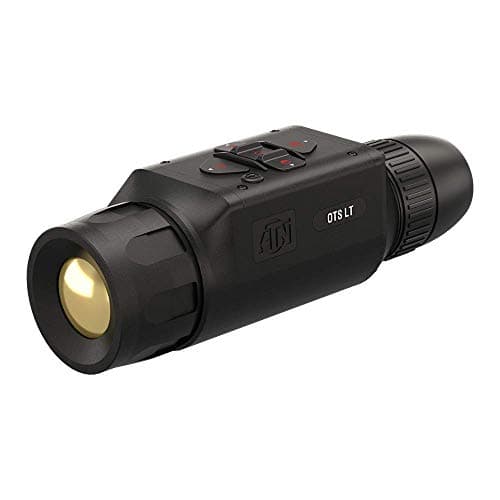 ATN OTS LT 320 Thermal Monocular320 resolution is where a heat shape becomes an identifiable animal. | Best thermal for identifyingHigher-resolution thermal | 9.2out of 10 | |
| 3 | 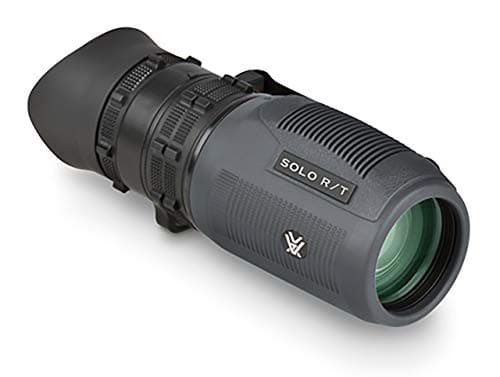 Vortex Solo R/T 8x36A 4.5 mm exit pupil and a ranging reticle in something that lives in a coat pocket. | Best daylight pickRanging reticle in a pocket | 9.4out of 10 | See today's price on the Solo R/T 8x36Check price on Amazon No buyable offer at the last price check. |
| 4 | 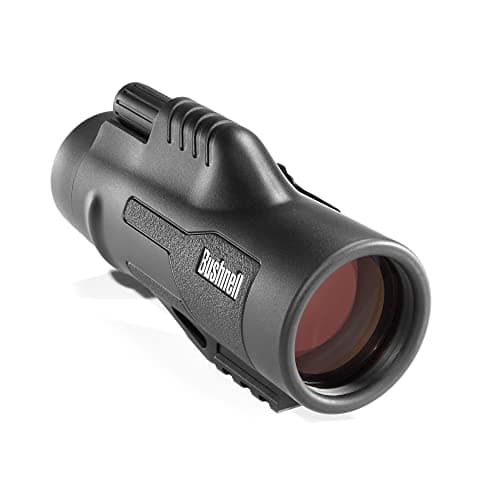 Bushnell Legend 10x42 MonocularA 42 mm objective in a monocular, which is the only way one holds up at dawn. | Best low-light glassLow-light monocular | 9.0out of 10 |
Prices are pulled live from Amazon and were last checked November 12, 2026; if a figure cannot be verified the button reads "Check price" instead. Scores are our editorial judgment against the published ranking criteria, on our published 8.4 to 9.8 recommendation scale. #ad How we earn.
Why 256 versus 320 resolution is the only thermal spec that matters here
Thermal marketing leads with detection range, which is close to meaningless: a sensor will detect a heat source miles away as a single warm pixel. What you actually care about is how many pixels land on a coyote-sized animal at the distance you shoot, because identification needs pixels, not range.
At typical calling distances a 256-wide sensor gives you enough to know something is there and roughly how big. A 320-wide sensor gives you enough to know it is a coyote and not a fox, a feral dog or a cat. If your rule is that you do not shoot at anything you have not identified - and it should be - that distinction is the product decision.
What a monocular gives up against binoculars
- Depth perception. Two eyes separate an animal from the brush in front of it. One eye flattens that, which matters most in exactly the thick cover coyotes use.
- Comfort over time. One-eyed viewing tires faster. For a two-minute check that is irrelevant; for a 40-minute glassing session it is not.
- Scanning speed. A narrower field of view means more sweeps to cover the same ground.
What you get back is size, weight and price - and in the case of thermal, a capability binoculars at this money simply do not have. The full comparison is in monocular vs binoculars, and if you are weighing a monocular against a rangefinder instead, see monocular vs rangefinder. If you decided you want two eyes on the call after all, the best binoculars for coyote hunting picks the glass for it.
The picks in detail
No buyable offer at the last price check.
Prices change; we show only live figures. #ad How we earn
AGM Taipan TM10-256 Thermal Monocular
A 256-resolution thermal monocular for scanning: it finds animals in the dark that no glass can, and resolves nothing in daylight that glass cannot.
Magnification and objective are the manufacturer's own model designation; exit pupil and twilight factor are computed from them. We could not machine-read AGM's spec page, so the remaining published figures are not listed rather than guessed.
What it does well
- Detects heat signatures in total darkness
- Pocketable for a thermal
- Useful for recovering animals after dark
Where it gives ground
- 256 resolution is detection, not identification
- Check your state's regulations before hunting with it
Skip it if
You expect it to replace daytime glass. It does a different job.
How this score breaks down
- Low-light performance (weight 4)9.5
- Size and weight (weight 4)8.2
- Optical quality per dollar (weight 4)7.8
- Eye relief (weight 2)6.3
- Build and sealing (weight 2)8.0
Criterion scores are on the 0-10 rubric scale. Their weighted mean is 8.2, which maps to 9.3 on our published recommendation scale of 8.4 to 9.8 - the band of products we are willing to recommend at all. The weights, the definitions and the mapping are all published, so any score here can be checked against our own rules. These are editorial judgments from published specifications, computed optical arithmetic and documented consensus.
Most coyote hunting happens in the dark, and in the dark a thermal monocular is not a better optic than glass - it is a different sense. A 256-resolution sensor reads the temperature difference between a dog and the ground it is standing on, so a coyote crossing a cut field at 200 yards is a bright shape on a gray background whether or not there is any moon.
What 256 resolution will not do is tell you what the shape is. At practical calling distances it says something warm, dog-sized, moving left to right. That is enough to turn your head and your call toward it, and in many states it is not enough to shoot at, which is a regulation problem rather than this product's problem.
It is also the unit that finds a dog you hit and lost in standing corn, which is worth the money on its own if you call regularly.
Price as of November 12, 2026. #ad How we earn
ATN OTS LT 320 Thermal Monocular
320 resolution makes the difference between seeing that something is warm and seeing what it is, which is the whole argument for spending more on thermal.
Magnification and objective are the manufacturer's own model designation; exit pupil and twilight factor are computed from them. We could not machine-read ATN's spec page, so the remaining published figures are not listed rather than guessed.
What it does well
- 320 sensor gives usable identification, not just detection
- Long battery life for a thermal
- Video recording onboard
Where it gives ground
- Expensive relative to any daytime optic
- Legality for hunting varies by state and species
Skip it if
You only need to find a downed animal - the cheaper 256 unit does that.
How this score breaks down
- Low-light performance (weight 4)9.8
- Size and weight (weight 4)7.5
- Optical quality per dollar (weight 4)7.3
- Eye relief (weight 2)6.3
- Build and sealing (weight 2)8.2
Criterion scores are on the 0-10 rubric scale. Their weighted mean is 8.0, which maps to 9.2 on our published recommendation scale of 8.4 to 9.8 - the band of products we are willing to recommend at all. The weights, the definitions and the mapping are all published, so any score here can be checked against our own rules. These are editorial judgments from published specifications, computed optical arithmetic and documented consensus.
The jump from 256 to 320 pixels across the sensor sounds incremental and is not. Identification needs a certain number of pixels on the target, so the same coyote at the same distance goes from a warm blob to an animal with a tail, a head position and a gait. On a night stand where a dog, a house cat and somebody's loose retriever all show up as heat, that difference is the whole reason to spend more.
Onboard recording is a genuine extra here rather than a gimmick: reviewing a stand afterwards shows you how the dogs actually approached, which changes where you set up next time.
The honest limit: thermal of any resolution tells you heat, not detail. It will not read a collar and it will not judge a hide.
No buyable offer at the last price check.
Prices change; we show only live figures. #ad How we earn
Vortex Solo R/T 8x36
A 4.5 mm exit pupil, 18 mm of eye relief and an MRAD ranging reticle in a unit that weighs a third of a binocular.
| Magnification | 8x |
|---|---|
| Objective lens | 36 mm |
| Eye relief | 18.0mm |
| Field of view | 393' @ 1000 yds |
| Angular field of view | 7.5º |
| Close focus | 16.4' |
| Weight | 9.7 oz. |
| Length | 4.9" |
| Exit pupil (computed) | 4.5 mm |
| Twilight factor (computed) | 17 |
Specs verified 2026-10-05 from Vortex's published specification. Exit pupil and twilight factor are computed, not quoted.
What it does well
- R/T ranging reticle estimates distance without batteries
- 18.0 mm eye relief, verified in Vortex's published specs
- Half the bulk of binoculars
Where it gives ground
- One eye tires faster than two over a long sit
- No depth perception, which matters in cover
Skip it if
You glass for more than a few minutes at a time.
How this score breaks down
- Low-light performance (weight 4)7.5
- Size and weight (weight 4)8.7
- Optical quality per dollar (weight 4)9.0
- Eye relief (weight 2)9.5
- Build and sealing (weight 2)8.8
Criterion scores are on the 0-10 rubric scale. Their weighted mean is 8.6, which maps to 9.4 on our published recommendation scale of 8.4 to 9.8 - the band of products we are willing to recommend at all. The weights, the definitions and the mapping are all published, so any score here can be checked against our own rules. These are editorial judgments from published specifications, computed optical arithmetic and documented consensus.
Daylight coyote hunting is a scanning problem - cut banks, fence lines, the edge of a CRP field - and a pocket monocular gets used because it is already in your hand. The 36 mm objective gives a 4.5 mm exit pupil, which is enough to work at the gray end of legal light rather than quitting twenty minutes early the way a 25 mm does.
The R/T reticle is the reason to pick this one over a plain monocular: it estimates distance off a known target size with no battery involved, which is exactly the sanity check you want before committing to a shot at a dog that will not stand still for a laser.
Eye relief is 18.0 mm in Vortex's published specification, which is generous and matters if you shoot in glasses.
Price as of November 12, 2026. #ad How we earn
Bushnell Legend 10x42 Monocular
A 42 mm objective gives a 4.2 mm exit pupil, which is the only way a monocular stays usable at legal light.
| Magnification | 10x |
|---|---|
| Objective lens | 42 mm |
| Exit pupil (computed) | 4.2 mm |
| Twilight factor (computed) | 20.5 |
Magnification and objective are the manufacturer's own model designation; exit pupil and twilight factor are computed from them. We could not machine-read Bushnell's spec page, so the remaining published figures are not listed rather than guessed.
What it does well
- 4.2 mm exit pupil matches a 10x42 binocular
- ED Prime glass
- Still far smaller than binoculars
Where it gives ground
- Bulky for a monocular - most of a binocular's volume
- One-eyed viewing at 10x is tiring
Skip it if
Size is the reason you want a monocular at all.
How this score breaks down
- Low-light performance (weight 4)8.8
- Size and weight (weight 4)6.0
- Optical quality per dollar (weight 4)8.3
- Eye relief (weight 2)7.3
- Build and sealing (weight 2)8.0
Criterion scores are on the 0-10 rubric scale. Their weighted mean is 7.7, which maps to 9.0 on our published recommendation scale of 8.4 to 9.8 - the band of products we are willing to recommend at all. The weights, the definitions and the mapping are all published, so any score here can be checked against our own rules. These are editorial judgments from published specifications, computed optical arithmetic and documented consensus.
If your coyote hunting happens in the last and first half hour of light rather than in the dark, objective diameter is the spec that decides whether you see a dog on the field edge. A 42 mm objective at 10x gives a 4.2 mm exit pupil - the same arithmetic as a 10x42 binocular - and ED Prime glass keeps the edges from smearing.
The cost is bulk. This is most of a binocular's volume in half its shape, which defeats the point for some people. If packability is why you want a monocular at all, take the 8x36.
Our recommendation
If you take one thing from this page, take this.
AGM Taipan TM10-256 Thermal Monocular
Best for night calling
A 256-resolution thermal that finds a dog coming in across a field no glass will show you.
No buyable offer at the last price check.
ATN OTS LT 320 Thermal Monocular
Best thermal for identifying
320 resolution is where a heat shape becomes an identifiable animal.
Prices are pulled live and shown on each button. #ad How we earn.
Questions people actually ask
What is the best monocular for coyote hunting?
Do I need thermal to hunt coyotes?
Is 256 thermal resolution good enough for coyotes?
Can I use a monocular instead of binoculars for coyote hunting?
Sources
- Vortex Solo R/T 8x36 product specifications - read 2026-10-11
- AGM Global Vision thermal monocular product information - read 2026-10-11