We earn a commission if you buy through the links on this page, at no extra cost to you. It never changes which products we pick or how we rank them - read the full disclosure.
Our top pick
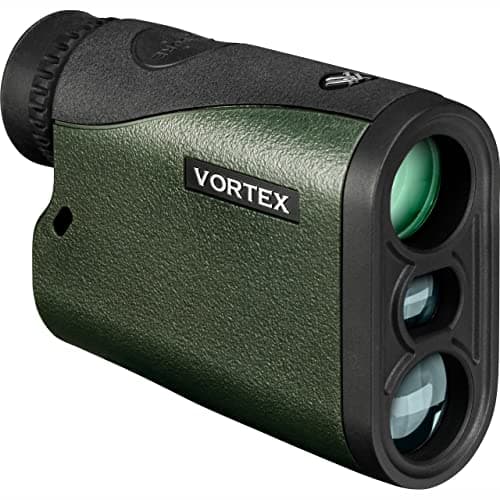
Vortex Crossfire HD 1400
A 5x21 monocular that ranges to 1,400 yards reflective with HCD angle compensation, at the price where rangefinders stop being a luxury.
No buyable offer at the last price check.
Prices change; we show only live figures. #ad How we earn
Buy the rangefinder first. A monocular improves a look you can already take; a rangefinder supplies a number you cannot guess - and misjudged distance, not mediocre glass, is what causes missed and wounded animals. Carry a monocular as a second optic once the ranging problem is solved.
What each one is actually for
| Monocular | Rangefinder | |
|---|---|---|
| Primary job | Magnified viewing | Measured distance |
| Typical magnification | 8x to 10x | 5x to 7x |
| Typical objective | 25-42 mm | 20-25 mm |
| Usable for scanning | Yes, within limits | Barely |
| Works in the dark | No better than your eye | No - the laser needs a target, not light |
| Needs a battery | No | Yes |
| Answers the shoot/no-shoot question | No | Yes, if it compensates for angle |
The overlap is real but shallow: a rangefinder has a monocular inside it, and that monocular is deliberately small, low-powered and built around a reticle rather than a view.
Quick picks
Ranked by the criteria published on how we review. Tap any row for the full write-up, or go straight to the current price.
| # | Product | Best for | Score | Price |
|---|---|---|---|---|
| 1 | Vortex Crossfire HD 1400A 5x21 rangefinder with angle compensation - the most useful small optic a hunter can carry. | Buy this firstSimplest reliable ranging | 9.2out of 10 | See today's price on the Crossfire HD 1400Check price on Amazon No buyable offer at the last price check. |
| 2 | 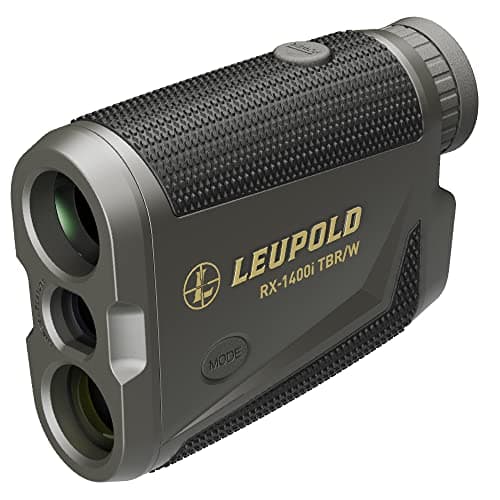 Leupold RX-1400i TBR/W Gen 2TBR/W plus a red OLED display that stays legible against dark timber. | Best readable displayBest rangefinder under $250 | 9.6out of 10 | |
| 3 | 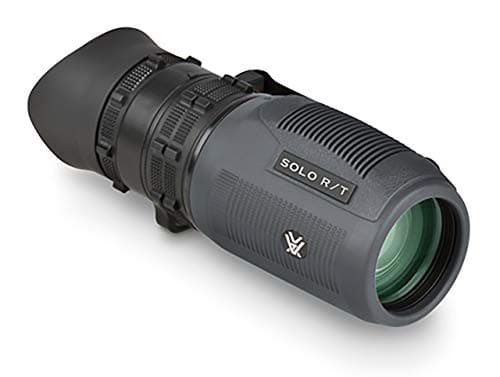 Vortex Solo R/T 8x368x36 with 18 mm of eye relief and a reticle that estimates range without a battery. | Best actual monocularRanging reticle in a pocket | 9.4out of 10 | See today's price on the Solo R/T 8x36Check price on Amazon No buyable offer at the last price check. |
| 4 | 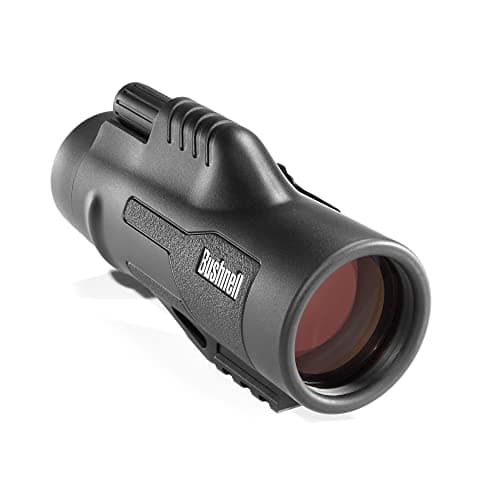 Bushnell Legend 10x42 Monocular10x42 with ED Prime glass, if you want a monocular that genuinely shows you detail. | Best monocular glassLow-light monocular | 9.0out of 10 |
Prices are pulled live from Amazon and were last checked November 12, 2026; if a figure cannot be verified the button reads "Check price" instead. Scores are our editorial judgment against the published ranking criteria, on our published 8.4 to 9.8 recommendation scale. #ad How we earn.
Can you use a rangefinder as a monocular?
Yes, within narrow limits, and the limits are the whole answer. A typical hunting rangefinder is a 5x or 6x optic with a 20-25 mm objective, which puts the exit pupil around 4 mm and the field of view in the region of 300-370 ft at 1,000 yards. That is enough to confirm that the gray shape on the ridge is a deer. It is not enough to count points, judge a hide, or scan a hillside for twenty minutes without your eye giving up.
The bigger practical problem is ergonomic. A rangefinder is designed to be raised, used and lowered in three seconds, with a button under your finger and a laser pointed somewhere. A monocular is designed to be looked through.
And can a monocular replace a rangefinder?
Not with a laser's precision. A reticle-based monocular like the Solo R/T estimates distance from apparent target size, which requires you to know the real size of the animal and to read it accurately against a scale - in the field, under time pressure, at an angle. It is a genuinely useful skill and a genuinely useful backup. It is not a measurement.
If you want one device that really does both well, the category you want is rangefinding binoculars rather than either of these. That trade is covered in rangefinder vs rangefinding binoculars.
The buying order that makes sense
- Binoculars. Two eyes for finding and judging. Nothing else comes first - start here.
- A rangefinder with angle compensation. The number that decides the shot. Why angle compensation matters.
- A harness so both ride on your chest. The cheapest upgrade in optics.
- A monocular, if there is still a pocket and a reason - a lightweight second look, or a thermal for the dark.
Hunters who buy in that order rarely regret it. Hunters who buy a monocular second usually end up with a rangefinder anyway.
The picks in detail
No buyable offer at the last price check.
Prices change; we show only live figures. #ad How we earn
Vortex Crossfire HD 1400
A 5x21 monocular that ranges to 1,400 yards reflective with HCD angle compensation, at the price where rangefinders stop being a luxury.
| Magnification | 5x |
|---|---|
| Objective lens | 21 mm |
| Eye relief | 16.0mm |
| Field of view | 367' @ 1000 yds |
| Angular field of view | 7.0º |
| Stated accuracy | 1 yds. @100 yds. |
| Weight | 4.8 oz. |
| Length | 4.0" |
| Height | 2.9" |
| Width | 1.3" |
Specs verified 2026-10-05 from Vortex's published specification. Exit pupil and twilight factor are computed, not quoted.
What it does well
- HCD mode gives angle-compensated distance
- 16.0 mm eye relief with a 367 ft field at 5x
- VIP warranty
Where it gives ground
- Display is LCD, not illuminated, so it fades in deep shade
- No ballistic holdover output, just corrected distance
Skip it if
You hunt in low light often - an illuminated display is worth the upgrade.
How this score breaks down
- Ranging accuracy and range on game (weight 5)8.1
- Angle compensation implementation (weight 5)8.7
- Display legibility in low light (weight 3)6.6
- Speed and scan mode (weight 3)8.1
- One-handed ergonomics (weight 2)8.8
Criterion scores are on the 0-10 rubric scale. Their weighted mean is 8.1, which maps to 9.2 on our published recommendation scale of 8.4 to 9.8 - the band of products we are willing to recommend at all. The weights, the definitions and the mapping are all published, so any score here can be checked against our own rules. These are editorial judgments from published specifications, computed optical arithmetic and documented consensus.
If you are choosing between one and the other, buy the rangefinder. A monocular gives you a better look at something you can already see; a rangefinder gives you a number you cannot estimate reliably, and that number is the one that decides whether you take the shot.
HCD mode returns angle-compensated distance rather than straight line of sight, which is the feature that matters from a treestand or a side hill. At 5x it also works as a crude monocular - enough to confirm an animal's shape, not enough to judge it.
Price as of November 12, 2026. #ad How we earn
Leupold RX-1400i TBR/W Gen 2
TBR/W gives you the true horizontal distance and a holdover value in the same readout, which is the single most useful feature on a hunting rangefinder.
| Magnification | 5x |
|---|---|
| Objective lens | 21 mm |
| Eye relief | 18.3 mm |
| Field of view | 368 ft @ 1,000 yd |
| Angular field of view | 7º |
| Max range, reflective | 1,400 yd |
| Max range, trees | 1,200 yd |
| Max range, deer | 900 yd |
| Minimum range | 6 yd |
| Accuracy | +/- 0.5 yd to 125 yd; +/- 2 yd to 1,000 yd; +/- 0.5 % beyond |
| Display | Red TOLED, adjustable brightness |
| Ranging modes | TBR/W, Bow with Flightpath, Line of Sight |
| Battery | CR2, approx. 3,000 actuations |
| Weight | 5.1 oz |
| Dimensions (L x W x H) | 4 x 1.4 x 3 in |
| Laser classification | Class 3R |
Specs verified 2026-10-26 from Leupold's published specification. Exit pupil and twilight factor are computed, not quoted.
What it does well
- TBR/W reports true ballistic range, not line of sight
- Fast, legible red OLED display in low light
- Compact enough for a harness pouch
Where it gives ground
- Stated ranges assume reflective targets, not deer hide - Leupold publishes 1,400 yd reflective but only 900 yd on deer
- No bluetooth or ballistic app integration
- Accuracy loosens to plus or minus 2 yd out at 1,000 yd
Skip it if
You need ranges past 1,000 yards on game - this is not that unit.
How this score breaks down
- Ranging accuracy and range on game (weight 5)8.5
- Angle compensation implementation (weight 5)9.5
- Display legibility in low light (weight 3)9.0
- Speed and scan mode (weight 3)8.5
- One-handed ergonomics (weight 2)9.0
Criterion scores are on the 0-10 rubric scale. Their weighted mean is 8.9, which maps to 9.6 on our published recommendation scale of 8.4 to 9.8 - the band of products we are willing to recommend at all. The weights, the definitions and the mapping are all published, so any score here can be checked against our own rules. These are editorial judgments from published specifications, computed optical arithmetic and documented consensus.
The reason to spend a little more than the Crossfire is the display. An LCD readout disappears against a shaded hillside at exactly the hour you need it; an illuminated red OLED does not. TBR/W also gives you a holdover value rather than just a corrected distance.
As an optic to look through it is unremarkable, which is rather the point of this page: nobody buys a rangefinder for the view.
No buyable offer at the last price check.
Prices change; we show only live figures. #ad How we earn
Vortex Solo R/T 8x36
A 4.5 mm exit pupil, 18 mm of eye relief and an MRAD ranging reticle in a unit that weighs a third of a binocular.
| Magnification | 8x |
|---|---|
| Objective lens | 36 mm |
| Eye relief | 18.0mm |
| Field of view | 393' @ 1000 yds |
| Angular field of view | 7.5º |
| Close focus | 16.4' |
| Weight | 9.7 oz. |
| Length | 4.9" |
| Exit pupil (computed) | 4.5 mm |
| Twilight factor (computed) | 17 |
Specs verified 2026-10-05 from Vortex's published specification. Exit pupil and twilight factor are computed, not quoted.
What it does well
- R/T ranging reticle estimates distance without batteries
- 18.0 mm eye relief, verified in Vortex's published specs
- Half the bulk of binoculars
Where it gives ground
- One eye tires faster than two over a long sit
- No depth perception, which matters in cover
Skip it if
You glass for more than a few minutes at a time.
How this score breaks down
- Low-light performance (weight 4)7.5
- Size and weight (weight 4)8.7
- Optical quality per dollar (weight 4)9.0
- Eye relief (weight 2)9.5
- Build and sealing (weight 2)8.8
Criterion scores are on the 0-10 rubric scale. Their weighted mean is 8.6, which maps to 9.4 on our published recommendation scale of 8.4 to 9.8 - the band of products we are willing to recommend at all. The weights, the definitions and the mapping are all published, so any score here can be checked against our own rules. These are editorial judgments from published specifications, computed optical arithmetic and documented consensus.
This is the closest thing to a product that does both jobs, and it is worth understanding exactly how far that goes. The R/T reticle estimates distance by comparing a known animal dimension against the reticle scale - useful, battery-free, and nowhere near as precise as a laser.
Where it clearly beats a rangefinder is as glass: 8x36 with 18.0 mm of eye relief and a 393 ft field at 1,000 yards is a usable scanning optic. A 5x21 rangefinder is not.
Price as of November 12, 2026. #ad How we earn
Bushnell Legend 10x42 Monocular
A 42 mm objective gives a 4.2 mm exit pupil, which is the only way a monocular stays usable at legal light.
| Magnification | 10x |
|---|---|
| Objective lens | 42 mm |
| Exit pupil (computed) | 4.2 mm |
| Twilight factor (computed) | 20.5 |
Magnification and objective are the manufacturer's own model designation; exit pupil and twilight factor are computed from them. We could not machine-read Bushnell's spec page, so the remaining published figures are not listed rather than guessed.
What it does well
- 4.2 mm exit pupil matches a 10x42 binocular
- ED Prime glass
- Still far smaller than binoculars
Where it gives ground
- Bulky for a monocular - most of a binocular's volume
- One-eyed viewing at 10x is tiring
Skip it if
Size is the reason you want a monocular at all.
How this score breaks down
- Low-light performance (weight 4)8.8
- Size and weight (weight 4)6.0
- Optical quality per dollar (weight 4)8.3
- Eye relief (weight 2)7.3
- Build and sealing (weight 2)8.0
Criterion scores are on the 0-10 rubric scale. Their weighted mean is 7.7, which maps to 9.0 on our published recommendation scale of 8.4 to 9.8 - the band of products we are willing to recommend at all. The weights, the definitions and the mapping are all published, so any score here can be checked against our own rules. These are editorial judgments from published specifications, computed optical arithmetic and documented consensus.
At the far end of the monocular argument is this: a 42 mm objective and ED glass at 10x, which resolves detail no rangefinder optic approaches. If your reason for wanting a monocular is to see better rather than to save weight, this is the honest version of that purchase.
Our recommendation
If you take one thing from this page, take this.
Vortex Crossfire HD 1400
Buy this first
A 5x21 rangefinder with angle compensation - the most useful small optic a hunter can carry.
No buyable offer at the last price check.
Leupold RX-1400i TBR/W Gen 2
Best readable display
TBR/W plus a red OLED display that stays legible against dark timber.
Prices are pulled live and shown on each button. #ad How we earn.
Questions people actually ask
Can you use a rangefinder as binoculars or a monocular?
Should I buy a monocular or a rangefinder first?
Is a monocular with a ranging reticle as good as a laser rangefinder?
What magnification do rangefinders have?
Sources
- Vortex Crossfire HD 1400 product specifications - read 2026-10-11
- Vortex Solo R/T 8x36 product specifications - read 2026-10-11