Buy binoculars first. Glassing is how animals get found, and you cannot range an animal you never saw - so the optic that improves detection comes before the one that refines a shot. The exception is treestand archery, where shots are inside 40 yards in cover and the angle correction matters more than detection does.
What each one actually changes
These two purchases are often discussed as though they are interchangeable upgrades. They are not: they act on different parts of the hunt.
| Binoculars | Rangefinder | |
|---|---|---|
| What it changes | How many animals you find | Whether you should shoot at one |
| Time in use per day | Hours | Seconds |
| Failure mode without it | You walk past animals | You misjudge distance |
| Helps in the dark half hour | Yes, with enough objective | No - the laser needs a target, not light |
| Needs a battery | No | Yes |
| Replaces the other | No | No |
Quick picks
Ranked by the criteria published on how we review. Tap any row for the full write-up, or go straight to the current price.
| # | Product | Best for | Score | Price |
|---|---|---|---|---|
| 1 | 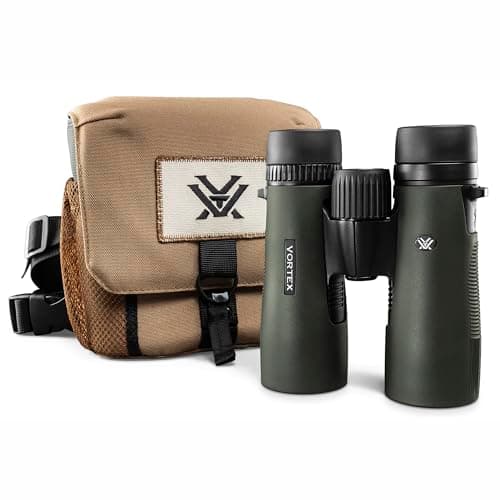 Vortex Diamondback HD 10x42The binocular to own before anything else - HD glass and a real warranty at the entry tier. | Buy this firstBest value overall | 9.3out of 10 | See today's price on the Diamondback HD 10x42Check price on Amazon No buyable offer at the last price check. |
| 2 | 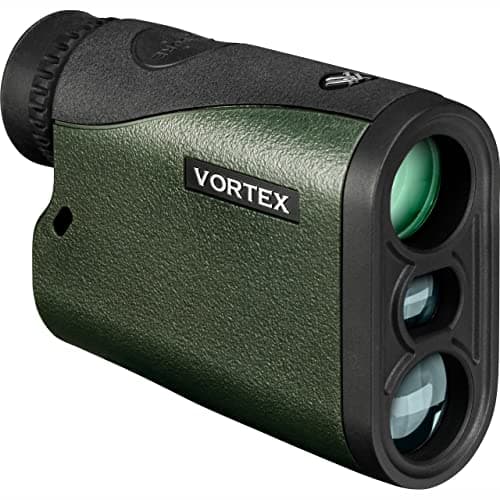 Vortex Crossfire HD 1400Angle-compensated distance in 4.8 oz, for a fraction of what good glass costs. | Buy this secondSimplest reliable ranging | 9.2out of 10 | See today's price on the Crossfire HD 1400Check price on Amazon No buyable offer at the last price check. |
| 3 | 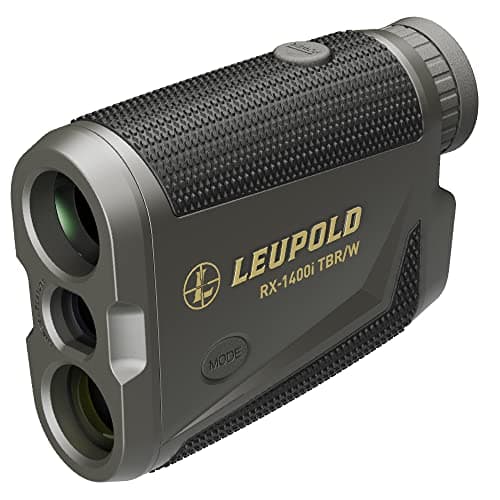 Leupold RX-1400i TBR/W Gen 2TBR/W holdover with an illuminated display - the reason an archer may buy the rangefinder first. | The bowhunter's exceptionBest rangefinder under $250 | 9.6out of 10 | |
| 4 | 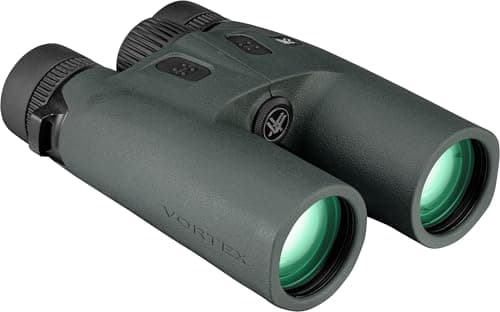 Vortex Ranger HD 3000 10x42A 10x42 rangefinding binocular - both jobs in one optic on your chest. | If you would rather buy onceRangefinding binocular on a budget | 9.3out of 10 | See today's price on the Ranger HD 3000 10x42Check price on Amazon No buyable offer at the last price check. |
Prices are pulled live from Amazon and were last checked November 12, 2026; if a figure cannot be verified the button reads "Check price" instead. Scores are our editorial judgment against the published ranking criteria, on our published 8.4 to 9.8 recommendation scale. #ad How we earn.
Why binoculars win for most hunters
The arithmetic is simple. On a typical day you will look through binoculars for hours and press a rangefinder button perhaps four times. Any improvement in the thing you use for hours compounds; an improvement in the thing you use for seconds does not.
There is also a detection asymmetry that is easy to miss. Better glass does not just make animals look nicer - it makes animals visible that you would otherwise have walked past, particularly in the first and last half hour when the light is marginal and most movement happens. A rangefinder cannot find anything. It can only measure what you already see.
The exception, in detail
If you hunt whitetail from an elevated stand with a bow, invert the order. Your shots are inside 40 yards, often inside 25, in cover where you can see the animal perfectly well with your eyes. Binoculars at that distance add little. What does matter is that from 20 feet up, the straight-line distance to a deer is meaningfully longer than the horizontal distance the arrow travels - and at archery speeds that error is a bad hit rather than a clean miss.
In that one case, buy the angle-compensating rangefinder first and the binoculars when you can. The mechanics of why are in what angle compensation is, and the stand-specific case is in rangefinder for treestand hunting.
The order that wastes the least money
- Binoculars you will keep. Mid-tier HD glass with a transferable warranty, bought once. Where to start.
- A harness. The cheapest meaningful upgrade in hunting optics, because it determines whether the glass is on your chest or in your pack.
- An angle-compensating rangefinder. It does not need to be expensive. It does need to compensate.
- A tripod and adapter, if you glass open country - this is the upgrade that beats buying better binoculars.
- A spotting scope, last, and only if you judge animals past 600 yards.
Most regret in hunting optics comes from doing step three before step one, or from skipping step two entirely. The full sequence, with what each step costs and what it buys, is in how to build a hunting optics setup.
Questions people actually ask
Should I buy binoculars or a rangefinder first?
Can a rangefinder replace binoculars?
Is it better to buy rangefinding binoculars instead of both?
How much should I spend on each?
Sources
- Vortex Diamondback HD 10x42 product specifications - read 2026-10-11
- Vortex Crossfire HD 1400 product specifications - read 2026-10-11