We earn a commission if you buy through the links on this page, at no extra cost to you. It never changes which products we pick or how we rank them - read the full disclosure.
Our top pick
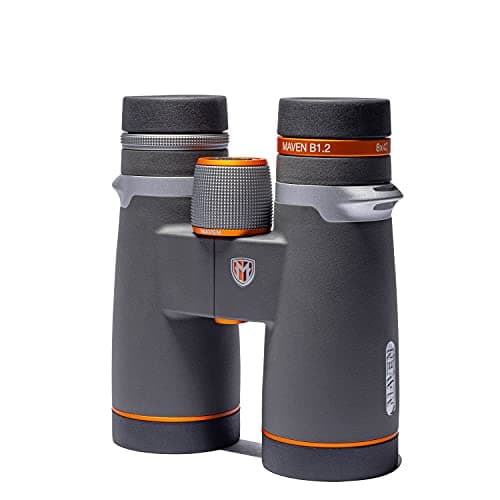
Maven B1.2 10x42
Maven sells direct and skips the dealer margin, which is how a $1,150 binocular ends up competing with glass priced nearer $2,000.
Price as of November 12, 2026. #ad How we earn
People search for alternatives to Swarovski binoculars for one of two reasons: the price, or the wait. Either way the useful question is not "what is nearly as good" - it is "which specific thing that Swarovski does well do I actually need?" Because the honest answer is that four or five binoculars match an alpha on most published numbers, two of them beat it on one number each, and none of them matches it on service, resale, or the last twenty minutes of legal light.
What Swarovski is genuinely known for
Start here, because an alternatives page that opens by running the original down is useless. Swarovski's reputation rests on three things that are not marketing. The first is performance at the extremes of light - the resolution and contrast an optic holds in the first and last minutes of legal shooting light, which is exactly when animals move and exactly when cheaper glass gives up. The second is service: parts and repair support for units that are decades old, handled as a matter of course rather than as a favor. The third is resale, which is unglamorous and financially the most significant of the three - a binocular that holds most of its value has a real ownership cost far below its purchase price.
Notice what is not on that list: field of view, eye relief, close focus and weight. Those are published numbers, they are where the alternatives compete directly, and on this page a binocular costing a fraction of an EL wins the field-of-view column outright.
How we ranked the alternatives
Scored against the published binocular rubric on how we review, with the weighting pointed at the question this query is really asking: how much of the alpha experience does each one return per dollar, and which part of it does it give up?
- Published field of view, in feet at 1,000 yards. This is the number that most changes how fast you cover ground, and it is the one every maker here publishes, so it is directly comparable. The spread on this page is 330 ft to 362 ft.
- Published eye relief. The specification that decides whether a binocular works in a hat and glasses. The spread here is 14.0 mm to 19.3 mm, which is enormous - and the longest figure belongs to one of the cheapest units.
- Prism design and coatings, where the maker states them. An Abbe-Koenig prism has no mirrored surface to lose light at; a Schmidt-Pechan does. Dielectric coatings and phase correction are the difference between a roof prism that performs and one that merely exists. Where a maker names nothing, we say so.
- A published light-transmission or exit-pupil figure. Almost nobody publishes transmission. One unit here does, and that honesty is worth scoring.
- Weight, and sealing stated as a rating. 24.0 oz against 32.4 oz is the difference between a binocular you carry and one you leave. IPX7 is a rating; "waterproof" is a word.
- Warranty type, not warranty length. An unconditional, transferable, no-fault warranty is a different product from a service policy with the same number of years on it.
Quick picks
Ranked by the criteria published on how we review. Tap any row for the full write-up, or go straight to the current price.
| # | Product | Best for | Score | Price |
|---|---|---|---|---|
| 1 | Maven B1.2 10x42347 ft of field, 17.8 mm of eye relief, a 4.9 ft near focus and IPX7 - alpha-class published numbers, sold direct at roughly half an EL. | Best alternative to a Swarovski overallDirect-to-consumer alpha | 9.8out of 10 | |
| 2 | 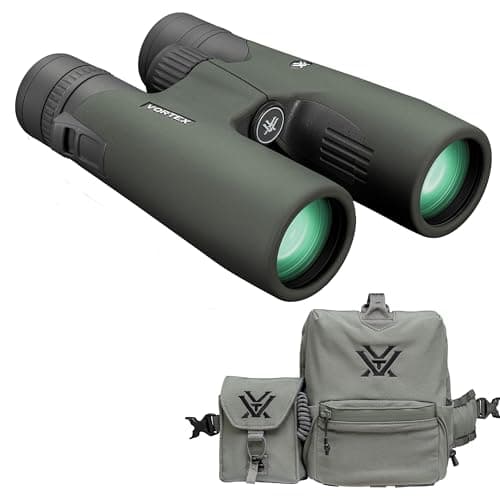 Vortex Razor UHD 10x42 (with GlassPak Pro harness)Abbe-Koenig prisms, 346 ft of field and a 4.5 ft close focus, with the VIP lifetime warranty behind it - the nearest thing here to alpha construction. | Closest on published specificationsAlpha glass without the alpha name | 9.6out of 10 | |
| 3 | 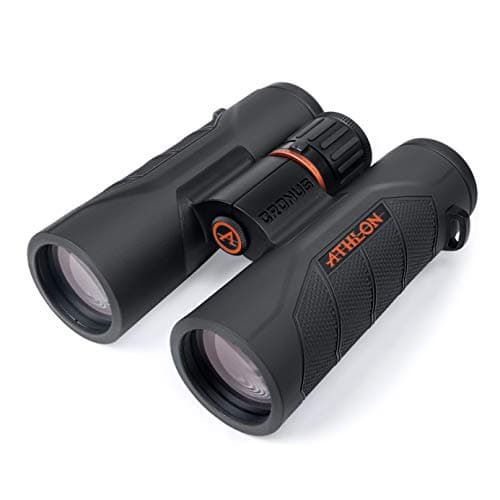 Athlon Cronus G2 UHD 10x4219.3 mm of eye relief - the longest of any 10x42 here - with 338 ft of field and ED/UHD glass, at roughly a quarter of an EL. | Most of the view for the least moneyBest glass under $600 | 9.6out of 10 | |
| 4 | 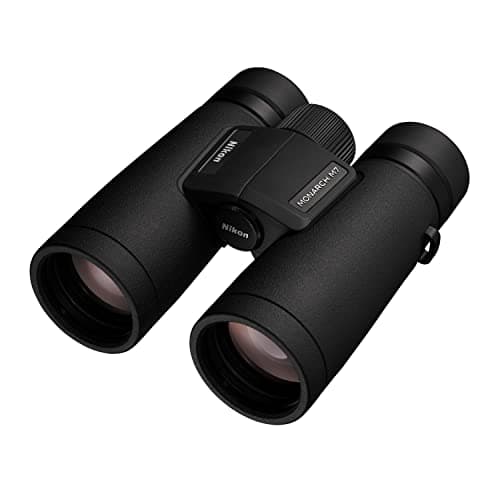 Nikon Monarch M7 10x42362 ft of field at 1,000 yd and 24.0 oz, the widest view and the lightest body here, for a small fraction of an EL. | The budget pick - widest field on the pageWidest field in the $450 class | 9.5out of 10 | See today's price on the Monarch M7 10x42$445.13 on Amazon $549.95 19% off |
| 5 | 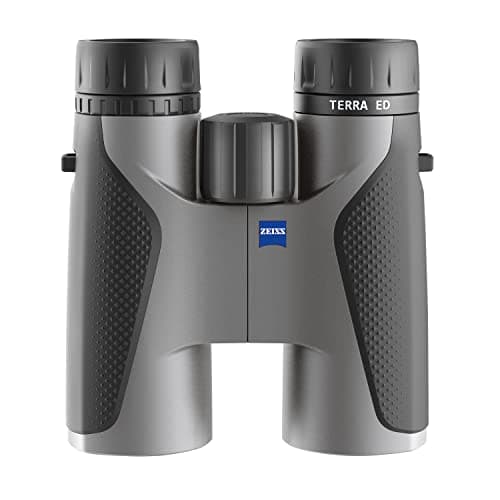 Zeiss Terra ED 10x4288 percent light transmission published by Zeiss, SCHOTT ED glass and a 5.3 ft close focus at 25.6 oz - the only unit here that states what it passes. | Cheapest way to a published transmission figureEuropean glass on a budget | 9.2out of 10 | |
| 6 | 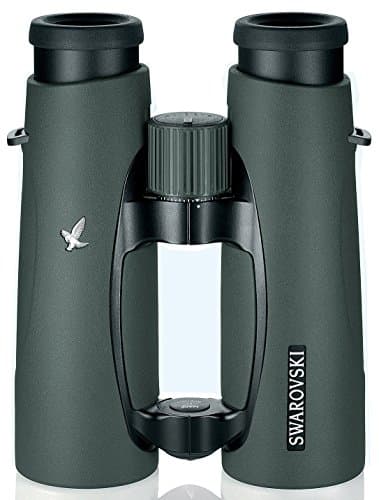 Swarovski EL 10x42The category's optical reference, with field service and parts support nothing here matches, and the best resale in the business. | The original - and when it is still the right answerThe reference standard | 9.5out of 10 |
Prices are pulled live from Amazon and were last checked November 12, 2026; if a figure cannot be verified the button reads "Check price" instead. Scores are our editorial judgment against the published ranking criteria, on our published 8.4 to 9.8 recommendation scale. #ad How we earn.
The alternatives in published numbers
Every figure below is the manufacturer's own, read on the date in the caption. The EL row is deliberately empty, and the reason is in the note underneath - it is not an oversight.
| Binocular | Field of view @ 1,000 yd | Eye relief | Close focus | Weight | Stated sealing |
|---|---|---|---|---|---|
| Maven B1.2 10x42 | 347 ft | 17.8 mm | 4.9 ft | 26.808 oz | IPX7, 1 m / 30 min |
| Vortex Razor UHD 10x42 | 346 ft | 16.7 mm | 4.5 ft | 32.4 oz | Not published |
| Athlon Cronus G2 UHD 10x42 | 338 ft | 19.3 mm | 6.6 ft | 27.8 oz | Not published |
| Nikon Monarch M7 10x42 | 362 ft | 16.5 mm | 8.2 ft | 24.0 oz | Not published |
| Zeiss Terra ED 10x42 | 330 ft | 14.0 mm | 5.3 ft | 25.6 oz | Not published |
| Swarovski EL 10x42 | No sourceable table | No sourceable table | No sourceable table | No sourceable table | No sourceable table |
The EL row is empty because Swarovski's US site no longer serves a readable EL 42 specification page - every path tried returned 404 - and this site does not print numbers it cannot source to the manufacturer. Read the other five rows across and the point of the page appears: the widest field and the lightest body belong to the cheapest binocular here, and the longest eye relief belongs to the second cheapest.
Three things fall out of that table. First, field of view does not track price at all on this page. The Monarch M7's 362 ft beats the Razor UHD's 346 ft and the Maven's 347 ft, and it is the least expensive unit here. If covering ground quickly is your priority, the money is not where the answer is.
Second, eye relief tracks price inversely. The longest figure, 19.3 mm, belongs to the Athlon; the shortest, 14.0 mm, belongs to the Zeiss. For anyone who glasses in prescription glasses that single column may decide the purchase outright, and it has nothing to do with glass quality.
Third, exit pupil and twilight factor are identical across every unit in the table, at 4.2 mm and 20.5, because both are pure arithmetic from 10x and 42 mm. Any seller presenting either figure as a reason to pay more for one 10x42 over another is selling you long division. Exit pupil and twilight factor explains what the numbers do and do not tell you.
What you actually give up
Low-light resolution in the last twenty minutes. This is the real difference and it is the hardest to shop for, because it does not appear in any published column. Alpha glass holds contrast on a deer standing in shadow at the edge of legal light; good glass turns that deer into a gray shape. If your hunting is decided in those twenty minutes - and in timber it often is - that is what the premium buys.
Service depth and parts for old units. Every alternative here has a warranty and two of them are unconditional and transferable, which is excellent. None of them has a thirty-year parts pipeline. If you expect to hand the binocular to a child, that is a consideration.
Resale. An alpha binocular sold used returns a large share of its purchase price. A mid-tier binocular sold used returns much less of a much smaller number, which narrows the real gap in ownership cost more than most buyers expect. It does not close it.
The chance to look through it first. Two of the strongest alternatives on this page are direct-sale products with no dealer network. On a purchase this size, being unable to compare two binoculars side by side with your own eyes is a genuine cost, and it is the one argument for buying from a brand with shops that nobody makes out loud.
Who should buy what
- Buy the Maven B1.2 10x42 if you want the closest thing to an alpha for roughly half the money, with 17.8 mm of eye relief, a 4.9 ft near focus, IPX7 sealing and an unconditional lifetime warranty. Accept that you cannot try one first.
- Buy the Vortex Razor UHD 10x42 if the construction matters to you - Abbe-Koenig prisms, a locking diopter and the VIP warranty - and you can live with 32.4 oz. Check availability first: Vortex marks the model inactive.
- Buy the Athlon Cronus G2 UHD 10x42 if you glass in glasses. 19.3 mm of eye relief is the longest figure on this site and it will change your comfort more than a small step in glass quality.
- Buy the Nikon Monarch M7 10x42 if you want the widest published field and the lightest body here and are upgrading from a cheap pair rather than cross-shopping an alpha. Spend the difference on a harness and a tripod adapter.
- Buy the Zeiss Terra ED 10x42 if a published light-transmission figure and Zeiss coatings matter to you, and you do not wear glasses. 14.0 mm of eye relief is the catch.
- Buy the Swarovski EL if you glass professionally, intend to own it for decades, or have run the resale arithmetic and found the net cost smaller than it looks. It is the reference for a reason.
The picks in full
Price as of November 12, 2026. #ad How we earn
Maven B1.2 10x42
Maven sells direct and skips the dealer margin, which is how a $1,150 binocular ends up competing with glass priced nearer $2,000.
| Magnification | 10x |
|---|---|
| Objective lens | 42 mm |
| Eye relief | 17.8 mm |
| Field of view | 347 ft @ 1,000 yds |
| Angular field of view | 6.6° |
| Near focus | 4.9 ft |
| Prism | Wide Angle Schmidt-Pechan |
| Glass | ED, 3 groups / 4 elements |
| Prism coating | Dielectric, phase corrected |
| Lens coating | Scratch and oil resistant |
| Eye width adjustment | 56-74 mm |
| Waterproof | 1 m for 30 min (IPX7) |
| Weight | 26.808 oz |
| Dimensions (W x H x D) | 5.2 x 5.7 x 2.2 in |
| Exit pupil (published) | 4.2 mm |
| Exit pupil (computed) | 4.2 mm |
| Twilight factor (computed) | 20.5 |
Specs verified 2026-11-09 from Maven's published specification. Exit pupil and twilight factor are computed, not quoted.
What it does well
- 347 ft of field at 1,000 yd with 17.8 mm of eye relief - alpha-class numbers
- 4.9 ft near focus, shorter than anything else in its price class here
- ED glass with dielectric prism coating and phase correction
- IPX7 submersion rating
- Customizable finish when ordered direct
- Unconditional lifetime warranty
Where it gives ground
- Mostly a direct-sale product, so stock on Amazon moves
- No dealer network, so there is nowhere to compare one in a store
- 26.8 oz is heavier than a Monarch M7, lighter than a Razor UHD
- Wide Angle Schmidt-Pechan prisms rather than the Abbe-Koenig design some rivals use at this price
Skip it if
You want to look through it before buying. Maven's model makes that hard.
How this score breaks down
- Low-light performance (weight 5)9.2
- Optical quality per dollar (weight 4)9.6
- Field of view (weight 3)9.3
- Eye relief (weight 3)9.2
- Weight and ergonomics (weight 2)8.4
- Warranty (weight 2)10.0
Criterion scores are on the 0-10 rubric scale. Their weighted mean is 9.3, which maps to 9.8 on our published recommendation scale of 8.4 to 9.8 - the band of products we are willing to recommend at all. The weights, the definitions and the mapping are all published, so any score here can be checked against our own rules. These are editorial judgments from published specifications, computed optical arithmetic and documented consensus.
If you are looking for the binocular that gets closest to an alpha for the least money, this is it, and the reason is a business model rather than a miracle. Maven publishes 10x on a 42 mm objective, 347 ft of field at 1,000 yd, a 6.6 degree angular field, 17.8 mm of eye relief, a 4.9 ft near focus, a published 4.2 mm exit pupil, Wide Angle Schmidt-Pechan prisms, ED glass in a three-group four-element objective, dielectric prism coating with phase correction, scratch and oil resistant lens coatings, a 56 to 74 mm eye-width range, IPX7 submersion to 1 m for 30 minutes, 26.808 oz, and a 5.2 by 5.7 by 2.2 in body. It carries an unconditional lifetime warranty.
Three of those rows are the argument. 17.8 mm of eye relief is longer than the Razor UHD's 16.7 mm and the Monarch M7's 16.5 mm, which is what decides whether a binocular is comfortable in a hat and glasses over a four-hour sit. The 4.9 ft near focus is remarkable at this price and genuinely useful - it is the difference between a binocular that can look at a bird in the yard and one that cannot focus closer than the far fence. And the IPX7 rating is a published submersion figure, where most makers in this bracket say "waterproof" and stop. Maven sells direct, skips the dealer margin and spends the difference on the glass, which is how published numbers like these arrive at this price.
The honest cons. It is mostly a direct-sale product, so the Amazon listing comes and goes - if you want one in a week, check before you commit. There is no dealer network, so there is nowhere to put one next to an EL and compare them with your own eyes, which on a purchase this size is a real loss. At 26.808 oz it is heavier than a Monarch M7 and lighter than a Razor UHD, so it is mid-pack on carry weight. And the prisms are Wide Angle Schmidt-Pechan rather than the Abbe-Koenig design the Razor UHD uses at a higher price - a Schmidt-Pechan has a silvered surface to lose light at and an Abbe-Koenig does not. The full Maven B1.2 10x42 review is the detail, and Maven vs Vortex is the brand-level comparison.
Price as of November 12, 2026. #ad How we earn
Vortex Razor UHD 10x42 (with GlassPak Pro harness)
Abbe-Koenig prisms and a 346 ft field put this in genuine alpha territory, and the listing ships with the GlassPak Pro harness.
| Magnification | 10x |
|---|---|
| Objective lens | 42 mm |
| Eye relief | 16.7 mm |
| Field of view | 346 feet/1000 yds |
| Angular field of view | 6.6 degrees |
| Close focus | 4.5 feet |
| Weight | 32.4 oz |
| Height | 7.0 inches |
| Width | 5.7 inches |
| Exit pupil (computed) | 4.2 mm |
| Twilight factor (computed) | 20.5 |
Specs verified 2026-10-05 from Vortex's published specification. Exit pupil and twilight factor are computed, not quoted.
What it does well
- 346 ft field of view, the widest of any 10x42 here
- 16.7 mm eye relief with a locking diopter
- Bundled with the GlassPak Pro harness
Where it gives ground
- Costs more than four Diamondback HDs
- You will not see the difference in midday light
Skip it if
You are upgrading from a $150 pair. Go to the Viper first; the jump from Viper to Razor is far smaller than the jump you just made.
How this score breaks down
- Low-light performance (weight 5)9.5
- Optical quality per dollar (weight 4)8.4
- Field of view (weight 3)9.3
- Eye relief (weight 3)8.4
- Weight and ergonomics (weight 2)7.6
- Warranty (weight 2)10.0
Criterion scores are on the 0-10 rubric scale. Their weighted mean is 8.9, which maps to 9.6 on our published recommendation scale of 8.4 to 9.8 - the band of products we are willing to recommend at all. The weights, the definitions and the mapping are all published, so any score here can be checked against our own rules. These are editorial judgments from published specifications, computed optical arithmetic and documented consensus.
This is the unit on the page whose construction, rather than its price, is closest to the alpha brands. Vortex publishes 10x on a 42 mm objective, 346 ft of field at 1,000 yd, a 6.6 degree angular field, 16.7 mm of eye relief with a locking diopter, a 4.5 ft close focus, 32.4 oz, and a 7.0 by 5.7 in body. The prism design is Abbe-Koenig, and this listing ships with the GlassPak Pro harness rather than a neck strap.
The Abbe-Koenig prism is why it belongs in this slot. A Schmidt-Pechan roof prism - the design in almost everything else at this price, including the Maven above - has a reflective surface that must be mirrored, and a mirror loses light no matter how good the coating. An Abbe-Koenig prism uses total internal reflection the whole way through and has no mirrored surface to lose light at. That is the same structural choice the European alphas make, it costs more to build, and it is the one specification on this page that is about the physics rather than about the marketing. The VIP warranty is the other half: unlimited, unconditional and transferable, which is a different kind of promise from a repair policy.
The cons, and the first is about supply rather than quality. Vortex's own product page marks this model inactive, and the Amazon listing has been running a scarce stock count - so treat it as finite rather than freely available, and check the buy card before you plan around it. At 32.4 oz it is the heaviest binocular on this page by nearly half a pound. 16.7 mm of eye relief is shorter than the Maven's 17.8 mm and much shorter than the Athlon's 19.3 mm. And honestly: in midday light you will not see what you paid for. The last ten percent of a binocular only shows itself in the first and last twenty minutes of shooting light. Why hunting binoculars cost what they do is the page on where the money actually goes.
Price as of November 12, 2026. #ad How we earn
Athlon Cronus G2 UHD 10x42
19.3 mm of eye relief and 338 ft of field on ED/UHD glass with an ESP dielectric prism coating - the clearest value argument above $500.
| Magnification | 10x |
|---|---|
| Objective lens | 42 mm |
| Eye relief | 19.3 mm |
| Field of view | 338 ft @ 1,000 yds |
| Angular field of view | 6.5° |
| Close focus | 2 m / 6.6 ft |
| Interpupillary distance | 56-73 mm |
| Glass | Extra-low dispersion / UHD |
| Prism coating | ESP dielectric |
| Weight | 27.8 oz |
| Dimensions | 6.3" x 5.1" |
| Exit pupil (computed) | 4.2 mm |
| Twilight factor (computed) | 20.5 |
Specs verified 2026-11-09 from Athlon's published specification. Exit pupil and twilight factor are computed, not quoted.
What it does well
- 19.3 mm of eye relief, the longest of any 10x42 on this site
- 338 ft of field at 1,000 yd
- ED/UHD glass with Athlon's ESP dielectric prism coating
- 6.6 ft close focus
- Athlon's lifetime warranty
Where it gives ground
- 27.8 oz, heavier than the Viper HD and the Monarch M7
- Athlon's published table gives no prism type, exit-pupil or transmission figure
- Brand carries less weight on resale
Skip it if
You will only ever glass in good light. The money buys you edge-of-legal-light performance.
How this score breaks down
- Low-light performance (weight 5)8.6
- Optical quality per dollar (weight 4)9.4
- Field of view (weight 3)8.8
- Eye relief (weight 3)10.0
- Weight and ergonomics (weight 2)7.4
- Warranty (weight 2)9.0
Criterion scores are on the 0-10 rubric scale. Their weighted mean is 8.9, which maps to 9.6 on our published recommendation scale of 8.4 to 9.8 - the band of products we are willing to recommend at all. The weights, the definitions and the mapping are all published, so any score here can be checked against our own rules. These are editorial judgments from published specifications, computed optical arithmetic and documented consensus.
This is the step where the price stops being an alpha price at all and the view is still worth sitting behind. Athlon publishes 10x on a 42 mm objective, 19.3 mm of eye relief, 338 ft of field at 1,000 yd, a 6.5 degree angular field, a 2 m / 6.6 ft close focus, a 56 to 73 mm interpupillary range, 27.8 oz, and a 6.3 by 5.1 in body, with extra-low dispersion UHD glass and Athlon's ESP dielectric prism coating. Athlon's lifetime warranty applies. Computed from the optics: a 4.2 mm exit pupil and a twilight factor of 20.5 - the same figures as every other 10x42 on this page, because that arithmetic depends only on magnification and objective.
19.3 mm of eye relief is the headline, and it is not a small thing. It is the longest figure of any 10x42 on this site, longer than the Maven's 17.8 mm and nearly 5 mm longer than the Zeiss Terra ED's 14.0 mm. If you wear glasses, eye relief is the specification that decides whether you see the whole field or a keyhole, and it is worth more real comfort over a long sit than a small difference in glass quality. The 6.6 ft close focus is also genuinely short for the class.
The honest cons. 27.8 oz makes it heavier than both the Viper HD and the Monarch M7, which is a poor trade in a pack. Athlon's published table names no prism type, gives no exit-pupil figure and no light-transmission figure, so there is less to hold them to than with Zeiss or Maven - and this page removed an older unsourced prism claim about this model for exactly that reason. The brand carries less weight on resale than Vortex, Zeiss or Swarovski, which matters if you trade optics. And at this price you are buying edge-of-legal-light performance, not a midday difference you will notice. The best ED-glass binoculars for hunting puts it against the field.
$549.95 19% off
Price as of November 12, 2026. #ad How we earn
Nikon Monarch M7 10x42
The M5 with a wider field and better coatings; the strongest argument against the Viper HD at a slightly lower price.
| Magnification | 10x |
|---|---|
| Objective lens | 42 mm |
| Eye relief | 16.5 mm |
| Field of view | 362 ft @ 1,000 yd |
| Real angular field of view | 6.9° |
| Apparent field of view | 62.2° |
| Close focus | 8.2 ft |
| Weight | 24.0 oz |
| Length | 5.6 in |
| Width | 5.1 in |
| Exit pupil (computed) | 4.2 mm |
| Twilight factor (computed) | 20.5 |
Specs verified 2026-10-05 from Nikon's published specification. Exit pupil and twilight factor are computed, not quoted.
What it does well
- Wider field of view than the M5 and most 10x42s at this price
- ED glass with improved multicoating
- Comfortable eye relief for glasses wearers
Where it gives ground
- No unconditional transferable warranty
- Focus wheel has more travel than some will like
Skip it if
Warranty matters more to you than optics - Vortex VIP is the better long-term bet.
How this score breaks down
- Low-light performance (weight 5)8.2
- Optical quality per dollar (weight 4)9.5
- Field of view (weight 3)10.0
- Eye relief (weight 3)8.3
- Weight and ergonomics (weight 2)9.6
- Warranty (weight 2)6.5
Criterion scores are on the 0-10 rubric scale. Their weighted mean is 8.7, which maps to 9.5 on our published recommendation scale of 8.4 to 9.8 - the band of products we are willing to recommend at all. The weights, the definitions and the mapping are all published, so any score here can be checked against our own rules. These are editorial judgments from published specifications, computed optical arithmetic and documented consensus.
The budget pick on this page beats every alpha alternative on it at one specification, which is a useful corrective to the whole premise. Nikon publishes 10x on a 42 mm objective, 362 ft of field at 1,000 yd, a 6.9 degree real angular field, a 62.2 degree apparent field, 16.5 mm of eye relief, an 8.2 ft close focus, 24.0 oz, and a 5.6 by 5.1 in body, with ED glass and improved multicoating.
362 ft is wider than the Razor UHD's 346 ft, the Maven's 347 ft and the Athlon's 338 ft - and field of view is the specification that most changes how fast you cover a hillside, which is what glassing actually is. At 24.0 oz it is also the lightest binocular here by nearly three ounces, which is the other thing that decides how much you use an optic. If you are upgrading from a cheap pair rather than cross-shopping an EL, this is very likely the honest answer, and the money you keep buys a harness and a tripod adapter that will change your season more than glass quality will.
The cons are real and two of them matter. There is no unconditional transferable warranty - Nikon's cover is a service policy, not the no-fault, no-questions promise Vortex and Maven both make, and over a twenty-year ownership that is a genuine difference. The focus wheel has more travel than some will like. The 8.2 ft close focus is the longest on this page. And it is not an alpha: in the last ten minutes of legal light an EL or a Razor UHD will show you a deer in shadow that this will not quite resolve. That is the trade, and for most hunters it is the right one. The Monarch M7 against the Vortex Viper HD is the comparison most buyers at this price are actually running.
Price as of November 12, 2026. #ad How we earn
Zeiss Terra ED 10x42
Zeiss coatings and SCHOTT ED glass in the brand's entry line, which is the cheapest way to get a Zeiss view.
| Magnification | 10 x |
|---|---|
| Objective lens | 42 mm |
| Eye relief (exit pupil distance) | 14.0 mm |
| Field of view | 110 m (330 ft) @ 1,000 |
| Angular field of view | 60° |
| Close focus | 1.6 m (5.3 ft) |
| Light transmission | 88 % |
| Weight | 725 g (25.6 oz) |
| Length | 142 mm (5.6 in) |
| Interpupillary distance | 58 - 76 mm |
| Exit pupil (computed) | 4.2 mm |
| Twilight factor (published and computed) | 20.5 |
Specs verified 2026-10-05 from Zeiss's published specification. Exit pupil and twilight factor are computed, not quoted.
What it does well
- SCHOTT ED glass with Zeiss multicoating
- Compact and light for a 42 mm
- Excellent contrast in flat light
Where it gives ground
- Built in China, not Germany, and priced accordingly
- Narrower field than the Japanese competition
- 14.0 mm of eye relief is the shortest in this price class
Skip it if
Field of view is your priority - the Monarch M7 gives you more of it.
How this score breaks down
- Low-light performance (weight 5)8.4
- Optical quality per dollar (weight 4)9.0
- Field of view (weight 3)7.8
- Eye relief (weight 3)6.4
- Weight and ergonomics (weight 2)9.2
- Warranty (weight 2)7.0
Criterion scores are on the 0-10 rubric scale. Their weighted mean is 8.1, which maps to 9.2 on our published recommendation scale of 8.4 to 9.8 - the band of products we are willing to recommend at all. The weights, the definitions and the mapping are all published, so any score here can be checked against our own rules. These are editorial judgments from published specifications, computed optical arithmetic and documented consensus.
The Terra ED is the only binocular on this page whose maker publishes the number everyone argues about. Zeiss publishes 10x on a 42 mm objective, a 110 m / 330 ft field at 1,000, a 60 degree apparent angular field, 14.0 mm of eye relief, a 1.6 m / 5.3 ft close focus, 88 percent light transmission, 725 g / 25.6 oz, a 142 mm / 5.6 in length and a 58 to 76 mm interpupillary range. The glass is SCHOTT ED with Zeiss multicoating.
Light transmission is the specification that actually corresponds to what a hunter means by "bright", and almost nobody publishes it. Zeiss does: 88 percent. The only other published transmission figure on this site is the 90 percent on the Conquest HDX, three times the price. That makes the Terra ED the cheapest way to buy a binocular whose brightness is a stated number rather than an adjective, and it is a Zeiss view with Zeiss coatings in flat light, which is the condition most western glassing actually happens in.
The cons are specific and you should take them seriously. 14.0 mm of eye relief is the shortest figure on this page by a wide margin - if you wear glasses, this is the wrong binocular and the Athlon above is the right one. The 330 ft field is the narrowest here, 32 ft behind the Monarch M7. It is built in China rather than Germany and priced accordingly, so the badge is doing some of the work. And a published 88 percent is good for the price but is not alpha territory; the difference shows up at last light. The full Zeiss Terra ED 10x42 review is the longer look.
Price as of November 12, 2026. #ad How we earn
Swarovski EL 10x42
The binocular every other entry here is implicitly measured against; worth understanding even if it is not worth buying for most hunters.
| Magnification | 10x |
|---|---|
| Objective lens | 42 mm |
| Exit pupil (computed) | 4.2 mm |
| Twilight factor (computed) | 20.5 |
Magnification and objective are the manufacturer's own model designation; exit pupil and twilight factor are computed from them. We could not machine-read Swarovski's spec page, so the remaining published figures are not listed rather than guessed.
What it does well
- Optical performance remains the category reference
- Field service and parts support are unmatched
- Holds resale value better than anything else here
Where it gives ground
- Costs roughly eight Diamondback HDs
- The last 10% of performance is where the money goes
Skip it if
You are upgrading from a cheap pair. The jump you already made is bigger than this one.
How this score breaks down
- Low-light performance (weight 5)10.0
- Optical quality per dollar (weight 4)6.0
- Field of view (weight 3)9.4
- Eye relief (weight 3)8.8
- Weight and ergonomics (weight 2)8.4
- Warranty (weight 2)9.5
Criterion scores are on the 0-10 rubric scale. Their weighted mean is 8.7, which maps to 9.5 on our published recommendation scale of 8.4 to 9.8 - the band of products we are willing to recommend at all. The weights, the definitions and the mapping are all published, so any score here can be checked against our own rules. These are editorial judgments from published specifications, computed optical arithmetic and documented consensus.
A page about alternatives owes you an honest account of the thing being replaced, so here it is. The EL is what every other binocular on this page is implicitly measured against, and it earned that position rather than bought it. Three things are genuinely uncontested about it: the optical performance at the edges of legal shooting light remains the category reference; Swarovski's field service and parts support are unmatched, including on units decades old; and it holds resale value better than anything else here, which changes the real cost of ownership in a way a purchase price does not capture.
A deliberate omission, stated plainly: this page quotes no specification table for the EL 42. Swarovski's US site no longer serves a readable specification page for the line - every path checked on 2026-10-26 returned a 404 - and this site does not publish numbers it cannot source to the manufacturer. Everything above is about standing, service and resale, which are observable. If you want the published optical figures, get them from a Swarovski dealer who will show you the current sheet, and look through the binocular in the same visit, which is something none of the direct-sale alternatives on this page lets you do.
The honest cons, because they are the reason this page exists. It costs roughly eight Vortex Diamondback HDs, and the last ten percent of optical performance is where that money goes - a diminishing return by definition. If you are upgrading from a cheap pair, the jump you already made is bigger than this one, and spending here instead of on a harness, a tripod and a rangefinder is usually the wrong allocation. Buy it if you glass professionally, if you will own it for twenty years, or if resale means the net cost is smaller than it looks. Are expensive binoculars worth it is the page that works through the arithmetic without a brand attached.
Our recommendation
If you take one thing from this page, take this.
Maven B1.2 10x42
Best alternative to a Swarovski overall
347 ft of field, 17.8 mm of eye relief, a 4.9 ft near focus and IPX7 - alpha-class published numbers, sold direct at roughly half an EL.
Vortex Razor UHD 10x42 (with GlassPak Pro harness)
Closest on published specifications
Abbe-Koenig prisms, 346 ft of field and a 4.5 ft close focus, with the VIP lifetime warranty behind it - the nearest thing here to alpha construction.
Prices are pulled live and shown on each button. #ad How we earn.
Questions people actually ask
What is the best alternative to Swarovski binoculars?
What is better than Swarovski binoculars?
Are Maven binoculars as good as Swarovski?
Why are Swarovski binoculars so expensive?
Is an alpha binocular worth it if I am upgrading from a cheap pair?
Does a cheaper binocular have a smaller exit pupil than a Swarovski?
Should I buy used Swarovski instead of a new alternative?
Sources
- Maven B1.2 - published specification table (10x42 column) - read 2026-11-09
- Athlon Cronus G2 UHD 10x42 - published specifications - read 2026-11-09
- Vortex Razor UHD 10x42 - published specifications - read 2026-10-05
- Nikon Monarch M7 10x42 - published specifications - read 2026-10-05
- Zeiss Terra ED 10x42 - published specifications, including the 88 percent transmission figure - read 2026-10-05