We earn a commission if you buy through the links on this page, at no extra cost to you. It never changes which products we pick or how we rank them - read the full disclosure.
Our top pick
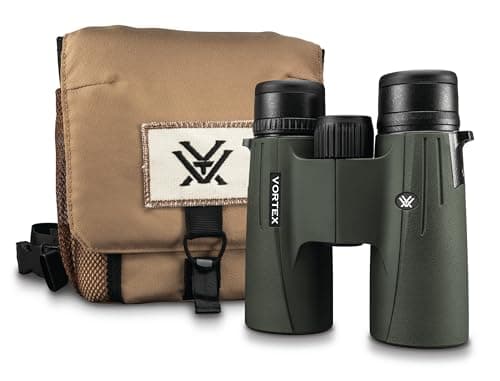
Vortex Viper HD 10x42
The default answer when someone outgrows a $150 pair: 17 mm of eye relief, a 341 ft field of view and glass that holds its edges, at the price where diminishing returns start.
Price as of October 5, 2026. #ad How we earn
Comparing these two brands product by product misses the point. Vortex and Maven have made different structural choices about how a binocular reaches you, and those choices produce the differences you actually experience.
Vortex: scale, dealers, and an unconditional warranty
Vortex sells through a very large dealer network, which means you can look through one before buying, get it tomorrow, and find someone locally if something goes wrong. The product line is wide - Crossfire HD at $149 through Razor UHD at $1,799 - so there is a Vortex at essentially every price point.
The VIP warranty is the single most important thing about the brand. It is unconditional, which means it covers damage you caused; it requires no receipt; and it transfers to whoever owns the binocular next. That last point is why used Vortex holds value better than most, and it is a real financial benefit rather than a marketing line.
Maven: direct sales, better glass per dollar, less convenience
Maven skips the dealer entirely. The margin that would have gone to distribution goes into glass instead, which is how a $1,150 B1.2 competes optically with traditionally distributed binoculars priced closer to $2,000. The effect is larger in absolute terms at higher prices, which is why Maven's strongest value argument is at the top of its range rather than the bottom.
The costs are real and specific: you cannot look through one in a shop next to three alternatives, stock on third-party retailers moves, and if you need something fixed you are shipping it rather than driving it somewhere.
| Vortex | Maven | |
|---|---|---|
| How you buy | Any dealer, plus online | Mostly direct, patchy third-party stock |
| Try before buying | Easy | Difficult |
| Glass per dollar | Good | Better, especially above $600 |
| Warranty | Unconditional, no receipt, transferable | Lifetime |
| Resale value | Strong, helped by the transferable warranty | Decent |
| Price range | $149 to $1,799 | Roughly $475 to $1,150+ |
| Customization | None | Color options when ordered direct |
Which to buy
- Buying your first serious binocular, or under $400: Vortex. The range goes lower, you can handle one first, and the warranty is the best insurance in optics.
- Spending $600 or more and comfortable buying unseen: Maven. This is where the direct model pays off most.
- You want to compare three binoculars side by side before deciding: Vortex, by default - you can actually do it.
- Resale matters to you: Vortex, because the warranty follows the binocular.
- You want the most glass for the money and nothing else matters: Maven.
The three to look at
Price as of October 5, 2026. #ad How we earn
Vortex Viper HD 10x42
The default answer when someone outgrows a $150 pair: 17 mm of eye relief, a 341 ft field of view and glass that holds its edges, at the price where diminishing returns start.
| Magnification | 10x |
|---|---|
| Objective lens | 42 mm |
| Eye relief | 17.0mm |
| Field of view | 341' @ 1000 yds |
| Angular field of view | 6.5º |
| Close focus | 6.0' |
| Weight | 24.9 oz. |
| Height | 5.6" |
| Width | 4.9" |
| Exit pupil (computed) | 4.2 mm |
| Twilight factor (computed) | 20.5 |
Specs verified 2026-10-05 from Vortex's published specification. Exit pupil and twilight factor are computed, not quoted.
What it does well
- 17.0 mm eye relief is generous enough for most glasses wearers
- 341 ft at 1,000 yards is a wide field for a 10x
- Vortex VIP warranty is unconditional and transferable
Where it gives ground
- 24.9 oz is noticeable on a chest harness over a long day
- The 12x50 costs little more if you glass open country
Skip it if
You hunt timber inside 200 yards - the 8x42 Diamondback does that job for less than half the money.
How this score breaks down
- Low-light performance (weight 5)8.5
- Optical quality per dollar (weight 4)9.0
- Field of view (weight 3)9.0
- Eye relief (weight 3)9.0
- Weight and ergonomics (weight 2)7.5
- Warranty (weight 2)10.0
Weights and definitions are published on how we review. These are editorial judgments from published specs and documented consensus, not test results.
341 ft of published field and 17.0 mm of eye relief, verified 2026-10-05, with cover that transfers to the next owner.
Price as of October 5, 2026. #ad How we earn
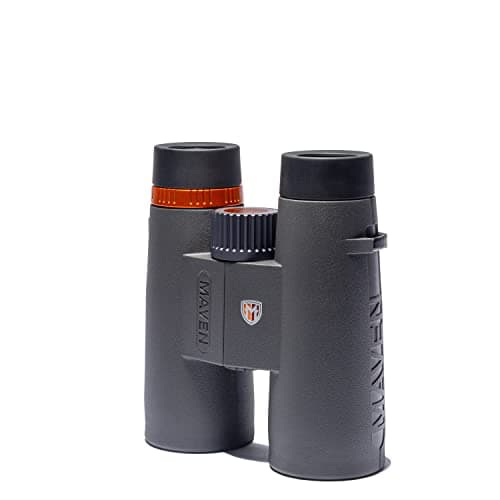
Maven C1 10x42
The C series is Maven's value line: ED glass and the same warranty as the B series, at a price that sits between the Viper HD and the Monarch M7.
| Magnification | 10x |
|---|---|
| Objective lens | 42 mm |
| Exit pupil (computed) | 4.2 mm |
| Twilight factor (computed) | 20.5 |
Magnification and objective are the manufacturer's own model designation; exit pupil and twilight factor are computed from them. We could not machine-read Maven's spec page, so the remaining published figures are not listed rather than guessed.
What it does well
- ED glass with Maven's lifetime warranty
- Lighter than the B1.2
- Direct pricing means no dealer markup
Where it gives ground
- Not as bright at the edges as the B1.2
- Availability on Amazon is inconsistent
Skip it if
You need it this week - direct-sale stock fluctuates.
How this score breaks down
- Low-light performance (weight 5)8.5
- Optical quality per dollar (weight 4)9.0
- Field of view (weight 3)8.0
- Eye relief (weight 3)8.5
- Weight and ergonomics (weight 2)8.0
- Warranty (weight 2)9.5
Weights and definitions are published on how we review. These are editorial judgments from published specs and documented consensus, not test results.
The C series is Maven's value line, aimed squarely at this price band - the most direct comparison with the Viper HD in the range.
Price as of October 5, 2026. #ad How we earn
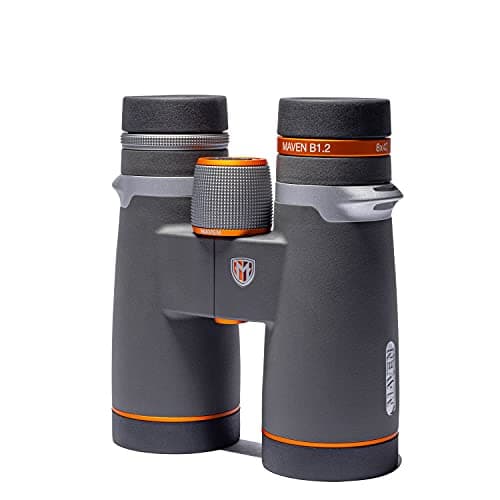
Maven B1.2 10x42
Maven sells direct and skips the dealer margin, which is how a $1,150 binocular ends up competing with glass priced nearer $2,000.
| Magnification | 10x |
|---|---|
| Objective lens | 42 mm |
| Exit pupil (computed) | 4.2 mm |
| Twilight factor (computed) | 20.5 |
Magnification and objective are the manufacturer's own model designation; exit pupil and twilight factor are computed from them. We could not machine-read Maven's spec page, so the remaining published figures are not listed rather than guessed.
What it does well
- Optically competitive with binoculars costing far more
- Customizable finish when ordered direct
- Unconditional lifetime warranty
Where it gives ground
- Mostly a direct-sale product, so stock on Amazon moves
- No dealer network for hands-on comparison
Skip it if
You want to look through it before buying. Maven's model makes that hard.
How this score breaks down
- Low-light performance (weight 5)9.5
- Optical quality per dollar (weight 4)8.0
- Field of view (weight 3)8.5
- Eye relief (weight 3)9.0
- Weight and ergonomics (weight 2)8.0
- Warranty (weight 2)9.5
Weights and definitions are published on how we review. These are editorial judgments from published specs and documented consensus, not test results.
Where Maven's model pays off hardest: removing the dealer margin matters more in absolute dollars the more expensive the product is.
Questions people actually ask
Is Maven better than Vortex?
Why is Maven cheaper for the same glass quality?
Does the Vortex VIP warranty really cover anything?
Can I return Maven binoculars if I do not like them?
Sources
- Vortex Viper HD 10x42 published specifications - read 2026-10-05
- Maven B1.2 8x42 and 10x42 product page - read 2026-10-05