For western hunting, buy a 10x42 if you are carrying one pair of binoculars, and add a 15x56 on a tripod if you glass basins and timbered faces for hours at a time. 12x50 is the middle option and only makes sense if you are already carrying a tripod. The size decision is really a tripod decision - above 10x, magnification you cannot hold still is magnification you do not have.
Western hunting is a glassing problem rather than a shooting problem. You are trying to find animals at a mile that are bedded, motionless and the color of the hillside, and then decide from a distance whether one is worth a five-hour approach. That is a completely different ask from a treestand, and it is why the size question comes up at all.
The three sizes, compared on published numbers
| Size | Exit pupil | Field of view | Weight | Tripod |
|---|---|---|---|---|
| 10x42 | 4.2 mm | 341 ft at 1,000 yd | 24.9 oz | Optional - a large upgrade |
| 12x50 | Objective divided by 12x | 288 ft at 1,000 yd | 28.8 oz | Required for sustained glassing |
| 15x56 | 3.73 mm | 230 ft at 1,000 yd | 34.8 oz | Mandatory |
Vortex's published figures for the Viper HD 10x42, Viper HD 12x50 and Diamondback HD 15x56. Exit pupil is objective diameter divided by magnification.
The column that decides it is the last one. Handshake scales with magnification, so by 12x a braced position is required for the image to settle, and by 15x a tripod is not a refinement but the thing that makes the binocular work at all.
Quick picks
Ranked by the criteria published on how we review. Tap any row for the full write-up, or go straight to the current price.
| # | Product | Best for | Score | Price |
|---|---|---|---|---|
| 1 | 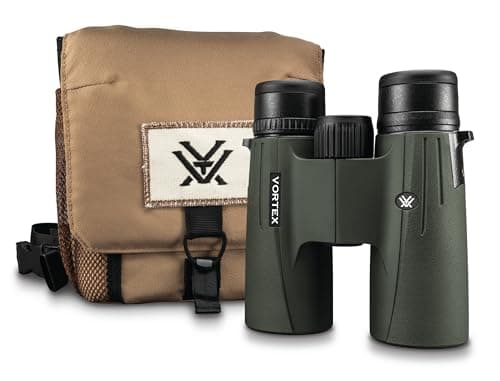 Vortex Viper HD 10x4210x42 at 24.9 oz with a 341 ft field - enough reach for open country and light enough to carry up a mountain. | The one-pair answerThe all-round upgrade | 9.5out of 10 | |
| 2 | 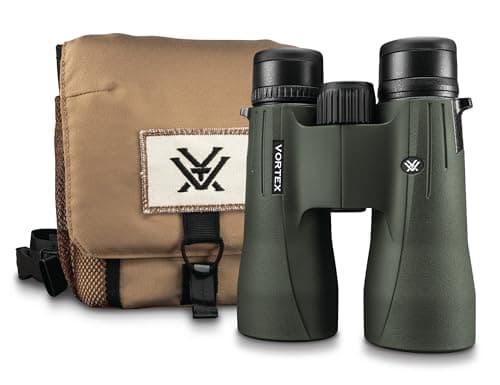 Vortex Viper HD 12x5012x50 resolves antler detail a 10x leaves ambiguous - with a tripod, which is not optional here. | The middle sizeOpen country off a tripod | 9.3out of 10 | |
| 3 | 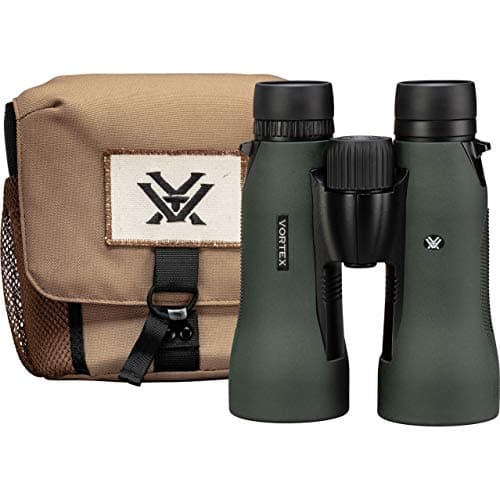 Vortex Diamondback HD 15x5615x56 on a tripod finds animals a 10x walks past - the cheapest alternative to a spotting scope. | The basin-glassing sizeTripod glassing without a spotting scope | 9.1out of 10 |
Prices are pulled live from Amazon and were last checked November 12, 2026; if a figure cannot be verified the button reads "Check price" instead. Scores are our editorial judgment against the published ranking criteria, on our published 8.4 to 9.8 recommendation scale. #ad How we earn.
How to choose, in order
- Decide whether you will carry a tripod. Honestly. If the answer is no, buy a 10x42 and stop - everything above it is wasted. If yes, the sizes above open up.
- Count your optics. One pair for everything: 10x42. Two optics: 10x42 on the chest and 15x56 on the tripod is the classic western pairing, and it beats one 12x50 trying to do both.
- Weigh the pack. 34.8 oz plus a tripod is real weight on a backcountry hunt. What size tripod do I need covers how much tripod the bigger sizes actually require.
- Think about the first and last half hour. Exit pupil falls as magnification rises, so a 15x56 is dimmer than a 10x42 at dusk. If you glass hardest in marginal light, weight the smaller size.
- Then decide about a spotting scope. If you need to count points at a mile, no binocular size does it - see spotting scope vs binoculars.
Why the tripod matters more than the size
A 10x42 on a tripod outperforms a handheld 12x50 for finding animals, every time. Braced, your eye can integrate the image over seconds instead of averaging out your own movement, which is exactly the condition under which a motionless bedded animal separates from its background. This is the single most underrated fact in western glassing, and it is why the cheapest real upgrade here is an adapter rather than a bigger binocular.
The practical consequence: budget for the tripod before the glass. A $250 10x42 on a $200 tripod finds more animals than a $900 12x50 handheld. The arithmetic and the setup are in do you need a tripod for binoculars and what a tripod changed about glassing.
What about 8x42 out west?
It is not the wrong answer if your western hunt is timbered - elk in dark timber is a close-range, low-light problem where the 5.25 mm exit pupil and wide field do more for you than reach. For sage, basins and above-timberline country, 8x is not enough to judge at distance. The full comparison is in 8x42 vs 10x42, and the roundup for this terrain is best binoculars for western hunting.
Questions people actually ask
What size binoculars are best for western hunting?
Are 12x50 binoculars too much for hunting?
Do I need 15x56 binoculars for western hunting?
Is a tripod really necessary for western glassing?
Sources
- Vortex Viper HD 12x50 published specifications - read 2026-10-17
- Vortex Diamondback HD 15x56 published specifications - read 2026-10-17