We earn a commission if you buy through the links on this page, at no extra cost to you. It never changes which products we pick or how we rank them - read the full disclosure.
Our top pick
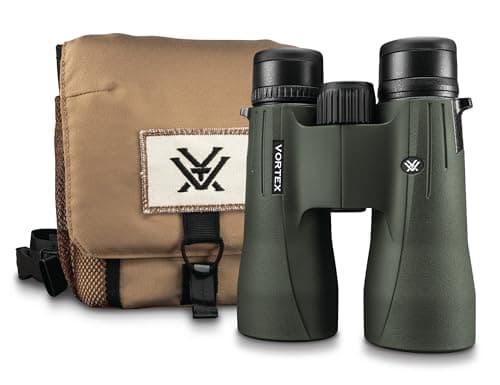
Vortex Viper HD 12x50
A 4.17 mm exit pupil and 288 ft of field, which is the trade you make for the extra detail; plan on a tripod, because 12x shows you your own pulse.
Price as of November 12, 2026. #ad How we earn
12x50 is the most over-bought format in hunting optics, and the most under-used by the people who buy it correctly. The magnification is genuine - 12x grows a lump in a wash into an animal with ears - but it comes with a narrower field, a dimmer exit pupil than an 8x42, and enough shake that handholding it for sustained glassing is close to pointless. This page is five 12x50s compared on their published numbers, and an honest argument about whether you should own one at all.
First, the question that saves you the money
A 12x50 is not an upgrade path from a 10x42. It is a different instrument for a different job, and the job is this: sitting still, behind a tripod, picking apart country you can see a long way across. Glassing a basin from a ridge. Sorting mule deer on a sage flat at a mile. Judging whether the elk bedded in the shade of a juniper at 1,100 yards is worth a four-hour approach. Inside that job it is excellent and a 10x42 is genuinely outclassed.
Outside it, almost everything about the format works against you. Handheld, 12x shows you your own pulse - the image jitters at a rate your brain cannot average out, and a shaky 12x resolves less detail than a steady 10x, which is the single most important sentence on this page. The field of view is narrow, so finding a moving animal is slower. The exit pupil is 4.17 mm against 5.25 mm for an 8x42, so at legal light it is the dimmer instrument. And it is heavy enough, with the tripod, that it gets left behind exactly when you would want it.
So the honest buying sequence for 12x50 is: own a good 10x42 first, own a tripod and a head second, and buy the 12x50 third - as the optic you glass with when you have already stopped walking. If any of the first two is missing, buy that instead. 10x42 vs 12x50 is the long-form version of that argument, and do you need a tripod for binoculars is the honest answer to the question this format forces.
| How and where you hunt | Format | Why |
|---|---|---|
| Timber, bottoms, treestands, inside 200 yards | 8x42 | 5.25 mm exit pupil and the widest field. 12x is actively worse here. |
| Mixed country, one pair for everything, mostly offhand | 10x42 | The default for a reason: handholdable, 4.2 mm exit pupil, enough reach to identify. |
| Open country, glassing seated from a tripod | 12x50 | The detail to judge an animal you have already found, with the steadiness problem solved. |
| Open country, long sessions, tripod always | 15x56 | More reach and a 3.73 mm exit pupil. Mandatory tripod, 230 ft field, heavier again. |
| Judging antler or horn past a mile | Spotting scope | Past 15x a zoom eyepiece and a bigger objective are the right tools. |
If you are choosing between 12x50 and 15x56 and you will definitely carry the tripod, the 15x56 is the more differentiated second optic. If the tripod is an aspiration, buy neither yet.
Quick picks
Ranked by the criteria published on how we review. Tap any row for the full write-up, or go straight to the current price.
| # | Product | Best for | Score | Price |
|---|---|---|---|---|
| 1 | Vortex Viper HD 12x50288 ft of field, 16.0 mm of eye relief and an 8.0 ft close focus - the most balanced published spec sheet of the five, with a locking diopter that matters on a tripod. | Best overall 12x50Open country off a tripod | 9.3out of 10 | |
| 2 | 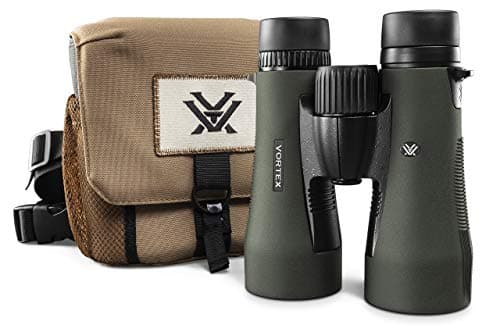 Vortex Diamondback HD 12x50271 ft of field and a 6.0 ft close focus for substantially less money; 14.0 mm of eye relief is the compromise and it is a real one if you wear glasses. | Best value 12x50Best value 12x50 | 9.1out of 10 | See today's price on the Diamondback HD 12x50Check price on Amazon No buyable offer at the last price check. |
| 3 | 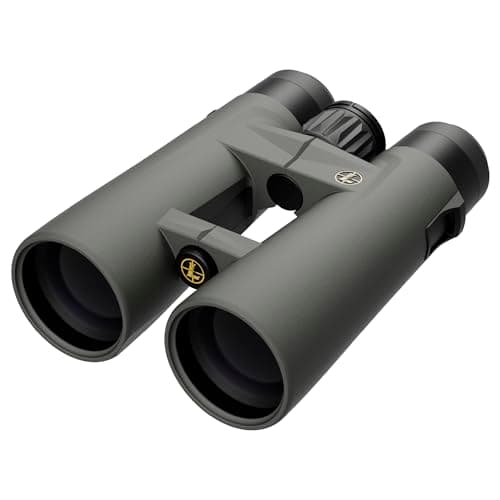 Leupold BX-4 Pro Guide HD 12x50mm Gen 216 mm of eye relief, a published 4.2 mm exit pupil and an open-bridge body - bought at the cost of the narrowest field here, 257 ft. | Best for glasses wearersGlasses wearers and all-day carry | 9.2out of 10 | |
| 4 | 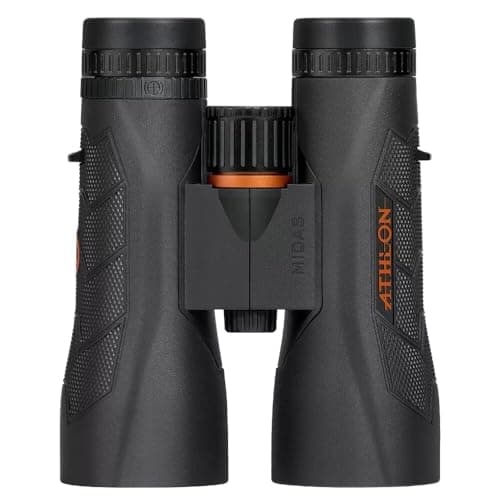 Athlon Midas G2 PRO UHD 12x50The widest field here at 281 ft, plus an ATBR reticle for holdovers - and the heaviest body at 32 oz with an 11.5 ft close focus. | Best with a ranging reticleRanging reticle for long-range spotting | 9.2out of 10 | |
| 5 | 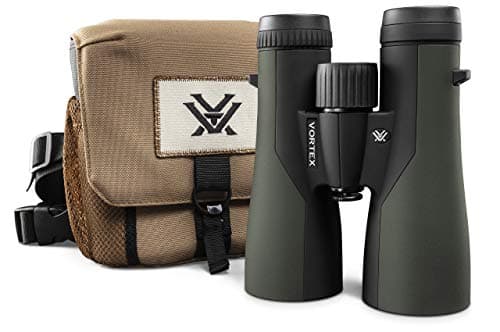 Vortex Crossfire HD 12x50273 ft of field, 15.0 mm of eye relief and a 6.0 ft close focus at the lowest price here - the resolution is where the money went missing. | Cheapest real 12x50Cheapest real 12x50 | 9.1out of 10 |
Prices are pulled live from Amazon and were last checked November 12, 2026; if a figure cannot be verified the button reads "Check price" instead. Scores are our editorial judgment against the published ranking criteria, on our published 8.4 to 9.8 recommendation scale. #ad How we earn.
The criteria, in the order that decides a 12x50
1. Resolution, because 12x magnifies the flaws too
This is the one criterion that reverses between formats. On a 10x42, glass quality is a comfort and a last-light advantage; a cheap one still does the job in daylight. At 12x it is structural. Magnification multiplies every optical defect along with the image: chromatic aberration becomes a visible purple halo on a backlit edge, field curvature turns the outer third of the circle into a place you stop looking, and the softness you would call 'fine' at 8x becomes the reason you cannot count points. Buying a 12x50 to see more detail and then buying the cheapest one is self-defeating in a way the equivalent decision on an 8x42 is not.
What that means in practice on this page: the Viper HD's XR coatings and the Leupold's DiamondCoat 2 surfaces and phase-coated prisms are not marketing garnish at this magnification, they are the difference between 12x of detail and 12x of bigger mush. The Crossfire HD is here because the arithmetic of brightness is identical and the price is a fraction - but it is honestly the compromise pick, not the smart-money one. ED glass vs HD glass sets out which of these labels mean something and which are a sticker.
2. Field of view, because a narrow circle is a slow search
Published linear field of view is stated in feet at 1,000 yards, and the five binoculars here run from 257 ft to 281 ft - a 24 ft spread, or about nine percent. For comparison, a Vortex Diamondback HD 8x42 publishes 393 ft. You are giving up something like a third of your picture to get from 8x to 12x, and that is the real cost of the format, more than weight and more than money.
The practical consequence is a change in technique rather than a defect. With a narrow field you cannot sweep; you grid. You break the hillside into overlapping blocks, work them in order, and let the tripod hold your place while your eyes do the work. Done properly that is more effective than panning a wide field at 8x, which is why the format exists. Done the way most people use binoculars - a quick scan from a standing position - a 12x50 is strictly worse than what you already own. How to glass for deer is the method this format assumes you are using.
3. Eye relief, because this is where the cheap ones differ
Eye relief is the distance behind the eyepiece at which the whole field is visible. Below roughly 15 mm, a glasses wearer physically cannot get their eye to that point and sees a smaller circle inside a black surround - you paid for 271 ft of field and you are looking at perhaps 220 ft of it. The spread on this page is wide: 16 mm for the Viper HD and the Leupold, 15 mm for the Athlon and the Crossfire HD, 14.0 mm for the Diamondback HD.
That makes eye relief the single specification most likely to turn the cheapest sensible pick here into the wrong purchase for you personally. If you glass in glasses, the Diamondback HD's 14.0 mm is a real problem and the Crossfire HD - cheaper still, with a millimeter more - is the better buy. If you do not, the Diamondback HD is the value pick on the page and the eye-relief gap costs you nothing.
4. Exit pupil and twilight factor, which are the same for all five
Every 12x50 ever made hands your eye an exit pupil of 50 / 12 = 4.17 mm and computes to a twilight factor of the square root of 12 x 50, which is 24.5. That is arithmetic, not a product feature, and it is identical on the cheapest binocular here and on a $3,000 alpha 12x50. Two readings follow from it.
First, nobody can sell you a brighter 12x50 - only a better-corrected one. A 12x50's low-light limit is set by the format, and the way to beat it is a larger objective (a 15x56 computes to 3.73 mm, a 10x50 to 5.00 mm) or less magnification, not more money. Second, 4.17 mm is slightly less than a 10x42's 4.2 mm and well under an 8x42's 5.25 mm, so a 12x50 is not a low-light binocular - its 24.5 twilight factor beats a 10x42's 20.5 because twilight factor rewards resolving power rather than brightness, and those are different things. Exit pupil and twilight factor works through why both numbers are useful and why neither is the whole story.
5. Weight, and the tripod you are also buying
The bodies here run 28.8 oz to 32 oz, which is a narrow spread and a heavy one - all five are heavier than almost any 10x42. The number that actually matters is the system weight: binocular plus harness plus tripod plus head plus adapter. Done cheaply that is well over four pounds; done with a carbon tripod it is still over three. That total is what determines whether the 12x50 is in your pack on the eighth day of a backcountry hunt or in the truck.
Two things follow. Budget for the mount as part of the binocular, not after it: a 12x50 on a wobbly photo tripod is a worse instrument than a 10x42 in your hands. And get the binocular onto a harness rather than a neck strap, because 30 oz on a strap is how a good binocular ends up unused. What size tripod do I need and how to mount binoculars on a tripod cover the rest of the system.
12x50 or 15x56: the second-optic question
Almost everyone reading this already owns a 10x42, which makes the real decision not '12x50 or 10x42' but 'what should my second binocular be'. Against that question 15x56 has a strong case. It is more differentiated from the 10x42 you own: Vortex publishes 230 ft of field and 15.6 mm of eye relief for the Diamondback HD 15x56, and it computes to a 3.73 mm exit pupil and a 29 twilight factor. If you are going to carry a tripod anyway, the extra three power finds bedded animals that 12x walks past.
The case for 12x50 is that it is the last magnification that is still occasionally usable without the tripod - braced over a pack, against a tree, sitting with your elbows on your knees - and that it is lighter and cheaper. If there is any realistic chance the tripod stays in the truck on a given morning, 12x50 is the format that still does something for you and 15x56 is the one that does not.
And if you find yourself wanting more than 15x, stop buying binoculars. Past that point a zoom eyepiece and a bigger objective are the right answer: spotting scope vs binoculars draws the line, and the best spotting scopes for hunting is where that budget should go instead.
What we did not pick, and why
No 12x42. It exists, it is lighter, and it computes to a 3.5 mm exit pupil - meaningfully dimmer than the 4.17 mm of every binocular here, at the exact moment of day when a hunter is making decisions. The 50 mm objective is not a luxury on a 12x; it is what keeps the format usable at gray light.
No 12x56 either, for the opposite reason: a handful exist, they are superb, and they weigh enough that the honest comparison is against a 15x56 rather than against this page. If you are willing to carry that much glass, carry the extra magnification with it.
And no rangefinding 12x50. Rangefinding binoculars are built around 10x42 for good reasons - weight, balance and the fact that most people range handheld - and the handful of higher-power units cost multiples of everything here. If combining the two is the appeal, the Vortex Fury HD 5000 review is the honest version of that arithmetic, and the answer for a tripod glasser is usually to keep them separate.
The picks in detail
Price as of November 12, 2026. #ad How we earn
Vortex Viper HD 12x50
A 4.17 mm exit pupil and 288 ft of field, which is the trade you make for the extra detail; plan on a tripod, because 12x shows you your own pulse.
| Magnification | 12x |
|---|---|
| Objective lens | 50 mm |
| Eye relief | 16.0mm |
| Field of view | 288' @ 1000 yds |
| Angular field of view | 5.5º |
| Close focus | 8.0' |
| Weight | 28.8 oz. |
| Height | 6.5" |
| Width | 5.2" |
| Exit pupil (computed) | 4.17 mm |
| Twilight factor (computed) | 24.5 |
Specs verified 2026-10-05 from Vortex's published specification. Exit pupil and twilight factor are computed, not quoted.
What it does well
- 12x resolves antler detail a 10x leaves ambiguous
- 50 mm objective keeps the exit pupil close to the 10x42
- Still fits a standard bino harness
Where it gives ground
- Unusable handheld for sustained glassing - tripod required
- 288 ft field makes picking up moving animals harder
Skip it if
You will not carry a tripod. A shaky 12x sees less than a steady 10x.
How this score breaks down
- Low-light performance (weight 5)8.4
- Optical quality per dollar (weight 4)8.9
- Field of view (weight 3)7.2
- Eye relief (weight 3)8.1
- Weight and ergonomics (weight 2)6.8
- Warranty (weight 2)10.0
Criterion scores are on the 0-10 rubric scale. Their weighted mean is 8.3, which maps to 9.3 on our published recommendation scale of 8.4 to 9.8 - the band of products we are willing to recommend at all. The weights, the definitions and the mapping are all published, so any score here can be checked against our own rules. These are editorial judgments from published specifications, computed optical arithmetic and documented consensus.
Vortex publishes 288 ft of linear field at 1,000 yards, a 5.5 degree angular field, 16.0 mm of eye relief, an 8.0 ft close focus and 28.8 oz for this one. Nothing in that list is the best figure on this page - the Athlon is wider, the Leupold has a millimeter more eye relief, the two cheaper Vortexes focus closer - but nothing in it is a liability either, and in a format with as little margin for error as 12x50 that is what you are actually shopping for.
The XR-coated glass is the reason to pay the difference over the Diamondback HD below. 12x magnifies optical shortcomings the same way it magnifies the animal: chromatic fringing that is invisible at 8x shows up as a purple edge on a backlit antler at 12x, and softness at the edge of the field becomes a reason to stop glassing early. This is the cheapest binocular on the page where the resolution keeps up with the magnification rather than merely tolerating it.
The locking diopter is the specification almost nobody shops on and the one tripod users notice. A 12x50 lives clamped to a head for hours at a time, getting bumped by packs, hands and brush, and a diopter that drifts out of adjustment puts one barrel permanently soft. Vortex locks it. Both cheaper Vortex models do not.
The honest cons. 28.8 oz is real weight on a harness, and nothing about the format makes it optional - you will also be carrying the tripod. The 8.0 ft close focus is longer than either cheaper Vortex here, which is irrelevant for hunting and annoying if the same binocular is also your yard-and-trail glass. And the price sits far above the Diamondback HD for a difference you can see at last light and not much before it.
No buyable offer at the last price check.
Prices change; we show only live figures. #ad How we earn
Vortex Diamondback HD 12x50
The cheapest 12x50 on this site worth owning: a 6.0 ft close focus and a 4.17 mm exit pupil, with 14 mm of eye relief as the one real compromise.
| Magnification | 12x |
|---|---|
| Objective lens | 50 mm |
| Eye relief | 14.0 mm |
| Field of view | 271' @ 1000 yds |
| Angular field of view | 5.2º |
| Close focus | 6.0' |
| Weight | 28.9 oz. |
| Height | 6.4" |
| Width | 5.3" |
| Interpupillary distance | 60-75 mm |
| Exit pupil (computed) | 4.17 mm |
| Twilight factor (computed) | 24.5 |
Specs verified 2026-10-19 from Vortex's published specification. Exit pupil and twilight factor are computed, not quoted.
What it does well
- 6.0 ft close focus - the shortest of any 12x50 here
- 28.9 oz, within an ounce of the Viper HD
- Ships with the GlassPak harness case rather than a bare neck strap
- Unlimited, unconditional lifetime warranty
Where it gives ground
- 14 mm of eye relief is the shortest here and will vignette for some glasses wearers
- 271 ft of field is 17 ft narrower than the Viper HD
- HD glass rather than the Viper HD's XR-coated glass, which shows at dusk
Skip it if
You wear glasses while glassing. 14 mm sits below the 15 mm floor where the field starts closing in.
How this score breaks down
- Low-light performance (weight 5)7.5
- Optical quality per dollar (weight 4)9.3
- Field of view (weight 3)7.5
- Eye relief (weight 3)5.8
- Weight and ergonomics (weight 2)7.8
- Warranty (weight 2)10.0
Criterion scores are on the 0-10 rubric scale. Their weighted mean is 7.9, which maps to 9.1 on our published recommendation scale of 8.4 to 9.8 - the band of products we are willing to recommend at all. The weights, the definitions and the mapping are all published, so any score here can be checked against our own rules. These are editorial judgments from published specifications, computed optical arithmetic and documented consensus.
This is the pick for most people who have decided on the format, and the reason is unglamorous: 12x50 is a second binocular for the great majority of hunters who own one. You are buying it to sit behind, on a tripod, in country where you can see a long way - and keeping your 10x42 for everything else. Spending Viper HD money on a second optic you use on a third of your hunts is a worse allocation than spending Diamondback HD money on it and putting the difference into the tripod the format requires.
Vortex publishes 271 ft of field, a 5.2 degree angular field, a 6.0 ft close focus and 28.9 oz. The field is 17 ft narrower than the Viper HD and the weight is within an ounce, which is the shape of the trade: you lose a little picture, not portability. It ships with the GlassPak harness case, which on a 28.9 oz binocular is a genuine part of the value rather than box filler.
Now the con that decides it for some readers. Eye relief is 14.0 mm - the shortest figure on this page and below the roughly 15 mm floor where a glasses wearer starts seeing a vignetted circle inside a black ring instead of the full field. If you glass in prescription or shooting glasses, buy the Crossfire HD below or the Leupold above rather than this, and do not let the price talk you out of it. The other con is the one that applies to all cheap high-power glass: HD coatings rather than XR, which at 12x is visible as softer contrast in the last fifteen minutes of light.
Price as of November 12, 2026. #ad How we earn
Leupold BX-4 Pro Guide HD 12x50mm Gen 2
16 mm of eye relief and a published 4.2 mm exit pupil in an open-bridge body, with the narrowest field of the group as the price of it.
| Magnification | 12x |
|---|---|
| Objective lens | 50 mm |
| Eye relief | 16 mm |
| Exit pupil (published) | 4.2 mm |
| Field of view | 257 ft @ 1,000 yd |
| Angular field of view | 4.9° |
| Close focus | 10 ft |
| Weight | 29.3 oz |
| Length | 6.8 in |
| Interpupillary distance | 56-74 mm |
| Prism | Phase-coated roof, DiamondCoat 2 exterior surfaces |
| Twilight factor (computed) | 24.5 |
Specs verified 2026-10-19 from Leupold's published specification. Exit pupil and twilight factor are computed, not quoted.
What it does well
- 16 mm of eye relief, the most of any 12x50 here
- Open-bridge body is the easiest of the group to hold one-handed
- 29.3 oz despite the 50 mm objective
- Leupold's Lifetime Guarantee needs no receipt and no registration
Where it gives ground
- 257 ft of field is the narrowest here - 31 ft less than the Viper HD
- 10 ft close focus, against 6.0 ft for either Vortex Diamondback or Crossfire
- Costs appreciably more than the Diamondback HD for one specification's worth of advantage
Skip it if
Field of view is what you shop on. This is the narrowest view on the page, and that is a deliberate design trade rather than a defect.
How this score breaks down
- Low-light performance (weight 5)8.5
- Optical quality per dollar (weight 4)7.5
- Field of view (weight 3)6.0
- Eye relief (weight 3)9.5
- Weight and ergonomics (weight 2)8.0
- Warranty (weight 2)9.5
Criterion scores are on the 0-10 rubric scale. Their weighted mean is 8.1, which maps to 9.2 on our published recommendation scale of 8.4 to 9.8 - the band of products we are willing to recommend at all. The weights, the definitions and the mapping are all published, so any score here can be checked against our own rules. These are editorial judgments from published specifications, computed optical arithmetic and documented consensus.
Leupold publishes 16 mm of eye relief, a 4.2 mm exit pupil, 257 ft of linear field, a 4.9 degree angular field, a 10 ft close focus, 29.3 oz and 6.8 in of length for the Gen 2. Read those two field-of-view numbers next to the Athlon's 281 ft before you buy: this is a visibly tighter view through the eyepiece, and that is a design decision rather than an accident. A narrower apparent field is one of the ways an optical designer buys edge sharpness and eye-relief comfort, and Leupold spent it here.
If you wear glasses, that is the right trade and this is your binocular. 16 mm is the most generous eye relief on the page, and the open-bridge body - two barrels joined by a single short hinge, with a gap your fingers close around - is the easiest of the five to hold steady one-handed while your other hand does something else. On a tripod that matters less; on the walk in, and for the hunter who glasses leaning against a tree before setting the tripod up, it matters a lot.
The honest cons. 257 ft of field is 31 ft less than the Viper HD and 24 ft less than the Athlon, which on a grid-search pattern across a basin means more panning per sweep. The 10 ft close focus is poor against the 6.0 ft of either cheap Vortex. And the money is the real objection: this costs appreciably more than the Diamondback HD in exchange for one specification's worth of advantage. Buy it for the eye relief, with your eyes open, or do not buy it.
The warranty deserves its own line because it is not a tie-break here, it is one of the two best in the industry. Leupold's Lifetime Guarantee covers the optic for its life with no receipt, no registration and no original-owner requirement - functionally equivalent to Vortex's VIP, and worth folding into the price rather than treating as a footnote.
Price as of November 12, 2026. #ad How we earn
Athlon Midas G2 PRO UHD 12x50
A 12x50 with Athlon's ATBR ranging reticle in the right barrel, 281 ft of field and 32 oz of weight - a spotting instrument first.
| Magnification | 12x |
|---|---|
| Objective lens | 50 mm |
| Eye relief | 15 mm |
| Field of view | 281 ft @ 1,000 yd |
| Angular field of view | 5.4° |
| Close focus | 11.5 ft |
| Weight | 32 oz |
| Dimensions | 6.5 x 5.1 in |
| Interpupillary distance | 59-74 mm |
| Reticle | ATBR, in the right barrel |
| Exit pupil (computed) | 4.17 mm |
| Twilight factor (computed) | 24.5 |
Specs verified 2026-10-19 from Athlon's published specification. Exit pupil and twilight factor are computed, not quoted.
What it does well
- Widest field of the group at 281 ft, by 8 ft over the Viper HD
- ATBR reticle gives holdover and ranging references without a second optic
- UHD glass with ESP dielectric and phase coatings
- Reticle focus and reticle leveling adjust separately from the diopter
Where it gives ground
- 32 oz is the heaviest 12x50 here - roughly 3 oz over the Vortex pair
- 11.5 ft close focus is the longest of the group
- A reticle in the view is clutter if you never use it for corrections
- Listed as 'Midas Pro G2' by some sellers and 'Midas G2 PRO UHD' by Athlon - the same product
Skip it if
You only glass for animals. Pay less for the Diamondback HD and put the difference into a tripod.
How this score breaks down
- Low-light performance (weight 5)8.0
- Optical quality per dollar (weight 4)8.0
- Field of view (weight 3)9.0
- Eye relief (weight 3)8.0
- Weight and ergonomics (weight 2)5.5
- Warranty (weight 2)9.0
Criterion scores are on the 0-10 rubric scale. Their weighted mean is 8.0, which maps to 9.2 on our published recommendation scale of 8.4 to 9.8 - the band of products we are willing to recommend at all. The weights, the definitions and the mapping are all published, so any score here can be checked against our own rules. These are editorial judgments from published specifications, computed optical arithmetic and documented consensus.
This is the specialist on the page and the one worth understanding properly before you dismiss it. Athlon publishes 281 ft of field at 1,000 yards, a 5.4 degree angular field, 15 mm of eye relief, an 11.5 ft close focus, 32 oz and 6.5 by 5.1 in. The field is the widest of the five by 8 ft over the Viper HD, which in a format this narrow is a meaningful advantage rather than a rounding error.
The reason it exists is the ATBR reticle etched into the right barrel, with its own focus and a leveling adjustment independent of the diopter. A reticle in a binocular does two jobs: it gives you a reference scale for estimating the size or the distance of something you are looking at, and more usefully it lets you call a correction for someone else shooting - 'two mils left, hold a mil high' - without taking a second optic out of the pack. For a long-range shooter spotting for a partner, or a hunter who wants a second opinion on what a rangefinder just told them, that is a real feature.
The cons are equally real. 32 oz is the heaviest body here, about three ounces over the Vortex pair, and weight is the thing that decides whether a second binocular comes out of the truck in November. The 11.5 ft close focus is the longest of the group. And if you never use the reticle, it is permanent clutter in the view and you have paid for it - buy the Diamondback HD instead and spend the difference on a tripod. One naming note, because it causes confusion at checkout: Athlon calls this the Midas G2 PRO UHD and several retailers list it as the Midas Pro G2. Same binocular.
Price as of November 12, 2026. #ad How we earn
Vortex Crossfire HD 12x50
The cheapest honest way into 12x50, and the arithmetic is identical to the expensive ones: 4.17 mm of exit pupil and a 24.5 twilight factor.
| Magnification | 12x |
|---|---|
| Objective lens | 50 mm |
| Eye relief | 15.0 mm |
| Field of view | 273' @ 1000 yds |
| Angular field of view | 5.2º |
| Close focus | 6.0' |
| Weight | 29.5 oz. |
| Height | 6.6" |
| Width | 5.3" |
| Exit pupil (computed) | 4.17 mm |
| Twilight factor (computed) | 24.5 |
Specs verified 2026-10-19 from Vortex's published specification. Exit pupil and twilight factor are computed, not quoted.
What it does well
- 15.0 mm of eye relief - better than the Diamondback HD above it
- 273 ft of field, within 2 ft of the Diamondback HD
- 6.0 ft close focus
- Includes the GlassPak harness, which the price does not suggest
Where it gives ground
- 29.5 oz is the heaviest of the three Vortex 12x50s
- Resolution at 12x is where the savings show - the edges go soft first
- No locking diopter, which matters more on a tripod than offhand
Skip it if
You are buying 12x to judge antler detail at 800 yards. Spend up; this format punishes cheap glass harder than a 10x42 does.
How this score breaks down
- Low-light performance (weight 5)7.0
- Optical quality per dollar (weight 4)9.0
- Field of view (weight 3)7.5
- Eye relief (weight 3)7.5
- Weight and ergonomics (weight 2)6.5
- Warranty (weight 2)10.0
Criterion scores are on the 0-10 rubric scale. Their weighted mean is 7.8, which maps to 9.1 on our published recommendation scale of 8.4 to 9.8 - the band of products we are willing to recommend at all. The weights, the definitions and the mapping are all published, so any score here can be checked against our own rules. These are editorial judgments from published specifications, computed optical arithmetic and documented consensus.
The arithmetic on this one is identical to the Leupold's. Both are 12x50, so both hand your eye a 4.17 mm exit pupil and both compute to a 24.5 twilight factor, and the Crossfire HD costs a small fraction of the price. That is the single most useful thing to understand about buying glass, and it is why this binocular earns a place on the page rather than a warning: a cheap 12x50 is not a dim 12x50.
Vortex publishes 273 ft of field, 15.0 mm of eye relief, a 6.0 ft close focus and 29.5 oz. Note that the eye relief is a full millimeter better than the Diamondback HD above it, which makes this the cheapest option here a glasses wearer can actually use. It also includes the GlassPak harness, which at this price is slightly absurd in the buyer's favor.
Where the money went missing is resolution and edge performance, and 12x is the least forgiving format in which to find that out. Expect the outer third of the field to go soft, expect visible color fringing on high-contrast edges, and expect both to get worse as the light goes. The practical consequence is that you will glass the center of the circle and pan more, which is slower. 29.5 oz is also the heaviest of the three Vortexes, and there is no locking diopter.
Buy it to find out whether you like the format before committing real money, or buy it as a truck and tripod binocular you are not precious about. Do not buy it expecting to judge antler points at 900 yards - that is the job the Viper HD barely does and this one does not.
Our recommendation
If you take one thing from this page, take this.
Vortex Viper HD 12x50
Best overall 12x50
288 ft of field, 16.0 mm of eye relief and an 8.0 ft close focus - the most balanced published spec sheet of the five, with a locking diopter that matters on a tripod.
Vortex Diamondback HD 12x50
Best value 12x50
271 ft of field and a 6.0 ft close focus for substantially less money; 14.0 mm of eye relief is the compromise and it is a real one if you wear glasses.
No buyable offer at the last price check.
Prices are pulled live and shown on each button. #ad How we earn.
Questions people actually ask
Are 12x50 binoculars good for hunting?
Do you need a tripod for 12x50 binoculars?
Is a 12x50 better than a 10x42 for hunting?
What is the exit pupil of a 12x50 binocular?
Should I buy a 12x50 or a 15x56?
Are cheap 12x50 binoculars worth buying?
Sources
- Vortex Viper HD 12x50 published specifications - read 2026-10-05
- Vortex Diamondback HD 12x50 published specifications - read 2026-10-19
- Vortex Crossfire HD 12x50 published specifications - read 2026-10-19
- Leupold BX-4 Pro Guide HD 12x50mm Gen 2 published specifications - read 2026-10-19
- Athlon Midas G2 PRO UHD 12x50 published specifications - read 2026-10-19
- Vortex Diamondback HD 15x56 published specifications (comparison figures) - read 2026-10-05