We earn a commission if you buy through the links on this page, at no extra cost to you. It never changes which products we pick or how we rank them - read the full disclosure.
Our top pick
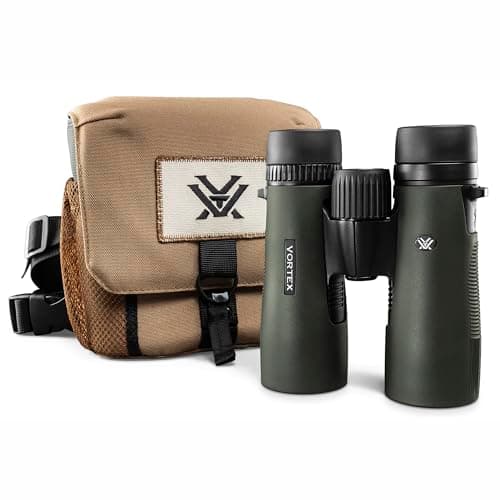
Vortex Diamondback HD 10x42
The honest floor for hunting glass: HD optical system, 330 ft of field and 15 mm of eye relief for about half what the Viper costs.
No buyable offer at the last price check.
Prices change; we show only live figures. #ad How we earn
The best all-round binocular for deer hunting is the Vortex Diamondback HD 10x42: genuine HD glass, a 330 ft field, 21.4 oz, and an unconditional transferable warranty. If you hunt timber or sit in a stand, buy the Vortex Viper HD 8x42 instead - its 5.25 mm exit pupil and 409 ft field are built for close cover at last light.
Searching for deer binoculars returns a hundred roundups that all recommend a 10x42. That is the right answer about half the time. Deer hunting splits cleanly into two jobs with two different specifications, and the biggest mistake buyers make at this price is buying the wrong half.
Quick picks
Ranked by the criteria published on how we review. Tap any row for the full write-up, or go straight to the current price.
| # | Product | Best for | Score | Price |
|---|---|---|---|---|
| 1 | Vortex Diamondback HD 10x42Genuine HD glass, a 330 ft field and the unconditional VIP warranty, at the price most deer hunters should stop at. | Best binoculars for deer huntingBest value overall | 9.3out of 10 | See today's price on the Diamondback HD 10x42Check price on Amazon No buyable offer at the last price check. |
| 2 | 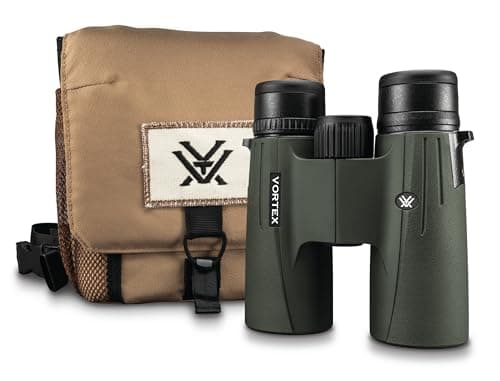 Vortex Viper HD 8x42A 5.25 mm exit pupil, 409 ft of field and 18.0 mm of eye relief - built for close cover at last light. | Best for timber and treestandsLast light and timber | 9.8out of 10 | |
| 3 | Vortex Viper HD 10x4217.0 mm of eye relief and a 341 ft field with glass that holds its edges - the all-round upgrade. | Best for open country deerThe all-round upgrade | 9.5out of 10 | |
| 4 | 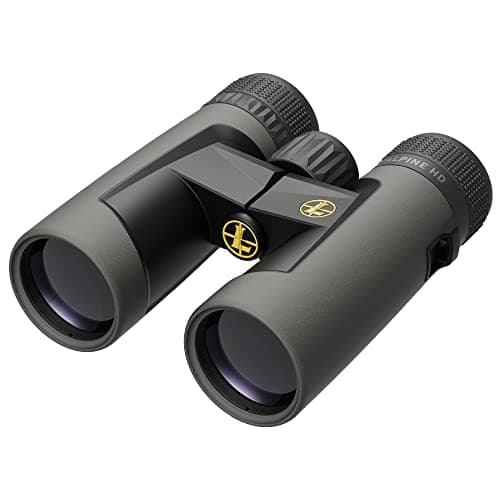 Leupold BX-2 Alpine HD 10x42Leupold's build and lifetime guarantee in the entry bracket, with good flare control for the tier. | Best budget pickBest Leupold under $250 | 9.1out of 10 | See today's price on the BX-2 Alpine HD 10x42Check price on Amazon No buyable offer at the last price check. |
Prices are pulled live from Amazon and were last checked November 12, 2026; if a figure cannot be verified the button reads "Check price" instead. Scores are our editorial judgment against the published ranking criteria, on our published 8.4 to 9.8 recommendation scale. #ad How we earn.
8x or 10x: the only decision that really matters
| Viper HD 8x42 | Viper HD 10x42 | |
|---|---|---|
| Exit pupil | 5.25 mm | 4.2 mm |
| Field of view | 409 ft at 1,000 yd | 341 ft at 1,000 yd |
| Eye relief | 18.0 mm | 17.0 mm |
| Weight | 24.5 oz | 24.9 oz |
| Better for | Timber, stands, last light | Fields, foothills, judging at distance |
Published Vortex specifications for the two models. They cost about the same, so the choice is terrain rather than budget.
Two things follow from that table. First, the 8x is brighter - not because of better glass, but because 42 divided by 8 is a larger number than 42 divided by 10. Second, the 8x shows you 68 more feet of ground at 1,000 yards, which is most of a whole extra sweep.
And one thing that is not in the table: 8x is easier to hold still. Handshake scales with magnification, so a 10x shows you your own pulse in a way an 8x does not - which matters if you are glassing from a stand with cold hands rather than off a tripod. The full comparison is in 8x42 vs 10x42.
Which kind of deer hunter are you?
- Treestand or ground blind, hardwoods, shots inside 150 yards. 8x42. Field of view and brightness beat magnification every time in cover.
- Cut corn, pasture edges, river bottoms at 200-500 yards. 10x42. You are judging antlers, not finding bodies.
- Western mule deer and open sage. 10x42 minimum, and read best binoculars for mule deer hunting - that hunt rewards a tripod more than it rewards better glass.
- Both, honestly. Take the 10x42 and buy a tripod adapter. A steady 10x covers cover; a shaky 12x does not.
- Whitetail specifically. The dedicated page is best binoculars for whitetail hunting.
No buyable offer at the last price check.
Prices change; we show only live figures. #ad How we earn
Vortex Diamondback HD 10x42
The honest floor for hunting glass: HD optical system, 330 ft of field and 15 mm of eye relief for about half what the Viper costs.
| Magnification | 10x |
|---|---|
| Objective lens | 42 mm |
| Eye relief | 15 mm |
| Field of view | 330 feet/1000 yards |
| Angular field of view | 6.3 degrees |
| Close focus | 6.7 feet |
| Weight | 21.4 oz |
| Height | 5.8 inches |
| Width | 5.1 inches |
| Exit pupil (computed) | 4.2 mm |
| Twilight factor (computed) | 20.5 |
Specs verified 2026-10-05 from Vortex's published specification. Exit pupil and twilight factor are computed, not quoted.
What it does well
- Genuine HD glass at the $250 tier
- 330 ft field of view matches binoculars costing twice as much
- Same unconditional VIP warranty as the Viper
Where it gives ground
- 15 mm eye relief is tight for some glasses wearers
- Edge sharpness falls off before the Viper's does
Skip it if
You wear glasses and have struggled with eye relief before - try the 8x42, which gives 17 mm.
How this score breaks down
- Low-light performance (weight 5)7.1
- Optical quality per dollar (weight 4)9.5
- Field of view (weight 3)8.4
- Eye relief (weight 3)6.8
- Weight and ergonomics (weight 2)8.1
- Warranty (weight 2)10.0
Criterion scores are on the 0-10 rubric scale. Their weighted mean is 8.2, which maps to 9.3 on our published recommendation scale of 8.4 to 9.8 - the band of products we are willing to recommend at all. The weights, the definitions and the mapping are all published, so any score here can be checked against our own rules. These are editorial judgments from published specifications, computed optical arithmetic and documented consensus.
For most deer hunters this is the right answer and the end of the search. It is a real HD optical system rather than a badge, Vortex publishes a 330 ft field at 1,000 yards - as wide as binoculars costing twice as much - and at 21.4 oz it is light enough to live on a harness all season.
The warranty is the quiet reason it wins. Vortex's VIP cover is unconditional and transferable: it follows the binocular rather than the buyer, with no receipt and no registration. A pair that survives being sat on in a truck and gets replaced anyway is a one-time purchase.
The limit is 15 mm of eye relief, which is tight if you wear glasses, and edge sharpness that gives up before the Viper's does. If either matters, the 8x42 version gives 17 mm and the Viper HD gives both.
Price as of November 12, 2026. #ad How we earn
Vortex Viper HD 8x42
The same body and glass as the 10x42 with a 5.25 mm exit pupil instead of 4.2 mm, which is why it looks brighter in the final ten minutes of legal light.
| Magnification | 8x |
|---|---|
| Objective lens | 42 mm |
| Eye relief | 18.0mm |
| Field of view | 409' @ 1000 yds |
| Angular field of view | 7.8º |
| Close focus | 6.0' |
| Weight | 24.5 oz. |
| Height | 5.6" |
| Width | 4.9" |
| Exit pupil (computed) | 5.25 mm |
| Twilight factor (computed) | 18.3 |
Specs verified 2026-10-05 from Vortex's published specification. Exit pupil and twilight factor are computed, not quoted.
What it does well
- 5.25 mm exit pupil is the brightest in the Viper 42 mm line
- 18.0 mm eye relief, the most forgiving in the range
- 409 ft field of view makes finding animals in cover faster
Where it gives ground
- 8x will not resolve a bedded buck at 800 yards
- Costs the same as the 10x42, so the choice is purely about terrain
Skip it if
Most of your glassing is across open basins - you will want the 10x or 12x.
How this score breaks down
- Low-light performance (weight 5)9.5
- Optical quality per dollar (weight 4)9.0
- Field of view (weight 3)9.6
- Eye relief (weight 3)9.7
- Weight and ergonomics (weight 2)8.4
- Warranty (weight 2)10.0
Criterion scores are on the 0-10 rubric scale. Their weighted mean is 9.4, which maps to 9.8 on our published recommendation scale of 8.4 to 9.8 - the band of products we are willing to recommend at all. The weights, the definitions and the mapping are all published, so any score here can be checked against our own rules. These are editorial judgments from published specifications, computed optical arithmetic and documented consensus.
If you hunt whitetails from a stand or still-hunt timber, this is the better buy and it is not close. The published 409 ft field at 1,000 yards is the widest in this roundup, which means you catch movement at the edge of your view instead of panning past it - and movement at the edge is how deer get spotted.
The 5.25 mm exit pupil is the other half. In the last ten minutes of legal light, when deer actually move, the 8x42 looks noticeably brighter than any 10x42. Add 18.0 mm of eye relief - the most forgiving in the Viper range - and you have the most comfortable binocular here for someone in glasses under a hood.
It will not resolve a bedded buck at 800 yards. If you glass across open ground as often as you sit in cover, take the 10x.
Price as of November 12, 2026. #ad How we earn
Vortex Viper HD 10x42
The default answer when someone outgrows a $150 pair: 17 mm of eye relief, a 341 ft field of view and glass that holds its edges, at the price where diminishing returns start.
| Magnification | 10x |
|---|---|
| Objective lens | 42 mm |
| Eye relief | 17.0mm |
| Field of view | 341' @ 1000 yds |
| Angular field of view | 6.5º |
| Close focus | 6.0' |
| Weight | 24.9 oz. |
| Height | 5.6" |
| Width | 4.9" |
| Exit pupil (computed) | 4.2 mm |
| Twilight factor (computed) | 20.5 |
Specs verified 2026-10-05 from Vortex's published specification. Exit pupil and twilight factor are computed, not quoted.
What it does well
- 17.0 mm eye relief is generous enough for most glasses wearers
- 341 ft at 1,000 yards is a wide field for a 10x
- Vortex VIP warranty is unconditional and transferable
Where it gives ground
- 24.9 oz is noticeable on a chest harness over a long day
- The 12x50 costs little more if you glass open country
Skip it if
You hunt timber inside 200 yards - the 8x42 Diamondback does that job for less than half the money.
How this score breaks down
- Low-light performance (weight 5)8.5
- Optical quality per dollar (weight 4)9.0
- Field of view (weight 3)8.9
- Eye relief (weight 3)9.1
- Weight and ergonomics (weight 2)7.6
- Warranty (weight 2)10.0
Criterion scores are on the 0-10 rubric scale. Their weighted mean is 8.8, which maps to 9.5 on our published recommendation scale of 8.4 to 9.8 - the band of products we are willing to recommend at all. The weights, the definitions and the mapping are all published, so any score here can be checked against our own rules. These are editorial judgments from published specifications, computed optical arithmetic and documented consensus.
The pair people land on when they outgrow a $150 binocular. Vortex publishes 17.0 mm of eye relief and a 341 ft field at 1,000 yards, which is wide for a 10x, and the glass holds detail out to the edges rather than going soft in the last quarter of the view.
For deer hunting in cut fields, river bottoms, foothills or anywhere you are picking apart cover at 300-600 yards, the extra magnification earns its keep. At 24.9 oz it is noticeable on a harness over a long day, which is the main argument for the Diamondback instead - see Vortex Diamondback HD vs Viper HD.
No buyable offer at the last price check.
Prices change; we show only live figures. #ad How we earn
Leupold BX-2 Alpine HD 10x42
The Alpine HD puts Leupold's build quality and lifetime guarantee into the $220 bracket, which is where most first upgrades land.
| Magnification | 10x |
|---|---|
| Objective lens | 42 mm |
| Exit pupil (computed) | 4.2 mm |
| Twilight factor (computed) | 20.5 |
Magnification and objective are the manufacturer's own model designation; exit pupil and twilight factor are computed from them. We could not machine-read Leupold's spec page, so the remaining published figures are not listed rather than guessed.
What it does well
- Leupold guarantee at an entry price
- Compact for a 42 mm objective
- Good flare control for the tier
Where it gives ground
- Glass is a visible step below the BX-4
- Eye relief is on the short side
Skip it if
Low-light performance is your main complaint - spend the extra on the BX-4 or a Viper HD.
How this score breaks down
- Low-light performance (weight 5)7.0
- Optical quality per dollar (weight 4)9.0
- Field of view (weight 3)7.5
- Eye relief (weight 3)6.6
- Weight and ergonomics (weight 2)8.6
- Warranty (weight 2)9.5
Criterion scores are on the 0-10 rubric scale. Their weighted mean is 7.9, which maps to 9.1 on our published recommendation scale of 8.4 to 9.8 - the band of products we are willing to recommend at all. The weights, the definitions and the mapping are all published, so any score here can be checked against our own rules. These are editorial judgments from published specifications, computed optical arithmetic and documented consensus.
The alternative at the bottom of the range, and a genuine one. The Alpine HD puts Leupold's build quality and guarantee into the bracket where most first upgrades land, and it controls flare better than most of its price class - which matters when you glass towards a rising sun across a field.
The glass is a visible step below the BX-4 and the eye relief is on the short side. If your main complaint about your current pair is low-light performance specifically, spend the extra on a Viper HD rather than buying twice.
How much to spend on deer binoculars
Around $250 buys genuine HD glass, a usable field of view and a warranty that outlives the binocular. Around $500 buys better edge performance, longer eye relief and a brighter image at the margins of legal light. Past that, for deer hunting specifically, you are buying refinement rather than capability.
The upgrade that beats spending more on glass is usually a harness, because a binocular in your pack finds nothing - see best way to carry binoculars hunting. After that, a tripod adapter. The money-order argument is laid out in how much to spend on hunting binoculars.
Our recommendation
If you take one thing from this page, take this.
Vortex Diamondback HD 10x42
Best binoculars for deer hunting
Genuine HD glass, a 330 ft field and the unconditional VIP warranty, at the price most deer hunters should stop at.
No buyable offer at the last price check.
Vortex Viper HD 8x42
Best for timber and treestands
A 5.25 mm exit pupil, 409 ft of field and 18.0 mm of eye relief - built for close cover at last light.
Prices are pulled live and shown on each button. #ad How we earn.
Questions people actually ask
What are the best binoculars for deer hunting?
Is 8x42 or 10x42 better for deer hunting?
How much should I spend on binoculars for deer hunting?
Do I need 12x50 binoculars for deer?
Sources
- Vortex Viper HD 8x42 published specifications - read 2026-10-17
- Vortex Diamondback HD 10x42 published specifications - read 2026-10-17