We earn a commission if you buy through the links on this page, at no extra cost to you. It never changes which products we pick or how we rank them - read the full disclosure.
Our top pick
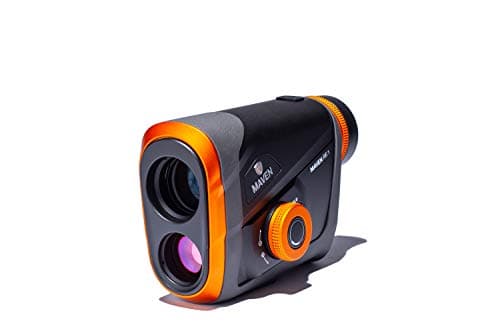
Maven RF.1
Maven's direct model buys you genuinely good glass in a rangefinder body, so the unit is usable as a monocular rather than just a distance readout.
Price as of November 12, 2026. #ad How we earn
Every rangefinder box carries a yardage figure, and on almost every unit that figure describes a highway sign, not an animal. Leupold is unusually honest about it: the RX-1400i is named for 1,400 yards and Leupold's own table gives 900 yards on deer. So if you want a rangefinder that returns a number on an elk at 1,000 yards, you are not shopping for a 1,000-yard unit. You are shopping for one rated well past it.
Why the number on the box is not the number you get
A laser rangefinder works by sending a pulse and timing the return. How much energy comes back depends on what the pulse hit: a flat, bright, perpendicular surface reflects most of it, and a wet, dark, curved, textured surface scatters nearly all of it. An animal is the second case in every respect - brown or gray hide, curved body, often angled away, often wet.
That is why manufacturers who publish honestly give three figures, and why they diverge so far. Taking the published tables for the units on this page: the Leupold RX-1400i gives 1,400 reflective, 1,200 trees, 900 deer. The SIG KILO5K gives 5,000 reflective, 2,500 trees, 2,000 deer. The Maven RF.1 gives 4,500 reflective, 3,000 trees, 2,700 deer. Across all three, the deer figure runs between roughly 40 and 64 percent of the reflective figure. The box always quotes the big one.
Conditions move it further. Rain and falling snow scatter the pulse on the way out and on the way back. Heat shimmer off warm ground in the afternoon degrades the return. Flat overcast light reduces the contrast your reticle needs to stay on the animal in the first place. A unit operating near the top of its rating fails in exactly those conditions, which are the conditions you most need it in. A unit operating at a third of its rating does not care.
How we ranked these
Scored against the published rangefinder rubric on how we review, with the weighting adapted to this one question - will it read an animal at 1,000 yards.
- The published game-animal rating, not the headline number. We want 2,000 yd or more on deer for a unit we will call a 1,000-yard rangefinder. That is not conservatism for its own sake - it is the margin that keeps the unit working in rain and flat light.
- Then stated accuracy at distance. Plus or minus 1 yd at 1,000 yards is useful; plus or minus 2 yd is the difference between a hold and a guess once you convert it to elevation. Some makers publish an accuracy band per distance range; others publish nothing, and we say which.
- Then angle compensation, because long shots in open country are rarely level. A corrected horizontal distance is the minimum; a ballistic hold is better. What angle compensation is is the prerequisite.
- Then display legibility, because at 1,000 yards you are often ranging at the edges of light, and an LCD readout against dark timber is unreadable exactly then.
- Then weight and one-handed ergonomics. A 10 oz unit and a 5 oz unit do the same job, but only one of them stays in a harness pouch all season without annoying you.
Quick picks
Ranked by the criteria published on how we review. Tap any row for the full write-up, or go straight to the current price.
| # | Product | Best for | Score | Price |
|---|---|---|---|---|
| 1 | Maven RF.12,700 yd published on deer with plus or minus 1 yd accuracy from 300 to 2,000 yd - the widest margin over 1,000 yards of any handheld unit here. | Best overall for genuine 1,000-yard rangingGlass quality in a rangefinder | 9.5out of 10 | |
| 2 | 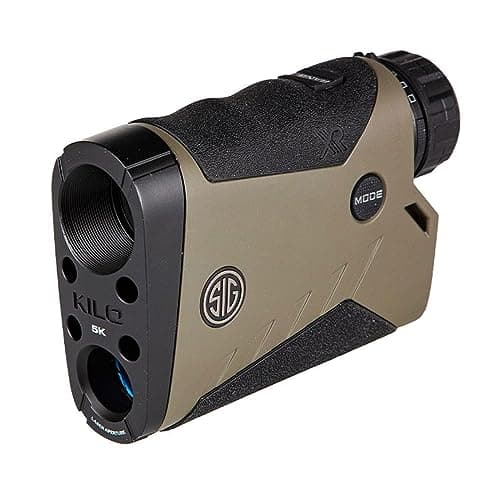 Sig Sauer KILO5K2,000 yd published on deer, Applied Ballistics Ultralite onboard with environmental sensors, and 7.5 oz - the light way to range past 1,000. | Best if you want a hold rather than a distanceLong-range ballistic solving | 9.6out of 10 | See today's price on the KILO5K$629.99 on Amazon $699.99 10% off |
| 3 | 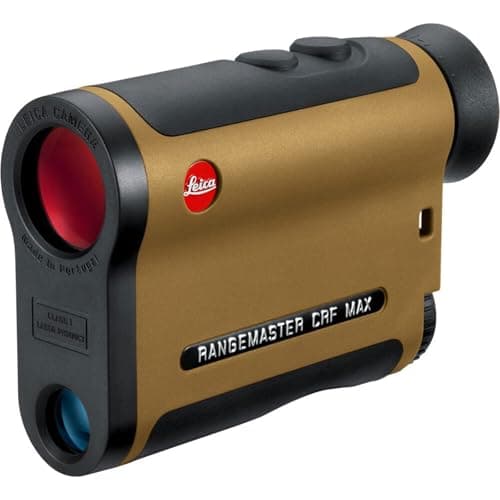 Leica Rangemaster CRF Max7.0 oz including battery, a 0.3 second measuring time and Applied Ballistics Elite on board - with no published game-animal rating at all. | Lightest unit that reaches past 3,000 yardsGlass quality and simplicity | 9.7out of 10 | |
| 4 | 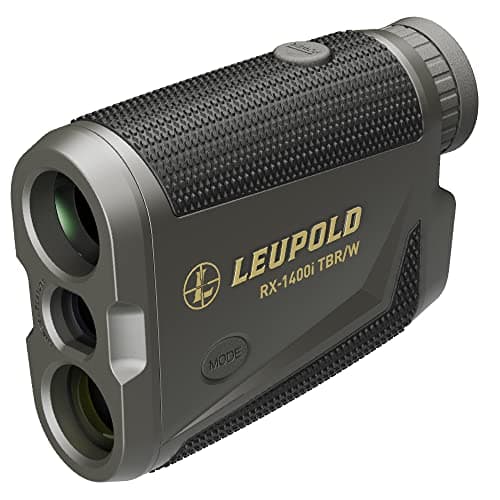 Leupold RX-1400i TBR/W Gen 2The box says 1,400 yards. Leupold's own table says 900 yards on deer, and that gap is the whole point of this page. | Best budget unit - and the honest reason it is not a 1,000-yard rangefinderBest rangefinder under $250 | 9.6out of 10 | |
| 5 | 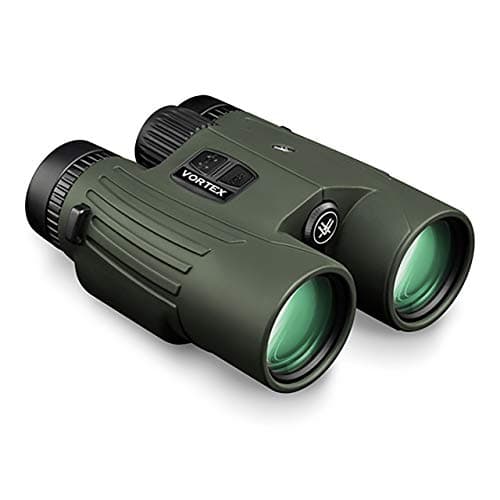 Vortex Fury HD 5000 10x42A 10x42 binocular with a 5,000 yd reflective laser inside it, so the ranging reticle is already on the animal you are looking at. | Best if you are replacing a binocular at the same timeProven rangefinding binocular | 9.4out of 10 | See today's price on the Fury HD 5000 10x42$999.00 on Amazon $1,499.99 33% off |
Prices are pulled live from Amazon and were last checked November 12, 2026; if a figure cannot be verified the button reads "Check price" instead. Scores are our editorial judgment against the published ranking criteria, on our published 8.4 to 9.8 recommendation scale. #ad How we earn.
The published ratings side by side
| Unit | Reflective | Trees | Deer | Stated accuracy | Weight |
|---|---|---|---|---|---|
| Maven RF.1 | 4,500 yd | 3,000 yd | 2,700 yd | +/- 1 yd, 300-2,000 yd | 10 oz |
| SIG KILO5K | 5,000 yd | 2,500 yd | 2,000 yd | not published | 7.5 oz |
| Leica Rangemaster CRF Max | approx. 3,700 yd | not published | not published | not published | 7.0 oz |
| Leupold RX-1400i TBR/W Gen 2 | 1,400 yd | 1,200 yd | 900 yd | +/- 2 yd at 1,000 yd | 5.1 oz |
| Vortex Fury HD 5000 10x42 | 5,000 yd | 1,600 yd | 1,400 yd | +/- 3 yd | 32.3 oz |
Read the deer column against the reflective column. On every unit that publishes both, the game figure is between roughly 28 and 64 percent of the headline number - and the headline number is what the model is named for.
Two things jump out of that table. The first is how little the reflective figure tells you: the SIG and the Vortex both publish 5,000 yd reflective, and their published deer figures are 2,000 yd and 1,400 yd. The second is that two of the five units do not publish a game-animal rating at all, which on this specific question is a meaningful omission rather than a technicality.
The things that stop you ranging at 1,000 yards that are not the laser
Assume the laser is good enough. There are three other reasons you will fail to get a number on an animal at 1,000 yards, and they are the reasons most often reported as "my rangefinder won't reach".
Holding the reticle on the animal. A 7x handheld at 1,000 yards covers a lot of country, and your heartbeat moves the reticle across most of an animal's body. If you cannot hold it still, the unit ranges the hillside behind the animal, or the sagebrush in front of it, and the number it returns is wrong rather than absent - which is worse. Bracing against a pack, a tripod leg or a shooting stick fixes more ranging problems than a bigger laser does.
First, best and last target modes. Nearly every unit here has them and most hunters never change them. At 1,000 yards through intervening brush, the mode decides whether you get the twig at 40 yards, the animal, or the ridge behind it. If you range at distance, set the mode deliberately before the season. The easiest rangefinders to use covers which units make that setting findable.
Finding the animal in the rangefinder at all. This is the problem a rangefinding binocular exists to solve, and it is the single strongest argument for the Fury HD 5000 on this page. Spotting an animal at 1,000 yards in a 10x binocular and then re-finding it in a 7x monocular is a genuine skill, and under time pressure it is where people lose the opportunity.
Who should buy what
- Buy the Maven RF.1 if you want the longest published game-animal rating in a handheld and a stated accuracy band you can hold the maker to. 2,700 yd on deer and plus or minus 1 yd at 1,000 yards is the most defensible combination here.
- Buy the SIG KILO5K if you want the reading converted into a hold, and you want it to weigh 7.5 oz. Check the IPX-4 sealing against the weather you actually hunt in first.
- Buy the Leica Rangemaster CRF Max if speed and weight decide it - 0.3 seconds and 7.0 oz are both best in class - and you accept that Leica publishes no game-animal figure.
- Buy the Leupold RX-1400i TBR/W Gen 2 if your honest maximum is 600 yards. It is not a 1,000-yard rangefinder and its own specification sheet says so, but it is the best value on this page by a wide margin.
- Buy the Vortex Fury HD 5000 if you are replacing a binocular and a rangefinder at the same time, which is the one moment the combined price works out, and if ranging a specific animal at distance is the job.
- Do not buy on the headline yardage. A unit named for 1,400 yards is a 900-yard unit on an animal. A unit that will read an animal at 1,000 yards is one rated past 2,000. Are rangefinders worth it is the page to read if you are still deciding whether to buy one at all.
The picks in full
Price as of November 12, 2026. #ad How we earn
Maven RF.1
Maven's direct model buys you genuinely good glass in a rangefinder body, so the unit is usable as a monocular rather than just a distance readout.
| Magnification | 7x |
|---|---|
| Objective lens | 25 mm |
| Eye relief | 17 mm |
| Light transmission | 77 % |
| Max range, reflective | 4,500 yd |
| Max range, trees | 3,000 yd |
| Max range, deer | 2,700 yd |
| Minimum range | 5 yd |
| Accuracy, to 300 yd | 0.5 yd (0.1 yd display) |
| Accuracy, 300-2,000 yd | +/- 1 yd |
| Accuracy, 2,000-4,500 yd | +/- 3 yd |
| Angle modes | LOS / COMP |
| Brightness settings | 5 |
| Battery | CR2, over 3,500 range cycles |
| Waterproof | IPX7 |
| Weight | 10 oz with battery |
| Dimensions (W x H x D) | 4.6875 x 3.0625 x 1.875 in |
| Frame material | Magnesium / aluminum |
Specs verified 2026-10-26 from Maven's published specification. Exit pupil and twilight factor are computed, not quoted.
What it does well
- Optical quality well above typical rangefinder glass, with 77 percent published light transmission
- 2,700 yd published on deer - the longest game-animal rating of any handheld unit here
- Plus or minus 1 yd from 300 to 2,000 yd
- LOS and COMP angle modes with an obstruction filter
- Lifetime warranty, sold direct
Where it gives ground
- Amazon stock is intermittent because Maven sells direct
- Interface has a learning curve
- 10 oz is heavy for a handheld - twice the Leupold RX-1400i
- No onboard ballistic solver, so it returns a corrected distance and not a hold
Skip it if
You only need a number. The RX-1400i delivers that for a third of the price.
How this score breaks down
- Ranging accuracy and range on game (weight 5)9.3
- Angle compensation implementation (weight 5)8.7
- Display legibility in low light (weight 3)8.5
- Speed and scan mode (weight 3)8.7
- One-handed ergonomics (weight 2)7.8
Criterion scores are on the 0-10 rubric scale. Their weighted mean is 8.7, which maps to 9.5 on our published recommendation scale of 8.4 to 9.8 - the band of products we are willing to recommend at all. The weights, the definitions and the mapping are all published, so any score here can be checked against our own rules. These are editorial judgments from published specifications, computed optical arithmetic and documented consensus.
This is the pick because of one published row: 2,700 yd on deer. Maven also publishes 3,000 yd on trees and 4,500 yd reflective, which means a 1,000 yd reading on an animal sits at roughly 37 percent of the unit's own game-animal rating. That is the margin you want. A laser working deep inside its rating returns a number instantly, in rain, in flat light, off a dark hide - which is the actual failure mode you are buying against, not the headline distance.
The accuracy table is unusually honest and unusually good: 0.5 yd out to 300 yd with a 0.1 yd display, plus or minus 1 yd from 300 to 2,000 yd, plus or minus 3 yd from 2,000 to 4,500 yd. At 1,000 yards you are inside the plus or minus 1 yd band. Maven also publishes 77 percent light transmission and 17 mm of eye relief on the 7x25 optic, with LOS and COMP angle modes, an obstruction filter, five brightness settings, IPX7 sealing and over 3,500 range cycles on a CR2.
The cons are real. 10 oz is heavy for a handheld - twice the Leupold RX-1400i's 5.1 oz and a third more than the SIG KILO5K's 7.5 oz - and you will notice it in a bino harness pouch. There is no onboard ballistic solver, so it returns a corrected distance rather than a hold, which is the right amount of computation for most hunting but not what a long-range shooter wants. And Maven sells direct, so Amazon stock is intermittent. The full Maven RF.1 review covers the interface in detail.
$699.99 10% off
Price as of November 12, 2026. #ad How we earn
Sig Sauer KILO5K
Applied Ballistics onboard and a 7x25 optic: it returns a firing solution rather than a distance, which is what long-range shooting actually needs.
| Magnification | 7x |
|---|---|
| Objective lens | 25 mm |
| Max range, reflective | Up to 5,000 yd |
| Max range, trees | Up to 2,500 yd |
| Max range, deer | Up to 2,000 yd |
| Eye relief | 15 mm minimum |
| Display | Segmented OLED |
| Reticle | Circle with milling grid |
| Laser divergence | 1.3 mrad |
| Battery | CR2, minimum 4,000 ranges |
| Waterproof | IPX-4 |
| Weight | 7.5 oz |
| Length | 4.4 in |
| Width | 1.3 in |
Specs verified 2026-10-26 from Sig Sauer's published specification. Exit pupil and twilight factor are computed, not quoted.
What it does well
- Onboard Applied Ballistics Ultralite solver with environmental sensors
- 2,000 yd published on deer, so a 1,000 yd reading is well inside its rating
- 7.5 oz - half the weight of the Maven RF.1
- Bluetooth profile sync and BDX-X support for Kestrel and Garmin
Where it gives ground
- More capability than most hunters will ever configure
- Menu depth is real - plan on reading the manual
- IPX-4 is splash resistance, not submersion - the weakest sealing rating of any unit here
- SIG does not publish a stated accuracy figure for this model
Skip it if
Your shots are inside 400 yards. You are paying for solving you will not use.
How this score breaks down
- Ranging accuracy and range on game (weight 5)9.5
- Angle compensation implementation (weight 5)9.2
- Display legibility in low light (weight 3)8.7
- Speed and scan mode (weight 3)9.4
- One-handed ergonomics (weight 2)7.4
Criterion scores are on the 0-10 rubric scale. Their weighted mean is 9.0, which maps to 9.6 on our published recommendation scale of 8.4 to 9.8 - the band of products we are willing to recommend at all. The weights, the definitions and the mapping are all published, so any score here can be checked against our own rules. These are editorial judgments from published specifications, computed optical arithmetic and documented consensus.
SIG publishes 5,000 yd reflective, 2,500 yd on trees and 2,000 yd on deer, so a 1,000 yd reading on an animal is half the unit's game rating - a comfortable margin, and the second-best on this page. Where this one separates is what it does with the number. Applied Ballistics Ultralite runs on board with environmental sensors, so instead of a corrected distance you get an elevation holdover and a wind hold on a segmented OLED display, and BDX-X will pull live data from a Kestrel or a Garmin.
It is also the ergonomic pick: 7.5 oz, 4.4 in long, 1.3 in wide, a minimum of 4,000 ranges on a CR2, with Extended Range and Fog target modes on the Gen II LightWave engine. If you are ranging at 1,000 yards you are probably also doing something with the answer, and this is the unit that does that step for you without the price of a Leica.
Two honest cons, one of which matters more than SIG's marketing admits. First, the sealing: SIG publishes IPX-4, which is splash resistance, not submersion - the weakest rating of any unit on this page, and worth knowing before you hunt the Pacific Northwest with it. Second, SIG does not publish a stated accuracy figure for this model, so there is no number to hold them to the way there is with Maven or Leupold. And the menu depth is genuine: configure it at the bench, not on the mountain. The SIG KILO5K review goes through the setup.
Price as of November 12, 2026. #ad How we earn
Leica Rangemaster CRF Max
Leica's optical quality with Applied Ballistics Elite on board, in a 7 oz body - the lightest unit on this site that ranges past 3,000 yards.
| Magnification | 7x |
|---|---|
| Front lens diameter | 24 mm |
| Measuring range | 10 to approx. 3,700 yd / 3,400 m |
| Measuring time | max. 0.3 sec |
| Battery lifetime | approx. 1,700 measurements at 68 °F |
| Weight | approx. 7.0 oz / 199 g with battery |
| Dimensions | 4.4 x 3.1 x 1.4 in |
Specs verified 2026-10-26 from Leica's published specification. Exit pupil and twilight factor are computed, not quoted.
What it does well
- Leica glass quality in a compact monocular body
- 7.0 oz including battery, the lightest long-range unit here
- 0.3 second measuring time
- Applied Ballistics Elite, Bluetooth and GPS on board
Where it gives ground
- Leica publishes one maximum-range figure and no game-animal rating, so there is no deer number to plan against
- Expensive for its feature set relative to Sig
- Roughly 1,700 measurements per battery is modest
Skip it if
You want configurable ballistic profiles you can audit. Sig's BDX ecosystem is more transparent for the money.
How this score breaks down
- Ranging accuracy and range on game (weight 5)9.3
- Angle compensation implementation (weight 5)8.7
- Display legibility in low light (weight 3)9.0
- Speed and scan mode (weight 3)9.2
- One-handed ergonomics (weight 2)9.5
Criterion scores are on the 0-10 rubric scale. Their weighted mean is 9.1, which maps to 9.7 on our published recommendation scale of 8.4 to 9.8 - the band of products we are willing to recommend at all. The weights, the definitions and the mapping are all published, so any score here can be checked against our own rules. These are editorial judgments from published specifications, computed optical arithmetic and documented consensus.
Leica publishes a measuring range of 10 to approximately 3,700 yd, a maximum measuring time of 0.3 seconds, roughly 1,700 measurements per battery, 7x magnification on a 24 mm front lens, dimensions of 4.4 by 3.1 by 1.4 in, and a weight of approximately 7.0 oz with the battery. Applied Ballistics Elite, Bluetooth and GPS are on board. It is the fastest and the lightest unit on this page, and in a glove at first light both of those are worth more than they look on paper.
The honest problem is a missing specification rather than a bad one. Leica publishes one maximum-range figure and no tree or game-animal rating, which means there is no published number that tells you what this unit does on a brown animal in flat light. Every other unit here gives you one. We rank it on the strength of the 3,700 yd ceiling and the 0.3 second measuring time, both of which imply enormous margin at 1,000 yards, but you are inferring the game performance rather than reading it - and on a site whose method is published specifications, that deserves saying plainly.
The other con is value. At this price the SIG KILO5K gives you a published 2,000 yd deer rating, a comparable solver and change left over, and the Maven RF.1 gives you 2,700 yd on deer for substantially less. You are buying Leica's glass, Leica's speed and 7.0 oz. Those are real; they are also the most expensive ounces on this page.
Price as of November 12, 2026. #ad How we earn
Leupold RX-1400i TBR/W Gen 2
TBR/W gives you the true horizontal distance and a holdover value in the same readout, which is the single most useful feature on a hunting rangefinder.
| Magnification | 5x |
|---|---|
| Objective lens | 21 mm |
| Eye relief | 18.3 mm |
| Field of view | 368 ft @ 1,000 yd |
| Angular field of view | 7º |
| Max range, reflective | 1,400 yd |
| Max range, trees | 1,200 yd |
| Max range, deer | 900 yd |
| Minimum range | 6 yd |
| Accuracy | +/- 0.5 yd to 125 yd; +/- 2 yd to 1,000 yd; +/- 0.5 % beyond |
| Display | Red TOLED, adjustable brightness |
| Ranging modes | TBR/W, Bow with Flightpath, Line of Sight |
| Battery | CR2, approx. 3,000 actuations |
| Weight | 5.1 oz |
| Dimensions (L x W x H) | 4 x 1.4 x 3 in |
| Laser classification | Class 3R |
Specs verified 2026-10-26 from Leupold's published specification. Exit pupil and twilight factor are computed, not quoted.
What it does well
- TBR/W reports true ballistic range, not line of sight
- Fast, legible red OLED display in low light
- Compact enough for a harness pouch
Where it gives ground
- Stated ranges assume reflective targets, not deer hide - Leupold publishes 1,400 yd reflective but only 900 yd on deer
- No bluetooth or ballistic app integration
- Accuracy loosens to plus or minus 2 yd out at 1,000 yd
Skip it if
You need ranges past 1,000 yards on game - this is not that unit.
How this score breaks down
- Ranging accuracy and range on game (weight 5)8.5
- Angle compensation implementation (weight 5)9.5
- Display legibility in low light (weight 3)9.0
- Speed and scan mode (weight 3)8.5
- One-handed ergonomics (weight 2)9.0
Criterion scores are on the 0-10 rubric scale. Their weighted mean is 8.9, which maps to 9.6 on our published recommendation scale of 8.4 to 9.8 - the band of products we are willing to recommend at all. The weights, the definitions and the mapping are all published, so any score here can be checked against our own rules. These are editorial judgments from published specifications, computed optical arithmetic and documented consensus.
Start with Leupold's published table, because it is the clearest illustration of this page's argument that any manufacturer provides. Maximum range reflective: 1,400 yd. Maximum range on trees: 1,200 yd. Maximum range on deer: 900 yd. The model is named for the first number. The number that predicts whether you get a reading on the animal you are looking at is the third one, and it is 500 yards shorter.
So this unit is not the answer to "best 1,000 yard rangefinder" and we are not going to pretend otherwise. What it is is the best thing on this page for the hunting most people actually do. TBR/W returns a ballistic hold rather than a raw distance, accuracy is plus or minus 0.5 yd inside 125 yd, the display is a red TOLED with adjustable brightness, it weighs 5.1 oz, it runs roughly 3,000 actuations on a CR2, and it includes Bow mode with Flightpath. What TBR/W actually does covers that output.
The cons, stated flatly: 900 yd on deer means it will fail you at the distance this page is about, accuracy loosens to plus or minus 2 yd by 1,000 yd even on a target it can read, and there is no Bluetooth or app integration. Buy it if your honest maximum is 600 yards and you want angle compensation and a holdover for a fraction of the money. How accurate are rangefinders sets out what the accuracy figures mean in the field.
$1,499.99 33% off
Price as of November 12, 2026. #ad How we earn
Vortex Fury HD 5000 10x42
The unit that made rangefinding binoculars mainstream: a credible 10x42 with a laser that reaches far past any ethical shot distance.
| Magnification | 10x |
|---|---|
| Objective lens | 42 mm |
| Eye relief | 16mm |
| Field of view | 321' @ 1000 yds |
| Angular field of view | 6.1º |
| Close focus | 18.5 ft. |
| Weight | 32.3 oz. |
| Height | 5.8" |
| Width | 5.0" |
Specs verified 2026-10-05 from Vortex's published specification. Exit pupil and twilight factor are computed, not quoted.
What it does well
- Good 10x42 glass with 16 mm eye relief, verified in Vortex's specs
- HCD angle compensation
- Ranges well beyond practical hunting distances
Where it gives ground
- 32.3 oz on a harness is a real weight penalty next to a 24.9 oz binocular
- Costs more than a Viper HD plus a good rangefinder
Skip it if
Weight is your binding constraint. Two lighter optics may carry better than one heavy one.
How this score breaks down
- Ranging accuracy and range on game (weight 5)9.0
- Angle compensation implementation (weight 5)8.6
- Display legibility in low light (weight 3)8.4
- Speed and scan mode (weight 3)8.7
- One-handed ergonomics (weight 2)7.1
Criterion scores are on the 0-10 rubric scale. Their weighted mean is 8.5, which maps to 9.4 on our published recommendation scale of 8.4 to 9.8 - the band of products we are willing to recommend at all. The weights, the definitions and the mapping are all published, so any score here can be checked against our own rules. These are editorial judgments from published specifications, computed optical arithmetic and documented consensus.
Long-distance ranging has an ergonomic problem that nobody mentions: at 1,000 yards, finding the animal again through a 7x handheld rangefinder after you spotted it through a 10x binocular is genuinely difficult, and holding a 7x unit steady enough to keep a small reticle on a specific animal at that distance is harder still. A rangefinding binocular removes both problems, because the reticle is already where you are looking and you have two hands and two eyes on it.
The Fury HD 5000 publishes a 5,000 yd reflective rating, 321 ft of field, HCD angle compensation and 32.3 oz. For ranging at distance that combination is better than any handheld on this page, and it is the setup most serious open-country hunters end up with. The cost is weight on your chest all day and the fact that if the electronics fail you lose the binocular with them. The full Fury HD 5000 review and rangefinder vs rangefinding binoculars are the two pages to read before buying one.
Our recommendation
If you take one thing from this page, take this.
Maven RF.1
Best overall for genuine 1,000-yard ranging
2,700 yd published on deer with plus or minus 1 yd accuracy from 300 to 2,000 yd - the widest margin over 1,000 yards of any handheld unit here.
Sig Sauer KILO5K
Best if you want a hold rather than a distance
2,000 yd published on deer, Applied Ballistics Ultralite onboard with environmental sensors, and 7.5 oz - the light way to range past 1,000.
$699.99 10% off
Prices are pulled live and shown on each button. #ad How we earn.
Questions people actually ask
Is a 1,000-yard rangefinder really good for 1,000 yards?
What is the difference between reflective range and deer range?
Will a rangefinder work in the rain at 1,000 yards?
Do I need angle compensation at 1,000 yards?
Is a rangefinding binocular better than a handheld for long-range ranging?
What is the lightest rangefinder that ranges past 1,000 yards on game?
Does a more expensive rangefinder range further on animals?
Sources
- Maven RF.1 7x25 - published specifications - read 2026-10-26
- Leupold RX-1400i TBR/W Gen 2 - published specifications - read 2026-10-26
- SIG SAUER KILO5K 7x25 - published specification table as reproduced by a stocking dealer (SIG's own page blocks automated reads) - read 2026-10-26
- Leica Rangemaster CRF MAX - published technical specification - read 2026-10-26
- Vortex Ranger HD 3000 10x42 - published specifications (considered, listing unavailable) - read 2026-10-26
- Vortex Fury HD 5000 published technical specification - read 2026-10-12