We earn a commission if you buy through the links on this page, at no extra cost to you. It never changes which products we pick or how we rank them - read the full disclosure.
Our top pick
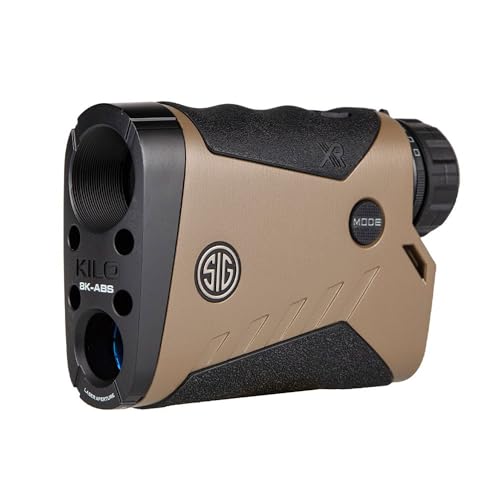
Sig Sauer KILO8K-ABS Gen II 7x25
Applied Ballistics Elite in a 7.5 oz handheld: the lightest way to carry a full solver, and the only one here with an active-matrix display.
$1,499.99 10% off
Price as of November 12, 2026. #ad How we earn
"Applied Ballistics" is not a category of rangefinder. It is a specific firing-solution engine licensed from Applied Ballistics LLC, and it either is or is not in the unit you are holding. That matters because the shelf is full of rangefinders sold as ballistic rangefinders that run something else: Vortex's own Amazon listing for the Impact 4000 describes an "On-Board GeoBallistics Solver", Leupold's TBR/W returns a true ballistic range and a holdover rather than a full solution, and Bushnell's ARC returns a corrected horizontal distance. Those are all useful. None of them is Applied Ballistics, and if you searched this phrase, telling them apart is the job.
What Applied Ballistics actually is, and what it is not
A ballistic solver takes a measured distance and turns it into a point of aim. To do that honestly it needs your projectile's drag behavior, your muzzle velocity, your zero range, your sight height above bore, the angle to the target, and ideally the air the bullet is flying through - temperature, pressure, humidity. Applied Ballistics is the solver that ships with a bullet library already measured: the AB bullet database, which stores drag data for a very large number of specific factory and match projectiles rather than approximating them.
It ships in two tiers, and the difference is the single most useful thing to understand before spending money here. Elite carries the complete AB bullet database plus custom drag curves - a measured drag profile for a specific bullet rather than a standard G1 or G7 curve scaled to fit. Ultralite carries the AB bullet database and the solver, without the custom drag curve layer. For a hunter shooting inside roughly 700 yards the two will hand you the same hold. Past the transonic region, where a standard drag model starts to diverge from what the bullet is really doing, Elite is the one that stays honest.
What it is not: a replacement for setting the thing up. Every unit on this page returns a confidently wrong answer if you enter the wrong sight height, and a confidently wrong hold is worse than an honest distance, because you will trust it. If you are not going to spend an evening at a bench with the manual and your load data, buy angle compensation and stop - the best angle-compensating rangefinders is the page for that, and it will cost you a fifth as much.
How we ranked these
Scored against the published rangefinder rubric on how we review, with the weighting pointed at the one thing this query is really asking: does the unit run a licensed Applied Ballistics solver, and what does the rest of the unit do with the answer?
- Does it actually run Applied Ballistics, and which tier? This is a yes/no row before it is a scoring row. Elite with custom drag curves, Ultralite with the AB database, or neither - and if neither, the unit is discussed in prose on this page but does not take a pick slot.
- Published game-animal range, not the headline number. The yardage in a model name is a reflective rating off a flat bright target. Only one unit here publishes a deer figure at all. Where a maker publishes none, we say so instead of guessing.
- Display type. A solver has to show elevation, wind and a heading, not just a distance. An active-matrix panel does that in one glance; a segmented readout cycles. This weighs more on a solver than on a plain rangefinder.
- Whether live environmental data is onboard. A solution computed from real temperature and pressure beats one computed from an app's last known conditions. Sensors, a compass and the connectivity to feed a Kestrel all count here.
- Sealing, stated in a rating. These are electronics you take into weather. IPX7 is submersion, IPX-4 is splash, and "waterproof" with no number is a word. We score what is published.
- Weight and whether you will carry it. 7.0 oz rides in a harness pouch. 32 oz rides on your neck. The best solver is the one that is on you when the animal is in front of you.
Quick picks
Ranked by the criteria published on how we review. Tap any row for the full write-up, or go straight to the current price.
| # | Product | Best for | Score | Price |
|---|---|---|---|---|
| 1 | Sig Sauer KILO8K-ABS Gen II 7x25Applied Ballistics Elite, the complete AB bullet database and custom drag curves, in a 7.5 oz handheld with a 304x256 active-matrix screen. | Best Applied Ballistics rangefinder overallA full Applied Ballistics solver you can carry | 9.8out of 10 | See today's price on the KILO8K-ABS Gen II 7x25$1,349.99 on Amazon $1,499.99 10% off |
| 2 | 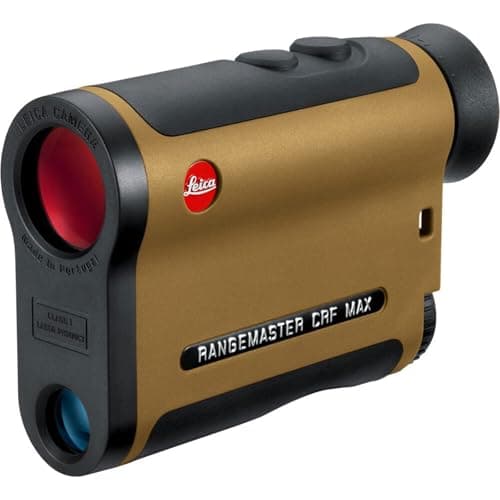 Leica Rangemaster CRF MaxApplied Ballistics Elite behind Leica optics, 0.3 second measuring time and 7.0 oz with the battery in - the lightest solver here. | Best glass with Applied BallisticsGlass quality and simplicity | 9.7out of 10 | |
| 3 | 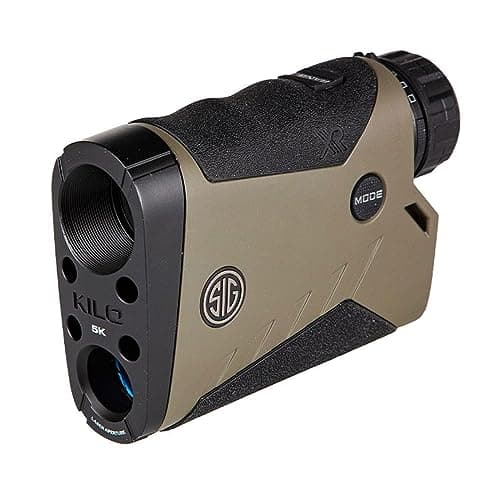 Sig Sauer KILO5KAB Ultralite, a published 2,000 yd rating on deer and IPX-4 sealing at 7.5 oz, for a fraction of what the Elite units cost. | Cheapest way into Applied Ballistics - and the budget pickLong-range ballistic solving | 9.4out of 10 | See today's price on the KILO5K$629.99 on Amazon $699.99 10% off |
| 4 | 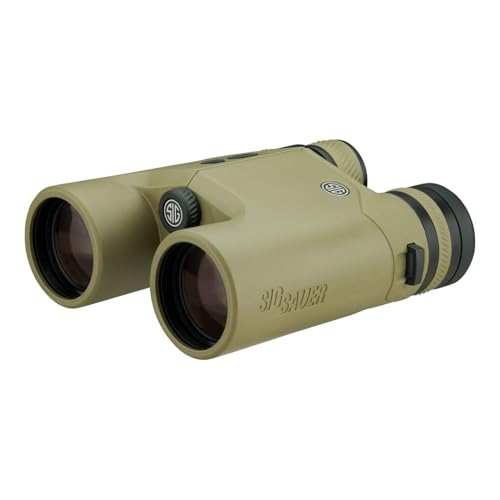 Sig Sauer KILO6K HDX 10x42Applied Ballistics Ultralite inside a 10x42 rangefinding binocular at 24.7 oz - the cheapest AB binocular on this site. | Best if you want the solver and a binocular in one bodyA solver and a binocular in one body | 9.3out of 10 | |
| 5 | 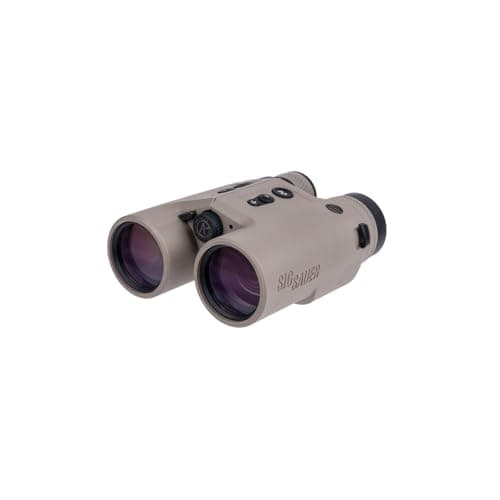 Sig Sauer KILO10K-ABS HD 10x42Applied Ballistics Elite with custom drag curves, a 10,000 yd laser, IPX7 sealing and 18 mm of eye relief in a 10x42 binocular. | Most capability available, at a price to matchMaximum capability | 9.6out of 10 | See today's price on the KILO10K-ABS HD 10x42Check price on Amazon No buyable offer at the last price check. |
Prices are pulled live from Amazon and were last checked November 12, 2026; if a figure cannot be verified the button reads "Check price" instead. Scores are our editorial judgment against the published ranking criteria, on our published 8.4 to 9.8 recommendation scale. #ad How we earn.
Which units have it, and which are something else
This is the table the page exists for. Read the solver column first; everything else on the shelf is a different product wearing a similar word.
| Unit | Solver | Published game-animal range | Display | Sealing | Weight |
|---|---|---|---|---|---|
| SIG KILO8K-ABS Gen II 7x25 | Applied Ballistics Elite | Not published | 304x256 active matrix OLED | Waterproof, no rating | 7.50 oz |
| Leica Rangemaster CRF Max | Applied Ballistics Elite | Not published | Not published | Not published | 7.0 oz |
| SIG KILO5K 7x25 | Applied Ballistics Ultralite | 2,000 yd on deer | Segmented OLED | IPX-4 | 7.5 oz |
| SIG KILO6K HDX 10x42 | Applied Ballistics Ultralite | Not published | Not published | Waterproof, no rating | 24.7 oz |
| SIG KILO10K-ABS HD Gen II 10x42 | Applied Ballistics Elite | Not published | Segmented OLED | IPX7 | 32 oz |
| Vortex Impact 4000 | GeoBallistics - not Applied Ballistics | Not published | In-display solution | Not published | 16.0 oz |
| Leupold RX-1400i TBR/W Gen 2 | TBR/W holdover - not a full solver | 900 yd on deer | Red TOLED | Not published | 5.1 oz |
The last two rows are the point of the table. Both are good units - the RX-1400i is this site's best-value pick in the whole category - and neither one runs Applied Ballistics. Note also which row publishes a deer figure: the cheapest AB unit here, and the non-AB Leupold.
Three things fall out of that table. First, the Elite units are sold on reflective headlines and publish no game-animal figure at all, while the cheapest Applied Ballistics unit on the page publishes all three target ratings. If a published deer number is what you want, price is not the axis you think it is.
Second, weight splits the group into two clean halves - roughly 7 oz for the handhelds and 25 to 32 oz for the binoculars - with nothing in between. That is the actual decision this page comes down to, and it is a decision about whether you already own glass, not about the solver.
Third, published sealing is almost random across the group. IPX7 on the most expensive unit, IPX-4 on the cheapest, and nothing at all on two of them. On a device that is useless when it is wet, that absence is worth noticing. Reading a spec sheet without being fooled covers why makers omit the rows they omit.
Do you need a solver at all?
Most hunters do not, and this page would rather say that than sell one. The honest test is a single question: at your longest realistic shot, does a wind call change your point of aim? If the answer is no - and inside roughly 400 yards with a modern cartridge it generally is - then a solver is buying you a number you would have held the same way anyway. What you need instead is angle compensation and a display you can read at last light, which is the whole argument of the best rangefinders for the money.
The second test is about you rather than the rifle: will you actually configure it? A solver needs your load, your measured muzzle velocity, your zero and your sight height entered before the season, plus a current atmospheric. A unit set up with a guess returns a hold with the same confident display as a unit set up properly, and you cannot tell them apart in the field. If that evening at the bench is not going to happen, the money is better spent on glass.
Where a solver genuinely earns its place: open-country rifle hunting past roughly 600 yards, where the elevation correction is large enough that a guess is a miss and the wind is doing something you have to account for. Steep country, where the angle correction and the ballistic correction compound. And anyone already running a Kestrel, because BDX-X and BDX 2.0 turn two devices into one workflow instead of two readouts you reconcile by hand.
Elite or Ultralite?
Buy Ultralite if your shooting lives inside roughly 700 yards. You get the real solver and the real AB bullet database, the environmental inputs and the device connectivity, and the hold it returns inside that band is the same hold Elite would return. The KILO5K is the cheapest route to it on this page and the only unit here that publishes a deer rating.
Buy Elite if you shoot past the transonic region, where standard drag models and the real bullet begin to disagree, or if you shoot a projectile whose custom drag curve exists and matters to you. That is a competition and long-range-practice requirement far more often than a hunting one. The best rangefinders for long-range shooting is the page that looks at this from the shooting side rather than the hunting side.
Who should buy what
- Buy the SIG KILO8K-ABS Gen II if you want Applied Ballistics Elite and you want it to weigh 7.5 oz. The active-matrix display is the best way to read a solution on this page.
- Buy the Leica Rangemaster CRF Max if the optic matters to you as much as the solution, and a 0.3 second measurement and 7.0 oz are worth paying for. Accept that there is no published game-animal figure.
- Buy the SIG KILO5K if you want a real Applied Ballistics solver at the lowest price here, with a published 2,000 yd deer rating and IPX-4 sealing. For most hunters reading this query, this is the right answer.
- Buy the SIG KILO6K HDX 10x42 if you do not already own binoculars and want the solver inside them. It is the cheapest AB binocular here and the lightest of the three binocular-format units.
- Buy the SIG KILO10K-ABS HD Gen II if you are a long-range competitor rather than a hunter, want Elite in a binocular, and want the only IPX7 sealing on the page.
- Buy none of these if your shots are inside 400 yards. The best hunting rangefinders is the page you want, and the unit it recommends costs a fifth of the cheapest one here.
The picks in full
$1,499.99 10% off
Price as of November 12, 2026. #ad How we earn
Sig Sauer KILO8K-ABS Gen II 7x25
Applied Ballistics Elite in a 7.5 oz handheld: the lightest way to carry a full solver, and the only one here with an active-matrix display.
| Magnification | 7x |
|---|---|
| Objective lens | 25 mm |
| Max distance (reflective) | 8,000 yd |
| Max range, trees / game | Not published in the dealer specification table |
| Ballistic solver | Applied Ballistics Elite (BDX Elite) |
| Display | 304 x 256 Active Matrix OLED |
| Reticle | Circle / Duplex / Box + Milling Grid |
| Eye relief | 16 mm |
| Field of view | 6.78 degrees |
| Diopter adjustment | -3 / +3 |
| Lens coating | SpectraCoat |
| Connectivity | Low energy / long range Bluetooth 5.x, multipoint |
| Battery | CR2 |
| Waterproof | Waterproof; no IPX rating published |
| Weight | 7.50 oz |
| Dimensions (L x W x H) | 4.40 x 1.30 x 3.0 in |
Specs verified 2026-11-09 from Sig Sauer's published specification. Exit pupil and twilight factor are computed, not quoted.
What it does well
- Applied Ballistics Elite with the complete AB bullet database and custom drag curves
- 7.5 oz, so the solver rides in a harness pouch rather than on your neck
- 304x256 active-matrix OLED - a real screen rather than a segmented readout
- 16 mm of eye relief and a 6.78 degree field, generous for a 7x25
- Bluetooth 5.x multipoint, so it links to a Kestrel or a Garmin
Where it gives ground
- The dealer specification table lists no tree or game-animal range figure, only the 8,000 yd reflective headline
- Listed as waterproof with no IPX rating published, so the sealing is unquantified
- A solver is worthless until you sit down and enter your load, zero and sight height
- One CR2 has to run a screen, a compass and three environmental sensors
Skip it if
You want a distance and a holdover and nothing else. A TBR/W unit does that for a fifth of the money.
How this score breaks down
- Ranging accuracy and range on game (weight 5)9.2
- Angle compensation implementation (weight 5)9.5
- Display legibility in low light (weight 3)9.6
- Speed and scan mode (weight 3)9.0
- One-handed ergonomics (weight 2)9.2
Criterion scores are on the 0-10 rubric scale. Their weighted mean is 9.3, which maps to 9.8 on our published recommendation scale of 8.4 to 9.8 - the band of products we are willing to recommend at all. The weights, the definitions and the mapping are all published, so any score here can be checked against our own rules. These are editorial judgments from published specifications, computed optical arithmetic and documented consensus.
This is the unit to buy if what you want is the full solver and you want to carry it in a harness pouch rather than on your neck. SIG publishes 7x magnification on a 25 mm objective, an 8,000 yd reflective maximum, a 304 by 256 active-matrix OLED display, a Circle / Duplex / Box + Milling Grid reticle set, 16 mm of eye relief, a 6.78 degree field, a minus-three to plus-three diopter, SpectraCoat lens coatings, low-energy long-range Bluetooth 5.x with multipoint connections, one CR2 cell, and 7.50 oz in a 4.40 by 1.30 by 3.0 in body. The solver is Applied Ballistics Elite, which is the full-fat tier: the complete AB bullet database plus custom drag curves rather than a G1/G7 approximation.
Two of those rows are the reason it leads the page. The first is 7.50 oz. Every other way to get Applied Ballistics Elite on this site weighs either 7.0 oz (the Leica, which is a smaller optic with a shorter laser) or 32 oz (the KILO10K binocular). A solver that lives in a chest pouch gets used on the animal in front of you; one that is heavy enough to leave in the truck does not. The second is the display. A 304 by 256 active-matrix panel is a real screen, which matters specifically on a solver, because a solver has to show you more than a number - elevation, wind, a compass heading - and a segmented readout has to blink those at you one at a time.
The honest cons. The dealer specification table lists only the 8,000 yd reflective headline - no tree figure and no game-animal figure - so there is no published deer number to plan against, and reflective ratings on a dark wet animal typically fall to between a third and two thirds of the headline. It is listed as waterproof with no IPX rating published, which is a phrase rather than a specification; the KILO10K below publishes IPX7 and the KILO5K publishes IPX-4, so SIG clearly can state one when it wants to. One CR2 has to run a screen, a digital compass and three environmental sensors. And the solver itself is worth nothing at all until you sit down at a bench with your load, your zero and your sight height and enter them properly - which is the real cost of this entire category. How accurate are rangefinders is the page on what the numbers mean once you have them.
Price as of November 12, 2026. #ad How we earn
Leica Rangemaster CRF Max
Leica's optical quality with Applied Ballistics Elite on board, in a 7 oz body - the lightest unit on this site that ranges past 3,000 yards.
| Magnification | 7x |
|---|---|
| Front lens diameter | 24 mm |
| Measuring range | 10 to approx. 3,700 yd / 3,400 m |
| Measuring time | max. 0.3 sec |
| Battery lifetime | approx. 1,700 measurements at 68 °F |
| Weight | approx. 7.0 oz / 199 g with battery |
| Dimensions | 4.4 x 3.1 x 1.4 in |
Specs verified 2026-10-26 from Leica's published specification. Exit pupil and twilight factor are computed, not quoted.
What it does well
- Leica glass quality in a compact monocular body
- 7.0 oz including battery, the lightest long-range unit here
- 0.3 second measuring time
- Applied Ballistics Elite, Bluetooth and GPS on board
Where it gives ground
- Leica publishes one maximum-range figure and no game-animal rating, so there is no deer number to plan against
- Expensive for its feature set relative to Sig
- Roughly 1,700 measurements per battery is modest
Skip it if
You want configurable ballistic profiles you can audit. Sig's BDX ecosystem is more transparent for the money.
How this score breaks down
- Ranging accuracy and range on game (weight 5)8.8
- Angle compensation implementation (weight 5)9.2
- Display legibility in low light (weight 3)8.6
- Speed and scan mode (weight 3)9.8
- One-handed ergonomics (weight 2)9.6
Criterion scores are on the 0-10 rubric scale. Their weighted mean is 9.1, which maps to 9.7 on our published recommendation scale of 8.4 to 9.8 - the band of products we are willing to recommend at all. The weights, the definitions and the mapping are all published, so any score here can be checked against our own rules. These are editorial judgments from published specifications, computed optical arithmetic and documented consensus.
The Rangemaster CRF Max is the answer when the thing you actually look through matters as much as the thing it tells you. Leica publishes 7x magnification, a 24 mm front lens, a 10 yd to approximately 3,700 yd / 3,400 m measuring range, a maximum 0.3 second measuring time, approximately 1,700 measurements per battery at 68 degrees Fahrenheit, approximately 7.0 oz / 199 g with the battery installed, and a 4.4 by 3.1 by 1.4 in body. Applied Ballistics Elite, Bluetooth and GPS are on board.
The 0.3 second figure is the one that changes how the unit feels in the hand, and it is the sort of specification that only a company with a reason to publish it bothers to publish. A fast measurement is not a luxury on a solver: the longer the unit takes, the more of your own heartbeat and wobble lands inside the reading. Combined with 7.0 oz including the cell, this is the only unit on the page you will genuinely forget you are carrying. The glass is the other half of the case. A rangefinder you can also glass a hillside through quietly earns its place in a pack on days you never press the button, which is a real argument for a 7x Leica over a 7x anything else.
The cons, and the first one is unusual enough that the site flags it everywhere this unit appears: Leica publishes one maximum-range figure and no game-animal rating at all, so performance on hide is inferred rather than published - there is no deer number to plan against. Roughly 1,700 measurements per battery is modest next to the KILO5K's published minimum of 4,000. It is expensive for its feature set relative to SIG, and the BDX ecosystem is more transparent for the money if you want configurable profiles you can audit. There is no published water rating either. Buy it for the optic and the speed; do not buy it expecting the longest laser here.
$699.99 10% off
Price as of November 12, 2026. #ad How we earn
Sig Sauer KILO5K
Applied Ballistics onboard and a 7x25 optic: it returns a firing solution rather than a distance, which is what long-range shooting actually needs.
| Magnification | 7x |
|---|---|
| Objective lens | 25 mm |
| Max range, reflective | Up to 5,000 yd |
| Max range, trees | Up to 2,500 yd |
| Max range, deer | Up to 2,000 yd |
| Eye relief | 15 mm minimum |
| Display | Segmented OLED |
| Reticle | Circle with milling grid |
| Laser divergence | 1.3 mrad |
| Battery | CR2, minimum 4,000 ranges |
| Waterproof | IPX-4 |
| Weight | 7.5 oz |
| Length | 4.4 in |
| Width | 1.3 in |
Specs verified 2026-10-26 from Sig Sauer's published specification. Exit pupil and twilight factor are computed, not quoted.
What it does well
- Onboard Applied Ballistics Ultralite solver with environmental sensors
- 2,000 yd published on deer, so a 1,000 yd reading is well inside its rating
- 7.5 oz - half the weight of the Maven RF.1
- Bluetooth profile sync and BDX-X support for Kestrel and Garmin
Where it gives ground
- More capability than most hunters will ever configure
- Menu depth is real - plan on reading the manual
- IPX-4 is splash resistance, not submersion - the weakest sealing rating of any unit here
- SIG does not publish a stated accuracy figure for this model
Skip it if
Your shots are inside 400 yards. You are paying for solving you will not use.
How this score breaks down
- Ranging accuracy and range on game (weight 5)8.6
- Angle compensation implementation (weight 5)9.0
- Display legibility in low light (weight 3)7.4
- Speed and scan mode (weight 3)8.4
- One-handed ergonomics (weight 2)9.2
Criterion scores are on the 0-10 rubric scale. Their weighted mean is 8.5, which maps to 9.4 on our published recommendation scale of 8.4 to 9.8 - the band of products we are willing to recommend at all. The weights, the definitions and the mapping are all published, so any score here can be checked against our own rules. These are editorial judgments from published specifications, computed optical arithmetic and documented consensus.
This is the budget pick on a page with no cheap options, and it is the unit most people reading this query should actually buy. SIG publishes 7x on a 25 mm objective, up to 5,000 yd reflective, up to 2,500 yd on trees and up to 2,000 yd on deer, a 15 mm minimum eye relief, a segmented OLED display with a circle and milling grid reticle, 1.3 mrad laser divergence, a CR2 good for a minimum of 4,000 ranges, IPX-4 sealing, 7.5 oz, and a 4.4 by 1.3 in body. The solver is Applied Ballistics Ultralite, with Bluetooth profile sync and BDX-X support for a Kestrel or a Garmin.
Read the third row again, because it is the one no other unit on this page gives you: a published 2,000 yd figure on deer. The two Elite-tier units above are sold on 8,000 and 3,700 yd headlines and neither publishes a game-animal number at all. A hunter planning a season wants the figure that predicts a reading on a wet brown animal in flat light, and here it is, stated by the manufacturer, at the lowest price in the group. The published minimum of 4,000 ranges per CR2 is more than twice the Leica's, and IPX-4 is at least a rating rather than an adjective.
The cons. Ultralite is the cut-down tier of the solver - it is genuine Applied Ballistics with the AB bullet database, but it is not Elite's custom drag curves, and if you are chasing a true transonic solution that difference is the whole reason to spend more. IPX-4 is splash resistance, not submersion, and it is the weakest sealing figure of any unit here. SIG publishes no stated accuracy figure for this model, which is a meaningful omission next to Maven's published band. The menu depth is real - plan on reading the manual. And this is still far more capability than a hunter whose shots land inside 400 yards will ever configure. The full SIG KILO5K review is the detail, and the KILO5K against the Leupold RX-1400i is the page to read if you are not sure you need a solver at all.
Price as of November 12, 2026. #ad How we earn
Sig Sauer KILO6K HDX 10x42
A 10x42 rangefinding binocular with an Applied Ballistics solver inside it - the cheapest way on this site to get both in one body.
| Magnification | 10x |
|---|---|
| Objective lens | 42 mm |
| Ballistic solver | Applied Ballistics Ultralight, complete AB bullet database |
| Ranging modes | BDX-U; BDX 2.0 enabled |
| Max range, reflective / trees / game | Not published in the dealer specification table |
| Eye relief | 15.5 mm |
| Lens coating | SpectraCoat |
| Battery | CR2 |
| Waterproof | Yes (no IPX figure published) |
| Weight | 24.7 oz |
| Length | 5.24 in |
| Exit pupil (computed) | 4.2 mm |
| Twilight factor (computed) | 20.5 |
Specs verified 2026-11-09 from Sig Sauer's published specification. Exit pupil and twilight factor are computed, not quoted.
What it does well
- Applied Ballistics Ultralight with the complete AB bullet database, at the lowest price of any AB unit here
- One optic instead of a binocular plus a handheld
- 24.7 oz, lighter than most rangefinding binoculars
- BDX 2.0 links to a Kestrel, a Garmin, onX Hunt and BaseMap
- Onboard temperature, pressure and humidity sensors
Where it gives ground
- The dealer specification table publishes no reflective, tree or game-animal range figure at all
- Listed only as waterproof, with an IPX4 splash rating reported elsewhere rather than published in the spec table
- Ultralight is the cut-down AB solver, not the Elite version
- 24.7 oz is still five times a pocket handheld
- If the electronics die you lose the binocular with them
Skip it if
You already own binoculars you like. A handheld solver costs less and weighs a third as much.
How this score breaks down
- Ranging accuracy and range on game (weight 5)8.4
- Angle compensation implementation (weight 5)8.8
- Display legibility in low light (weight 3)8.0
- Speed and scan mode (weight 3)8.4
- One-handed ergonomics (weight 2)7.2
Criterion scores are on the 0-10 rubric scale. Their weighted mean is 8.3, which maps to 9.3 on our published recommendation scale of 8.4 to 9.8 - the band of products we are willing to recommend at all. The weights, the definitions and the mapping are all published, so any score here can be checked against our own rules. These are editorial judgments from published specifications, computed optical arithmetic and documented consensus.
Everything above assumes you already own binoculars you like. If you do not, the arithmetic changes, and this is the unit that exposes it. The dealer specification table publishes 10x magnification on a 42 mm objective, 15.5 mm of eye relief, SpectraCoat coatings, a 5.24 in length, 24.7 oz, one CR2 cell, and a waterproof body. The solver is Applied Ballistics Ultralite with the complete AB bullet database, with BDX-U ranging, BDX 2.0 connectivity to a Kestrel or a Garmin, waypoint dropping through onX Hunt and BaseMap, and onboard temperature, pressure and humidity sensors. Computed from the optical figures: a 4.2 mm exit pupil and a twilight factor of 20.5.
Two things make it the pick in this slot. It is the least expensive Applied Ballistics unit of any kind on this site that also replaces your binocular, and at 24.7 oz it is lighter than most rangefinding binoculars - the KILO10K below is 32 oz and the Vortex Fury HD 5000 is 32.3 oz. The onboard environmental sensors matter more here than the spec sheet suggests: a solver fed live temperature and pressure returns a different and better answer than one fed last week's numbers, and that is the practical gap between an Ultralite unit with sensors and a phone app.
The cons are substantial and you should weigh them. The dealer specification table publishes no reflective, tree or game-animal range figure at all - the "6K" in the name is a model name, not a verified rating, and this page will not treat it as one. Sealing is listed only as waterproof; an IPX4 figure is reported elsewhere but is not in the spec table, so treat it as splash rather than submersion. Ultralite is the cut-down solver tier. 24.7 oz is still five times a pocket handheld, it rides on your neck all day, and if the electronics fail you lose the binocular with them and cannot send half of it in for service. Rangefinder vs rangefinding binoculars is the decision page.
No buyable offer at the last price check.
Prices change; we show only live figures. #ad How we earn
Sig Sauer KILO10K-ABS HD 10x42
Applied Ballistics Elite, onboard environmental sensors and a 10,000 yard laser: the ceiling of what this category currently does.
| Magnification | 10x |
|---|---|
| Objective lens | 42 mm |
| Max distance | 10,000 yd |
| Display | Segmented OLED |
| Reticle | Circle / Duplex / Box + Milling Grid |
| Ballistic solver | Applied Ballistics Elite, complete AB bullet database and custom drag curves |
| Eye relief | 18 mm |
| Field of view | 6.10 degrees |
| Battery | CR2 |
| Waterproof | IPX7 |
| Weight | 32 oz |
| Dimensions (L x W x H) | 5.70 x 5.0 x 2.50 in |
| Exit pupil (computed) | 4.2 mm |
| Twilight factor (computed) | 20.5 |
Specs verified 2026-11-09 from Sig Sauer's published specification. Exit pupil and twilight factor are computed, not quoted.
What it does well
- Applied Ballistics Elite with the complete AB bullet database and custom drag curves
- Laser reach far exceeds any hunting need
- IPX7 sealing, the only submersion rating of any SIG unit here
- Excellent glass independent of the electronics
Where it gives ground
- Priced like a rifle and a scope together
- 32 oz on a harness all day
- Complexity is a liability in the dark
- SIG publishes no game-animal range figure in the dealer specification table
Skip it if
You are a hunter rather than a long-range competitor.
How this score breaks down
- Ranging accuracy and range on game (weight 5)9.6
- Angle compensation implementation (weight 5)9.5
- Display legibility in low light (weight 3)8.8
- Speed and scan mode (weight 3)9.0
- One-handed ergonomics (weight 2)6.4
Criterion scores are on the 0-10 rubric scale. Their weighted mean is 9.0, which maps to 9.6 on our published recommendation scale of 8.4 to 9.8 - the band of products we are willing to recommend at all. The weights, the definitions and the mapping are all published, so any score here can be checked against our own rules. These are editorial judgments from published specifications, computed optical arithmetic and documented consensus.
This is the ceiling of what the category currently does, and it is worth knowing exactly what the ceiling consists of. The dealer specification table publishes 10x on a 42 mm objective, a 10,000 yd maximum distance, a segmented OLED display, the Circle / Duplex / Box + Milling Grid reticle set, 18 mm of eye relief - the most generous on this page - a 6.10 degree field, one CR2 cell, IPX7 waterproofing, 32 oz, and a 5.70 by 5.0 by 2.50 in body. The solver is Applied Ballistics Elite with the complete AB bullet database and custom drag curves. Computed: a 4.2 mm exit pupil and a twilight factor of 20.5.
IPX7 is the specification that genuinely separates it. It is the only submersion rating of any SIG unit on this site - the KILO5K publishes IPX-4 and the KILO8K and KILO6K publish no figure at all - and on a device whose whole value is electronic, sealing is not a nice-to-have. The 18 mm of eye relief is the other quiet win, because a rangefinding binocular is a binocular you glass through for hours, and eye relief is what decides whether that is comfortable in a hat and glasses.
The cons are blunt. It is priced like a rifle and a scope together, and it is roughly twice the KILO8K-ABS Gen II for a solver of the same tier. It is 32 oz on your neck all day. The dealer table publishes no game-animal figure, so the 10,000 yd headline tells you about a flat reflective panel and nothing about an elk at last light. And complexity is a real liability in the dark: the more the unit can do, the more there is to get wrong with cold hands. Honestly, for hunting rather than long-range competition the KILO8K-ABS Gen II gives you the same solver tier, two thirds less weight and a better display. The best 1,000-yard rangefinders is the page if your actual ceiling is four figures rather than five.
Our recommendation
If you take one thing from this page, take this.
Sig Sauer KILO8K-ABS Gen II 7x25
Best Applied Ballistics rangefinder overall
Applied Ballistics Elite, the complete AB bullet database and custom drag curves, in a 7.5 oz handheld with a 304x256 active-matrix screen.
$1,499.99 10% off
Leica Rangemaster CRF Max
Best glass with Applied Ballistics
Applied Ballistics Elite behind Leica optics, 0.3 second measuring time and 7.0 oz with the battery in - the lightest solver here.
Prices are pulled live and shown on each button. #ad How we earn.
Questions people actually ask
Which rangefinders have Applied Ballistics?
What is the difference between Applied Ballistics Elite and Ultralite?
Is Applied Ballistics worth it for hunting?
Do I need to set up a ballistic solver before I hunt?
Does a rangefinder with Applied Ballistics range further on animals?
What does BDX-X or BDX 2.0 do on these SIG units?
Is a rangefinding binocular with a solver better than a handheld plus binoculars?
Sources
- SIG KILO8K-ABS Gen II (SOK8K702) - SIG specification table as reproduced verbatim by a stocking dealer; sigsauer.com returns HTTP 403 to automated reads - read 2026-11-09
- SIG KILO10K-ABS HD Gen II (SOK10K12) - SIG specification table as reproduced verbatim by a stocking dealer - read 2026-11-09
- SIG KILO6K HDX 10x42 (SOK6K106) - SIG specification table and feature list as reproduced by a stocking dealer - read 2026-11-09
- SIG KILO5K 7x25 - SIG specification table as reproduced by a stocking dealer - read 2026-10-26
- Leica Rangemaster CRF Max - published technical specification - read 2026-10-26
- Vortex Impact 4000 - published specifications (the GeoBallistics solver named on the product listing) - read 2026-10-05
- Leupold RX-1400i TBR/W Gen 2 - published specifications - read 2026-10-26