We earn a commission if you buy through the links on this page, at no extra cost to you. It never changes which products we pick or how we rank them - read the full disclosure.
Reviewed here
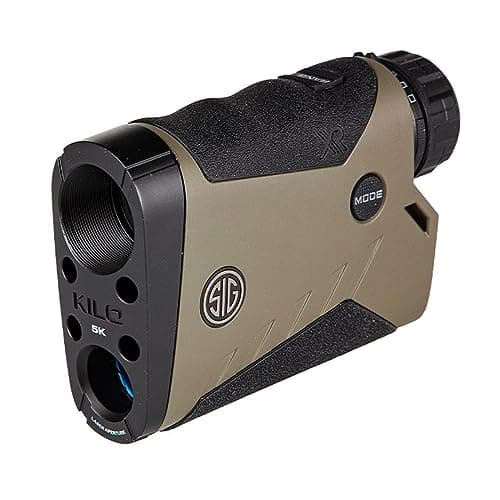
Sig Sauer KILO5K
Applied Ballistics onboard and a 7x25 optic: it returns a firing solution rather than a distance, which is what long-range shooting actually needs.
Price as of October 5, 2026. #ad How we earn
Calling this a rangefinder undersells and misdescribes it. It measures distance, and then it does ballistics - which is a different product category with a different question attached.
What onboard Applied Ballistics actually means
Applied Ballistics maintains a library of measured drag data for real bullets. Given your specific bullet, your muzzle velocity, your zero, and the current atmospheric conditions, it computes an elevation correction - and in the fuller implementations a wind hold.
Having that onboard means the unit does not hand you a distance to type into a phone app. You range, and it tells you what to dial. At 700 yards in wind, that is a meaningfully different experience from doing the lookup yourself.
The condition, which is the whole review
You have to configure it, and then verify it. That means knowing your actual muzzle velocity (chronographed, not the box figure), your actual bullet, and your verified zero - then entering them, syncing the profile, and confirming the solver's output against paper at distance.
An unconfigured solver returns answers based on defaults for a load you are not shooting, and it presents them with the same confidence as a correct answer. That is worse than a $200 unit returning a corrected distance whose limitations you understand, because you will trust it.
So the honest buying test is not your shot distances. It is whether you will spend an evening setting it up and a range session verifying it. If not, buy the Leupold.
What else to know
- The optic is a 7x25, which computes to a 3.57 mm exit pupil. Adequate in daylight, not something you would glass with. This is not an optic that replaces a monocular.
- Menu depth is real. More capability means more to navigate, and a deep menu is a liability with cold hands at 5am. Practice with it before the season.
- Laser reach far exceeds hunting needs. That is normal for the class and not a reason to pay more.
- Stated range is reflective, as always. On game, expect a fraction of it.
Who should buy it
Someone who shoots past about 400 yards, knows their load, and will do the setup. That is a real and specific group, and for them this is excellent. For a hunter shooting inside 400 yards, it is $500 of capability that never gets configured and a menu that slows them down. Where the line sits.
This unit and two alternatives
Price as of October 5, 2026. #ad How we earn
Sig Sauer KILO5K
Applied Ballistics onboard and a 7x25 optic: it returns a firing solution rather than a distance, which is what long-range shooting actually needs.
Magnification and objective are the manufacturer's own model designation; exit pupil and twilight factor are computed from them. We could not machine-read Sig Sauer's spec page, so the remaining published figures are not listed rather than guessed.
What it does well
- Onboard Applied Ballistics solver
- Ranges well past practical rifle distances
- Bluetooth profile sync
Where it gives ground
- More capability than most hunters will ever configure
- Menu depth is real - plan on reading the manual
Skip it if
Your shots are inside 400 yards. You are paying for solving you will not use.
How this score breaks down
- Ranging accuracy and range on game (weight 5)9.5
- Angle compensation implementation (weight 5)9.0
- Display legibility in low light (weight 3)8.5
- Speed and scan mode (weight 3)9.5
- One-handed ergonomics (weight 2)7.0
Weights and definitions are published on how we review. These are editorial judgments from published specs and documented consensus, not test results.
The computed exit pupil of a 7x25 is 3.57 mm, so the optic is adequate in daylight rather than something you would choose to glass with.
Price as of October 5, 2026. #ad How we earn
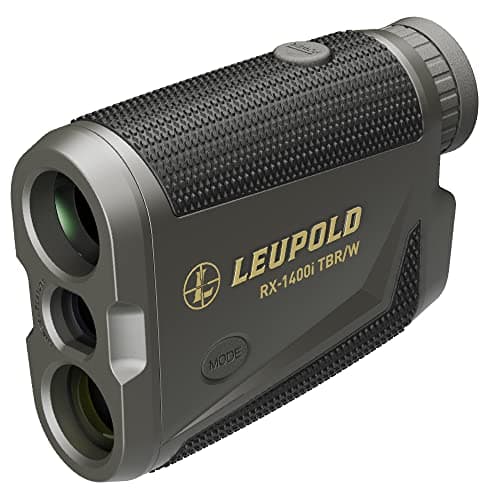
Leupold RX-1400i TBR/W Gen 2
TBR/W gives you the true horizontal distance and a holdover value in the same readout, which is the single most useful feature on a hunting rangefinder.
Magnification and objective are the manufacturer's own model designation; exit pupil and twilight factor are computed from them. We could not machine-read Leupold's spec page, so the remaining published figures are not listed rather than guessed.
What it does well
- TBR/W reports true ballistic range, not line of sight
- Fast, legible red OLED display in low light
- Compact enough for a harness pouch
Where it gives ground
- Stated ranges assume reflective targets, not deer hide
- No bluetooth or ballistic app integration
Skip it if
You need ranges past 1,000 yards on game - this is not that unit.
How this score breaks down
- Ranging accuracy and range on game (weight 5)8.5
- Angle compensation implementation (weight 5)9.5
- Display legibility in low light (weight 3)9.0
- Speed and scan mode (weight 3)8.5
- One-handed ergonomics (weight 2)9.0
Weights and definitions are published on how we review. These are editorial judgments from published specs and documented consensus, not test results.
Inside 400 yards there is nothing the KILO5K does that improves the outcome. Head to head.
Price as of October 5, 2026. #ad How we earn
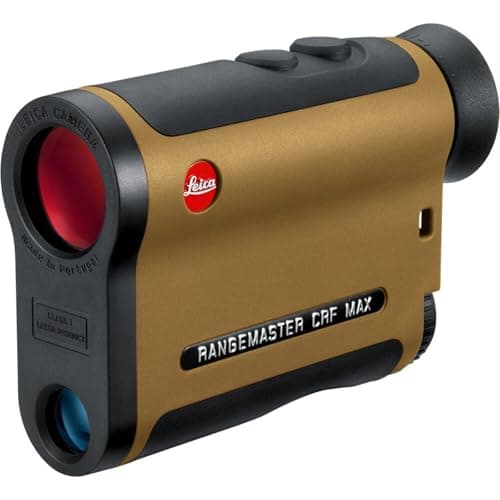
Leica Rangemaster CRF 2800.com
Leica's optical quality with a straightforward ballistic output: the choice for someone who wants precision without a menu tree.
Magnification and objective are the manufacturer's own model designation; exit pupil and twilight factor are computed from them. We could not machine-read Leica's spec page, so the remaining published figures are not listed rather than guessed.
What it does well
- Leica glass quality in a compact monocular body
- Simple, fast interface
- Reliable on dark hides at long distance
Where it gives ground
- Expensive for its feature set relative to Sig
- Limited app integration
Skip it if
You want configurable ballistic profiles. This is deliberately simpler.
How this score breaks down
- Ranging accuracy and range on game (weight 5)9.5
- Angle compensation implementation (weight 5)8.5
- Display legibility in low light (weight 3)9.0
- Speed and scan mode (weight 3)9.0
- One-handed ergonomics (weight 2)9.5
Weights and definitions are published on how we review. These are editorial judgments from published specs and documented consensus, not test results.
For someone who wants long-range precision without a menu tree. Deliberately less configurable, and better to look through.