We earn a commission if you buy through the links on this page, at no extra cost to you. It never changes which products we pick or how we rank them - read the full disclosure.
Our top pick
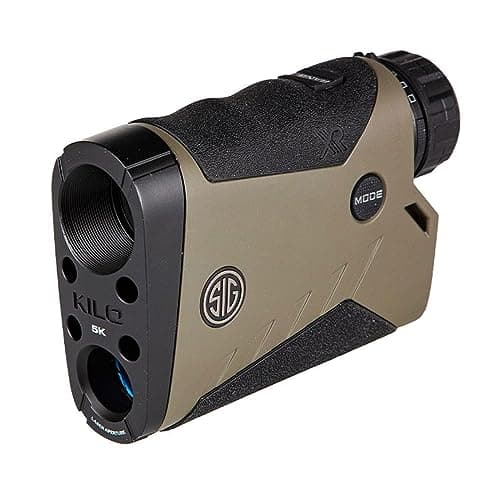
Sig Sauer KILO5K
Applied Ballistics onboard and a 7x25 optic: it returns a firing solution rather than a distance, which is what long-range shooting actually needs.
$699.99 10% off
Price as of November 12, 2026. #ad How we earn
The best rangefinder for long-range shooting is the Sig Sauer KILO5K, because it runs Applied Ballistics on board and returns a firing solution rather than a distance. If you want onboard temperature, pressure and humidity as well, the KILO10K-ABS HD does that in a 10x42 binocular; if you shoot from a bipod, the rail-mounted Vortex Impact 4000 ranges without breaking your position.
Why the laser number is the wrong thing to shop for
Every rangefinder advertises a maximum range, and every one of those numbers assumes a large, flat, highly reflective target - a building, a billboard, a rock face square to you. Published maximums are typically quoted in tiers for exactly this reason: reflective, tree, and deer. The deer figure is often less than half the headline.
For shooting, this matters less than it does for hunting, because steel and paper reflect well. What matters instead is everything that happens after the distance appears: the angle correction, the atmospheric inputs, and whether the device does the ballistics or hands them back to you.
Quick picks
Ranked by the criteria published on how we review. Tap any row for the full write-up, or go straight to the current price.
| # | Product | Best for | Score | Price |
|---|---|---|---|---|
| 1 | Sig Sauer KILO5KApplied Ballistics onboard, so it returns a firing solution rather than a distance. | Best overall for long rangeLong-range ballistic solving | 9.6out of 10 | See today's price on the KILO5K$629.99 on Amazon $699.99 10% off |
| 2 | 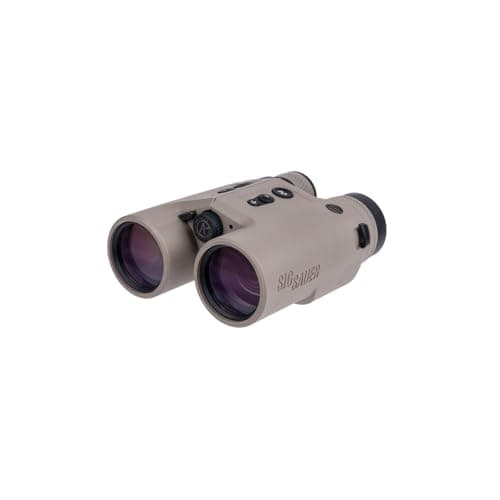 Sig Sauer KILO10K-ABS HD 10x42Applied Ballistics Elite with onboard environmental sensors, in a 10x42 binocular. | Maximum capabilityMaximum capability | 9.8out of 10 | See today's price on the KILO10K-ABS HD 10x42Check price on Amazon No buyable offer at the last price check. |
| 3 | 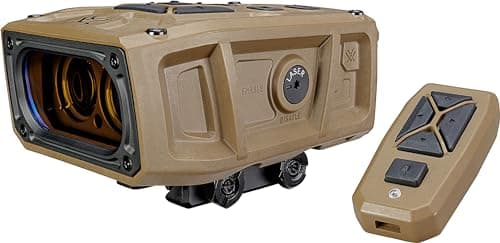 Vortex Impact 4000Ranges and solves without your hands leaving the rifle, 0.5 yd at 100 yd in Vortex's published spec. | Best rail-mounted optionRail-mounted ranging | 9.5out of 10 | |
| 4 | 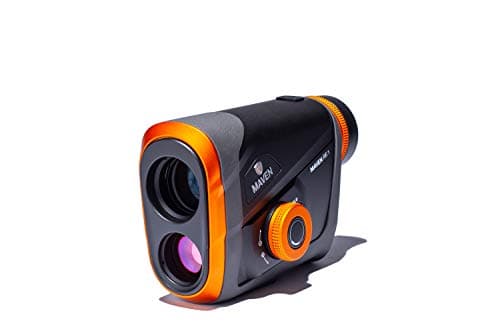 Maven RF.1Angle-compensated and ballistic modes with genuinely good optics in the housing. | Best glass in a handheldGlass quality in a rangefinder | 9.5out of 10 | |
| 5 | 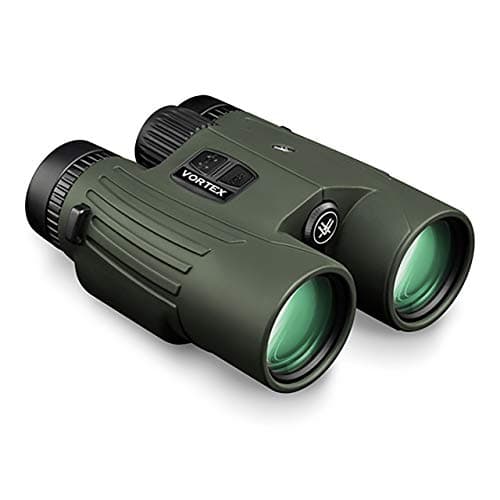 Vortex Fury HD 5000 10x4210x42 glass with HCD compensation and a laser far past any ethical shot distance. | Proven value in a binocularProven rangefinding binocular | 9.4out of 10 | See today's price on the Fury HD 5000 10x42$999.00 on Amazon $1,499.99 33% off |
Prices are pulled live from Amazon and were last checked November 12, 2026; if a figure cannot be verified the button reads "Check price" instead. Scores are our editorial judgment against the published ranking criteria, on our published 8.4 to 9.8 recommendation scale. #ad How we earn.
Distance, corrected distance, and a firing solution
These three outputs get used interchangeably in marketing and they are not the same thing. Knowing which one a unit gives you is the whole purchase decision.
| Output | What it is | What you still have to do |
|---|---|---|
| Line-of-sight distance | Raw measured distance to the target | Correct for angle, then solve ballistics yourself |
| Angle-compensated distance | The horizontal distance your bullet actually travels | Solve ballistics yourself |
| Holdover value | A correction expressed in inches, MOA or MIL | Dial or hold it |
| Full firing solution | Elevation correction from your own load profile and conditions | Dial it and read the wind |
Inside 300 yards the first row is fine. Past 500 the difference between the first row and the last row is measured in feet of vertical error.
Angle compensation still matters, and more than people think
Shooters often assume angle compensation is a treestand feature. It is not: a steep shot down a canyon at 700 yards has a horizontal component meaningfully shorter than the line of sight, and a solution calculated on the raw number puts the bullet high. Any device you buy for long-range work should be correcting for angle, and the implementation is worth understanding - see what angle compensation is and what TBR/W does.
What to prioritize, in order
- A ballistic output you trust. Onboard solver, or at minimum a holdover value from a profile you configured.
- Angle compensation. Non-negotiable past a few hundred yards on any sloping ground.
- Display legibility. An LCD readout vanishes against a shaded hillside. An illuminated display does not.
- Repeatability over headline range. A unit that returns the same number three times in a row is worth more than one that reaches further once.
- Glass, if you will spot through it. Most rangefinder optics are poor. A few are not.
And one thing not to prioritize: the maximum range figure. A rangefinder that ranges 5,000 yards on a billboard and 900 on a deer is a 900-yard rangefinder. Our general picks are in the best hunting rangefinders, and the accuracy question is unpacked in how accurate are rangefinders. The clearest example of that gap on this site is the Fury HD 5000: 5,000 yd on a reflective target against 1,600 yd on deer, both published by Vortex - see the review.
The picks in detail
$699.99 10% off
Price as of November 12, 2026. #ad How we earn
Sig Sauer KILO5K
Applied Ballistics onboard and a 7x25 optic: it returns a firing solution rather than a distance, which is what long-range shooting actually needs.
| Magnification | 7x |
|---|---|
| Objective lens | 25 mm |
| Max range, reflective | Up to 5,000 yd |
| Max range, trees | Up to 2,500 yd |
| Max range, deer | Up to 2,000 yd |
| Eye relief | 15 mm minimum |
| Display | Segmented OLED |
| Reticle | Circle with milling grid |
| Laser divergence | 1.3 mrad |
| Battery | CR2, minimum 4,000 ranges |
| Waterproof | IPX-4 |
| Weight | 7.5 oz |
| Length | 4.4 in |
| Width | 1.3 in |
Specs verified 2026-10-26 from Sig Sauer's published specification. Exit pupil and twilight factor are computed, not quoted.
What it does well
- Onboard Applied Ballistics Ultralite solver with environmental sensors
- 2,000 yd published on deer, so a 1,000 yd reading is well inside its rating
- 7.5 oz - half the weight of the Maven RF.1
- Bluetooth profile sync and BDX-X support for Kestrel and Garmin
Where it gives ground
- More capability than most hunters will ever configure
- Menu depth is real - plan on reading the manual
- IPX-4 is splash resistance, not submersion - the weakest sealing rating of any unit here
- SIG does not publish a stated accuracy figure for this model
Skip it if
Your shots are inside 400 yards. You are paying for solving you will not use.
How this score breaks down
- Ranging accuracy and range on game (weight 5)9.5
- Angle compensation implementation (weight 5)9.2
- Display legibility in low light (weight 3)8.7
- Speed and scan mode (weight 3)9.4
- One-handed ergonomics (weight 2)7.4
Criterion scores are on the 0-10 rubric scale. Their weighted mean is 9.0, which maps to 9.6 on our published recommendation scale of 8.4 to 9.8 - the band of products we are willing to recommend at all. The weights, the definitions and the mapping are all published, so any score here can be checked against our own rules. These are editorial judgments from published specifications, computed optical arithmetic and documented consensus.
This is the pick because of what it outputs. A conventional rangefinder hands you a number and leaves the ballistics to you, your phone and your memory of what the wind was doing. This one runs Applied Ballistics on board, takes your rifle and load profile, and returns the elevation correction - which is the figure you actually dial.
The 7x25 optic is secondary and adequate. Bluetooth profile sync means you configure the load on a phone at the bench rather than through a menu in the field, which is the right way round.
The honest warning is complexity. Menu depth here is real, and a device you have not configured properly is slower than no device at all. Set it up before the season, not on the mountain.
No buyable offer at the last price check.
Prices change; we show only live figures. #ad How we earn
Sig Sauer KILO10K-ABS HD 10x42
Applied Ballistics Elite, onboard environmental sensors and a 10,000 yard laser: the ceiling of what this category currently does.
| Magnification | 10x |
|---|---|
| Objective lens | 42 mm |
| Max distance | 10,000 yd |
| Display | Segmented OLED |
| Reticle | Circle / Duplex / Box + Milling Grid |
| Ballistic solver | Applied Ballistics Elite, complete AB bullet database and custom drag curves |
| Eye relief | 18 mm |
| Field of view | 6.10 degrees |
| Battery | CR2 |
| Waterproof | IPX7 |
| Weight | 32 oz |
| Dimensions (L x W x H) | 5.70 x 5.0 x 2.50 in |
| Exit pupil (computed) | 4.2 mm |
| Twilight factor (computed) | 20.5 |
Specs verified 2026-11-09 from Sig Sauer's published specification. Exit pupil and twilight factor are computed, not quoted.
What it does well
- Applied Ballistics Elite with the complete AB bullet database and custom drag curves
- Laser reach far exceeds any hunting need
- IPX7 sealing, the only submersion rating of any SIG unit here
- Excellent glass independent of the electronics
Where it gives ground
- Priced like a rifle and a scope together
- 32 oz on a harness all day
- Complexity is a liability in the dark
- SIG publishes no game-animal range figure in the dealer specification table
Skip it if
You are a hunter rather than a long-range competitor.
How this score breaks down
- Ranging accuracy and range on game (weight 5)10.0
- Angle compensation implementation (weight 5)9.8
- Display legibility in low light (weight 3)9.4
- Speed and scan mode (weight 3)9.3
- One-handed ergonomics (weight 2)7.2
Criterion scores are on the 0-10 rubric scale. Their weighted mean is 9.4, which maps to 9.8 on our published recommendation scale of 8.4 to 9.8 - the band of products we are willing to recommend at all. The weights, the definitions and the mapping are all published, so any score here can be checked against our own rules. These are editorial judgments from published specifications, computed optical arithmetic and documented consensus.
The feature that justifies this over the KILO5K is not the laser reach - no hunter needs 10,000 yards - it is the onboard environmentals. Temperature, pressure and humidity all change a long-range solution, and a device that reads them itself removes the step where you guess or forget.
Being a binocular rather than a handheld also means one optic instead of two on your chest, with genuinely good 10x42 glass independent of the electronics.
It is priced like a rifle and a scope together, and the complexity is a liability in the dark. This is a competitor's and dedicated long-range shooter's tool, not a general hunting rangefinder.
Price as of November 12, 2026. #ad How we earn
Vortex Impact 4000
A rail-mounted ballistic rangefinder that ranges and solves without you taking your hands off the rifle, accurate to 0.5 yd at 100 yd per Vortex's published spec.
| Stated accuracy | .5 yds @ 100 yds. |
|---|---|
| Weight | 16.0 oz. |
| Length | 4.6" |
| Height | 2.5" |
| Width | 3.2" |
Specs verified 2026-10-05 from Vortex's published specification. Exit pupil and twilight factor are computed, not quoted.
What it does well
- Ranges without breaking your position
- Published accuracy of 0.5 yd at 100 yd
- Integrates with ballistic apps
Where it gives ground
- Only useful on a rifle with rail space
- Adds 16 oz to the rifle
Skip it if
You hunt with a bow or still-hunt - a handheld unit is more use.
How this score breaks down
- Ranging accuracy and range on game (weight 5)9.5
- Angle compensation implementation (weight 5)9.0
- Display legibility in low light (weight 3)8.2
- Speed and scan mode (weight 3)9.3
- One-handed ergonomics (weight 2)6.7
Criterion scores are on the 0-10 rubric scale. Their weighted mean is 8.8, which maps to 9.5 on our published recommendation scale of 8.4 to 9.8 - the band of products we are willing to recommend at all. The weights, the definitions and the mapping are all published, so any score here can be checked against our own rules. These are editorial judgments from published specifications, computed optical arithmetic and documented consensus.
The problem this solves is positional. From a prone or bipod position, picking up a handheld rangefinder means breaking your position, ranging, putting it down and rebuilding - and in that sequence the animal often moves. A rail-mounted unit ranges from behind the rifle.
Vortex publishes 0.5 yd accuracy at 100 yd, and it integrates with ballistic apps for the solution side. It adds 16 oz to the rifle and it is only useful if you have rail space, which is the trade.
Price as of November 12, 2026. #ad How we earn
Maven RF.1
Maven's direct model buys you genuinely good glass in a rangefinder body, so the unit is usable as a monocular rather than just a distance readout.
| Magnification | 7x |
|---|---|
| Objective lens | 25 mm |
| Eye relief | 17 mm |
| Light transmission | 77 % |
| Max range, reflective | 4,500 yd |
| Max range, trees | 3,000 yd |
| Max range, deer | 2,700 yd |
| Minimum range | 5 yd |
| Accuracy, to 300 yd | 0.5 yd (0.1 yd display) |
| Accuracy, 300-2,000 yd | +/- 1 yd |
| Accuracy, 2,000-4,500 yd | +/- 3 yd |
| Angle modes | LOS / COMP |
| Brightness settings | 5 |
| Battery | CR2, over 3,500 range cycles |
| Waterproof | IPX7 |
| Weight | 10 oz with battery |
| Dimensions (W x H x D) | 4.6875 x 3.0625 x 1.875 in |
| Frame material | Magnesium / aluminum |
Specs verified 2026-10-26 from Maven's published specification. Exit pupil and twilight factor are computed, not quoted.
What it does well
- Optical quality well above typical rangefinder glass, with 77 percent published light transmission
- 2,700 yd published on deer - the longest game-animal rating of any handheld unit here
- Plus or minus 1 yd from 300 to 2,000 yd
- LOS and COMP angle modes with an obstruction filter
- Lifetime warranty, sold direct
Where it gives ground
- Amazon stock is intermittent because Maven sells direct
- Interface has a learning curve
- 10 oz is heavy for a handheld - twice the Leupold RX-1400i
- No onboard ballistic solver, so it returns a corrected distance and not a hold
Skip it if
You only need a number. The RX-1400i delivers that for a third of the price.
How this score breaks down
- Ranging accuracy and range on game (weight 5)9.3
- Angle compensation implementation (weight 5)8.7
- Display legibility in low light (weight 3)8.5
- Speed and scan mode (weight 3)8.7
- One-handed ergonomics (weight 2)7.8
Criterion scores are on the 0-10 rubric scale. Their weighted mean is 8.7, which maps to 9.5 on our published recommendation scale of 8.4 to 9.8 - the band of products we are willing to recommend at all. The weights, the definitions and the mapping are all published, so any score here can be checked against our own rules. These are editorial judgments from published specifications, computed optical arithmetic and documented consensus.
Long-range shooting involves a lot of looking at small things a long way away, and most rangefinder glass is an afterthought. Maven's is not: the optical quality here is well above the category norm, which means the unit is usable for spotting impacts and reading mirage rather than only for ranging.
Angle compensation and ballistic modes cover the correction side without the menu depth of the Sig units. Amazon stock is intermittent because Maven sells mostly direct, and the interface takes a session to learn.
$1,499.99 33% off
Price as of November 12, 2026. #ad How we earn
Vortex Fury HD 5000 10x42
The unit that made rangefinding binoculars mainstream: a credible 10x42 with a laser that reaches far past any ethical shot distance.
| Magnification | 10x |
|---|---|
| Objective lens | 42 mm |
| Eye relief | 16mm |
| Field of view | 321' @ 1000 yds |
| Angular field of view | 6.1º |
| Close focus | 18.5 ft. |
| Weight | 32.3 oz. |
| Height | 5.8" |
| Width | 5.0" |
Specs verified 2026-10-05 from Vortex's published specification. Exit pupil and twilight factor are computed, not quoted.
What it does well
- Good 10x42 glass with 16 mm eye relief, verified in Vortex's specs
- HCD angle compensation
- Ranges well beyond practical hunting distances
Where it gives ground
- 32.3 oz on a harness is a real weight penalty next to a 24.9 oz binocular
- Costs more than a Viper HD plus a good rangefinder
Skip it if
Weight is your binding constraint. Two lighter optics may carry better than one heavy one.
How this score breaks down
- Ranging accuracy and range on game (weight 5)9.0
- Angle compensation implementation (weight 5)8.6
- Display legibility in low light (weight 3)8.4
- Speed and scan mode (weight 3)8.7
- One-handed ergonomics (weight 2)7.1
Criterion scores are on the 0-10 rubric scale. Their weighted mean is 8.5, which maps to 9.4 on our published recommendation scale of 8.4 to 9.8 - the band of products we are willing to recommend at all. The weights, the definitions and the mapping are all published, so any score here can be checked against our own rules. These are editorial judgments from published specifications, computed optical arithmetic and documented consensus.
The unit that made rangefinding binoculars mainstream, and still the sensible entry point to the category for a shooter who wants one optic. HCD returns angle-compensated distance, 16 mm of eye relief in Vortex's published spec, and glass good enough to glass with.
What it does not do is solve for your load - you get a corrected distance, not an elevation correction. For shooting past 600 yards that means your phone or your turret chart is still part of the process.
Our recommendation
If you take one thing from this page, take this.
Sig Sauer KILO5K
Best overall for long range
Applied Ballistics onboard, so it returns a firing solution rather than a distance.
$699.99 10% off
Sig Sauer KILO10K-ABS HD 10x42
Maximum capability
Applied Ballistics Elite with onboard environmental sensors, in a 10x42 binocular.
No buyable offer at the last price check.
Prices are pulled live and shown on each button. #ad How we earn.
Questions people actually ask
What is the best rangefinder for long-range shooting?
Do I need a rangefinder with a ballistic solver?
How far can a hunting rangefinder actually range?
Is a rail-mounted rangefinder better than a handheld?
Sources
- Vortex Impact 4000 product specifications - read 2026-10-11
- Vortex Fury HD 5000 10x42 product specifications - read 2026-10-11