We earn a commission if you buy through the links on this page, at no extra cost to you. It never changes which products we pick or how we rank them - read the full disclosure.
Our top pick
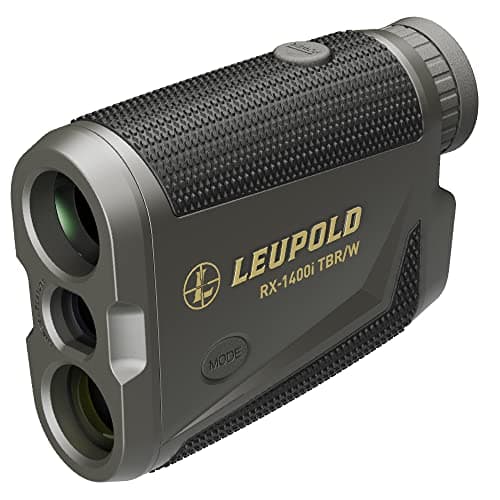
Leupold RX-1400i TBR/W Gen 2
TBR/W gives you the true horizontal distance and a holdover value in the same readout, which is the single most useful feature on a hunting rangefinder.
Price as of November 12, 2026. #ad How we earn
"Best for the money" is not the same question as "cheapest" or "best under $250", and shopping it as though it were is how people end up with a rangefinder that cost them $176 and cannot tell them the horizontal distance to a deer 30 yards below their stand. The useful question is where the price curve flattens: at what point does another dollar stop buying a capability you would actually use. On published specifications, that point arrives earlier than most buyers expect and then the curve stays flat for a long way.
What value means on a rangefinder, specifically
A rangefinder has an unusually short list of things it can be good at, which makes it one of the easier pieces of hunting gear to evaluate on value rather than vibe. It has to return a number on an animal at the distance you hunt. It has to tell you the horizontal distance rather than the line-of-sight distance, because that is the one your projectile cares about. You have to be able to read it when the light is going. And it has to be small enough that you carry it.
That is the whole list. Everything else - Bluetooth, app pairing, environmental sensors, live wind calls, a ballistic solver, a Kestrel link - is a fifth category that only has value if you shoot at distances where a wind call changes the point of aim. Most hunters do not, and the ones who do already know it. So the value calculation on this page weights the first four heavily and treats the fifth as a conditional.
How we ranked these
Scored against the published rangefinder rubric on how we review, with the weighting pointed at one question: what does each additional dollar buy that the step below it did not have?
- Published game-animal range, not the headline number. The yardage in the model name is a reflective rating off a flat bright target. The figure that predicts whether you get a reading on a wet brown animal in flat light is the deer rating - and where a maker does not publish one, we say so instead of guessing.
- Whether angle compensation is included at all. This is the single biggest value cliff in the category. Below roughly $100 it is often absent; just above it, it is standard. A unit without it is a different and lesser tool, not a cheaper version of the same tool. What angle compensation is is the prerequisite reading.
- Stated accuracy, and whether the maker states one. Plus or minus 0.3 yd to 150 yd is worth more to an archer than plus or minus 1 yd at 2,000 yd. A maker who publishes no accuracy figure at all has given you nothing to hold them to.
- Display legibility. An unlit LCD against dark timber at last light is the cheapest corner a manufacturer can cut and the one you will notice first. An illuminated or auto-inverting reticle is worth real money.
- Weight and one-handed operation, because the best-value rangefinder is one you have on you. A 5 oz unit lives in a harness pouch; a 10 oz unit gets left in the truck in August.
- What the next step up costs. A pick only earns a place here if the capability it adds is one a definable group of hunters needs. Where the next step adds only refinement, we say that too - twice on this page.
Quick picks
Ranked by the criteria published on how we review. Tap any row for the full write-up, or go straight to the current price.
| # | Product | Best for | Score | Price |
|---|---|---|---|---|
| 1 | Leupold RX-1400i TBR/W Gen 2Published 900 yd on deer, a true ballistic holdover rather than a raw distance, and 5.1 oz - at a price where nothing else offers all three. | Best rangefinder for the money, full stopBest rangefinder under $250 | 9.6out of 10 | |
| 2 | 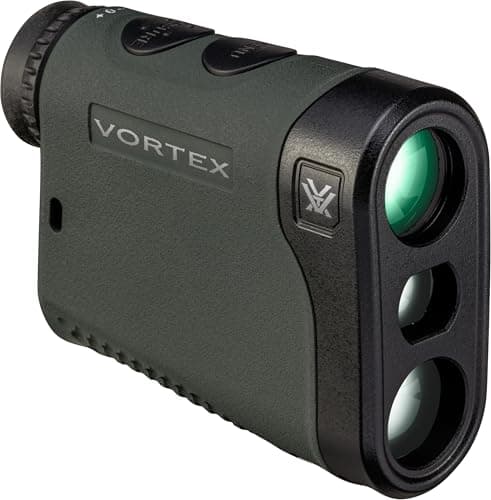 Vortex Triumph HD 850HCD angle compensation, a published 350 yd rating on deer, plus or minus 0.5 yd inside 100 yd and the VIP lifetime warranty - at the cheapest price on this page. | Best value at the entry pointBest value entry rangefinder | 9.1out of 10 | |
| 3 | 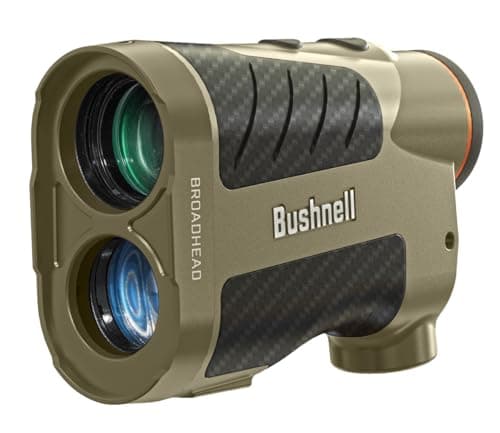 Bushnell BroadheadARC angle compensation and an auto-inverting ActivSync reticle in a 5.9 oz body, at roughly 60 percent of what the dedicated archery units cost. | Best value for bowhuntingBudget bow rangefinder | 9.3out of 10 | See today's price on the BroadheadCheck price on Amazon No buyable offer at the last price check. |
| 4 | 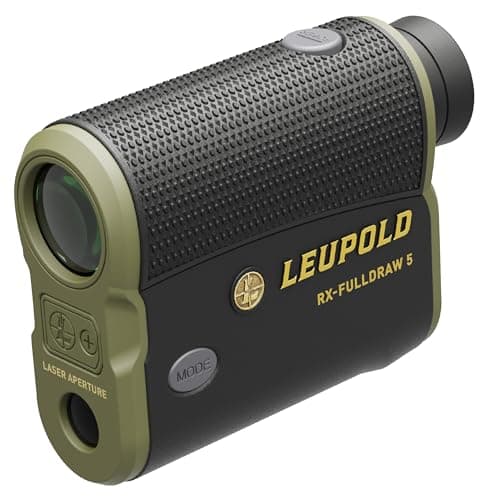 Leupold RX-FullDraw 5Arrow-specific ballistics from your own arrow weight and speed, plus Flightpath branch clearance, in 7.5 oz - for more than twice the Broadhead. | Best value for serious archeryBowhunting | 9.6out of 10 | |
| 5 | 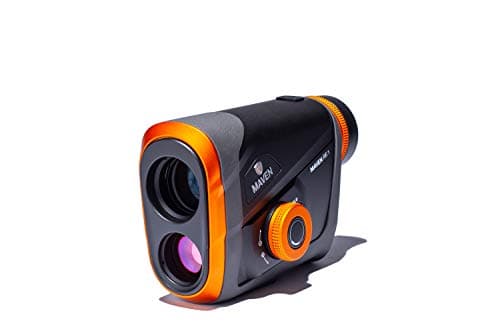 Maven RF.12,700 yd published on deer and plus or minus 1 yd from 300 to 2,000 yd - specifications that otherwise cost roughly twice as much. | Best value at the top of the marketGlass quality in a rangefinder | 9.5out of 10 | |
| 6 | 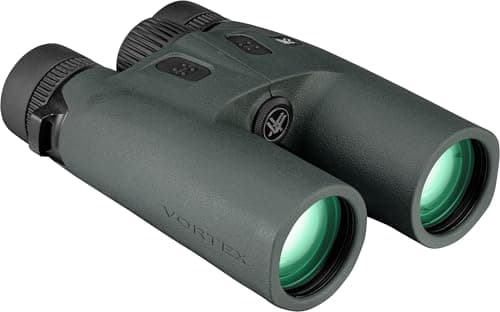 Vortex Ranger HD 3000 10x42A 10x42 binocular with a 1,500 yd deer-rated laser inside it, for roughly what a good 10x42 and a mid-tier handheld cost separately. | Best value if you need binoculars tooRangefinding binocular on a budget | 9.3out of 10 | See today's price on the Ranger HD 3000 10x42Check price on Amazon No buyable offer at the last price check. |
Prices are pulled live from Amazon and were last checked November 12, 2026; if a figure cannot be verified the button reads "Check price" instead. Scores are our editorial judgment against the published ranking criteria, on our published 8.4 to 9.8 recommendation scale. #ad How we earn.
The value curve, in published numbers
This is the table the page exists for. Read it down the "deer" column and then down the "angle compensation" column, and the shape of the curve is immediately visible.
| Unit | Deer / non-reflective | Angle compensation | Stated accuracy | Display | Weight |
|---|---|---|---|---|---|
| Vortex Triumph HD 850 | 350 yd | HCD, to +/- 89 degrees | +/- 0.5 yd to 100 yd | Black LCD | 4.6 oz |
| Leupold RX-1400i TBR/W Gen 2 | 900 yd | TBR/W + holdover | +/- 0.5 yd to 125 yd | Red TOLED | 5.1 oz |
| Bushnell Broadhead | 800 yd non-reflective | ARC, Bow mode | +/- 0.3 yd to 150 yd | ActivSync, auto-inverting | 5.9 oz |
| Leupold RX-FullDraw 5 | 900 yd | Arrow-matched + Flightpath | +/- 0.5 yd to 125 yd | Red OLED | 7.5 oz |
| Maven RF.1 | 2,700 yd | LOS / COMP | +/- 1 yd, 300-2,000 yd | Red, 5 brightness levels | 10 oz |
| Vortex Ranger HD 3000 10x42 | 1,500 yd | HCD | not published | Red OLED | 32.4 oz |
Every unit here publishes a game-animal figure, and the spread across them is the whole story: 350 yd at the entry price, 900 yd in the middle, 2,700 yd at the top. The deer column is what you are buying; the headline yardage on the box is not.
Three things fall out of that table. First, the capability jump between the Triumph HD 850 and the Leupold RX-1400i is large for a small amount of money: the published deer rating goes from 350 yd to 900 yd, HCD becomes a full ballistic holdover, and the black LCD becomes an illuminated red TOLED. That is the steep part of the curve, and it is short.
Second, from the RX-1400i to the RX-FullDraw 5 the deer rating does not move at all - both publish 900 yd - and the accuracy figures are identical. You are paying entirely for the arrow math and Flightpath. That is a real feature for a bowhunter and nothing whatsoever for a rifle hunter. The curve has gone flat.
Third, it only gets steep again at the Maven, and it gets steep because of one number: 2,700 yd on deer against 900. That is a threefold increase in published game-animal range, and it is the only thing on this page that justifies a large step in price on specifications alone rather than on use case.
Where the money genuinely goes
Up to roughly $100 you are buying a short-range tool, and one unit does it properly. Most of this shelf omits angle compensation and publishes no game-animal rating at all. The Vortex Triumph HD 850 does both - HCD angle compensation, 350 yd published on deer, plus or minus 0.5 yd inside 100 yd - and adds the VIP lifetime warranty. That makes the entry price a genuine starting point rather than a compromise, provided your distances stay inside about 300 yards.
Between roughly $100 and $250 the category transforms. Published deer ratings roughly triple, accuracy bands extend much further out, and displays become illuminated. This is where the Leupold RX-1400i sits, and it is why it wins this page. If your honest maximum range is inside 600 yards - which covers the overwhelming majority of American hunting - this band contains your rangefinder and spending more will not change your season. The best hunting rangefinders under $250 is the full field at this price.
Between roughly $250 and $500 you buy a specialization. The deer ratings barely move. What you get instead is arrow-specific math, a better display, a faster scan, or a tougher body. The RX-FullDraw 5 and the Bushnell Broadhead both live here and both are good value - for archers. For a rifle hunter this band is almost pure overspend. The best hunting rangefinders under $500 lays out the field.
Above roughly $500 you buy range and solvers. The deer figures finally move: 2,700 yd from Maven, 1,500 yd from the Ranger HD 3000's built-in laser, and ballistic solvers with environmental sensors appear. This band is good value for exactly two people - the hunter who genuinely ranges past 1,000 yards, and the hunter who needs a binocular at the same time. For everyone else it is the most expensive way to get a number you could have had for a quarter of the price.
Three ways people waste money on a rangefinder
Buying the headline yardage. A unit named for 1,400 yards reads 900 on deer, and its own maker publishes both figures. Paying for a 3,000 yd reflective rating when your longest honest shot is 300 yards buys you nothing at all. If a maker publishes no game-animal figure, treat the headline as a ceiling you will never see.
Buying a ballistic solver you will never configure. A solver needs your load, your zero, your sight height and ideally live air data to be worth anything, and it needs them entered correctly before the season. A hunter who has not done that gets a confidently wrong hold instead of an honest distance, which is worse than the cheap unit would have been. If you are not going to sit down with the manual, buy angle compensation and stop. How accurate are rangefinders sets out what the numbers mean once you have them.
Skipping angle compensation to save $40. This is the one that actually costs animals. From an elevated stand at close range the difference between line-of-sight and horizontal distance is small in yards and large in arrow trajectory; in steep country at longer range it is large in both. It is the cheapest capability in the category and the one that most changes outcomes. The best angle-compensating rangefinders is the dedicated page.
Who should buy what
- Buy the Leupold RX-1400i TBR/W Gen 2 if you want the best rangefinder for the money and are not going to overthink it. It is the end of the steep part of the curve and covers rifle and bow.
- Buy the Bushnell Broadhead if you hunt with a bow, want angle compensation and the auto-inverting reticle, and do not need pin-matched arrow math.
- Buy the Leupold RX-FullDraw 5 if archery is your main season and the branch-clearance question is a real one where you hunt. It is the only unit here that answers it.
- Buy the Maven RF.1 if you genuinely range animals past 1,000 yards and want the longest published deer rating and a stated accuracy band you can hold the maker to.
- Buy the Vortex Ranger HD 3000 if you need a binocular as well. Priced against buying both separately it is the best value on this page - and the worst if you already own glass you like.
- Buy the Vortex Triumph HD 850 if the budget is fixed at the entry price. It is the only unit this cheap that publishes a deer rating, includes angle compensation and is covered for life - its ceiling is 350 yd on deer.
- Buy nothing yet if you have not decided between glass and a laser. Binoculars or rangefinder first is the honest answer, and it is usually binoculars.
The picks in full
Price as of November 12, 2026. #ad How we earn
Leupold RX-1400i TBR/W Gen 2
TBR/W gives you the true horizontal distance and a holdover value in the same readout, which is the single most useful feature on a hunting rangefinder.
| Magnification | 5x |
|---|---|
| Objective lens | 21 mm |
| Eye relief | 18.3 mm |
| Field of view | 368 ft @ 1,000 yd |
| Angular field of view | 7º |
| Max range, reflective | 1,400 yd |
| Max range, trees | 1,200 yd |
| Max range, deer | 900 yd |
| Minimum range | 6 yd |
| Accuracy | +/- 0.5 yd to 125 yd; +/- 2 yd to 1,000 yd; +/- 0.5 % beyond |
| Display | Red TOLED, adjustable brightness |
| Ranging modes | TBR/W, Bow with Flightpath, Line of Sight |
| Battery | CR2, approx. 3,000 actuations |
| Weight | 5.1 oz |
| Dimensions (L x W x H) | 4 x 1.4 x 3 in |
| Laser classification | Class 3R |
Specs verified 2026-10-26 from Leupold's published specification. Exit pupil and twilight factor are computed, not quoted.
What it does well
- TBR/W reports true ballistic range, not line of sight
- Fast, legible red OLED display in low light
- Compact enough for a harness pouch
Where it gives ground
- Stated ranges assume reflective targets, not deer hide - Leupold publishes 1,400 yd reflective but only 900 yd on deer
- No bluetooth or ballistic app integration
- Accuracy loosens to plus or minus 2 yd out at 1,000 yd
Skip it if
You need ranges past 1,000 yards on game - this is not that unit.
How this score breaks down
- Ranging accuracy and range on game (weight 5)8.5
- Angle compensation implementation (weight 5)9.5
- Display legibility in low light (weight 3)9.0
- Speed and scan mode (weight 3)8.5
- One-handed ergonomics (weight 2)9.0
Criterion scores are on the 0-10 rubric scale. Their weighted mean is 8.9, which maps to 9.6 on our published recommendation scale of 8.4 to 9.8 - the band of products we are willing to recommend at all. The weights, the definitions and the mapping are all published, so any score here can be checked against our own rules. These are editorial judgments from published specifications, computed optical arithmetic and documented consensus.
If you read nothing else on this page: this is the unit where the price curve stops being steep. Below it you give up angle compensation, a legible display, or a published game-animal figure - usually all three. Above it you spend two to three times as much for capability that only pays if you shoot past about 600 yards or hunt with a bow. That makes it the answer to the question in the headline more cleanly than anything else we list.
The specification that earns it is TBR/W. Instead of returning the line-of-sight distance and leaving you to work out what a 25-degree downhill angle does to it, the unit returns the true ballistic range and a holdover value in the same readout. Leupold publishes 1,400 yd reflective, 1,200 yd on trees and 900 yd on deer; accuracy is plus or minus 0.5 yd inside 125 yd, loosening to plus or minus 2 yd by 1,000 yd, then 0.5 percent beyond. It has a red TOLED display with adjustable brightness, 368 ft of field at 1,000 yd, 18.3 mm of eye relief, and runs roughly 3,000 actuations on a single CR2. It weighs 5.1 oz and measures 4 by 1.4 by 3 in, so it disappears into a harness pouch. Bow mode with Flightpath is included, which means an archer does not strictly need to move up a tier.
The honest cons. The 900 yd deer figure is the real ceiling and it is 500 yards short of the number the model is named for - if you genuinely range past that, this is the wrong unit and no amount of value framing fixes it. Accuracy at 1,000 yd is plus or minus 2 yd, which is enough to matter once you convert a range into elevation. And there is no Bluetooth, no app, and no live environmental data, so it will never hand you a wind call. The full RX-1400i TBR/W Gen 2 review covers the interface, and what TBR/W actually does is the page to read if the acronym is new.
Price as of November 12, 2026. #ad How we earn
Vortex Triumph HD 850
The cheapest way onto the site: HCD angle compensation, a published 350 yd rating on deer and the VIP lifetime warranty, in a 4.6 oz body.
| Magnification | 5x |
|---|---|
| Objective lens | 21 mm |
| Optical system | HD, fully multi-coated |
| Eye relief | 13 mm |
| Field of view | 335 ft @ 1,000 yd |
| Angular field of view | 6.4 degrees |
| Max range, reflective | 850 yd |
| Max range, trees | 500 yd |
| Max range, deer | 350 yd |
| Minimum range | 6 yd |
| Accuracy, to 100 yd | +/- 0.5 yd |
| Accuracy, 100-850 yd | +/- 2 yd |
| Angle compensation | HCD; line of sight and scan modes; reads to +/- 89 degrees |
| Target modes | Normal, first, last |
| Display | Black LCD |
| Battery | CR2, 4,000+ range cycles |
| Weight | 4.6 oz (130 g) |
| Dimensions (L x W x H) | 3.8 x 3.1 x 1.4 in |
| Sealing | Waterproof and shockproof |
| Warranty | Vortex VIP lifetime, transferable |
Specs verified 2026-11-04 from Vortex's published specification. Exit pupil and twilight factor are computed, not quoted.
What it does well
- HCD angle compensation included, which most units at this price leave out
- Published figures for all three target types, including 350 yd on deer
- Plus or minus 0.5 yd inside 100 yd - the tightest short-range figure of any entry unit here
- 4.6 oz, the lightest rangefinder on the site
- Vortex VIP lifetime warranty, transferable and no-fault
- Waterproof and shockproof, with 4,000+ range cycles on one CR2
Where it gives ground
- 350 yd on deer is a genuine ceiling - it is not an open-country unit
- A black LCD rather than an illuminated display, so it is harder to read against dark timber
- 13 mm of eye relief is short if you range in glasses
Skip it if
You hunt open country past about 350 yards. Buy the RX-1400i TBR/W Gen 2 instead.
How this score breaks down
- Ranging accuracy and range on game (weight 5)7.0
- Angle compensation implementation (weight 5)9.0
- Display legibility in low light (weight 3)6.0
- Speed and scan mode (weight 3)7.5
- One-handed ergonomics (weight 2)9.5
Criterion scores are on the 0-10 rubric scale. Their weighted mean is 7.8, which maps to 9.1 on our published recommendation scale of 8.4 to 9.8 - the band of products we are willing to recommend at all. The weights, the definitions and the mapping are all published, so any score here can be checked against our own rules. These are editorial judgments from published specifications, computed optical arithmetic and documented consensus.
This is the unit that makes the bottom of the curve worth buying rather than merely cheap. Vortex publishes 5x on a 21 mm objective, 850 yd reflective, 500 yd on trees and 350 yd on deer, a 6 yd minimum, plus or minus 0.5 yd inside 100 yd loosening to plus or minus 2 yd beyond, 335 ft of field, HCD angle compensation reading to plus or minus 89 degrees, line-of-sight and scan modes, normal, first and last target modes, a CR2 good for over 4,000 range cycles, and 4.6 oz in a waterproof, shockproof body. It carries the Vortex VIP lifetime warranty.
Three of those rows are why it earns its place rather than merely occupying the price slot. It publishes all three target figures, so you can read the 350 yd deer ceiling instead of inferring it from a reflective headline. Its plus or minus 0.5 yd inside 100 yd is the tightest short-range accuracy figure of any entry unit here, and short range is where a treestand archer actually shoots. And the VIP lifetime warranty is the same no-fault, transferable cover Vortex puts on a flagship riflescope - at this price nothing else comes close, and it is why a cheap Vortex outlasts a cheap anything else.
Good to know: the published 350 yd figure on deer is the real ceiling, so this is a timber and field-edge unit rather than an open-country one, and the display is a black LCD rather than an illuminated readout - clear against a bright hillside, harder against dark timber at last light. Buy it when your honest maximum is inside 300 yards. The best hunting rangefinders under $100 is the fuller look at this tier.
No buyable offer at the last price check.
Prices change; we show only live figures. #ad How we earn
Bushnell Broadhead
Angle-compensated ranging aimed at archery distances, with ActivSync display that flips between dark and light to stay readable.
| Magnification | 6x |
|---|---|
| Objective lens | 24 mm |
| Max range, reflective | 1,500 yd |
| Max range, non-reflective | 800 yd |
| Stated accuracy | +/- 0.3 yd to 150 yd |
| Angle compensation | Yes (true horizontal distance in Bow mode) |
| Display | ActivSync - switches between black and illuminated red |
| Ranging modes | Bow, Scan, target priority |
| Battery | CR2 |
| Weight | 5.9 oz |
| Dimensions (L x W) | 4.3 x 1.57 in |
| Water resistance | Water resistant; the owner's manual states IPX4 |
| Max range, deer | not published |
Magnification and objective are the manufacturer's own model designation; exit pupil and twilight factor are computed from them. We could not machine-read Bushnell's spec page, so the remaining published figures are not listed rather than guessed.
What it does well
- ActivSync display adapts to background brightness
- Angle compensation at an archery-focused price
- Compact and one-hand operable
Where it gives ground
- Less precise than the FullDraw 5 on true arrow ballistics
- Stated maximum range is optimistic for game
Skip it if
You want arrow-specific holdover rather than corrected distance.
How this score breaks down
- Ranging accuracy and range on game (weight 5)7.9
- Angle compensation implementation (weight 5)8.9
- Display legibility in low light (weight 3)8.7
- Speed and scan mode (weight 3)8.1
- One-handed ergonomics (weight 2)8.7
Criterion scores are on the 0-10 rubric scale. Their weighted mean is 8.4, which maps to 9.3 on our published recommendation scale of 8.4 to 9.8 - the band of products we are willing to recommend at all. The weights, the definitions and the mapping are all published, so any score here can be checked against our own rules. These are editorial judgments from published specifications, computed optical arithmetic and documented consensus.
Archery is where rangefinder money gets spent badly, because the archery-specific units carry an archery-specific premium and most bowhunters do not need all of what that premium buys. This is the unit that short-circuits that. Bushnell publishes 6x on a 24 mm objective, 1,500 yd to a reflective target, 800 yd to a non-reflective one, plus or minus 0.3 yd accuracy out to 150 yd, a CR2 battery, 5.9 oz, and a 4.3 by 1.57 in body. Angle compensation is included and returns true horizontal distance in Bow mode.
Two of those figures deserve pulling out. The first is plus or minus 0.3 yd to 150 yd, which is the tightest short-range accuracy claim on this page - tighter than the Leupold's 0.5 yd to 125 yd - and short range is where an arrow actually gets launched. The second is ActivSync: the reticle flips between black and illuminated red depending on the brightness behind it, which solves the single most common complaint about budget rangefinders, namely that a red reticle washes out against a bright field and a black one vanishes against dark timber. At this price that is unusual and genuinely useful.
The cons. Bushnell publishes no game-animal figure at all - only reflective and non-reflective - so the 800 yd number is the closest thing you get and it is not a deer rating. There is no arrow-specific ballistics: you get a corrected horizontal distance, not a pin-matched holdover computed from your arrow weight and speed, which is exactly the thing the tier above does. Water resistance is IPX4 per the owner's manual, which is splash rather than submersion. And the 1,500 yd reflective headline is marketing on a unit whose honest working envelope is a few hundred yards on hide. The best rangefinder for bow hunting sets it against the dedicated archery units.
Price as of November 12, 2026. #ad How we earn
Leupold RX-FullDraw 5
Built specifically around arrow flight: it takes your arrow weight and speed and returns the pin-matched distance rather than a raw number.
| Magnification | 6x |
|---|---|
| Objective lens | 22 mm |
| Max range, reflective | 1,200 yd |
| Max range, trees | 1,100 yd |
| Max range, deer | 900 yd |
| Minimum range | 6 yd |
| Accuracy, to 125 yd | 0.5 yd |
| Accuracy, to 1,000 yd | 2 yd |
| Accuracy, beyond 1,000 yd | 0.5 % |
| Field of view | 315 ft @ 1,000 yd |
| Angular field of view | 6 degrees |
| Eye relief | 17 mm |
| Diopter range | -3 to +3 |
| Dimensions (L x W x H) | 3.8 x 1.4 x 3 in |
| Weight | 7.5 oz |
| Battery | CR2, more than 3,000 actuations |
| Display | Red OLED, adjustable brightness |
| Ranging modes | Line of Sight, Flightpath, Last Target |
| Laser classification | Class 1M |
Magnification and objective are the manufacturer's own model designation; exit pupil and twilight factor are computed from them. We could not machine-read Leupold's spec page, so the remaining published figures are not listed rather than guessed.
What it does well
- Archery-specific ballistics using your arrow weight and speed
- Flightpath shows whether your arrow clears a branch
- Fast ranging in Scan mode from a stand
Where it gives ground
- Overkill and over-priced if you only shoot a rifle
- Needs setup before the season, not in the stand
Skip it if
You hunt with a rifle. The RX-1400i does the job for less than half.
How this score breaks down
- Ranging accuracy and range on game (weight 5)9.0
- Angle compensation implementation (weight 5)9.5
- Display legibility in low light (weight 3)9.0
- Speed and scan mode (weight 3)8.5
- One-handed ergonomics (weight 2)8.5
Criterion scores are on the 0-10 rubric scale. Their weighted mean is 9.0, which maps to 9.6 on our published recommendation scale of 8.4 to 9.8 - the band of products we are willing to recommend at all. The weights, the definitions and the mapping are all published, so any score here can be checked against our own rules. These are editorial judgments from published specifications, computed optical arithmetic and documented consensus.
This is where the page changes character. Up to here each step bought a capability the step below genuinely lacked. From here on you are buying refinement, and whether it is good value depends entirely on what you do. For a bowhunter who shoots out to 60 or 70 yards and hunts thick timber, the RX-FullDraw 5 is worth the step. For anyone else it is not, and we will say so rather than ranking it higher because it costs more.
Leupold publishes 6x on a 22 mm objective, 1,200 yd reflective, 1,100 yd on trees and 900 yd on deer, a 6 yd minimum, 0.5 yd accuracy to 125 yd and 2 yd to 1,000 yd, 315 ft of field at 1,000 yd, 17 mm of eye relief, a red OLED with adjustable brightness, a CR2 good for over 3,000 actuations, and 7.5 oz in a 3.8 by 1.4 by 3 in body. What you are paying for is the DNA engine's archery math: you enter your arrow weight and speed and the unit returns the pin-matched distance, and Flightpath shows whether your arrow's apex clears the branch between you and the animal. That second feature is the one that sells it, because the branch problem is invisible through any other rangefinder.
The cons are about who you are, not about the unit. If you hunt with a rifle this is dead money - the RX-1400i returns the same 900 yd deer figure, the same angle correction and a rifle holdover for well under half the price. The arrow setup has to be entered at the bench before the season, not in the stand with a buck walking. At 7.5 oz it is nearly half again the RX-1400i's 5.1 oz. And Leupold publishes no water rating for it. The full RX-FullDraw 5 review is the detail.
Price as of November 12, 2026. #ad How we earn
Maven RF.1
Maven's direct model buys you genuinely good glass in a rangefinder body, so the unit is usable as a monocular rather than just a distance readout.
| Magnification | 7x |
|---|---|
| Objective lens | 25 mm |
| Eye relief | 17 mm |
| Light transmission | 77 % |
| Max range, reflective | 4,500 yd |
| Max range, trees | 3,000 yd |
| Max range, deer | 2,700 yd |
| Minimum range | 5 yd |
| Accuracy, to 300 yd | 0.5 yd (0.1 yd display) |
| Accuracy, 300-2,000 yd | +/- 1 yd |
| Accuracy, 2,000-4,500 yd | +/- 3 yd |
| Angle modes | LOS / COMP |
| Brightness settings | 5 |
| Battery | CR2, over 3,500 range cycles |
| Waterproof | IPX7 |
| Weight | 10 oz with battery |
| Dimensions (W x H x D) | 4.6875 x 3.0625 x 1.875 in |
| Frame material | Magnesium / aluminum |
Specs verified 2026-10-26 from Maven's published specification. Exit pupil and twilight factor are computed, not quoted.
What it does well
- Optical quality well above typical rangefinder glass, with 77 percent published light transmission
- 2,700 yd published on deer - the longest game-animal rating of any handheld unit here
- Plus or minus 1 yd from 300 to 2,000 yd
- LOS and COMP angle modes with an obstruction filter
- Lifetime warranty, sold direct
Where it gives ground
- Amazon stock is intermittent because Maven sells direct
- Interface has a learning curve
- 10 oz is heavy for a handheld - twice the Leupold RX-1400i
- No onboard ballistic solver, so it returns a corrected distance and not a hold
Skip it if
You only need a number. The RX-1400i delivers that for a third of the price.
How this score breaks down
- Ranging accuracy and range on game (weight 5)9.3
- Angle compensation implementation (weight 5)8.7
- Display legibility in low light (weight 3)8.5
- Speed and scan mode (weight 3)8.7
- One-handed ergonomics (weight 2)7.8
Criterion scores are on the 0-10 rubric scale. Their weighted mean is 8.7, which maps to 9.5 on our published recommendation scale of 8.4 to 9.8 - the band of products we are willing to recommend at all. The weights, the definitions and the mapping are all published, so any score here can be checked against our own rules. These are editorial judgments from published specifications, computed optical arithmetic and documented consensus.
Value does not stop existing at the top of a market; it just gets harder to see. The RF.1 is the clearest case on this site. Maven publishes 4,500 yd reflective, 3,000 yd on trees and 2,700 yd on deer - the longest published game-animal rating of any handheld unit we list - with 0.5 yd accuracy and a 0.1 yd display inside 300 yd, plus or minus 1 yd from 300 to 2,000 yd, and plus or minus 3 yd beyond. It publishes 77 percent light transmission on the 7x25 optic, 17 mm of eye relief, five brightness settings, LOS and COMP angle modes with an obstruction filter, IPX7 sealing and over 3,500 range cycles on a CR2. Those are flagship numbers, and the units that match them generally sit at roughly twice the price.
The reason it costs less than it should is the business model rather than the glass: Maven sells direct, skips the dealer margin, and spends the difference on the optic. The practical effect is that this is the only unit on this page you can also use as a monocular - 77 percent transmission through 7x25 is better glass than a rangefinder normally carries, and it means the unit earns a place in the pack even on days you never press the button.
The cons are real and two of them are about value. At 10 oz it is twice the weight of the Leupold RX-1400i, and on a harness strap all season you feel it. There is no onboard ballistic solver, so it returns a corrected distance rather than a hold - if you want a wind call this is the wrong class of tool and you want something with Applied Ballistics. The interface takes a session to learn. And because Maven sells direct, the Amazon listing comes and goes. Honestly: for the hunting most people do, the RX-1400i at a fraction of the money is the better buy, and that is what makes it the pick above. The RF.1 is the right answer only when you genuinely range past 1,000 yards. The full Maven RF.1 review and the best 1,000-yard rangefinders both go deeper.
No buyable offer at the last price check.
Prices change; we show only live figures. #ad How we earn
Vortex Ranger HD 3000 10x42
A 10x42 binocular with a 3,000 yard laser built in, which removes the one-handed juggle that every separate-rangefinder setup creates.
| Magnification | 10x |
|---|---|
| Objective lens | 42 mm |
| Max range, reflective | 3,000 yd |
| Max range, trees | 1,800 yd |
| Max range, deer | 1,500 yd |
| Minimum range | 6 yd |
| Angle compensation | HCD; Line of Sight mode also available |
| Field of view | 335 ft @ 1,000 yd |
| Angular field of view | 6.4 degrees |
| Eye relief | 17.0 mm |
| Close focus | 6.0 ft |
| Interpupillary distance | 55-74 mm |
| Display | Red OLED, optimized for low light |
| Battery | CR123 (included) |
| Weight | 32.4 oz |
| Dimensions (H x W) | 6.7 x 5.1 in |
| Sealing | Nitrogen purged, O-ring sealed - waterproof and fogproof |
| Stated accuracy | not published |
Magnification and objective are the manufacturer's own model designation; exit pupil and twilight factor are computed from them. We could not machine-read Vortex's spec page, so the remaining published figures are not listed rather than guessed.
What it does well
- One optic instead of two on your chest
- HCD angle compensation built in
- VIP warranty
Where it gives ground
- Heavier than a plain 10x42 on a harness all day
- If the electronics fail you lose the binocular too
Skip it if
You already own good binoculars you like - a separate rangefinder is cheaper.
How this score breaks down
- Ranging accuracy and range on game (weight 5)8.8
- Angle compensation implementation (weight 5)8.7
- Display legibility in low light (weight 3)8.1
- Speed and scan mode (weight 3)8.5
- One-handed ergonomics (weight 2)7.3
Criterion scores are on the 0-10 rubric scale. Their weighted mean is 8.4, which maps to 9.3 on our published recommendation scale of 8.4 to 9.8 - the band of products we are willing to recommend at all. The weights, the definitions and the mapping are all published, so any score here can be checked against our own rules. These are editorial judgments from published specifications, computed optical arithmetic and documented consensus.
Everything above assumes you already own binoculars you like. If you do not, the arithmetic changes completely, and this is the unit that exposes it. Vortex publishes 10x on a 42 mm objective, 3,000 yd reflective, 1,800 yd on trees and 1,500 yd on deer, a 6 yd minimum, HCD angle compensation with a Line of Sight mode, 335 ft of field at 1,000 yd, 17.0 mm of eye relief, 6.0 ft close focus, a 55-74 mm interpupillary range, a red OLED tuned for low light, a CR123, 32.4 oz, and a nitrogen-purged, O-ring-sealed body.
Price the alternative. A 10x42 worth owning plus a rangefinder with a published deer rating in the four figures is two purchases, two things on your chest, and the one-handed juggle of finding the animal again through a 7x monocular after you spotted it in a 10x binocular. This unit is one purchase, one strap, and the ranging reticle is already on the animal you are looking at. Its published 1,500 yd deer rating also sits comfortably above everything else here except the Maven, so you are not trading range for convenience.
The cons are the standard rangefinding-binocular cons and they are not small. 32.4 oz is six times the Leupold RX-1400i and you carry it on your neck all day, not in a pocket. If the electronics fail you lose the binocular with them, and you cannot send half of it in for service. Vortex publishes no stated accuracy figure for this model, which is a meaningful omission next to Maven's published band. And the glass, while good, is not the equal of a dedicated 10x42 at the same money. Rangefinder vs rangefinding binoculars is the decision page, and binoculars or rangefinder first is the one to read if you are buying your first of either.
Our recommendation
If you take one thing from this page, take this.
Leupold RX-1400i TBR/W Gen 2
Best rangefinder for the money, full stop
Published 900 yd on deer, a true ballistic holdover rather than a raw distance, and 5.1 oz - at a price where nothing else offers all three.
Vortex Triumph HD 850
Best value at the entry point
HCD angle compensation, a published 350 yd rating on deer, plus or minus 0.5 yd inside 100 yd and the VIP lifetime warranty - at the cheapest price on this page.
Prices are pulled live and shown on each button. #ad How we earn.
Questions people actually ask
What is the best rangefinder for the money?
How much should I spend on a hunting rangefinder?
Is a cheap rangefinder worth buying?
Do I really need angle compensation?
Is a rangefinding binocular better value than buying both separately?
Why do rangefinder yardage ratings differ so much from real performance?
Does a more expensive rangefinder range further on animals?
Sources
- Leupold RX-1400i TBR/W Gen 2 - published specifications - read 2026-10-26
- Leupold RX-FullDraw 5 - published specifications - read 2026-11-02
- Nikon PROSTAFF 1000 laser rangefinder - published specifications - read 2026-11-02
- Bushnell Broadhead (LA1500AD) - specification table as reproduced by a stocking dealer; Bushnell's own page rate-limits automated reads - read 2026-11-02
- Vortex Ranger HD 3000 10x42 - published specifications - read 2026-11-02
- Maven RF.1 7x25 - published specifications - read 2026-10-26
- Vortex Triumph HD 850 - published specification table as reproduced by a stocking dealer (Vortex's own model page returns 404 to automated reads) - read 2026-11-04