Yes, inside their limits. A budget rangefinder will measure a deer-sized target accurately out to roughly 300-400 yards in good light, and that covers most hunting in this country. What it gives up is reach on dark hides, display legibility in low light, and consistency in rain and brush - and if it also lacks angle compensation, it is the wrong tool from a treestand at any price.
What a cheap rangefinder does well
Laser ranging is a mature technology and the basic measurement is not where manufacturers save money. A budget unit's stated accuracy - typically about a yard at 100 yards - is usually honest, and for a shot inside 300 yards on a clear morning it will give you the same number a unit costing five times as much gives you.
It will also be small, light and simple, which matters more than people admit. The cheap rangefinder in your harness pouch gets used; the expensive one in the truck does not.
The three things it gives up
| What you give up | How it shows up in the field | When it matters |
|---|---|---|
| Reach on non-reflective targets | Returns nothing, or a wild number, on a dark hide past 250-300 yards | Open country, late light, dark-coated animals |
| Display legibility | LCD digits disappear against shaded timber at dusk | Every low-light hunt |
| Consistency in bad conditions | Reads the brush in front of the animal, or the rain | Rain, snow, heavy cover |
| Angle compensation (on the cheapest units) | Gives line-of-sight distance from height, which is longer than the shot | Any elevated stand - and this one is not a convenience |
The first three are tolerances you can hunt within if you know about them. The fourth is a correctness problem, and it is why the cheapest units with an angle mode are better buys than slightly cheaper ones without.
Quick picks
Ranked by the criteria published on how we review. Tap any row for the full write-up, or go straight to the current price.
| # | Product | Best for | Score | Price |
|---|---|---|---|---|
| 1 | 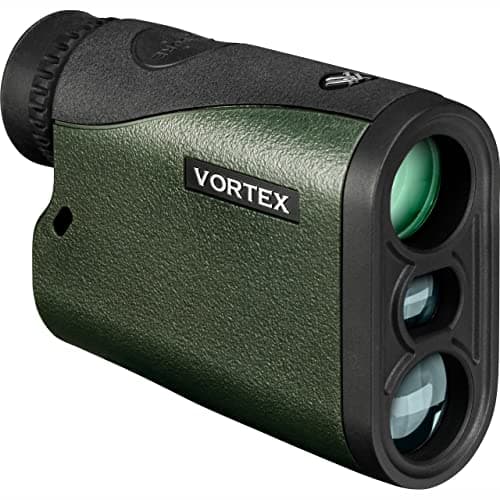 Vortex Crossfire HD 1400HCD angle compensation and VIP warranty - the budget unit with the feature that matters. | The cheap one worth buyingSimplest reliable ranging | 9.2out of 10 | See today's price on the Crossfire HD 1400Check price on Amazon No buyable offer at the last price check. |
| 2 | 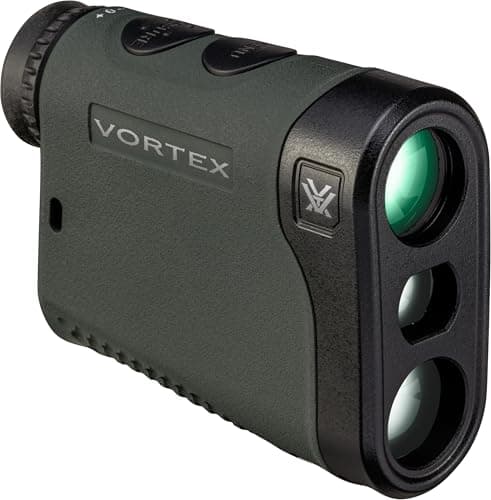 Vortex Triumph HD 850Published figures on all three target types, HCD angle compensation and the VIP lifetime warranty, for the least money on the site. | Best cheap rangefinder worth owningBest value entry rangefinder | 9.1out of 10 |
Prices are pulled live from Amazon and were last checked November 12, 2026; if a figure cannot be verified the button reads "Check price" instead. Scores are our editorial judgment against the published ranking criteria, on our published 8.4 to 9.8 recommendation scale. #ad How we earn.
The one feature worth paying up for
Angle compensation. From 20 feet up a tree with a deer at 25 horizontal yards, the line-of-sight distance your rangefinder measures is noticeably longer than the distance the arrow actually flies. A compensating unit returns the horizontal figure; a plain one returns the slope distance and leaves you to shoot over the animal's back.
This is the reason a budget unit with an angle mode is a genuinely good rangefinder and a slightly cheaper one without is a false economy. The mechanics are in what angle compensation is, and the treestand case specifically is in rangefinder for treestand hunting.
How to tell whether cheap is enough for you
- Write down your longest realistic shot. Not your best day at the range - the longest shot you would actually take at an animal.
- Halve the headline range on any unit you are considering. Published maximums assume reflective targets; the deer figure is the one you will live with.
- Decide whether you hunt from height. If yes, angle compensation is mandatory, not optional.
- Decide whether you hunt the last twenty minutes of light. If yes, pay for an illuminated display.
- Check the warranty. At this end of the market, an unconditional transferable warranty is worth more than any spec on the box.
The practical verdict
Buy the cheapest unit that has angle compensation and a warranty behind it, and spend what you saved on glass. A budget rangefinder plus good binoculars beats a premium rangefinder plus mediocre binoculars on every hunt, because you spend hours looking and seconds ranging. Our picks at this end of the market are in the best budget hunting rangefinders.
Questions people actually ask
Are cheap rangefinders accurate?
What is the cheapest rangefinder worth buying?
Do cheap rangefinders work on deer?
Should I spend more on a rangefinder or binoculars?
Sources
- Vortex Crossfire HD 1400 product specifications - read 2026-10-11