We earn a commission if you buy through the links on this page, at no extra cost to you. It never changes which products we pick or how we rank them - read the full disclosure.
Our top pick
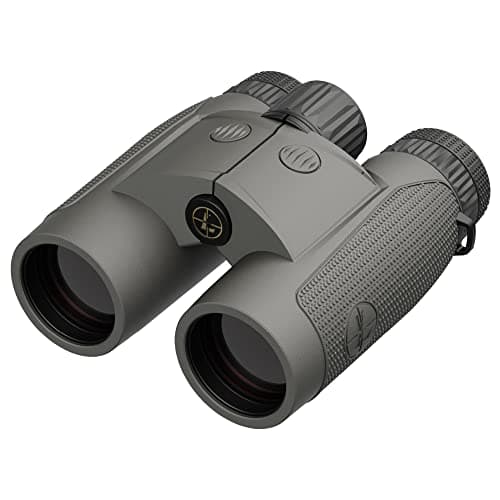
Leupold BX-4 Range HD TBR/W 10x42
Leupold's TBR/W output, which gives a holdover rather than a corrected distance, in a 10x42 binocular body.
$1,066.22 6% off
Price as of November 12, 2026. #ad How we earn
Under $1,000 is not just a bigger version of under $500. It is the first price band where the category changes shape: a rangefinding binocular becomes reachable, a licensed ballistic solver becomes reachable, and for the first time the question stops being "which rangefinder" and becomes "how many devices am I carrying". That is a genuinely different decision, and it is why this page exists alongside the best hunting rangefinders under $500.
What the extra $500 actually buys
Less than you would think, if you measure it the obvious way. The best unit under $250 publishes 900 yd on deer. This page's overall pick publishes 1,100 yd - a 200 yd improvement for several times the money. Spend about half the ceiling on a handheld instead and the Maven RF.1 publishes 2,700 yd on deer, which is a real and large improvement, but only for a hunter who genuinely ranges animals past 1,000 yards. That is a very small number of people.
What the band really buys is consolidation and computation. Consolidation: one body on your chest instead of a binocular and a laser, with the ranging reticle already on the animal you are looking at rather than requiring you to find it again through a 7x monocular. Computation: a solver with live environmental sensors that returns a point of aim rather than a distance. Both are worth real money to the right hunter and nothing at all to the wrong one, which is the whole job of this page.
How we ranked these
Scored against the published rangefinder rubric on how we review, with one extra question layered on top: for a buyer with $1,000 to spend, does this unit use the budget or merely consume it?
- Published game-animal range, not the headline. The yardage in a model name is a reflective rating off a flat bright target; the deer figure is what predicts a reading on a wet brown animal in flat light. Where a maker publishes none - and in this band two do not - we say so rather than guessing.
- Angle compensation, and what form it takes. A corrected horizontal distance is good. A true ballistic range with a holdover is better. A full solver is a different tool again. What angle compensation is is the prerequisite.
- Whether it replaces another optic. At this ceiling that is the central question. A rangefinding binocular that is also a binocular you would have bought anyway is using the budget; one that is a poor binocular with a laser in it is wasting it.
- Stated accuracy, and whether the maker states one. Maven publishes a banded accuracy figure out to 2,000 yd. Two units in this band publish none at all, which gives you nothing to hold them to.
- Weight, honestly accounted. Roughly 5 to 10 oz for a handheld against 24.7 to 39 oz for a binocular format. The second number lives on your neck for fourteen hours.
- Sealing, stated as a rating. IPX7 is submersion. "Waterproof" with no number is a phrase. At this price the rating should be published, and we note it when it is not.
Quick picks
Ranked by the criteria published on how we review. Tap any row for the full write-up, or go straight to the current price.
| # | Product | Best for | Score | Price |
|---|---|---|---|---|
| 1 | Leupold BX-4 Range HD TBR/W 10x421,100 yd published on deer, a TBR/W holdover and 334 ft of field with 17 mm of eye relief - a 10x42 worth glassing through that also ranges. | Best rangefinder under $1,000 overallTBR/W in a binocular | 9.6out of 10 | |
| 2 | 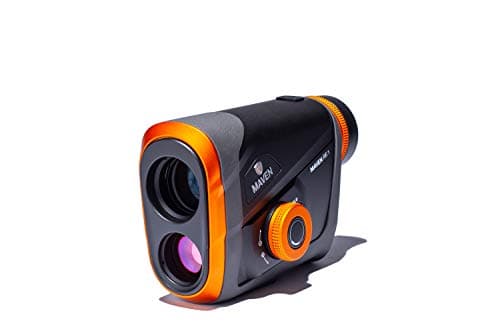 Maven RF.12,700 yd published on deer, plus or minus 1 yd from 300 to 2,000 yd, 77 percent light transmission and IPX7 - at roughly half the ceiling. | Best handheld under $1,000Glass quality in a rangefinder | 9.5out of 10 | |
| 3 | 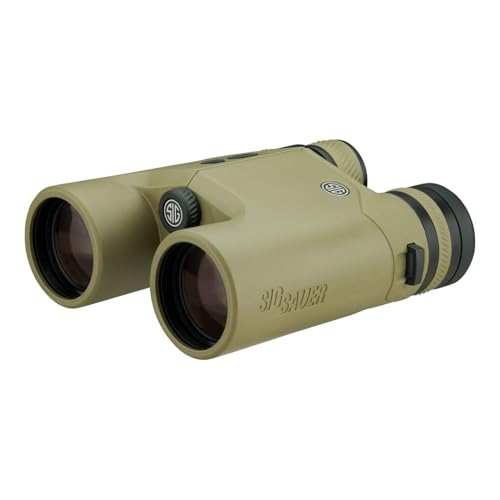 Sig Sauer KILO6K HDX 10x42Applied Ballistics Ultralite with live environmental sensors, inside a 24.7 oz 10x42 binocular that sits right at $1,000. | Best solver you can get under the ceilingA solver and a binocular in one body | 9.3out of 10 | |
| 4 | 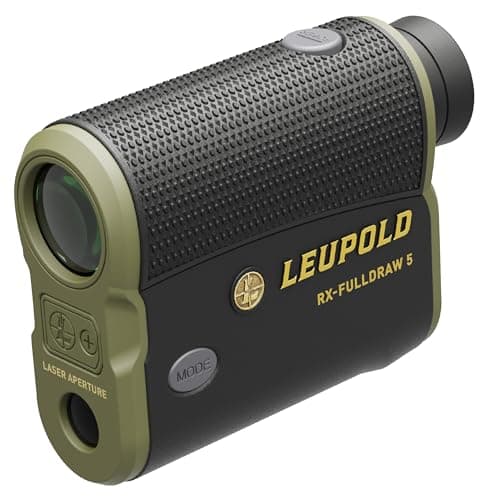 Leupold RX-FullDraw 5Arrow-specific ballistics computed from your own arrow weight and speed, plus Flightpath branch clearance, in 7.5 oz for roughly half the ceiling. | Best under $1,000 for archeryBowhunting | 9.6out of 10 | |
| 5 | 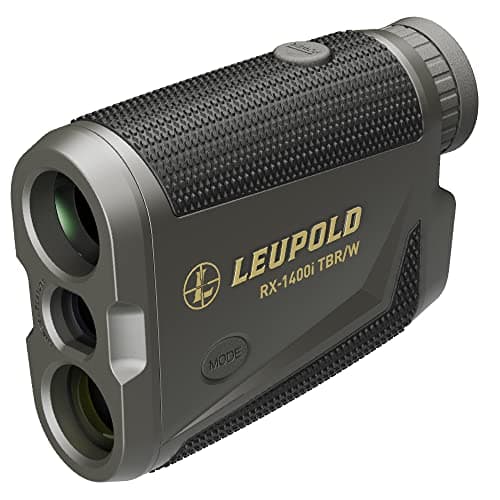 Leupold RX-1400i TBR/W Gen 2900 yd published on deer, a true ballistic holdover and 5.1 oz, for a fraction of this page's ceiling. Read this before spending more. | The budget pick - and the one that may end the searchBest rangefinder under $250 | 9.6out of 10 |
Prices are pulled live from Amazon and were last checked November 12, 2026; if a figure cannot be verified the button reads "Check price" instead. Scores are our editorial judgment against the published ranking criteria, on our published 8.4 to 9.8 recommendation scale. #ad How we earn.
The band in published numbers
| Unit | Format | Deer / game range | Angle handling | Solver | Weight |
|---|---|---|---|---|---|
| Leupold RX-1400i TBR/W Gen 2 | Handheld | 900 yd | TBR/W + holdover | None | 5.1 oz |
| Leupold RX-FullDraw 5 | Handheld | 900 yd | Arrow-matched + Flightpath | Archery DNA | 7.5 oz |
| Maven RF.1 | Handheld | 2,700 yd | LOS / COMP + obstruction filter | None | 10 oz |
| SIG KILO6K HDX 10x42 | Binocular | Not published | BDX-U | Applied Ballistics Ultralite | 24.7 oz |
| Leupold BX-4 Range HD TBR/W 10x42 | Binocular | 1,100 yd | TBR/W + holdover | None | 39 oz |
Read the deer column and the weight column together. The cheapest unit here publishes 900 yd on deer - within 200 yd of the dearest binocular on the page - and the two heaviest units are the ones that replace your binocular. Only the Maven triples the game-animal figure, and it does it at roughly half the ceiling.
Two conclusions follow. If your ranging needs are inside 900 yd on game - which covers virtually all American hunting - this band adds almost nothing to your ranging ability. It adds format and features. And the single specification in this band that is genuinely a step change is the Maven's published 2,700 yd on deer, just as the single format change that matters is going from two devices to one.
One device or two?
This is the decision the page comes down to, and the honest answer depends on something that has nothing to do with rangefinders: whether you already own binoculars you are happy with. If you do, buying a rangefinding binocular means replacing glass you like with glass you did not choose on its own merits, carrying 25 to 32 oz instead of 10, and accepting that one failure takes out both functions. A handheld is the right answer and the Maven or the RX-1400i is the unit.
If you do not own binoculars yet, the arithmetic inverts completely. A good 10x42 plus a rangefinder with a four-figure deer rating is two purchases and two things on your chest; this band lets you make it one of each, and the BX-4 Range HD in particular is built on a binocular the site recommends independently. Rangefinder vs rangefinding binoculars is the full decision page and binoculars or rangefinder first is the one to read if you own neither.
Three ways to waste $1,000 here
Buying the format you do not need. A rangefinding binocular is a wonderful thing for a hunter who needs binoculars and a terrible one for a hunter who already has them. It is the most expensive mistake available in this band because it costs the whole budget.
Buying the headline yardage. A unit named for 6,000 yards may publish no game-animal figure at all, while a unit a quarter of the price publishes 900 yd on deer. Paying for reflective range you will never see is the oldest waste in the category. Reading a spec sheet without being fooled is the page on this.
Buying a solver you will not configure. A ballistic solver needs your load, your zero, your sight height and live atmospherics entered correctly before the season. Configured with guesses it returns a confidently wrong hold, which is worse than an honest distance. If that evening at the bench is not going to happen, buy angle compensation and keep the change - the best rangefinders for the money makes the case in full.
Who should buy what
- Buy the Leupold BX-4 Range HD TBR/W 10x42 if you need binoculars as well as a rangefinder. It publishes 1,100 yd on deer with the widest field and longest eye relief of any rangefinding binocular here, and TBR/W returns a holdover rather than a raw distance. Accept 39 oz.
- Buy the Maven RF.1 if you already own glass and want the longest published deer rating of any handheld here, a stated accuracy band and IPX7 sealing - at roughly half the ceiling.
- Buy the SIG KILO6K HDX 10x42 if you want a licensed ballistic solver with live environmental sensors and a binocular in one body, and you accept that SIG publishes no game-animal figure for it.
- Buy the Leupold RX-FullDraw 5 if archery is your main season. Pin-matched arrow math and the branch-clearance readout are things no rifle unit here can do.
- Buy the Leupold RX-1400i TBR/W Gen 2 if you want to spend a fraction of the ceiling and get a published 900 yd deer rating, a real ballistic holdover and 5.1 oz. For most hunters this is the end of the search.
- Spend the difference on a harness or a tripod if you were going to buy the ceiling out of completeness. A good harness changes how often your optic is in your hands, which changes more about your season than another 500 yd of reflective range. The best bino harnesses is the page.
The picks in full
$1,066.22 6% off
Price as of November 12, 2026. #ad How we earn
Leupold BX-4 Range HD TBR/W 10x42
Leupold's TBR/W output, which gives a holdover rather than a corrected distance, in a 10x42 binocular body.
| Magnification | 10x |
|---|---|
| Objective lens | 42 mm |
| Eye relief | 17 mm |
| Field of view | 334 ft @ 1,000 yd |
| Angular field of view | 6.2° |
| Close focus | 13 ft |
| Max range, reflective | 2,600 yd |
| Max range, trees | 1,600 yd |
| Max range, deer | 1,100 yd |
| Minimum range | 12 yd |
| Accuracy | 1 yd to 1,000 yd; 0.2 % beyond |
| Display | Red OLED |
| Ranging modes | TBR/W, Bow, Line of Sight |
| Battery | CR2, approx. 3,000 actuations |
| Weight | 39 oz |
| Length | 5.9 in |
| Warranty | Lifetime optics; two-year electronics |
| Exit pupil (computed) | 4.2 mm |
| Twilight factor (computed) | 20.5 |
Specs verified 2026-10-19 from Leupold's published specification. Exit pupil and twilight factor are computed, not quoted.
What it does well
- TBR/W holdover output, not just corrected distance
- 334 ft of field and 17 mm of eye relief - the widest, most comfortable view of any rangefinding binocular here
- Published 1,100 yd range on deer and 1 yd accuracy out to 1,000 yd
- Lifetime optical guarantee behind the glass
Where it gives ground
- 39 oz is the heaviest rangefinding binocular on this site - 6.7 oz over the Vortex Fury HD 5000
- 13 ft close focus, against 6.0 ft for a standard 10x42
- Electronics carry a two-year warranty, not the lifetime cover the glass gets
- Leupold now also sells a Gen 2 of this unit at a substantially higher price
Skip it if
You want app-based ballistic profiles. Sig's ecosystem is deeper.
How this score breaks down
- Ranging accuracy and range on game (weight 5)9.0
- Angle compensation implementation (weight 5)9.6
- Display legibility in low light (weight 3)9.0
- Speed and scan mode (weight 3)8.6
- One-handed ergonomics (weight 2)6.8
Criterion scores are on the 0-10 rubric scale. Their weighted mean is 8.9, which maps to 9.6 on our published recommendation scale of 8.4 to 9.8 - the band of products we are willing to recommend at all. The weights, the definitions and the mapping are all published, so any score here can be checked against our own rules. These are editorial judgments from published specifications, computed optical arithmetic and documented consensus.
This is the unit that justifies the page's price ceiling. Below roughly $600 a rangefinding binocular either does not exist or means a mediocre binocular with a laser bolted on; at the top of this band you can buy a genuinely good 10x42 that happens to range. Leupold publishes 10x on a 42 mm objective, 334 ft of field at 1,000 yd, a 6.2 degree angular field, 17 mm of eye relief, 2,600 yd reflective, 1,600 yd on trees and 1,100 yd on deer, a 12 yd minimum, accuracy of 1 yd out to 1,000 yd and 0.2 percent beyond, a red OLED display, TBR/W, Bow and Line of Sight modes, a CR2 good for approximately 3,000 actuations, 39 oz, and a 5.9 in length. Computed from the optics: a 4.2 mm exit pupil and a twilight factor of 20.5.
Three rows carry the pick. The published 1,100 yd deer figure is the highest of any binocular-format unit on this page and higher than every handheld here except the Maven. The 334 ft field with 17 mm of eye relief is the widest, most comfortable view of any rangefinding binocular on this site, which matters because this is glass you look through for hours rather than a laser you point for a second. And TBR/W returns the hold itself rather than a corrected distance: most angle-compensating units hand you a horizontal number and leave you to convert it, which is one more piece of arithmetic under pressure in steep country.
The honest cons, and the first one is large. At 39 oz this is the heaviest rangefinding binocular on this site - 6.7 oz over the Vortex Fury HD 5000 and well over half a pound more than the SIG below - and it lives on your neck, not in a pocket. Close focus is 13 ft against 6.0 ft for an ordinary 10x42, so it is poor at anything near you. The lifetime guarantee covers the optics; the electronics carry two years. TBR/W is a holdover engine, not a full solver, so it will never produce a wind call - that is the Applied Ballistics units one tier up. And Leupold now also sells a Gen 2 of this unit at a substantially higher price, so check which generation a listing is actually offering. The full BX-4 Range HD review is the detail.
Price as of November 12, 2026. #ad How we earn
Maven RF.1
Maven's direct model buys you genuinely good glass in a rangefinder body, so the unit is usable as a monocular rather than just a distance readout.
| Magnification | 7x |
|---|---|
| Objective lens | 25 mm |
| Eye relief | 17 mm |
| Light transmission | 77 % |
| Max range, reflective | 4,500 yd |
| Max range, trees | 3,000 yd |
| Max range, deer | 2,700 yd |
| Minimum range | 5 yd |
| Accuracy, to 300 yd | 0.5 yd (0.1 yd display) |
| Accuracy, 300-2,000 yd | +/- 1 yd |
| Accuracy, 2,000-4,500 yd | +/- 3 yd |
| Angle modes | LOS / COMP |
| Brightness settings | 5 |
| Battery | CR2, over 3,500 range cycles |
| Waterproof | IPX7 |
| Weight | 10 oz with battery |
| Dimensions (W x H x D) | 4.6875 x 3.0625 x 1.875 in |
| Frame material | Magnesium / aluminum |
Specs verified 2026-10-26 from Maven's published specification. Exit pupil and twilight factor are computed, not quoted.
What it does well
- Optical quality well above typical rangefinder glass, with 77 percent published light transmission
- 2,700 yd published on deer - the longest game-animal rating of any handheld unit here
- Plus or minus 1 yd from 300 to 2,000 yd
- LOS and COMP angle modes with an obstruction filter
- Lifetime warranty, sold direct
Where it gives ground
- Amazon stock is intermittent because Maven sells direct
- Interface has a learning curve
- 10 oz is heavy for a handheld - twice the Leupold RX-1400i
- No onboard ballistic solver, so it returns a corrected distance and not a hold
Skip it if
You only need a number. The RX-1400i delivers that for a third of the price.
How this score breaks down
- Ranging accuracy and range on game (weight 5)9.3
- Angle compensation implementation (weight 5)8.7
- Display legibility in low light (weight 3)8.5
- Speed and scan mode (weight 3)8.7
- One-handed ergonomics (weight 2)7.8
Criterion scores are on the 0-10 rubric scale. Their weighted mean is 8.7, which maps to 9.5 on our published recommendation scale of 8.4 to 9.8 - the band of products we are willing to recommend at all. The weights, the definitions and the mapping are all published, so any score here can be checked against our own rules. These are editorial judgments from published specifications, computed optical arithmetic and documented consensus.
If you already own binoculars you like, this is the page's answer and it leaves half the budget in your pocket. Maven publishes 4,500 yd reflective, 3,000 yd on trees and 2,700 yd on deer - the longest published game-animal rating of any handheld on this site - with 0.5 yd accuracy and a 0.1 yd display inside 300 yd, plus or minus 1 yd from 300 to 2,000 yd, and plus or minus 3 yd beyond. It also publishes 77 percent light transmission through the 7x25 optic, 17 mm of eye relief, five brightness settings, LOS and COMP angle modes with an obstruction filter, IPX7 sealing and over 3,500 range cycles on a CR2.
Two of those rows are unusual enough to drive the pick. A published 2,700 yd deer figure is three times what a good $200 unit publishes, and it is a game-animal rating rather than a reflective headline, so it is the number that predicts a reading on a wet elk in flat light. And 77 percent transmission through a 7x25 is better glass than a rangefinder normally carries, which means this is one of the few units you can also use as a monocular - it earns its place in the pack on days you never press the button. IPX7 is submersion, not splash.
The cons are real. At 10 oz it is twice the weight of a Leupold RX-1400i and you feel that on a harness strap all season. There is no onboard ballistic solver, so it returns a corrected distance rather than a hold - fine for hunting, wrong if you want a wind call. The interface takes a session to learn. And because Maven sells direct, the Amazon listing comes and goes. The full Maven RF.1 review goes deeper, and the best 1,000-yard rangefinders is the page if that is your actual target distance.
Price as of November 12, 2026. #ad How we earn
Sig Sauer KILO6K HDX 10x42
A 10x42 rangefinding binocular with an Applied Ballistics solver inside it - the cheapest way on this site to get both in one body.
| Magnification | 10x |
|---|---|
| Objective lens | 42 mm |
| Ballistic solver | Applied Ballistics Ultralight, complete AB bullet database |
| Ranging modes | BDX-U; BDX 2.0 enabled |
| Max range, reflective / trees / game | Not published in the dealer specification table |
| Eye relief | 15.5 mm |
| Lens coating | SpectraCoat |
| Battery | CR2 |
| Waterproof | Yes (no IPX figure published) |
| Weight | 24.7 oz |
| Length | 5.24 in |
| Exit pupil (computed) | 4.2 mm |
| Twilight factor (computed) | 20.5 |
Specs verified 2026-11-09 from Sig Sauer's published specification. Exit pupil and twilight factor are computed, not quoted.
What it does well
- Applied Ballistics Ultralight with the complete AB bullet database, at the lowest price of any AB unit here
- One optic instead of a binocular plus a handheld
- 24.7 oz, lighter than most rangefinding binoculars
- BDX 2.0 links to a Kestrel, a Garmin, onX Hunt and BaseMap
- Onboard temperature, pressure and humidity sensors
Where it gives ground
- The dealer specification table publishes no reflective, tree or game-animal range figure at all
- Listed only as waterproof, with an IPX4 splash rating reported elsewhere rather than published in the spec table
- Ultralight is the cut-down AB solver, not the Elite version
- 24.7 oz is still five times a pocket handheld
- If the electronics die you lose the binocular with them
Skip it if
You already own binoculars you like. A handheld solver costs less and weighs a third as much.
How this score breaks down
- Ranging accuracy and range on game (weight 5)8.4
- Angle compensation implementation (weight 5)8.8
- Display legibility in low light (weight 3)8.0
- Speed and scan mode (weight 3)8.4
- One-handed ergonomics (weight 2)7.2
Criterion scores are on the 0-10 rubric scale. Their weighted mean is 8.3, which maps to 9.3 on our published recommendation scale of 8.4 to 9.8 - the band of products we are willing to recommend at all. The weights, the definitions and the mapping are all published, so any score here can be checked against our own rules. These are editorial judgments from published specifications, computed optical arithmetic and documented consensus.
This is the only way under this page's ceiling to get a licensed ballistic solver and a binocular in the same body. The dealer specification table publishes 10x on a 42 mm objective, 15.5 mm of eye relief, SpectraCoat coatings, 5.24 in of length, 24.7 oz, one CR2 cell and a waterproof body, with Applied Ballistics Ultralite and the complete AB bullet database, BDX-U ranging, BDX 2.0 connectivity to a Kestrel or Garmin, onX Hunt and BaseMap waypoints, and onboard temperature, pressure and humidity sensors. Computed from the optics: a 4.2 mm exit pupil and a twilight factor of 20.5.
The onboard sensors are what make it interesting at this price rather than merely well specified. A solver fed live temperature and pressure returns a materially different elevation correction than one fed numbers you typed in at the trailhead, and that difference grows with distance. At 24.7 oz it is also the lightest rangefinding binocular on this page - the Leupold and the Vortex units in this format are heavier - which matters because the main cost of this whole format is what it does to your neck.
The cons deserve weight. The dealer specification table publishes no reflective, tree or game-animal range figure at all, so the "6K" in the name is a model name and this page will not treat it as a rating - which is a genuine strike against it next to the Maven's published 2,700 yd on deer. Sealing is listed only as waterproof. Ultralite is the cut-down solver tier, not Elite. And as with every unit in this format, the electronics and the binocular fail together. Buy it if the solver is the point; buy the Leupold above if the binocular is.
Price as of November 12, 2026. #ad How we earn
Leupold RX-FullDraw 5
Built specifically around arrow flight: it takes your arrow weight and speed and returns the pin-matched distance rather than a raw number.
| Magnification | 6x |
|---|---|
| Objective lens | 22 mm |
| Max range, reflective | 1,200 yd |
| Max range, trees | 1,100 yd |
| Max range, deer | 900 yd |
| Minimum range | 6 yd |
| Accuracy, to 125 yd | 0.5 yd |
| Accuracy, to 1,000 yd | 2 yd |
| Accuracy, beyond 1,000 yd | 0.5 % |
| Field of view | 315 ft @ 1,000 yd |
| Angular field of view | 6 degrees |
| Eye relief | 17 mm |
| Diopter range | -3 to +3 |
| Dimensions (L x W x H) | 3.8 x 1.4 x 3 in |
| Weight | 7.5 oz |
| Battery | CR2, more than 3,000 actuations |
| Display | Red OLED, adjustable brightness |
| Ranging modes | Line of Sight, Flightpath, Last Target |
| Laser classification | Class 1M |
Magnification and objective are the manufacturer's own model designation; exit pupil and twilight factor are computed from them. We could not machine-read Leupold's spec page, so the remaining published figures are not listed rather than guessed.
What it does well
- Archery-specific ballistics using your arrow weight and speed
- Flightpath shows whether your arrow clears a branch
- Fast ranging in Scan mode from a stand
Where it gives ground
- Overkill and over-priced if you only shoot a rifle
- Needs setup before the season, not in the stand
Skip it if
You hunt with a rifle. The RX-1400i does the job for less than half.
How this score breaks down
- Ranging accuracy and range on game (weight 5)9.0
- Angle compensation implementation (weight 5)9.5
- Display legibility in low light (weight 3)9.0
- Speed and scan mode (weight 3)8.5
- One-handed ergonomics (weight 2)8.5
Criterion scores are on the 0-10 rubric scale. Their weighted mean is 9.0, which maps to 9.6 on our published recommendation scale of 8.4 to 9.8 - the band of products we are willing to recommend at all. The weights, the definitions and the mapping are all published, so any score here can be checked against our own rules. These are editorial judgments from published specifications, computed optical arithmetic and documented consensus.
Bowhunting is the one use case on this page where the money buys something no rifle hunter can use, and this is the unit that does it. Leupold publishes 6x on a 22 mm objective, 1,200 yd reflective, 1,100 yd on trees and 900 yd on deer, a 6 yd minimum, 0.5 yd accuracy to 125 yd and 2 yd to 1,000 yd, 315 ft of field at 1,000 yd, 17 mm of eye relief, a red OLED with adjustable brightness, a CR2 good for over 3,000 actuations, and 7.5 oz in a 3.8 by 1.4 by 3 in body.
What you are paying for is the DNA engine's archery math. You enter your arrow weight and speed, and the unit returns the pin-matched distance rather than a raw number you have to translate. Flightpath is the other half: it shows whether your arrow's apex clears the branch between you and the animal, which is a problem that is completely invisible through any other rangefinder and the single most common cause of a deflected arrow from a treestand.
The cons are about who you are rather than about the unit. If you hunt with a rifle this is dead money - a TBR/W unit returns the same 900 yd deer figure, the same angle correction and a rifle holdover for a fraction of the price. The arrow setup has to be entered at the bench before the season, not in the stand with a buck walking. At 7.5 oz it is nearly half again the weight of the cheapest unit here. And Leupold publishes no water rating for it. The full RX-FullDraw 5 review and the best rangefinder for bow hunting both go further.
Price as of November 12, 2026. #ad How we earn
Leupold RX-1400i TBR/W Gen 2
TBR/W gives you the true horizontal distance and a holdover value in the same readout, which is the single most useful feature on a hunting rangefinder.
| Magnification | 5x |
|---|---|
| Objective lens | 21 mm |
| Eye relief | 18.3 mm |
| Field of view | 368 ft @ 1,000 yd |
| Angular field of view | 7º |
| Max range, reflective | 1,400 yd |
| Max range, trees | 1,200 yd |
| Max range, deer | 900 yd |
| Minimum range | 6 yd |
| Accuracy | +/- 0.5 yd to 125 yd; +/- 2 yd to 1,000 yd; +/- 0.5 % beyond |
| Display | Red TOLED, adjustable brightness |
| Ranging modes | TBR/W, Bow with Flightpath, Line of Sight |
| Battery | CR2, approx. 3,000 actuations |
| Weight | 5.1 oz |
| Dimensions (L x W x H) | 4 x 1.4 x 3 in |
| Laser classification | Class 3R |
Specs verified 2026-10-26 from Leupold's published specification. Exit pupil and twilight factor are computed, not quoted.
What it does well
- TBR/W reports true ballistic range, not line of sight
- Fast, legible red OLED display in low light
- Compact enough for a harness pouch
Where it gives ground
- Stated ranges assume reflective targets, not deer hide - Leupold publishes 1,400 yd reflective but only 900 yd on deer
- No bluetooth or ballistic app integration
- Accuracy loosens to plus or minus 2 yd out at 1,000 yd
Skip it if
You need ranges past 1,000 yards on game - this is not that unit.
How this score breaks down
- Ranging accuracy and range on game (weight 5)8.5
- Angle compensation implementation (weight 5)9.5
- Display legibility in low light (weight 3)9.0
- Speed and scan mode (weight 3)8.5
- One-handed ergonomics (weight 2)9.0
Criterion scores are on the 0-10 rubric scale. Their weighted mean is 8.9, which maps to 9.6 on our published recommendation scale of 8.4 to 9.8 - the band of products we are willing to recommend at all. The weights, the definitions and the mapping are all published, so any score here can be checked against our own rules. These are editorial judgments from published specifications, computed optical arithmetic and documented consensus.
A page with a $1,000 ceiling owes you the unit that makes most of the ceiling unnecessary, and this is it. Leupold publishes 1,400 yd reflective, 1,200 yd on trees and 900 yd on deer; accuracy is plus or minus 0.5 yd inside 125 yd, loosening to plus or minus 2 yd by 1,000 yd and then 0.5 percent beyond. It carries a red TOLED display with adjustable brightness, 368 ft of field at 1,000 yd, 18.3 mm of eye relief, roughly 3,000 actuations on a CR2, and 5.1 oz in a 4 by 1.4 by 3 in body. Bow mode with Flightpath is included.
TBR/W is the whole argument. Instead of returning the line-of-sight distance and leaving you to work out what a 25-degree downhill angle does to it, it returns the true ballistic range and a holdover in the same readout - the same capability that anchors this page's overall pick, in a unit that weighs a fraction as much and leaves most of the budget unspent. Its published 900 yd deer rating also matches the RX-FullDraw 5's exactly, three tiers down the price list.
The honest cons. The 900 yd deer figure is the real ceiling and it is 500 yards short of the number in the model name - if you genuinely range past that, this is the wrong unit and no amount of value framing fixes it. Accuracy at 1,000 yd is plus or minus 2 yd, enough to matter once you convert a range into elevation. There is no Bluetooth, no app and no environmental data, so it will never produce a wind call. And it is a monocular, so you are still carrying binoculars as well. The full RX-1400i review and what TBR/W actually does are the follow-ups.
Our recommendation
If you take one thing from this page, take this.
Leupold BX-4 Range HD TBR/W 10x42
Best rangefinder under $1,000 overall
1,100 yd published on deer, a TBR/W holdover and 334 ft of field with 17 mm of eye relief - a 10x42 worth glassing through that also ranges.
Maven RF.1
Best handheld under $1,000
2,700 yd published on deer, plus or minus 1 yd from 300 to 2,000 yd, 77 percent light transmission and IPX7 - at roughly half the ceiling.
Prices are pulled live and shown on each button. #ad How we earn.
Questions people actually ask
What is the best hunting rangefinder under $1,000?
Is a $1,000 rangefinder worth it over a $200 one?
Can you get a rangefinding binocular for under $1,000?
Do rangefinders under $1,000 have ballistic solvers?
How much should I actually spend on a hunting rangefinder?
Is a heavier rangefinding binocular a problem on a hunt?
What happens if the electronics fail on a rangefinding binocular?
Sources
- Leupold BX-4 Range HD TBR/W 10x42 - published specifications - read 2026-10-19
- Maven RF.1 7x25 - published specifications - read 2026-10-26
- SIG KILO6K HDX 10x42 (SOK6K106) - SIG specification table and feature list as reproduced by a stocking dealer; sigsauer.com returns HTTP 403 to automated reads - read 2026-11-09
- Leupold RX-FullDraw 5 - published specifications - read 2026-11-02
- Leupold RX-1400i TBR/W Gen 2 - published specifications - read 2026-10-26