We earn a commission if you buy through the links on this page, at no extra cost to you. It never changes which products we pick or how we rank them - read the full disclosure.
Our top pick
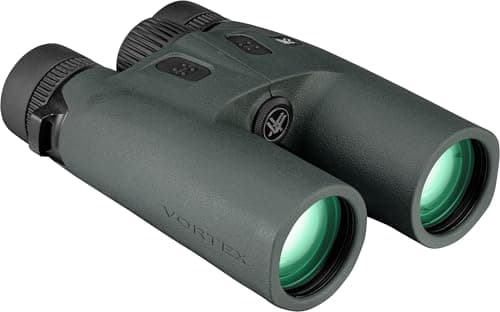
Vortex Ranger HD 3000 10x42
A 10x42 binocular with a 3,000 yard laser built in, which removes the one-handed juggle that every separate-rangefinder setup creates.
No buyable offer at the last price check.
Prices change; we show only live figures. #ad How we earn
For ranging an animal at 500 yards, the Vortex Ranger HD 3000 is the pick - not because its laser is strongest, but because its 10x42 binocular optic lets you see what the beam is actually pointed at. Handheld, the Leupold RX-1400i TBR/W Gen 2 is the value answer, and the Sig KILO5K is the one that returns a firing solution instead of a number.
Almost every rangefinder sold will claim a maximum range several times 500 yards. Those numbers are measured against large, flat, highly reflective targets. A bedded mule deer is small, curved and about as reflective as a dirt bank, which is why the useful question is not how far the laser reaches but whether you can put it on an animal and trust what comes back.
Quick picks
Ranked by the criteria published on how we review. Tap any row for the full write-up, or go straight to the current price.
| # | Product | Best for | Score | Price |
|---|---|---|---|---|
| 1 | Vortex Ranger HD 3000 10x42A 3,000 yard laser behind a 10x42 binocular - the magnification is what actually finds the animal at 500. | Best for 500 yards on gameRangefinding binocular on a budget | 9.3out of 10 | See today's price on the Ranger HD 3000 10x42Check price on Amazon No buyable offer at the last price check. |
| 2 | 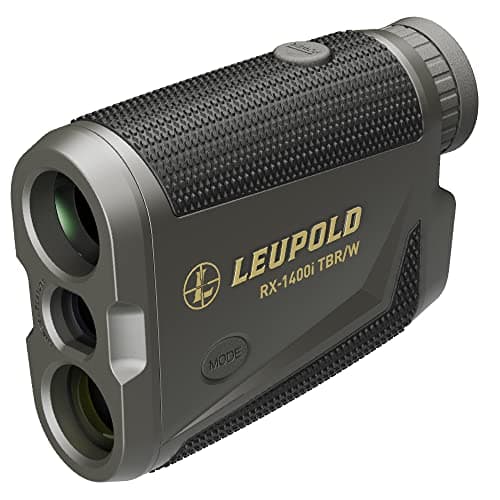 Leupold RX-1400i TBR/W Gen 2TBR/W holdover and an illuminated display, with enough laser to cover 500 yards on game in good conditions. | Best handheld valueBest rangefinder under $250 | 9.6out of 10 | |
| 3 | 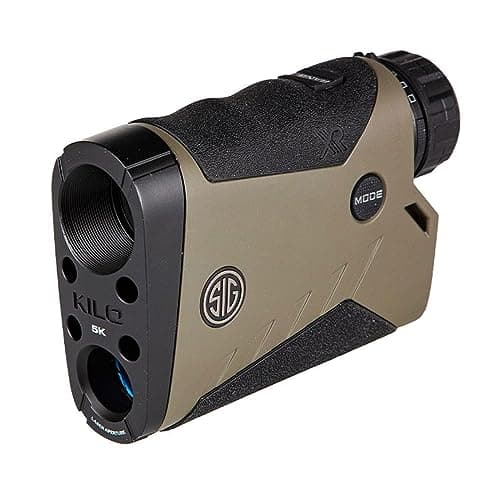 Sig Sauer KILO5KOnboard Applied Ballistics and a 7x25 optic - it returns a solution rather than a distance. | Best for a firing solutionLong-range ballistic solving | 9.6out of 10 | See today's price on the KILO5K$629.99 on Amazon $699.99 10% off |
| 4 | 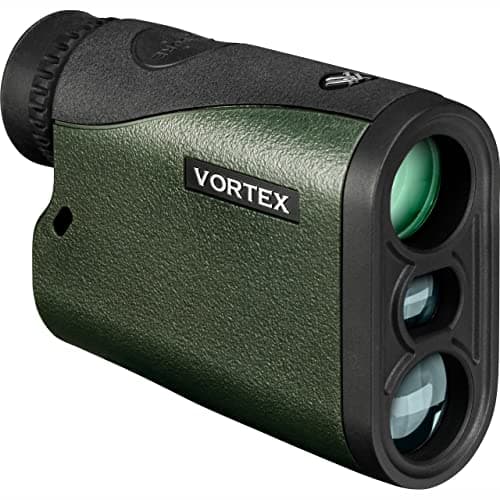 Vortex Crossfire HD 1400HCD compensation at the lowest sensible price - but 500 yards is the edge of what we would ask of it. | The honest budget limitSimplest reliable ranging | 9.2out of 10 | See today's price on the Crossfire HD 1400Check price on Amazon No buyable offer at the last price check. |
Prices are pulled live from Amazon and were last checked November 12, 2026; if a figure cannot be verified the button reads "Check price" instead. Scores are our editorial judgment against the published ranking criteria, on our published 8.4 to 9.8 recommendation scale. #ad How we earn.
Why 500 yards is the distance that separates units
Three problems arrive together at roughly this distance, and they are the three things the picks above solve.
- Aim precision. At 500 yards, a 5x monocular's reticle covers a lot of hillside. You cannot confirm the beam is on hair rather than brush. Magnification fixes this, which is why a 10x rangefinding binocular is so much more trustworthy here.
- Reflectivity. Deer hair returns a weak signal. A realistic figure on game is well below any advertised reflective rating, which is what most makers' own fine print implies when it specifies the target type.
- Angle, at scale. A moderate slope at 30 yards costs you a yard. At 500 yards it costs you tens. Angle compensation stops being a treestand nicety and becomes the main correction - see what is angle compensation.
No buyable offer at the last price check.
Prices change; we show only live figures. #ad How we earn
Vortex Ranger HD 3000 10x42
A 10x42 binocular with a 3,000 yard laser built in, which removes the one-handed juggle that every separate-rangefinder setup creates.
| Magnification | 10x |
|---|---|
| Objective lens | 42 mm |
| Max range, reflective | 3,000 yd |
| Max range, trees | 1,800 yd |
| Max range, deer | 1,500 yd |
| Minimum range | 6 yd |
| Angle compensation | HCD; Line of Sight mode also available |
| Field of view | 335 ft @ 1,000 yd |
| Angular field of view | 6.4 degrees |
| Eye relief | 17.0 mm |
| Close focus | 6.0 ft |
| Interpupillary distance | 55-74 mm |
| Display | Red OLED, optimized for low light |
| Battery | CR123 (included) |
| Weight | 32.4 oz |
| Dimensions (H x W) | 6.7 x 5.1 in |
| Sealing | Nitrogen purged, O-ring sealed - waterproof and fogproof |
| Stated accuracy | not published |
Magnification and objective are the manufacturer's own model designation; exit pupil and twilight factor are computed from them. We could not machine-read Vortex's spec page, so the remaining published figures are not listed rather than guessed.
What it does well
- One optic instead of two on your chest
- HCD angle compensation built in
- VIP warranty
Where it gives ground
- Heavier than a plain 10x42 on a harness all day
- If the electronics fail you lose the binocular too
Skip it if
You already own good binoculars you like - a separate rangefinder is cheaper.
How this score breaks down
- Ranging accuracy and range on game (weight 5)8.8
- Angle compensation implementation (weight 5)8.7
- Display legibility in low light (weight 3)8.1
- Speed and scan mode (weight 3)8.5
- One-handed ergonomics (weight 2)7.3
Criterion scores are on the 0-10 rubric scale. Their weighted mean is 8.4, which maps to 9.3 on our published recommendation scale of 8.4 to 9.8 - the band of products we are willing to recommend at all. The weights, the definitions and the mapping are all published, so any score here can be checked against our own rules. These are editorial judgments from published specifications, computed optical arithmetic and documented consensus.
The hard part of ranging at 500 yards is not the laser. It is aiming it. A 5x monocular shows you a reticle sitting over an ambiguous tan smudge, and you cannot tell whether the beam is on the deer, the sagebrush in front of it, or the slope behind. At 10x you can, and that single fact makes a rangefinding binocular the most reliable way to get a trustworthy number at this distance.
The laser reaches 3,000 yards reflective, which means a comfortable margin at 500 on hair. HCD angle compensation is built in. The trade is weight on a harness all day and a single point of failure - lose the electronics and you have lost the binocular too.
Price as of November 12, 2026. #ad How we earn
Leupold RX-1400i TBR/W Gen 2
TBR/W gives you the true horizontal distance and a holdover value in the same readout, which is the single most useful feature on a hunting rangefinder.
| Magnification | 5x |
|---|---|
| Objective lens | 21 mm |
| Eye relief | 18.3 mm |
| Field of view | 368 ft @ 1,000 yd |
| Angular field of view | 7º |
| Max range, reflective | 1,400 yd |
| Max range, trees | 1,200 yd |
| Max range, deer | 900 yd |
| Minimum range | 6 yd |
| Accuracy | +/- 0.5 yd to 125 yd; +/- 2 yd to 1,000 yd; +/- 0.5 % beyond |
| Display | Red TOLED, adjustable brightness |
| Ranging modes | TBR/W, Bow with Flightpath, Line of Sight |
| Battery | CR2, approx. 3,000 actuations |
| Weight | 5.1 oz |
| Dimensions (L x W x H) | 4 x 1.4 x 3 in |
| Laser classification | Class 3R |
Specs verified 2026-10-26 from Leupold's published specification. Exit pupil and twilight factor are computed, not quoted.
What it does well
- TBR/W reports true ballistic range, not line of sight
- Fast, legible red OLED display in low light
- Compact enough for a harness pouch
Where it gives ground
- Stated ranges assume reflective targets, not deer hide - Leupold publishes 1,400 yd reflective but only 900 yd on deer
- No bluetooth or ballistic app integration
- Accuracy loosens to plus or minus 2 yd out at 1,000 yd
Skip it if
You need ranges past 1,000 yards on game - this is not that unit.
How this score breaks down
- Ranging accuracy and range on game (weight 5)8.5
- Angle compensation implementation (weight 5)9.5
- Display legibility in low light (weight 3)9.0
- Speed and scan mode (weight 3)8.5
- One-handed ergonomics (weight 2)9.0
Criterion scores are on the 0-10 rubric scale. Their weighted mean is 8.9, which maps to 9.6 on our published recommendation scale of 8.4 to 9.8 - the band of products we are willing to recommend at all. The weights, the definitions and the mapping are all published, so any score here can be checked against our own rules. These are editorial judgments from published specifications, computed optical arithmetic and documented consensus.
The cheapest unit we would take to a 500-yard setting. The 1,400-yard rating is a reflective-target figure, so treat it as a fraction of that on deer hair - which still clears 500 with margin in daylight on a clear day. More useful than the raw reach is TBR/W: at 500 yards in steep country the angle correction is no longer a rounding error, it is tens of yards.
Leupold is explicit that stated ranges assume reflective targets. Take them at their word. In rain, heat shimmer or failing light, expect to work for a lock at 500 and expect to re-range rather than trust the first number.
$699.99 10% off
Price as of November 12, 2026. #ad How we earn
Sig Sauer KILO5K
Applied Ballistics onboard and a 7x25 optic: it returns a firing solution rather than a distance, which is what long-range shooting actually needs.
| Magnification | 7x |
|---|---|
| Objective lens | 25 mm |
| Max range, reflective | Up to 5,000 yd |
| Max range, trees | Up to 2,500 yd |
| Max range, deer | Up to 2,000 yd |
| Eye relief | 15 mm minimum |
| Display | Segmented OLED |
| Reticle | Circle with milling grid |
| Laser divergence | 1.3 mrad |
| Battery | CR2, minimum 4,000 ranges |
| Waterproof | IPX-4 |
| Weight | 7.5 oz |
| Length | 4.4 in |
| Width | 1.3 in |
Specs verified 2026-10-26 from Sig Sauer's published specification. Exit pupil and twilight factor are computed, not quoted.
What it does well
- Onboard Applied Ballistics Ultralite solver with environmental sensors
- 2,000 yd published on deer, so a 1,000 yd reading is well inside its rating
- 7.5 oz - half the weight of the Maven RF.1
- Bluetooth profile sync and BDX-X support for Kestrel and Garmin
Where it gives ground
- More capability than most hunters will ever configure
- Menu depth is real - plan on reading the manual
- IPX-4 is splash resistance, not submersion - the weakest sealing rating of any unit here
- SIG does not publish a stated accuracy figure for this model
Skip it if
Your shots are inside 400 yards. You are paying for solving you will not use.
How this score breaks down
- Ranging accuracy and range on game (weight 5)9.5
- Angle compensation implementation (weight 5)9.2
- Display legibility in low light (weight 3)8.7
- Speed and scan mode (weight 3)9.4
- One-handed ergonomics (weight 2)7.4
Criterion scores are on the 0-10 rubric scale. Their weighted mean is 9.0, which maps to 9.6 on our published recommendation scale of 8.4 to 9.8 - the band of products we are willing to recommend at all. The weights, the definitions and the mapping are all published, so any score here can be checked against our own rules. These are editorial judgments from published specifications, computed optical arithmetic and documented consensus.
At 500 yards a distance is no longer sufficient information. You need drop, and drop depends on your load, your zero and the air you are shooting through. This unit solves that onboard: enter a profile, and the readout is a firing solution rather than a number you then have to do arithmetic on in the wind.
It ranges far past any practical hunting distance, which is why it also shows up in best rangefinders for long range shooting. The cost is complexity: the menu depth is real, and a unit you have not configured properly is worse at 500 yards than a simple one you know.
No buyable offer at the last price check.
Prices change; we show only live figures. #ad How we earn
Vortex Crossfire HD 1400
A 5x21 monocular that ranges to 1,400 yards reflective with HCD angle compensation, at the price where rangefinders stop being a luxury.
| Magnification | 5x |
|---|---|
| Objective lens | 21 mm |
| Eye relief | 16.0mm |
| Field of view | 367' @ 1000 yds |
| Angular field of view | 7.0º |
| Stated accuracy | 1 yds. @100 yds. |
| Weight | 4.8 oz. |
| Length | 4.0" |
| Height | 2.9" |
| Width | 1.3" |
Specs verified 2026-10-05 from Vortex's published specification. Exit pupil and twilight factor are computed, not quoted.
What it does well
- HCD mode gives angle-compensated distance
- 16.0 mm eye relief with a 367 ft field at 5x
- VIP warranty
Where it gives ground
- Display is LCD, not illuminated, so it fades in deep shade
- No ballistic holdover output, just corrected distance
Skip it if
You hunt in low light often - an illuminated display is worth the upgrade.
How this score breaks down
- Ranging accuracy and range on game (weight 5)8.1
- Angle compensation implementation (weight 5)8.7
- Display legibility in low light (weight 3)6.6
- Speed and scan mode (weight 3)8.1
- One-handed ergonomics (weight 2)8.8
Criterion scores are on the 0-10 rubric scale. Their weighted mean is 8.1, which maps to 9.2 on our published recommendation scale of 8.4 to 9.8 - the band of products we are willing to recommend at all. The weights, the definitions and the mapping are all published, so any score here can be checked against our own rules. These are editorial judgments from published specifications, computed optical arithmetic and documented consensus.
We include this as the floor rather than a recommendation. HCD angle compensation and a published 1 yard accuracy at 100 yards make it a genuinely good short- and mid-range unit, and in bright, clear conditions it will give you a number at 500.
Two things limit it at this distance. The 5x21 optic makes precise aim at 500 yards guesswork, and the non-illuminated LCD is hardest to read at exactly the light levels where long shots get taken. If 500 yards is a routine distance for you, buy more unit.
How the picks compare at this distance
| Unit | Optic | Angle compensation | Ballistic output | What limits it at 500 |
|---|---|---|---|---|
| Vortex Ranger HD 3000 | 10x42 binocular | HCD | Corrected distance | Weight on a harness |
| Leupold RX-1400i TBR/W Gen 2 | Monocular | TBR/W | Holdover value | Reflective-target rating; marginal in poor light |
| Sig KILO5K | 7x25 | Yes | Onboard Applied Ballistics solution | Menu depth and setup |
| Vortex Crossfire HD 1400 | 5x21 | HCD | Corrected distance only | Aim precision and a non-illuminated LCD |
Optic and feature details come from each manufacturer's published specifications.
The number you should actually shop on
Ignore maximum range. Shop on magnification, display legibility and whether the unit has a scan mode, because those three determine whether you get a usable reading. A unit that reads 500 yards on the third attempt after you re-aimed twice is doing its job; a unit that returns a confident number the first time while aimed at a bush is actively dangerous.
If 500 yards is near the top of your range rather than the middle of it, the rest of the category sorts out in best hunting rangefinders, and the rangefinding-binocular case specifically in rangefinder vs rangefinding binoculars.
Our recommendation
If you take one thing from this page, take this.
Vortex Ranger HD 3000 10x42
Best for 500 yards on game
A 3,000 yard laser behind a 10x42 binocular - the magnification is what actually finds the animal at 500.
No buyable offer at the last price check.
Leupold RX-1400i TBR/W Gen 2
Best handheld value
TBR/W holdover and an illuminated display, with enough laser to cover 500 yards on game in good conditions.
Prices are pulled live and shown on each button. #ad How we earn.
Questions people actually ask
What is the best rangefinder for 500 yards?
Will a 1,000-yard rangefinder range a deer at 500 yards?
Do I need angle compensation at 500 yards?
Is a rangefinding binocular better than a handheld at long range?
Sources
- Vortex Crossfire HD 1400 published specifications - read 2026-10-17
- Leupold RX-1400i TBR/W Gen 2 product page - read 2026-10-17