You can look through a rangefinder, and for confirming a shape at a few hundred yards it works fine. It will not replace binoculars for hunting. Most hunting rangefinders are 5x or 6x with an objective around 20-25 mm, built around a display rather than a view, and used with one eye - which costs you field of view, steadiness and the depth cues that make picking an animal out of cover possible.
What the specifications actually say
Put a typical rangefinder's optic next to a mid-tier hunting binocular and the gap is not subtle.
| Vortex Crossfire HD 1400 (rangefinder) | Vortex Viper HD 10x42 (binocular) | |
|---|---|---|
| Magnification | 5x | 10x |
| Objective lens | 21 mm | 42 mm |
| Field of view | 367 ft at 1,000 yd | 341 ft at 1,000 yd |
| Eyes in use | One | Two |
| Exit pupil (objective divided by magnification) | 4.2 mm | 4.2 mm |
| Weight | 4.8 oz | 24.9 oz |
Figures as published by Vortex for each product. Exit pupil is the objective diameter divided by the magnification.
Note the row that surprises people: the exit pupils match. A 5x21 and a 10x42 both divide to 4.2 mm, so on paper they deliver a similarly bright image. The rangefinder is still much worse to glass with, and the reasons are not on the spec sheet.
Why it fails in practice
- One eye instead of two. Using both eyes genuinely improves low-contrast detection, and two eyes give you the depth cues that separate an animal from the brush behind it. Monocular viewing flattens the scene.
- You cannot hold it still. A 4.8 oz unit held in one hand at arm's length shakes far more than 25 oz braced against both brows. Movement is what you are trying to detect, and shake hides it.
- The display is in the way. A rangefinder's optical path is designed around projecting numerals. The reticle and readout sit in the middle of the view, which is exactly where the animal is.
- Eye strain. Squinting through one eyepiece for twenty minutes is genuinely uncomfortable. Hunters do not glass for hours with a rangefinder because they cannot, not because they have not thought of it.
- No way to brace it. A binocular pairs with a tripod adapter and becomes a glassing instrument. Nearly no rangefinder does - see how to mount binoculars on a tripod.
Quick picks
Ranked by the criteria published on how we review. Tap any row for the full write-up, or go straight to the current price.
| # | Product | Best for | Score | Price |
|---|---|---|---|---|
| 1 | 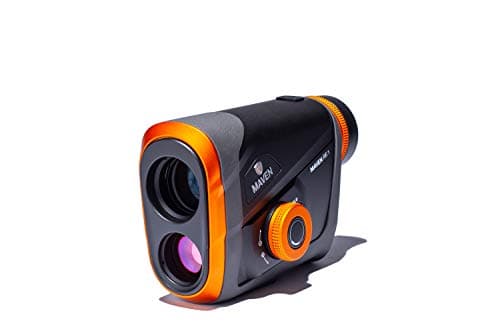 Maven RF.1Optical quality well above typical rangefinder glass, which makes it genuinely usable as a monocular. | The rangefinder you can glass withGlass quality in a rangefinder | 9.5out of 10 | |
| 2 | 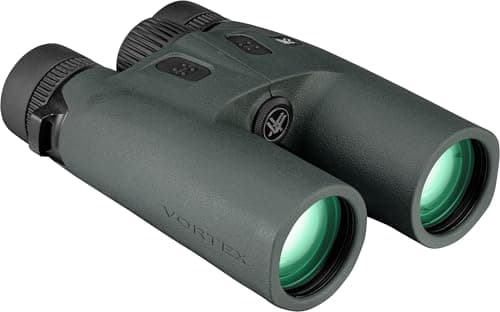 Vortex Ranger HD 3000 10x42A 10x42 binocular with a 3,000 yard laser inside it - both jobs, properly, in one housing. | The actual fixRangefinding binocular on a budget | 9.3out of 10 | See today's price on the Ranger HD 3000 10x42Check price on Amazon No buyable offer at the last price check. |
| 3 | 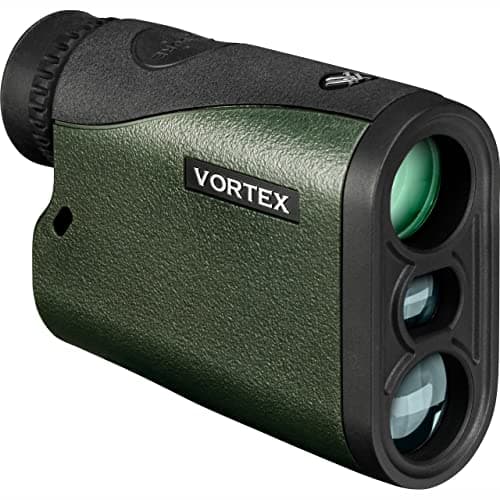 Vortex Crossfire HD 14004.8 oz of angle-compensated ranging next to a real binocular - the cheapest setup that does both jobs well. | The cheap pairingSimplest reliable ranging | 9.2out of 10 | See today's price on the Crossfire HD 1400Check price on Amazon No buyable offer at the last price check. |
Prices are pulled live from Amazon and were last checked November 12, 2026; if a figure cannot be verified the button reads "Check price" instead. Scores are our editorial judgment against the published ranking criteria, on our published 8.4 to 9.8 recommendation scale. #ad How we earn.
What a rangefinder is genuinely good for besides ranging
It is not useless as an optic, and it is worth knowing what it will do. Confirming whether a dark shape at 300 yards has antlers: yes, often. Checking a gate or a boundary marker across a field: yes. Reading a distant sign: yes. Finding an animal that is not already standing in the open: no.
The useful way to think about it is that a rangefinder is a confirming optic, not a searching one. Binoculars find; a rangefinder measures. The ordering argument - which to buy first if you can only buy one - is in binoculars or rangefinder first, and the closest honest comparison is monocular vs rangefinder.
Three ways to fix it
- Buy a rangefinder with real glass. The Maven RF.1 is genuinely pleasant to look through, which makes it a usable confirming optic as well as a measuring one. It is still monocular.
- Buy a rangefinding binocular. The Vortex Ranger HD 3000 is a real 10x42 with the laser inside. This is the only option that truly does both jobs.
- Buy a tiny rangefinder and a good binocular. Usually the best value: the Crossfire HD 1400 adds 4.8 oz to a harness and leaves your binocular to be a binocular.
Questions people actually ask
Can you use a rangefinder as binoculars?
What magnification are hunting rangefinders?
Should I buy a rangefinder or binoculars first?
Are rangefinding binoculars a better idea than carrying both?
Sources
- Vortex Crossfire HD 1400 published specifications - read 2026-10-17
- Vortex Viper HD 10x42 published specifications - read 2026-10-17